Showing posts with label Robert Latimer. Show all posts

Monday, August 20, 2018

Latimer's request for Clemency should be rejected.

Alex Schadenberg
Executive Director - Euthanasia Prevention Coalition

Peter Stockland
Peter Stockland, the former editor in chief of the Montreal Gazette, was published by Maclean's Magazine on August 17, 2018 concerning the application for clemency for Robert Latimer, who gassed his daughter Tracy to death in 1993.

Several weeks ago, Robert Latimer asked the Justice Minister, Jody Wilson-Raybould that he pardoned of his second-degree murder conviction in the death of his daughter Tracy, who was living with Cerebral Palsy. Latimer claimed that since euthanasia is now legal in Canada, that his crime should be erased from his record freeing him of the difficulty of crossing the boarder.

Stockland explains that Latimer lacks remorse for killing his daughter:

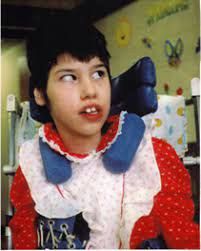
Tracy Latimer
Latimer himself has never hesitated to volubly proclaim he did nothing wrong in 1993 when he put his 12-year-old daughter Tracy in the cab of his farm truck and pumped carbon monoxide in to kill her. As recently as October 2017, Latimer gave an interview to the Saskatoon StarPhoenix in which he insisted yet again: “What I did was right.” 
Such defiant lack of remorse, in the face of five legal proceedings affirming his guilt and sentence, might be deemed worthy of comment by a government that seldom feels the need to restrain its vocal enthusiasm on an array of issues, including criminal verdicts still subject to potential appeal.
Stockland recognizes that Latimer has a right to request clemency for his murder conviction, and he explains some of the facts of the case:
Canadians who recall the 25-year-old killing know Latimer confessed, after initially lying to police. 
In its 2001 decision upholding his conviction and sentence, the Supreme Court records that “Mr. Latimer…told police he had considered giving Tracy an overdose of Valium or ‘shooting her in the head’ to end her suffering from severe cerebral palsy. The court documents the alternatives open to Latimer such as surgery for Tracy or placement in a care facility, all of which he rejected in favour of killing her. “Tracy’s proposed surgery did not pose an imminent threat to her life, nor did her medical condition,” the court said in rejecting what is called the defence of necessity. “In fact, Tracy’s health might have improved had the Latimers not rejected the option of relying on a feeding tube. [Latimer] can be reasonably expected to have understood that reality.”
Taylor Hyatt
Stockland interviews Taylor Hyatt, the outreach coordinator and policy analyst for the disability rights group Not Dead Yet, how attitides might change if Latimer is given a pardon:

“You’re going to see a tremendous shift in the way that disability, and people who live with it, is treated by Canadian society,” she says. “Down the road, more people could be inspired to share Mr. Latimer’s views and act on them by judging from the outside that a life like mine or Tracy’s is not worth living. People will be put in very real danger.” 
... Hyatt lives with cerebral palsy as Tracy Latimer did for the 12 years of her life, though its effect isn’t remotely as severe. It has taught her a great deal about assumptions Canadians still paternalistically make on behalf the disabled. She loathes, for example, the routine reference to her being “confined” to a wheelchair. 
“It’s true I have to use it all the time, but I’m not confined to it. I’m liberated. Without it, I would not be able to get out and experience the world as I do.”

Stockland concludes his article by quoting Hyatt:
“He killed his minor daughter without her consent because of what he believed her life was like. Just because a way of life looks unfamiliar, even scary, even a thousand times harder than your own, don’t be quick to judge it is not worth living, and to impose your assumptions of a good life onto the life that is already there,” Hyatt says.
The Euthanasia Prevention Coalition opposes clemency for Robert Latimer.

Monday, July 23, 2018

Disability rights leader: Latimer stirs up nightmarish wake up call.

Dr Heidi Janz
Heidi Janz (PhD) is an adjunct professor at the University of Alberta’s John Dossetor Health Ethics Centre and the Faculty of Rehabilitation Medicine and chairs the Council of Canadians with Disabilities Ending-of-Life Ethics Committee. Dr Janz wrote the following opinion article that was published in the Edmonton Journal on July 20, 2018.
Last week, news outlets reported that Robert Latimer has submitted a letter to the federal minister of justice seeking a pardon or a new trial following his conviction for the murder of his daughter Tracy in 1993. When I heard these reports, I, like many Canadians with disabilities, felt a sickening sense of deja vu. 
For many Canadians with disabilities, including me, the murder of Tracy Latimer and the overwhelming media and public support for her father was a nightmarish wake-up call, alerting us to the fact that many, if not most, of our fellow Canadians considered a life with disabilities as being a life not worth living. 
During Latimer’s appeal trial, I vividly remember tuning into a CBC news magazine show on the topic and being overwhelmed with horror. For the first time, I became fully aware that, as a person with severe disabilities, I, too, would be viewed by many of my fellow Canadians as better off dead than disabled. 
Latimer’s request for a pardon means that my nightmare, and the nightmare of thousands of Canadians with disabilities, is beginning all over again. In petitioning to be pardoned, he is declaring: “I was right to kill my daughter; the law was wrong. Medical Aid in Dying (MAID) is now legal in Canada. Therefore, I should no longer continue to have to carry the stigma of being branded a convicted murderer just because MAID wasn’t a legal option when Tracy was alive. And—did I mention?—I WAS RIGHT!” 
What Latimer and his lawyers appear to be overlooking is that Medical Aid in Dying still isn’t legal for minors in Canada. Or perhaps it’s not so much that they’re ignoring that fact as it is that they’re hoping to promote a reshaping of the law that will vindicate Robert Latimer. 
As to the issue of stigma, it seems to me that the stigmatization we should be worrying about isn’t Robert Latimer’s, but Tracy’s, and along with her that of all Canadians with disabilities. 
Tracy Latimer
From the time Latimer was first arrested for killing Tracy, he portrayed his daughter as little more than a suffering bundle of flesh. And the mainstream media was quick to promote this image of Tracy. As Shafer Parker, a former journalist who covered Latimer’s murder trials, says, “Instead of the pain-wracked, non-communicative sufferer described by Latimer, the record reveals that right up until her last weekend, Tracy continued to ride the bus to the developmental centre in Wilkie five days a week, 45 minutes each way. And in the caregiver’s communication book that was permanently attached to Tracy’s wheelchair Mrs. Latimer included frequent descriptions of her as a ‘happy girl’ who, for example, was ‘all smiles’ when her cousins came for a visit. And when her younger sister Lindsay invited friends for a sleepover, she was fully involved in their hijinks. ‘Tracy was the worst girl,’ her mother wrote, ‘up at 10 to seven, laughing and vocalizing. She was really good
the rest of the day.’ ” 
And yet, two-and-a-half decades after Tracy Latimer was murdered by her father, some mainstream media reports about his petition for a pardon still erroneously described Tracy as a “bedridden quadriplegic.” 
Finally, like many other disability-rights advocates, I am sickened and alarmed by Robert Latimer’s petition for pardon because, contrary to the claim of Latimer’s lawyer that “[g]ranting a pardon to Mr. Latimer does not detract from any value or principle,” pardoning Tracy’s killer would, in fact, signal an abandonment of the government’s commitment to equality, justice, and ending discrimination against disabled Canadians. 
Being a disabled Canadian could be about to get a whole lot scarier again thanks to Robert Latimer.
Taylor Hyatt - Tracy Latimer: My sister in spirit

Thursday, July 19, 2018

Tracy Latimer: my sister in spirit

This article was published by Toujours Vivant - Not Dead Yet on July 19, 2018.

By Taylor Hyatt
Policy Analyst & Outreach Coordinator, Toujours Vivant-Not Dead Yet

Taylor Hyatt
On July 11, 2018, a number of news outlets revealed that Robert Latimer was seeking either a new trial or a complete pardon for the second degree murder conviction in the 1993 death of his daughter, Tracy. The conviction and life sentence he received (with a mandatory minimum of ten years before parole could be considered), were upheld by the Supreme Court in 2001. Latimer “was granted day parole in February 2008 and full parole in November 2010.”

Most Canadians are aware of his crime: in October 1993, Mr. Latimer put 12-year-old Tracy in the cab of his truck and piped in exhaust fumes. His motive? He “loved his daughter,” who was thought to be in severe pain, and “couldn’t bear watching her suffer.”

Tracy Latimer
The cause of Tracy’s alleged pain and suffering was her cerebral palsy. I was born with the same disability in May 1992, about a year and a half before Tracy’s death. As a result, I’ve always felt a connection when I’ve heard her name in the news. I can’t remember how old I was when I finally understood what had happened to her – probably around age 10 or 11. (For reference, I was 18 when Latimer was granted full parole in 2010. Among my fondest memories of high school law classes are the discussions my classmates had about how sickening his actions were!) Hearing about Tracy’s fate sent shivers down my spine…and years later, it still does. The sense of kinship I felt with her, and the disgust I felt at the thought of her murder, has stayed with me. If I had to put it all into words, it would read something like “She’s like me, and her father resented having to care for her and feared for her future so much that he killed her.”

There are at least two major differences between Tracy’s life and my own. Like all families, mine has had its share of squabbles and drama. Yet as intense as some of these conflicts have been, none would have put me in physical danger. As well, a medical label is just about the only thing our conditions have in common. Because my speech and cognition are unaffected by CP, it would have been easier for me to reach out to others if I were in a dangerous situation at home. Authorities would also be more likely to take my complaints seriously. Due to deep-rooted biases in our legal system, accounts of crimes put forward by people who communicate using assistive technologies or who have cognitive disabilities are more likely to be disbelieved.

As I wrote a few years ago, life with a disability does not seem too strange to the Canadian public right now. Walkers and wheelchairs like the ones used by Tracy and I are common sights. However, the internalized prejudice and fear surrounding disability that played a role in her murder is just as prevalent now as 25 years ago. Legal euthanasia and assisted suicide now offer a socially-sanctioned escape from those negative messages; the procedures are prompting a startling shift in our country’s view of disability, death, the definition of “suffering” and how much of it someone can live with. Just as some physicians have begun to view suicidal behaviour as “an expression of refusal of medical treatment,” Robert Latimer’s lawyers are now arguing that society’s new acceptance of assisted suicide makes his actions more understandable. Therefore, the case against him should be re-examined.

However, the lawyers are missing a few important points. First, as a minor, Tracy would not have been able to consent to her own death. Her father had a responsibility to protect his daughter, care for her, and help her to thrive – a task which he clearly rejected. Second, Tracy’s own thoughts about her life were not taken into account. At best, no one asked Tracy what she thought about her life because they lacked a consistent way to communicate with her. At worst, the obvious joy that she found in life with family and friends was dismissed – in part because she was disabled, young, and female.

The questions remain: does Canada value its citizens with disabilities less than it did 25 years ago? Will my sister in spirit continue to get the justice she deserves?

Tracy Latimer's killer does not deserve to be pardoned.

Carmela Hutchinson, the President of the Disabled Women's Network (DAWN) Canada wrote an excellent article that was published in Rabble on July 17, 2018.

Hutchinson points out that woman and girls with disabilities face greater levels of abuse than other groups. Hutchinson wrote:

Tracy Latimer
I would be deeply concerned for the protection of women and girls with disabilities if Tracy Latimer’s killer is pardoned.

Article 12 of the United Nations Convention on the Rights of the Persons with Disabilities (CRPD), which Canada ratified in 2010, calls for Equal Recognition under the law. Yet Tracy’s killer, believing he was acting out of “mercy”, acted as judge, jury and executioner. And now, thinking he is being victimized by society, is appealing to those very courts for a mercy of his own, still without any remorse, and continues to maintain he has done the right thing. 
Article 10 of the CRPD affirms the right to life of every human being. Yet, in the intervening years, Tracy was denied her Right to Life.

Tracy, 12-year-old a girl with disabilities who lived with cerebral palsy, was identified under the same Convention to be at particular risk for violence and abuse in extra need of protection as outlined in Article 6 -- Women with Disabilities and Article 7 -- Children with Disabilities.

She was murdered on her family farm by her father on Oct. 24, 1993.

Tracy’s murder is an example of ableism in its most heinous form. Feminist disability scholar Fran Odette cautions that ableism, the idea that disabled bodies are inferior, combined with sexism, place women and girls with disabilities at risk for unique types of violence and more violence.
In March 2018, the Canadian Centre for Justice Statistics released a report --Violent Victimization of Women with Disabilities-- which lets us know women and girls living with disabilities like Tracy still live at risk. Specifically, the report notes that: 
- In 45 per cent of all incidents of violent victimization involving women, the victim was as woman with a disability.

- Women with a disability are more likely to experience multiple victimization. 
- Nearly two in five (36 per cent) women with a disability who were victimized reported two or more incidents, twice the proportion among women without a disability (20 per cent). 
- Almost one in three (30 per cent) incidents of violent victimization of a person with a disability occurred in their private residence, 
- One-quarter (26 per cent) of women with a disability were victimized in their own home. 
Clearly, Canada has failed to adequately protect and support women and girls with disabilities.

Funding needs to be provided for women and girls with disabilities to be empowered to live safe and effective lives.

In its comments to Canada in May 2017, the Committee on the CRPD called on Canada to ensure that its federal strategy on gender-based violence included specific benchmarks to address all forms of violence against women and girls with disabilities. 
It is impossible to think that in a country that places so much emphasis on addressing violence against women, that we could consider pardoning Tracy’s killer.
Robert Latimer does not deserve to be pardoned for killing his daughter Tracy.

Monday, July 16, 2018

A pardon for Latimer could have consequences for disabled Canadians

Shafer Parker wrote an excellent article that was published in the Calgary Herald on July 16.

By Shafer Parker

Tracy Latimer
When I read the Herald’s report that Saskatchewan farmer Robert Latimer is seeking a federal pardon for taking the life of his 12-year-old daughter Tracy, who from birth had lived with cerebral palsy, I knew I had to speak up.

Why? Because his application for a pardon is simply a continuation of the injustice Tracy has suffered ever since Latimer propped her up behind the wheel of his pickup truck in October 1993 and piped in exhaust until she was dead.

It isn’t enough for Latimer to somehow justify the second-degree murder he committed back in 1993 (a conviction unanimously upheld by the Supreme Court of Canada in 2001).

Part of the injustice Tracy continues to suffer stems from her father’s inability to face the facts of her life, and a compliant media’s willingness to accept his version of her story (more on that in a moment). The larger issue is that Latimer and Vancouver lawyer Jason Gratl are seeking to employ Canada’s two-year-old medical assistance in dying legislation as part of their plea.

Currently, the legislation does not apply to minors. Nor does it justify euthanizing Canadians simply because they are in some measure disabled. Nevertheless, if Latimer succeeds in getting federal Justice Minister Jody Wilson-Raybould to pardon him based on this argument, he will have endangered the lives of many.

A
Dr Heidi Janz
s Heidi Janz, chair of the ending of life ethics committee of the Council of Canadians with Disabilities, has written: “contrary to the claim of Latimer’s lawyer that, ‘granting a pardon to Mr. Latimer does not detract from any value or principle,’ pardoning Tracy’s killer would, in fact, signal an abandonment of the government’s commitment to equality, justice and ending discrimination against disabled Canadians.”

It might make a difference if Wilson-Raybould takes the time to review transcripts of court testimony by Tracey’s mom before she decides whether to grant Latimer a pardon.

Instead of the “incessant agony” claimed by her father, her mother’s testimony reveals a girl who was enjoying her life. She loved music; she had a pull-switch on the canopy of her chair that would activate toys, and if a caregiver got too close, she would grab his or her glasses with her one useful hand and smile broadly.

She also smiled while playing a clapping game with her peers and would try to start again after others had grown tired.

In cross-examination, her mother also admitted in court that thanks to Tracy’s back surgery, in which steel rods were inserted into her spine, so much pressure had been taken off her abdomen, that for the first time in years, she could breathe easily and digest her food properly.

Yet Latimer has repeatedly cited this particular surgery as a cause of Tracy’s chronic suffering.

Moreover, instead of the pain-wracked, non-communicative sufferer described by Latimer, the record reveals that right up until her last weekend, Tracy continued to ride the bus to the developmental centre in Wilkie, Sask., five days a week, 45 minutes each way.

And in the caregiver’s communication book that was permanently attached to Tracey’s wheelchair, her mother included frequent descriptions of her as a “happy girl” who, for example, was “all smiles” when her cousins came for a visit.

And when her younger sister Lindsay invited friends for a sleepover, she was fully involved in their hijinks. “Tracy was the worst girl,” her mother wrote, “up at 10 to seven, laughing and vocalizing. She was really good the rest of the day.”

A major frustration for many observers, is Latimer’s absolute confidence that he did the right thing in taking his daughter’s life.

“This is not a crime,” he told reporters after the Supreme Court upheld his conviction. “Almost everything that’s happened have been things that ordinary humans would do.”

In light of the impact Latimer’s self-justifications may have on Canada’s assisted suicide law, it is worth noting that after the Supreme Court upheld his conviction, University of Saskatchewan law professor Donna Greschner declared that his actions “met the definition of first-degree murder.”

Thursday, July 12, 2018

Not Dead Yet: Tracy Latimer Must Not Be Erased; Her Murder Must Not Be Pardoned.


Media Release

Contact: Amy Hasbrouck 450-921-3057 12 July 2018

TRACY LATIMER MUST NOT BE ERASED; HER MURDER MUST NOT BE PARDONED.

Multiple news outlets are reporting that Robert Latimer has submitted a letter to the Minister of Justice seeking a pardon or a new trial following his conviction for the murder of his daughter Tracy in 1993.

Latimer has been free on parole since 2010. Contrary to some media reports, Latimer has been able to travel outside Canada since 2015, according to the Globe and Mail.

Disability rights activists are concerned that the pardon request is a “symptom and effect of the continuing devaluation of disabled people” as shown by the legalization of assisted suicide and euthanasia in 2016, according to Amy Hasbrouck, director of Toujours Vivant-Not Dead Yet. She notes that individual choice is supposed to be key to the suspension of homicide laws in cases of assisted suicide and euthanasia. “Yet Tracy was not given a choice.”

Hasbrouck says public policies that favour institutional care over home-based supports, and failure to fund such supports, as well as palliative care, deprive disabled people of any real choice in where and how they live. “Under those circumstances, how can the choice to die be truly ‘free’?” she said.

Though Hasbrouck agrees that Tracy Latimer should have received effective pain relief, she finds the statement that ‘Tracy Latimer's life should have ended 'unintentionally' as a secondary consequence of her physicians' administration of opiates to alleviate her pain,” to be “ignorant, insulting, and offensive.”

Hasbrouck also points to a claim made by Latimer’s attorney Jason Gratl that "[g]ranting a pardon to Mr. Latimer does not detract from any value or principle.”

“Pardoning Tracy’s killer would signal a failure of the Government’s commitment to equality, justice, and ending discrimination against disabled Canadians,” said Hasbrouck.

She noted that the Latimer conviction was “the exception to the rule” that parents who kill their disabled children receive more lenient treatment from the criminal justice system than do parents who kill their non-disabled children.

Toujours Vivant-Not Dead Yet (TVNDY) is a nonreligious and nonpartisan organization established in 2013 by and for people with disabilities as a project of the Council of Canadians with Disabilities. Our goal is to inform, unify and give voice to the disability rights opposition to assisted suicide, euthanasia, and other life-ending practices that have a disproportionate impact on people with disabilities.


TRACY LATIMER NE DOIT PAS ÊTRE EFFACÉ; SON MEURTRE NE DOIT PAS ÊTRE EXCUSÉ.

Contact:  Amy Hasbrouck 450-921-3057                                         12 July 2018

Plusieurs médias rapportent que Robert Latimer a envoyé une lettre au ministre de la Justice pour demander la grâce ou un nouveau procès pour le meurtre de sa fille Tracy en 1993.

Latimer est en liberté conditionnelle depuis 2010. Contrairement à certains reportages dans les médias, Latimer a pu voyager à l'extérieur du Canada depuis 2015, selon le Globe and Mail.

Selon Amy Hasbrouck, directrice de Toujours Vivant-Not Dead Yet, les militants des droits des personnes en situation de handicap craignent que la demande de grâce soit un « symptôme et effet de la dévaluation continue des personnes avec déficiences ». Elle note que le choix individuel est censé être la clé de la suspension des lois sur l'homicide dans les cas de suicide assisté et d'euthanasie. « Pourtant, Tracy n'a pas eu de choix. »

Hasbrouck dit que les politiques publiques qui favorisent les soins institutionnels plutôt que les soins à domicile, et le manque de financement de tels soutiens, ainsi que les soins palliatifs, privent les personnes avec des incapacités de tout choix réel quant à où et comment elles vivent. « Dans ces circonstances, comment le choix de mourir peut-il être vraiment "libre"? » A-t-elle dit.

Bien qu'Hasbrouck convienne que Tracy Latimer aurait dû recevoir un soulagement efficace de la douleur, elle trouve l’énonce « la vie de Tracy Latimer aurait dû se terminer "involontairement" comme une conséquence secondaire de l'administration d'opiacés par ses médecins pour soulager sa douleur, » être ignorante, insultant et offensant. "

Hasbrouck fait également allusion à une affirmation de l'avocat de Latimer, Jason Gratl, selon laquelle « le fait de gracier un pardon à M. Latimer ne porte atteinte à aucune valeur ou principe. »

« Pardonner l'assassinat de Tracy signifierait un échec de l'engagement du gouvernement envers l'égalité, la justice et l'élimination de la discrimination contre les Canadiens avec déficiences, » a déclaré Hasbrouck.

Elle a noté que la condamnation Latimer fait « l'exception à la règle » que les parents qui tuent leurs enfants ayant des incapacités reçoivent un traitement plus clément du système de justice pénale que les parents qui tuent leurs enfants non handicapés.

Toujours Vivant-Not Dead Yet (TVNDY) est une organisation non religieuse et non partisane fondée en 2013 par et pour les personnes handicapées dans le cadre d'un projet du Conseil des Canadiens avec déficiences. Notre objectif est d'informer, d'unifier et de donner une voix à l'opposition aux droits des personnes handicapées contre le suicide assisté, l'euthanasie et d'autres pratiques qui mettent fin à la vie et qui ont un impact disproportionné sur les personnes handicapées.
(30)
90 des Ceminots Valleyfield QC J6T 2V2, www.tvnyd.ca / info@tv-ndy.ca /450-921-3057

Friday, November 24, 2017

Canada Legalized Euthanasia. Will Parents Be Able To Kill Disabled Children?

This article was written by Rohan Sharma published by Pagalparrot on November 22, 2017

According to a survey conducted by the Canadian Paediatric Society (CPS), paediatricians are already increasingly being asked by parents to euthanize disabled or dying children and infants.

American anti-euthanasia activist Wesley Smith wrote in the National Review, 

“Once euthanasia consciousness is unleashed, it never stops expanding. I guess Robert Latimer–a Canadian farmer who murdered his daughter because she had cerebral palsy–was a visionary.”
The CPS survey noted, 
“such consultations may be rare, minors in Canada are contemplating MAID-related concepts and approaching healthcare providers with MAID-related questions. Given the evolving legislative landscape, it is reasonable to anticipate that such questions will increase in the near future.”
The executive director of the Euthanasia Prevention Coalition added: 
“All this is very problematic. Why do you want to allow them to suffer? So the idea is, well, this isn’t fair, the law has an inequality because you’re allowing adults who are capable of requesting this, but not children or mature minors.” 

Thursday, June 22, 2017

Catherine Frazee: The Nazi Aktion T4 euthanasia program is part of my history as a disabled person.

Alex Schadenberg
Executive Director - Euthanasia Prevention Coalition

Catherine Frazee
Recently the euthanasia lobby attacked Dr Harvey Schipper for comparing "assisted dying" to the Nazi T-4 euthanasia program. This would not have been a big deal other than that fact that Schipper had been appointed to chair a working group that was to examine Canada's euthanasia law and make recommendations concerning possible extensions to the law.

Schipper responded to the criticism by resigning as chair of the working group

Catherine Frazee, who is an Officer of the Order of Canada and professor emerita at the Ryerson University School of Disability Studies wrote an article titled: Look into the dark corners of history that was published in the Victoria Times Colonist on June 15. Frazee wrote:
History has a role in the national conversation about medically assisted death, despite protests to the contrary. 
A respected physician and scholar recently stepped down as chairman of the expert working group appointed to study the issue of advanced directives for medically assisted death. 
Named to this position only two weeks before by the Council of Canadian Academies, Dr. Harvey Schipper was judged harshly in some circles for having authored a commentary in 2014 in which, according to some reports, he had “compared arguments used to justify assisted dying with those advanced by Nazi Germany to justify the Holocaust.” 
Schipper was repeatedly characterized as “a strident opponent of assisted dying” for reasons having nothing to do with the tone or substance of his argument. What seemed to cause offence and give rise to a condemnation of “strident” opposition was Schipper’s reference to Nazi-era euthanasia.
Nazi T4 euthanasia program victims
Frazee continues by recounting the history of the Nazi euthanasia program:
None of Schipper’s critics disputed the facts upon which his reference was made, nor should they. As historians have chronicled, the Nazi euthanasia program originated when a father in Leipzig petitioned to end the life of his disabled daughter and Adolf Hitler dispatched his personal physician, Karl Brandt, to authorize her death as “an act of mercy.” 
According to historian Hugh Gallagher, “as the story of the little Leipzig girl became known in medical circles, other families sent similar appeals to the Führer.” It fell to Brandt to make determinations on each of these requests and ultimately to authorize the killing of at least 70,000 people with disabilities pursuant to what the American Holocaust Museum describes as “a medically administered program of ‘mercy death.’ ”
Frazee then challenges the attack on Schipper:
Schipper’s recusal as working group chairman will no doubt be applauded by advocates who seek to broaden the availability of assisted death in Canada. Others, such as myself, who know Schipper to be a man of considerable wisdom and integrity, are saddened that the 43-member panel — which includes expert advocates on both sides of this debate — failed to seize the opportunity to rise above the clamour and reject any suggestion that politics, rather than evidence, would govern their work. 
Had they spoken out together, and forcefully, in defence of their colleague, the outcome might have been different. 
This is not the first time that a measured and accurate reference to the historical facts of the Nazi euthanasia program has been condemned as strident, distasteful or offensive. It should be the last
Nothing about medically assisted death is ahistorical. As we review current law and practice, and consider potential expansion to the Criminal Code exemptions that permit Canadian doctors and nurse practitioners to end the lives of certain patients, surely we have the maturity to invite history into the conversation.
Frazee then outlines the reality that people with disabilities have historically faced:
Doctors, at times, have killed. This is fact. Often, when they have killed or harmed, they have not acted alone, but as agents of state authority. 
With all of their immense skill and influence, doctors have played indispensable roles in residential schools and asylums in Canada, comfort stations in Southeast Asia, enhanced interrogation facilities at Guantánamo Bay and extermination centres in Nazi Germany. 
People with disabilities have suffered violence and harm at the hands of doctors, parents and caregivers. Sometimes, as with Satoshi Uematsu in Sagamihara, Japan, the world has instantly recoiled in horror. Sometimes, as with parent Robert Latimer in Saskatchewan, a court of law might ultimately uphold conviction, but not before public opinion solidifies in support of the perpetrator. 
Sometimes, as with Brandt, a nation colludes. 
The Nazi Aktion T4 euthanasia program is part of my history as a disabled person. Importantly, it’s also part of Schipper’s history as a physician. Those who would forbid us to speak of this history, or police our speech as strident and unwelcome, can only fuel doubt about whether its lessons have been learned.
Frazee concludes by challenging the working groups to examine the extension of euthanasia through the lens of history:
If our federal government is to benefit from the comprehensive reviews it assigned to the Council of Canadian Academies, and if the council’s working groups are to gather the evidence Canadians require to guide policy decisions about providing medically assisted death to mature minors, to people with mental illness and to people no longer capable of expressing consent, then the history of euthanasia, and questions arising from the darkest corners of that history, must not be out of bounds. 
As Margaret MacMillan, the distinguished Canadian historian, has said: “We don’t always know best, and the past can remind us of that.”
Thank you to Catherine Frazee for setting the record straight.

Previous articles by Catherine Frazee:

Thursday, April 3, 2014

Jim Derksen is Not Dead Yet.

This article was originally published on March 4 in the Spring 2014 edition of Geez Magazine.

By Jim Derksen - A founder of the Council of Canadians with Disabilities.


Jim Derksen
Could it be that it follows after 20th century sterilizations of people with disabilities in Europe and North America and the various versions of “good death” (mass killings) administered to hundreds of thousands of people with disabilities through the Nazi eugenics program? Or is it Canadian farmer Robert Latimer’s claim to have been acting compassionately when he killed his 12-year-old disabled daughter in 1993 that sticks in my memory?

At first sight, helping someone who because of disability cannot commit any legal deed, including suicide, seems generous and righteous. Yet, it is disability rights activists, many of whom are eligible for assisted suicide under current and proposed legislation, who most vehemently oppose its legalization.

Most people think the eligibility criteria for assisted suicide is terminal illness and constant pain that cannot be relieved, but these are very slippery and difficult concepts. The concept of pain as expanded under permissive assisted-suicide legislation in European countries such as Belgium and the Netherlands includes existential and emotional pain. Broad definitions of terminality and pain include disabilities that do not necessarily prevent people from living full lives.

Mortal life is a terminal illness. Our ability to predict the duration of anyone’s life is notoriously inaccurate. Many disabilities, but not all, result in shortened lifespans. Disabilities such as Lou Gehrig’s disease (ALS) and multiple sclerosis, which are usually understood to be terminal, can be relatively stable for decades. For more than 60 years I have relied on wheelchairs to get around. In the past 30 years I have learned to live with ever greater and greater disabilities, sometimes called “post-polio syndrome.” I count myself blessed and very fortunate in my life, lived fully.

Many of us with visible “significant” disabilities have heard non-disabled people imply or directly state that they would rather be dead than live with our disabilities. The first time we are usually surprised, but after repeated incidents and some reflection, we see the danger.

The “better dead than disabled” attitude is pervasive, and public opinion on the severity and kind of disability that would be unbearable is a moving target that puts people with disabilities at risk. Our real-life experience of devaluation is probably our greatest reason to fear the legalization of assisted suicide.

Naturally, this devaluation is demoralizing and depressing for many of us, especially in our most vulnerable moments. Some of us integrate this devaluation and come to feel that our lives are not worth living. After all, the value and joy of just being over doing is largely out of favour in our culture.

Almost everyone experiences depression, sooner or later. The current consensus is that depression is treatable and that treatment is preferable to suicide. Counselling programs are in place, in part, to prevent suicide. I fear that with legalized assisted suicide, the reality for those of us with disabilities will become even more dangerous than it is now. Imagine this: a devalued disabled person becomes depressed and requests suicide counselling. The help-line service provider becomes aware of the disability factor and instead of counselling refers the disabled person for legalized (medicalized) suicide.

I do not assume that those who seek criminal-code changes to legalize assisted suicide are openly and consciously declaring their antipathy to persons living with disabilities, but the “Death with Dignity” movement does threaten our well-being. It is a profound insult to people with disabilities to assert that a person’s dignity requires that they remain non-disabled. Some people’s self-concept is so narrow that they cannot imagine having dignity if ever they were to need assistance in eating, washing or toileting. Those of us who require such assistance as part of our daily lives would disagree.

Disability-rights activists say each person has the right to their own definition of dignity, and we assert our dignity as more fundamental and self-generated than the dignity of the “Death with Dignity” crowd. After all, we allow babies their dignity in spite of their inabilities. Historically, we have not denied dignity to elderly people at the end of life, despite their need for intimate care. Is it unreasonable to demand the same respect for persons living with disabilities in their middle years?

The organized disability rights movement struggles to prevent legalized assisted suicide and all other forms of death-making for persons with disabilities. The Council of Canadians with Disabilities and the Canadian Association for Community Living, together representing hundreds of thousands of individual Canadians, are united on this issue. We may sometimes appear to be absolutist in this position. In fact, it is our devaluation that commands and sustains our resistance. Most of us respond not by choosing death but rather by pressing for the recognition of disability as a good and valuable aspect of the natural diversity found in human life.

For my part, once we achieve this major cultural transformation, I will no longer oppose the legalization of assisted suicide for all who freely choose it.

Thursday, August 1, 2013

An analysis of the Nicklinson euthanasia decision by the British Court of Appeal.

Alex Schadenberg
By Alex Schadenberg
International Chair - Euthanasia Prevention Coalition

On July 31, 2013, the Court of Appeal (Civil Division) in Britain decided in the Nicklinson case that no exception would be created to the homicide (euthanasia) or assisted suicide Acts, that no defense of “necessity” exists within the homicide or assisted suicide Acts, and that only parliament can decide to change the law in relation to euthanasia and/or assisted suicide. The court did decide in a limited manner in favour of 'Martin' by deciding that the Director of Public Prosecutions is to provide further clarification concerning the assisted suicide prosecution guidelines.

The first two plaintiffs in the case involve Tony Nicklinson (deceased) represented by his wife Jane Nicklinson and Paul Lamb. Both plaintiffs asked the court to create an exception to the Homicide Act to allow someone to cause their death (euthanasia). They argued that there is a defense of “necessity” that allows the court to create an exception to murder and thus legalize euthanasia in the UK.

The third plaintiff, ‘Martin,’ was seeking death by assisted suicide. 'Martin' may be planning to go to Switzerland to die by assisted suicide at the Dignitas suicide clinic. He sought a further clarification to the assisted suicide prosecution guidelines to assure a person who accompanies him to Switzerland for assisted suicide would not be prosecuted.

The interveners in the case were: the Ministry of Justice, the Director of Public Prosecutions, the Attorney General, the Care Not Killing Alliance, the British Humanist Association, and A Primary Care Trust.

The Appeals Court decided:
In our view, this submission that the common law should recognise a defence of necessity to apply to certain cases of euthanasia is wholly unsustainable for a variety of reasons. (section 54)
1. It cannot be held that the values of autonomy and dignity supercede the sanctity of human life (section 54). 
2. There is no right to suicide. The law provides immunity for those who kill themselves but does not confer a right to suicide. If there is no right to kill yourself, then there is no right to have someone assist you to die or to kill you (section 55). 
3. It is not appropriate for the court to fashion a defense of necessity in such a complex and controversial field; this is a matter for parliament (section 56).
Parliament
The court agreed, (in section 60), that only the parliament has the power to change the law:
Parliament as the conscience of the nation is the appropriate constitutional forum, not judges who might be influenced by their own particular moral perspectives; the judicial process which has to focus on the particular facts and circumstances before the court is not one which is suited to enabling the judges to deal competently with the range of conflicting considerations and procedural requirements which a proper regulation of the field may require; and there is a danger that any particular judicial decision, influenced perhaps by particular sympathy for an individual claimant, may have unforeseen consequences, creating an unfortunate precedent binding in other contexts.
The plaintiffs argued that there is no distinction between withholding or withdrawing treatment that is certain to cause death and actively causing death. They argued that since it is lawful to withhold or withdraw medical treatment, when death is certain, then it should also be lawful to intentionally cause the death of the same person. The court disagreed with the plaintiffs and responded in section 61:
“However, these judges recognised that this is a distinction deeply rooted in English law…  Moreover, as we have seen, not everyone considers that the distinction is irrational and unjustified.”
The court expressed their decision, (in section 66) with the following quote:
First, as we have noted, there is no right - let alone a fundamental right - to commit suicide, and the right to assist someone to do so cannot place the party providing assistance in a stronger position than the party committing suicide. Second, section 2(2) of the Suicide Act is not ambiguous, nor is it cast in general terms. There is no scope for giving it a limited interpretation. There is no conceivable risk that Parliament may not have understood the full implications of a blanket ban, or that the problems of those unable to commit suicide have passed unnoticed in the democratic process. On the contrary, Parliament fully understood what a blanket ban meant and why they were imposing it. They have on numerous occasions considered specific proposals for change but have so far chosen not to accede to them. The principle of legality can gain no hold here. This difficulty alone is in our view decisive of this submission. If a defence of necessity cannot be fashioned for assisted suicide, it certainly cannot for euthanasia.
The court examined the question of the current prohibition on euthanasia and assisted suicide in the UK. The court states in section 74:
"a terminally ill or dying person's wish to die never constitutes any legal claim to die at the hand of another person... 
and it added that it could not constitute legal justification for someone else to bring about that person's death.”
Considering the purpose of a blanket ban to euthanasia and assisted suicide the court recognized in section 74 the potential threat to vulnerable people by stating:
"We are also concerned that vulnerable people - the elderly, lonely, sick or distressed - would feel pressure, whether real or imagined, to request early death. We accept that, for the most part, requests resulting from such pressure or from remediable depressive illness would be identified as such by doctors and managed appropriately. Nevertheless we believe that the message which society sends to vulnerable and disadvantaged people should not, however obliquely, encourage them to seek death, but should assure them of our care and support in life." 
 It is not hard to imagine that an elderly person, in the absence of any pressure, might opt for a premature end to life if that were available, not from a desire to die or a willingness to stop living, but from a desire to stop being a burden to others.
The court therefore agreed with the previous decision, by the House of Lords in Purdy, that a blanket ban was “amply justified” and proportionate.

In section 78 the court outlines its concern related to the possible threat to vulnerable people if euthanasia and/or assisted suicide were legalized. The court stated:
“The more serious the harm involved the more heavily will weigh in the balance considerations of public health and safety against the countervailing principle of personal autonomy. The law in issue in this case, section 2 of the 1961 Act, was designed to safeguard life by protecting the weak and vulnerable and especially those who are not in a condition to take informed decisions against acts intended to end life or to assist in ending life. Doubtless the condition of terminally ill individuals will vary. But many will be vulnerable and it is the vulnerability of the class which provides the rationale for the law in question. It is primarily for States to assess the risk and the likely incidence of abuse if the general prohibition on assisted suicides were relaxed or if exceptions were to be created. 
Clear risks of abuse do exist, notwithstanding arguments as to the possibility of safeguards and protective procedures."
After deciding that the blanket ban on assisted suicide is justified the court considered the question that “Martin” placed before the court, that being the level of clarity that the assisted suicide prosecution guidelines provide.

The court considered the House of Lords decision in Purdy, a case that sought to clarify if a person who travels with someone to Switzerland for assisted suicide would be prosecuted. In response to the Purdy decision, the Director of Public Prosecutions published prosecution guidelines with respect to assisted suicide.

In assessing the prosecution guidelines, the court examined what they referred to as: 
Class 1 cases: A person with emotional connections with nothing to gain travels with the person to Switzerland for assisted suicide.Class 2 cases:  A Person with no emotional connections who assist a person to commit suicide or go to Switzerland for assisted suicide with some financial or other gain.
The court assessed the prosecution guidelines and determines in section (138) that:
“a person who is considering providing assistance to a victim to commit suicide is able to foresee, to a degree that is reasonable and adequate in the circumstances, the consequences of providing such assistance.”
The court then, in section 140 determines that Class 1 cases are sufficiently defined and limits the requirement to clarify the prosecution guidelines to Class 2 cases.

The Lord Chief Justice dissented on the decision to require the Director of Public Prosecutions to provide further clarity on the assisted suicide prosecution guidelines. Chief Justice Toulson argued that further clarity in the prosecution guidelines might cross the constitutional boundary, whereby the prosecution guidelines become similar to legislation.

The Director of Public Prosecutions has informed the court that he would be appealing this part of the decision to the Supreme Court.

The court concluded there full decision by stating in section 149:
We would therefore dismiss the appeals of Mrs Nicklinson and Paul Lamb. We would uphold Martin's complaint that the Policy of the DPP fails to provide sufficient clarity as to the DPP's prosecution Policy with respect to those persons who fall into what we have termed the class 2 category.
Dr Andrew Fergusson
The Dr. Andrew Fergusson of the Care Not Killing Alliance responded to the decision of the Court of Appeal with the following statement:
 The judgment comprehensively and completely dismissed these appeals, which sought to alter legislation covering murder. 
"All three judges strongly rejected the notion that 'necessity' should be a defence in euthanasia cases, saying this was not compatible with English Law. Further, the blanket prohibition on assisted suicide in the UK is not contrary to Article 8 of the European Convention on Human Rights." 
"The judges, the Lord Chief Justice, Lord Judge, the Master of the Rolls, Lord Dyson and Lord Justice Elias, recognised that changing the laws on murder and suicide are matters for Parliament alone. They acknowledged that these issues had been debated by Parliament frequently in recent years." 
"And they confirmed the simple truth that the current law exists to protect the vulnerable and those without a voice: disabled people, terminally ill people and elderly people, who might otherwise feel pressured into ending their lives."  
"Two of the three judges concluded that the DPP should issue some very minor clarification to the prosecution guidelines covering assisted suicide for 'class two cases' requiring the involvement of a health professional. We were persuaded by the dissenting opinion from the UK's most senior judge that change was unnecessary and unhelpful, but, importantly, this clarification does not change the current law."
The Nicklinson decision establishes strong precedents, in Common Law, for the Supreme Court of Canada to overturn the Carter decision by Justice Smith in British Columbia Canada.

Smith decided that the court could decide public policy on euthanasia and assisted suicide even though the Canadian parliament had recently considered the issue of euthanasia and assisted suicide when it defeated Bill 384 by a vote of 228 to 59 in April 2010.
This court decision found that parliament has the sole right to make laws related to important public issues such as euthanasia and assisted suicide.
Smith decided that there is no ethical difference between withdrawing treatment with the likelihood that death will occur and intentionally causing death by deliberate means.
This court decision found that the difference between killing and letting die is a well established common law principle.
Smith decided that since suicide was not illegal therefore assisted suicide should also not be illegal.
This court found that there is no right to suicide and therefore no right to euthanasia or assisted suicide.
Smith decided that since some people are incapable of committing suicide or dying by assisted suicide, therefore a limited form of euthanasia should be legal.
 This court found that since there is not right to kill yourself therefore there cannot be a right to have someone else kill you.
It is interesting that Robert Latimer argued that he had a 'defense of necessity' when he killed his daughter Tracy in 1993. The Supreme Court of Canada also rejected this argument.

This decision by the Court of Appeal in Britain is the second recent common law decision in the past few months to come to a similar conclusion. Recently the Irish Supreme Court made a similar decision in the Fleming decision.

I expect that the Nicklinson decision by the Court of Appeal in Britain will be appealed to the Supreme Court. We already know that the Director of Public Prosecutions is appealing the 'Martin' part of the decision.