Showing posts with label William Peace. Show all posts

Sunday, July 19, 2026

Prescription Poison film: Averting Assisted Suicide in America.

The Prescription Poison film (43 minutes) was released on July 20, 2026. 

The Prescription Poison film is produced by Alex Schadenberg, Executive Director of the Euthanasia Prevention Coalition and Frank Panico with Xs in the Sky films. 

Purchase the Prescription Poison film for $10 US or purchase the DVD for $15 US at: https://prescriptionpoison.com

Prescription Poison is a ground-breaking documentary exposing the expansion of assisted suicide in America.

The film will awaken America to the growth of assisted suicide and is a warning to Americans that, unless stopped, the Canadian system of killing will become a reality in America. Watch the Prescription Poison film trailer.


Groups can organize screenings of the Prescription Poison film at no cost. The Euthanasia Prevention Coalition asks that you make a donation when showing the film to a group.

You may also want a speaker, such as Alex Schadenberg, to lead a discussion session after the screening. 

For screening plans contact EPC at: info@epcc.ca
 
Purchase the Prescription Poison film for $10 US at:  https://prescriptionpoison.com

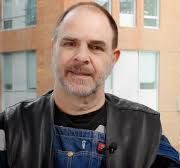
The film features: Denise Leipold, Margaret Marsilla, Victor Nieves, Professor William Peace (RIP), Ales Primc, Alexander Raikin, Jessica Rodgers, Alex Schadenberg, Wesley J Smith, Dr Sarah Smith, Nir Solomon, Dr William Toffler.

Tuesday, February 23, 2021

Stephen Mendelsohn - Testimony opposing Connecticut assisted suicide Bill HB 6425

Testimony in strong opposition to HB 6425 

An Act Concerning Aid in Dying for Terminally Ill Patients February 26, 2021 

Senator Abrams, Representative Steinberg and members of the Public Health Committee:

Stephen Mendelsohn, Second Thoughts
I am an autistic adult and one of the leaders of Second Thoughts Connecticut, a coalition of disabled people opposed to the legalization of assisted suicide. Our group works with national disability rights organizations including Not Dead Yet and the Disability Rights Education and Defense Fund to oppose such legislation. Second Thoughts Connecticut is a member of the Connecticut Suicide Advisory Board. Personally, I serve on the board of directors of Euthanasia Prevention Coalition-USA and previously served on the Connecticut MOLST Task Force. 

HB 6425 would codify lethal and systemic disability discrimination into law. It does so by redefining the suicides of a subset of disabled people as somehow not suicide, but a “medical treatment option,” using the focus-group-tested euphemism “aid in dying.” 

Suicide is defined as the act of taking one’s life intentionally. The person who intentionally ingests a prescribed lethal overdose more closely fits the dictionary definition of suicide than the despondent person who jumps off a bridge. The desire for suicide is a cry for help, even when redefined as a “medical treatment option.”

The Connecticut State Suicide Prevention Plan 2025 posits a clear intersection between assisted suicide and other suicide. Connecticut has the only comprehensive state suicide prevention plan that includes disabled people as a high-risk population. To quote the relevant section (pp. 57-58): 

Discussions about assisted suicide for those with terminal illness intersect in important ways with suicide prevention. The active disability community in Connecticut has been vocal on the need for suicide prevention services for people with disabilities… [William] Peace writes that “Many assume that disability is a fate worse than death. So we admire people with a disability who want to die, and we shake our collective heads in confusion when they want to live.” 

Connecticut’s suicide prevention plan makes a number of important recommendations, including “Do not assume suicide is a ‘rational’ response to disability or chronic illness.” 

By contrast, Oregon’s state suicide prevention plan only deals with youth suicide—not adults of any age, and certainly not disabled people or older people as high-risk groups. A quarter century of legalized assisted suicide in that state has led to a culture where the suicides of old, ill, and disabled people are viewed as mere “acceptable losses” by suicide prevention authorities—who all too often harbor ableist attitudes our state suicide prevention plan rejects. 

In addition to attempting to redefine suicide, proponents of assisted suicide promote other falsehoods. 

Proponents claim assisted suicide is only available to people who will soon die. Yet not only do many people far outlive “terminal” prognoses, including those who have received lethal prescriptions, but many disabled people are perceived as “terminally ill” by medical professionals. Laws allow treatable medical conditions like diabetes to qualify as “terminal diseases,” and HB 6425 is no different, as the definition of “terminal illness” in Section 1 (20) does not say “regardless of treatment options.” Moreover, proponents have long sought to expand suicide assistance to those with non-terminal disabilities

They claim that their legislation is only for people in “deep and dire pain,” yet nothing in HB 6425 requires those seeking lethal overdoses to be in pain. Pain or the fear of it has never been in the top five reasons people give for seeking assisted suicide, according to Oregon’s annual reports. The overwhelming reasons people ask for assisted suicide involve not wanting to live the way disabled people do

Proponents claim that there have been no abuses in states that have legalized assisted suicide, when the Disability Rights Education and Defense Fund has documented a list of abuses and complications, including cases of prolonged and agonizing deaths. Moreover, as the Oregon Department of Health and Human Services stated: “We are not given the resources to investigate [assisted suicide cases] and not only do we not have the resources to do it, but we do not have any legal authority to insert ourselves.” The only reason more abuses have not been documented is that assisted suicide laws are designed to conceal them. 

HB 6425 is actually worse than laws in other states by allowing both of the witnesses to the request for the lethal prescription to be family members, heirs, or employees of the health care facility where the patient resides, who can have a fiduciary interest in the patient’s earlier death. The 2015-2020 Connecticut assisted suicide bills that were rejected all forbade either witness from being in these categories. Along with the lack of any witness at the time of death, this provision is an open invitation to elder abuse. Other ostensible safeguards are overcome by doctor-shopping, which this bill makes easier than previous versions by allowing the attending and consulting physicians to work together in the same office. 

Advocates claim to be about patient choice, yet there have been instances when insurance companies would pay for assisted suicide but not curative care. A state senator who serves on this committee and is a leading assisted suicide proponent authored an op-ed in the Hartford Courant proposing a separate bill that would “require the completion of advanced directives in order to sign up for Medicare, Medicaid or private health insurance.” He spoke of his proposal as a way of getting people to forgo curative care, thereby reducing healthcare costs. 

Proponents like to compare assisted suicide with pet euthanasia, but when we put animals down—most of the time because they are unwanted or have behavior problems—the animals do not get to choose. As the cheapest “treatment,” assisted suicide similarly diminishes choice, and especially so for people of color, disabled people, and others who have been historically marginalized in our health care system. 

Proponents demand legislation that mandates the falsification of death certificates. HB 6425 requires the underlying terminal illness be listed as the cause of death. If Connecticut follows the lead of Oregon and Washington, this will forbid any mention of the lethal overdose. Connecticut’s Division of Criminal Justice has twice submitted testimony in opposition to death certificate falsification, stating: 

Section 9(b) effectively mandates the falsification of death certificates under certain circumstances. It states: “The person signing the qualified patient’s death certificate shall list the underlying terminal illness as the cause of death.” This is simply not the case; the actual cause of death would be the medication taken by or given to the patient… The practical problem for the criminal justice system and the courts will be confronting a potential Murder prosecution where the cause of death is not accurately reported on the death certificate. 

Finally, there is the issue of further expansion. Some proponents may claim they only want a limited bill, but HB 6425 already guts some of the “safeguards” from previous bills. Moreover, we only need to look at what Compassion & Choices and other proponents are saying, and what bills they are pushing in other states. We can all remember when Compassion & Choices’ president emerita Barbara Coombs Lee came to Hartford in October 2014 declaring support for assisted suicide for people with dementia and cognitive disabilities unable to consent; in her words, “It is an issue for another day but is no less compelling.” 

We can also look at current expansion legislation being pushed by Compassion & Choices in other states, particularly those in states that already have legalized assisted suicide, including Oregon (which already has expanded its law), Washington, California, and Hawai‘i, as well as bills in New Mexico. These bills have provisions that would dramatically shorten and/or waive the mandatory waiting period, allow APRNs and PAs to prescribe lethal drugs, waive the requirement for a second doctor to confirm the ostensibly terminal diagnosis, allow almost anyone who does counseling for a fee to qualify in the rare case that the patient is referred for a mental health evaluation, allow mail-order delivery of lethal overdoses, and compel objecting providers to refer patients to other providers who will dispense lethal prescriptions. 

This last provision, which is in California SB 380, is a threat to patient safety, as noted by the example of Jeanette Hall, who sought to die under Oregon’s law but was persuaded by her doctor to accept cancer treatment and is still alive more than 20 years later. Under a “do or refer” regime supported by Compassion & Choices, people like Jeanette Hall would have their lives cut short by years or even decades as ethical doctors will be forbidden to use their professional judgment to encourage their suicide-minded patients to seek lifesaving treatment. 

Moreover, once the concept of certain people having a right to assistance with their suicides to end their suffering is codified into law, there is no limiting principle to prevent it from being extended to other disabled people who also may claim to be suffering. If HB 6425 were enacted, further expansion will move into the hands of judges. While we in the disability-rights community view legalizing assisted suicide as a violation of the Americans with Disabilities Act and the disability equal protection clause (Article XXI, amending Article V) of the Connecticut Constitution—people with certain disabilities are thus denied the benefit of suicide prevention services—judges could easily use both of these provisions to require extending the “benefit” of this “end of life option” to other disabled people. The limitations of “six months,” “terminally ill,” “mentally competent,” and “self-administer” in HB 6425 all discriminate on the basis of disability. Indeed, back in 1999, former Deputy Attorney General of Oregon David Schuman wrote this response to state senator Neil Bryant regarding the issue of self-administration: 

“The Death with Dignity Act does not, on its face and in so many words, discriminate against persons who are unable to self-administer medication. Nonetheless, it would have that effect....It therefore seems logical to conclude that persons who are unable to self-medicate will be denied access to a ‘death with dignity’ in disproportionate numbers. Thus, the Act would be treated by courts as though it explicitly denied the ‘benefit’ of a ‘death with dignity’ to disabled people....” 

Indeed, the Connecticut Supreme Court’s ruling in State v. Santiago, striking down a prospective repeal of the death penalty in favor of full repeal, shows how our courts can expand laws beyond the intent of this legislature using equal protection grounds. The same principle is at work with HB 6425, which gives suicide assistance to some while others get suicide prevention, and the arbitrary difference is what disability they have. 

So what about the person with ALS who has a six month prognosis, but has lost the ability to self-administer? What about the person with Parkinson’s disease, who will have tremors for years before dying? What about people with communication disabilities who may not be able to make the request on their own? What about Grandma with dementia, or the person with a severe psychiatric disability? Once the door to assisted suicide is pried open, Compassion & Choices will seek to open it further through the courts, going from six months terminal to one year, to perhaps five years; from assisted suicide to euthanasia; and from euthanasia for terminal illness, to chronic illness, to mental suffering. This is how we go down the same road as Canada, which is currently debating Bill C-7 to allow euthanasia even for non-physical conditions, and where hospitals routinely deny treatment to disabled people while offering euthanasia instead. For Compassion & Choices, these are merely issues for another day, and for them, no less compelling. 

Legislators and the public should not be fooled by a privileged lobby that seeks to sell suicide as a solution to their own disability-phobia. We should follow the recommendations of the National Council on Disability’s report, “The Danger of Assisted Suicide Laws,” and reject codifying lethal and systemic disability discrimination into law.

Thursday, July 30, 2020

Patients can no longer assume that doctors are committed to protecting life.

Gordon Friesen
By Gordon Friesen.
http://www.euthanasiediscussion.net/


Throughout the long Canadian discussions, court cases, and legislative compromises, which eventually resulted in mandating physician “assisted” death, there has often been a comfortable tendency for people to think that euthanasia is merely another clinical procedure; that its influence could be restricted to certain unusual and well-defined circumstances; that it could be simply added to existing medical practice without changing the care and services which we have come to expect and rely upon; that no change in the relation of confidence between patient and physician would result. Or as some have made the case: that for those not personally requesting euthanasia, there would be no effect whatsoever.

Clearly, however, reason and experience have demonstrated that such is not the case.

Ideas have consequences

The practice of euthanasia is justified by a set of moral principles, medical and social, which are entirely at odds with those from which doctors have traditionally taken their inspiration in providing compassionate personal healthcare. In a medical sense: Philosophy translates to practice. Different philosophy means a different medicine -- and different doctors to provide it. For to be quite clear upon this point: those doctors who are now operating under alternative philosophical assumptions which permit the practice of euthanasia, can not, will not, and do not, provide the same sort of medical care as those, other doctors, who have chosen to continue, faithful, to earlier Hippocratic tradition.

Specifically, patients in this new environment, can no longer assume that doctors are unconditionally committed to protecting life.

The introduction of euthanasia, then, has illuminated a monumental shock of ideological principle within the medical industry. And although the details of that clash may still find many of us lacking in curiosity, or passion, I believe that this situation is about to change, as we become increasingly aware of the real-world consequences. It is not the case, for instance, that the nature of medical practice affects only the “vulnerable” among us. In a hospital bed, everyone is vulnerable. The nature of medical practice, therefore, affects us all.


The iconic case of Bill Peace 

Professor William Peace (center)
Many reading this article will be familiar with the career of William Peace (1961 – 2019), erstwhile executive member of Not Dead Yet, who unfortunately passed away last year, due to the complications of ongoing wound problems. I personally made contact with Bill some years ago, when his Bad Cripple blog first jumped out in my web browser. I now wish I had had more interactions with him. That is always the way of it. Last week, I looked him up for advice on some subject, and sadly, he was gone.

William Peace was a handicapped individual from childhood. In certain places and at certain times, there would have been significant opinion in favor of simply abandoning a child like Bill. But that did not happen. From his auto-biographical passages, we see that his family supported him and they found doctors willing to do whatever could be done, also, encouraging their young patient to persevere through very difficult courses of treatment, with very uncertain prognoses.

As a result of this severe upbringing, in support of his own natural talents, William Peace was able to function at a very high level of social performance, to gain an advanced education and to undertake an influential academic career. However, in 2010, he suffered a serious wound episode, of a sort which has precipitated the deaths of uncounted seated wheelchair users, including among others, Christopher Reeve (1952 – 2004) (more widely known to movie audiences as “Superman” (1978)).

The point of this story, is to highlight the attitude of the doctor who was assigned to the wound case of Bill Peace.


How the attending physician proposed to “treat” Bill Peace
 
 Visiting his patient in the dead of night (according to the author’s own account), this doctor immediately set in on trying to convince Bill that treatment would be useless. Better, he advised, to make him comfortable and “let nature take its course”.

Now there are those who would maintain that this advice reflects best Hippocratic practice (“do no harm”) and also, an admirably modern palliative approach where the terminal patient would be spared useless and invasive treatments. However, I think we can safely consign this episode to another medical strategy entirely, which is to say, “stealth euthanasia”. And the reason I make this charge is that this patient was by no means terminal!

As we know, Bill actually survived another 9 years, touching countless lives through his writing, his presentations, his videos, and his organizational presence in the disabled rights community. There would be, perhaps, a reasonable case for accepting, with regret, the self-motivated decision of some hypothetical individual (in a case similar to Bill’s) to withdraw themselves from active therapy. However, to attempt to persuade (and according to the account given : objectively to bully) a patient in such a case... for THAT behavior, there is no Hippocratic or Palliative rationale. And had the doctor actually succeeded in convincing Bill Peace to withdraw from active treatment, that doctor would effectively have killed the man, as certainly as if he had employed a poison-laden syringe to do so.

Two types of medicine, and two types of doctor

In the life of this one man, then, we see the influence of two VERY different sorts of medical professionals. For on the one hand, are doctors who give their patient the benefit of the doubt; who believe that the patient always deserves “a shot” at survival; and who, even in the grimmest of prognoses, are in no hurry to deliberately pull the plug. These are doctors for whom the question of shortening life never even arises because they are devoted to a medical model which excludes that possibility, and who are therefore free of the disabling doubts that always surround it. On the other, we have doctors who, when the outlook begins to look problematic (and resource intensive), are all for hastening death; not only in deferring to a (perhaps less than convincing) death wish; but in actively debating the patient regarding the value of his or her own clearly affirmed intent to survive.

And again, this was before the time of legal euthanasia as such. Because, as stated, euthanasia is not merely a procedure: it is the embodiment and validation of a pre-existing philosophical principle. However, whereas in the old days it was understood that killing patients was a “bad” thing (simply defined as murder, in fact), legal euthanasia today (that is to say for us in Canada: universally mandated, and institutionally normalized euthanasia), has made killing patients a positive virtue. And whereas the doctor in the Bill Peace case was still limited to surreptitiously attempting “euthanasia by stealth”, today’s professionals stand ready to propose, and to accomplish the act, in a completely open and (officially) ethical manner.


A new urgency for all

Such is the effect, then -- now entirely obvious -- of the general penetration of certain utilitarian ideas in our medical culture. It is true that these ideas were, as we have noticed, already long present among a minority of practitioners. The difference, however, is that with the universal implementation of euthanasia throughout our monopoly healthcare system, these ideas have become objectively dominant in Canada.

There is, therefore, no further excuse (and increasingly less appetite one would also hope), for politely ignoring these facts. We are all patients; and ever more frequently, these are our doctors.

In short, it has become high time for all of us to ask: What are the effects of these medical changes upon ME? And when I or a loved one is (inevitably) taken to hospital: WHICH SORT OF DOCTORS WILL I ENCOUNTER THERE?

Gordon Friesen, is a Euthanasia Prevention Coalition board member and Advisory Assistant Physicians’ Alliance Against Euthanasia Montreal, Quebec,


Post Scriptum : It seems quite extraordinary that William Peace does not have a Wikipedia page (where so many lesser lights are to be found). It would be most appropriate to remedy this situation.

Tuesday, July 2, 2019

Bill Peace: A Professor Who Professed Disability Activism

Published by Not Dead Yet on July 2, 2019

By Diane Coleman

By now, many who read this message will know that Bill Peace died not long after midnight this morning. In the hours since, the outpouring of both grief over our loss and celebration of his life is nothing short of incredible. He has been one of an increasingly rare breed of academics who embrace disability activism. The countless lives he touched – his students, his colleagues, his friends, his family (his personal family and very extended disability family) – are a testament to his amazing ability to communicate and advocate for our fundamental civil rights.

Bill’s Facebook page is full of memories and tributes today, including stories and articles, like this wonderful profile in New Mobility Magazine. Here’s an excerpt concerning his work on bioethics issues:
The Underlying Problem: Devalued Lives 
In 2006, Peace’s career took a sharp turn after he read about the Ashley treatment. The treatment was a series of procedures performed, at the request of her parents, on a Seattle child with developmental disabilities named “Ashley X.” The surgeries were intended to stunt her growth, eliminate menstruation and prevent her from developing large breasts. 
It was a wake up call for Peace. “It wasn’t what they did that was horrible, it was that there was a 38-person bioethics meeting at one of the leading children’s hospitals in the nation, and they gave it the go-ahead,” he says. “They illegally sterilized a profoundly disabled child.” Soon after, he began work in bioethics and disability studies, while becoming a harsh critic of the cure industry. 
Little did Peace know, but his work in bioethics would hit very close to home. In 2010, he was hospitalized with a stage IV pressure sore. After an especially difficult debridement, a hospitalist encouraged him to discontinue the aggressive treatment and pursue end-of-life care. Peace refused the offer but the experience shattered him. “Somebody I had never met determined my life wasn’t worth living,” he says. 
It took almost two years to heal the wound, but Peace vowed to advocate against assisted suicide. The reason for doing so was simple. “People are needlessly dying, and there’s no nuanced view of disability within the medical community,” he says. He joined the board of directors of the advocacy group Not Dead Yet, and since then has become a leading national critic of the practice of assisted suicide.
Bill joined the NDY board in 2013. The year before, NDY reported on his groundbreaking article in a leading bioethics journal about that middle-of-the-night visit from a hospital physician recommending that he consider dying rather than receiving antibiotics for his pressure wound. The journal article is now behind a pay wall, but excerpts remain available in the NDY blogs and Bill told the story in his Bad Cripple Blog.

Bill Peace in the front.
The New Mobility article also included a great example of Bill’s activism following a workshop he did entitled “The Walking Dead and Assisted Suicide”, when he “led a procession of fellow scholars dressed as zombies across the Syracuse University campus.” (Photo by Stephen Sartori.)

Recently, complications developed from new pressure wounds, but the hospital that cared for him in these last several days was described by his family as respectful, showing the utmost kindness and trying very hard to save him from the infection that has taken him from us.

Months ago, if insurance had been willing to cover the type of therapeutic bed he needed to help heal the wounds, he might have made it through. I suspect it would have cost insurance much less than a week in an intensive care unit. Outrageous insurance decisions like this are killing people with disabilities. We lost Carrie Lucas in February this year, and now Bill. We’ll never know how many others, but this can never be acceptable and must stop!

Bill repeatedly challenged society’s “better dead than disabled” message. Stephen Drake, NDY’s research analyst, covered examples like these (note: some of the embedded links may not work anymore):
For more of NDY’s blogs featuring Bill’s work, go here.

And for links to some of Bill’s Bad Cripple Blogs on NDY issues, many are listed on our articles page.

One of our favorite pieces is this great video satire:
YouTube: EZ Breezy Assisted Suicide w/ Bill Peace (and Tipsy Tullivan)
Bill Peace has left all of us a rich legacy spanning decades during this critical time for the disability rights movement. He will be deeply missed, and he won’t be forgotten.

Diane Coleman

Thursday, August 17, 2017

The New York Times and Assisted Suicide

This article was published by William Peace on his Bad Cripple blog on August 16.

Bill Peace pictured with some of his students.
About a week ago the New York Times published an opinion piece I can't get out of my mind. The title was provocative—“Should I help My Patients Die”. Written by Jessica Nutik Zitter, a physician, she discusses end of life issues and specifically the law in California that empowers physicians to end the life of their patients. So called death with dignity laws, have been passed in five states. The New York Times position on assisted suicide is very clear. For years the editorial board has been a staunch advocate of assisted suicide. (Link).

In terms of assisted suicide, there is no pretense of objective journalism at the Times. The New York Times is far from alone because when it comes to end of life issues a major cultural shift has taken place in the last two decades. In the post Jack Kevorkian era, most major newspapers in the United States are in favor of assisted suicide. If polls are any indication, the majority of Americans support assisted suicide legislation. The problem, as I perceive it, is that the discussion of assisted suicide is reliant upon a simplistic notion that one should not die in pain and person should be in control of how they die. This seems reasonable. Proponents of assisted suicide and legislatures rely upon the fact few people discuss end of life with their loved ones and physician in detail. Even fewer people read death with dignity legislation nor consider its larger implications. For well over twenty years those that advocate for assisted suicide or death with dignity as they phrase it are reliant on the implication of the phrase itself. Death with dignity implies that physician assisted suicide is the one and only way to insure a dignified death. This is patently false. The public has been sold a false bill of goods. There is the notion death with dignity legislation is all about pain—no person should die in agonizing pain. If one were faced with an agonizing death a person has the “right” or “control” of when to die. End of life is not this simple. People access assisted suicide because they fear a loss of autonomy and being a burden upon others.

The significant shift as I see it is cultural. There is a notion that people deserve a good death. What a good death is, I have no idea. But this phrase, a good death, is as misleading as death with dignity. A good death is now akin to a designer dress or enviable life style. Planned orchestrated deaths are the rage. What I find remarkable is even those that support assisted suicide legislation are concerned. For instance, Franklin G. Miller, a physician that supports assisted suicide legislation was disturbed by a long New York Times photo essay about a carefully scripted death. In “At His Own Wake, Celebrating Life and the Gift of Death Catherine Porter and photos by Lesley Davis lavish praise upon the end of John Shields life. There is no question the Canadian Shields led an interesting life. But that is not the point. The piece reads like a New York Times style section essay about a celebrity wedding. Like Miller, I found this essay deeply disturbing. In the Hastings Center Bioethics Forum he wrote:

Presented to the readers, in lavish detail, as the “Gift of Death,” with a very appealing protagonist, this article romanticizes the death of John Shields. More importantly, I see it as describing, and prescribing, a model for the good death in North America today. The article prominently features various quotes from Shields: “I think this is a mark of our humanity,” “What could be more meaningful than planning for the end of your life?” These are Shields’s own legitimate opinions, but I read them as being given a prescriptive force. 
Physician-assisted death remains ethically controversial. The end of life is an arena for diverging values. Commitment to pluralism means recognizing a variety of good or legitimate ways to face death and dying. Presenting the planned death of John Shields as a model for dying in our era uncritically places a premium on the choice and control of the sovereign individual. Letting death happen, with the aid of palliative care, is no less good than making it happen. We should beware of prescribing a particular form of “death with dignity” as a model for the end of life and not acknowledging other perspectives (Link). 
I understand talking about death is hard. Believe me I get it—in recent years I have had to deal with the death of a parent, siblings, and a beloved pet. I have also had to face my own mortality when I had a heart attack in June. We do not need assisted suicide legislation. What we need is a nuanced discussion of end of life issues and options. Here Miller and I are in agreement despite the fact we are on opposite sides of the debate about assisted suicide. Death with dignity need not involve assisted suicide yet that is exactly what one is led to believe if reliant on mainstream news outlets such as the New York Times.

Here I return to the New York Times opinion that I cannot get out of my mind. At first glance “Should I let My Patients Die” appears to be a nuanced view by a physician that has struggled with the new death with dignity law in California. Jessica Nutik Zitter, author of Extreme Measures: Finding a Better Path to End of Life is a critical care and palliative medicine doctor. In her opinion Americans die badly and many people needlessly suffer at the end of life in intensive care units. This is not new ground. What makes her opinion different is how she hooks the reader in the first paragraph of her essay: she tells a story about a colleague who tapped her on the shoulder and said, “I have a patient who is asking about the End of Life Option Act”…”Can we even do that here”. For half the essay Zitter plays the part of objective commentator and insider. It is not until she wrote about her own family, specifically her mother, that her real feelings become evident, as does her ableist bigotry. After discussing the first patient who asked her about assisted suicide she admitted she wanted this option for her family. She wrote:

I have seen much suffering around death. In my experience, most of the pain can be managed by expert care teams focusing on symptom management and family support. But not all. My mother is profoundly claustrophobic. I can imagine her terror if she were to develop Lou Gehrig’ disease, which progressively immobilizes patients while their cognitive faculties remain largely intact. For my mother, this would be a fate worse than death.

Replace the condition ALS with any other neurological calamity as a means of justifying death with dignity. This indicates just how deeply ableism is entrenched into the fabric of society. Alzheimer’s is a fate worse than death. Quadriplegia is a fate worse than death. Multiple Sclerosis is a fate worse than death. Muscular Dystrophy is a fate worse than death. Parkinson’s disease is a fate worse than death. Yes, the medical model of disability is quite clear—many conditions people live with for decades if not their entire life is a fate worse than death. I know this from personal experience; some think my existence is indeed a fate worse then death for strangers and more than one physician have expressed this to me directly.

Zitter goes on to state she does not feel comfortable shortening the life of any patient and wonders if this makes her a hypocrite. In search of an answer she turned to the “defacto specialist in our area on this issue for counsel. Dr. Lonny Shavelson, an emergency medicine and primary care physician in Northern California, who has been grappling with the subject for many years.” I find this is a remarkably unusual choice. Shavelson operates an unorthodox medical practice, Bay Area End of Life Options, that has gotten quite a bit of attention in the last year. Shavelson specializes in consulting with patients and physicians who are deemed terminally ill and are interested in or have requested assisted suicide in the state of California. This sort of practice is well out of the norm even in states where assisted suicide is legal. To be clear: in California it is legal to request assisted suicide if one is diagnosed as terminally ill, is able to self administer a lethal prescription, and retain the mental capacity to make such a decision. For more on the law here is a link:

Shavelson is not your average physician. He is coauthor of “Physician-Hastened Death” guidelines published in the Western Journal of Medicine and has written amicus briefs for the Supreme Court (1996 Quill vs. Vacco case). Shavelson, like many, believes in the idea of a “good death” and is a staunch advocate of assisted suicide legislation. In A Chosen Death: The Dying Confront Assisted Suicide Shavelson wrote about “death anarchy” and came to believe assisted suicide had to be legalized and regulated. In Forbes he stated: 
what I found during the 1990s was a horror show--people hoarding medicine, afraid of how they were going to die; doctors secretly assisting people in dying; family members tortured by the memory of helping someone in their family die. It was the equivalent of back alley abortions. I was calling it dark bedroom suicide. Link:
For Shavelson, assisted suicide “is not about being a death doctor. This is about being a good death doctor”. This sort of double speak reminds me of Jack Kevorkian. Dr. Death as he was called is largely forgotten (college students do not even know who Kevorkian was). In his place, physicians across the nation are calling for or establishing protocols, procedures and outcome measurements in states that have passed assisted suicide legislation. Thus Zitter argues that medical procedures all require training and thinks the process of dying is no different. Zitter wants physicians specifically trained to end the lives of patients. 

I shake my head in wonder. All week I have come back to the flip answer to the question “Should I Help My Patients Die”. The answer is an obvious no. Hastening the death of others is ethically objectionable. How we mange end of life, that is the process of death, speaks volumes about who we are as human beings. I am worried about the future of humanity for I believe life is precious.

Thursday, September 8, 2016

Jerika Bolen: Hard Questions Being Asked

This article was written by William Peace and published on his blog on Sept 7, 2016.

William Peace is a Syracuse University Professor and disability rights leader.

William Peace with students
Jerika Bolen is a 14 year old with SMA type two. She has explicitly stated she wants to die. Last month she had her "last dance" which received a great deal of press. Since her last dance, she has been completely out of the news. No follow up stories have been published in mainstream media outlets. I assume the mainstream press is waiting for Ms. Bolen to die. Her death has been scripted. This makes me shudder. The mainstream press loves this story. Plucky terminally ill child states she has had enough. She is in pain all the time. Her quality of life is unacceptable. She does not want machines to breathe for her. Oh the heart break. This rhetoric sells newspapers, generates high television ratings, and is the wildly effective click bait (paging the mighty.com).

Jerika Bolen
The problem with the above story is that it makes no sense. Many people with the exact same condition as Ms. Bolen lead rich and full lives. Most live well past their teens and many live into middle age. Most do not experience the type of pain Ms. Bolen describes nor do they have over 35 surgeries as has been reported by various news outlets. SMA type two is not necessarily a fatal or terminal condition. Could Ms. Bolen truly be terminal will? Yes, this is a possibility. It is also equally likely she could live many more years if not more decades. The only person that can answer these questions are her physicians and mother. They are not speaking to the press. In this void, some people are asking the hard questions the mainstream press has not thought of much less asked. Carrie Ann Lucas, executive director of Colorado based Disabled Parents Rights, is asking child protection services to investigate. Lucas is not alone. Other organizations have asked the same question: Not Dead Yet (I am on the board of directors), NMD United, and ASAN, Autistic Self Advocacy Network. Many people with SMA type two have discretely and privately sought to contact Ms. Bolen and her family. No wants to intervene in the case as one news outlet maintained. People such as Lucas and many others with a disability are asking a basic question: why has Ms. Bolen been lauded as brave and heroic? Why did 1,000 people from all over the nation show up at the "last dance"? Why do people with a disability that express a desire to die receive overwhelming support? Why do snuff films like Me Before You reinforce the notion that death is preferable to life with a disability?

As I see it, this was a misleading story from start to finish. No human dies in social isolation. Life and the manner in which we die has meaning. For decades, people with a disability that boldly and proudly proclaim a desire to die are lauded. The tracks to death are greased with over flowing support. At no point have I read a mainstream news article that addresses whether a 14 year old has the capacity to make life and death decisions. I have not read any story that asks why child protective services has not investigated the Bolen case. I have not read whether Ms. Bolen has received appropriate psychiatric care or even a psychiatric consultation. I have not read any story that discusses whether a minor has the legal right to die. What I do know is that if a morbidly sick non disabled child expressed a desire to die and had parental support an investigation would be launched instantly. Instead, we have a child with a disability that has expressed a desire to die and has received nothing but support from family, physicians, and the public. This troika of support might be lethal.

Carrie Ann Lucas wrote:
This non-terminally ill child is reportedly going to be placed into hospice sometime in August. While Ms. Bolen maintains optimal respiratory health using a bipap machine with a mask to assist breathing at night, she is able to breathe to sustain life without that device for a very long period of time daily. The only way her breathing will stop is to discontinue any form of breathing support, including her bipap, while administering a sufficient dose of morphine to suppress her breathing – in short euthanasia. If this plan goes forward, it goes beyond the allowed “double effect” of making a hospice patient comfortable even if it may also shorten life. Ms. Bolen is not terminal and being comforted through the dying process, but rather her death could only be induced with medication.
There is so much we do not know about Bolen. In the stampede of support to end Bolen's life all nuance has been lost. She is terminally ill. She is in pain. She wants to die. Life is never that simple. Death is not that simple. Diane Coleman wrote:
as of today, we don’t know whether Jerika and her mother decided to continue with the plan to enter hospice, we don’t know whether the Wisconsin Department of Children and Families decided to intervene and secure better health care for Jerika, and we don’t know whether the hospice provider is willing to deliver enough medication over a sufficient period of time to produce total respiratory failure in a 14-year-old disabled girl who only uses non-invasive breathing support 12 hours a night and is not really terminally ill.
I think it behooves all of us to ask these questions. I think it is the obligation of those directly involved in Bolen's care to answer the very basic questions multiple disability rights organizations are asking. Bolen and her mother chose to make the case very public. They requested financial support and a great deal of money was donated to their "cause". With this publicity comes responsibility. The stakes in this case could not be any higher. We are discussing the life of a minor. Minors have rights and deserve protection. Those protections extend to minors with disabilities like Ms. Bolen.

Friday, August 26, 2016

Soylent Green and Assisted Suicide as A "Life Style"

This article was written by William Peace and published on his blog on August 25, 2016.

William Peace is a Syracuse University Professor and disability rights leader. 

William Peace.
About ten days ago I wrote about Betsy Davis who ended her life and in so doing created an elaborate "Rebirth Ceremony". Davis was among the first people to use California'a euphemistically titled End of Life Option Act. Let's drop the pretense and describe the law as is: assisted suicide legislation. A few days ago an online magazine I read, Vox, published a "Rebirth Ceremony" party goers personal account of the party. As you would expect, I was appalled and taken aback that Vox published the story. 

The long essay gushes over how sad and wonderful the ceremony was and is replete with a description of a fashion show in which party goers try on Betsey's clothes. Yes, the author apparently fell in love with a vibrant red Donna Karen wrap dress that was difficult to figure out how to wear. Here is the dress in question gayly worn by the author.

Betsy you see has ALS and is terminally ill. Clearly, she could never enjoy wearing such a "frock". I breathlessly read that "Betsy groans in frustration. She's unable to talk because she is in the final stages of ALS, a neurodegenerative disease that is slowly depriving her of the power to move, speak, eat and breathe. Like many of the 30 party goers who flew in for the "Rebirth Ceremony" I am supposed to be impressed with the shindig. Many details are included. A random sampling:

It hadn't occurred to me that assisted suicide couldn't be wrong, because it was clearly what Betsy wanted. 
My friends and I rented a house in Ojai, close to Betsy's, for the weekend. We understood our job was to have as much fun as possible. 
From 5 to 7pm we would drink cocktails while picking out Betsy souvineers from her remaining belongings--everything must go. 
One friend brought balloons altered to read "Happy Re-Birthday". Betsy's photographer friend documented everything like a wedding.

A Tesla Model X with Falcon wing doors was at the ready to transport her to the ceremony site.
We were instructed to walk up a hill to a vista where white shade tents, a massage table, and an alter stood before white folding chairs--once again like a wedding. She was lifted into the Tesla X, laughing with joy as the Falcon doors closed, radiant in her blue and white robe. Despite our collective concern, we cheered her on as she was wheeled into the ceremony site. Lots of hooting and hollering, as if she'd just kissed the bride.

The above reads like something on page 6 of the New York Post tabloid wedding section in which two movie stars get married. This is not a spoof. This is very real. All week I have been thinking this is akin to a science fiction novel. Surely a person with wealth and power and the ability to have 30 people fly from across the nation might have put some energy into a little thing called life. Perhaps she did. I have no idea. A few things are a given in this story. ALS is certainly a fatal condition. Those who are terminally ill will die for certain. They will acquire an unwanted and horrific disability. Living connected to machines is a fate worse than death. Those unidentified machines are most likely a feeding tube and ventilator often referred to as life support. The focus here is on the drama of death. As I wrote ten days ago assisted suicide has become a life style.

I have thought long and hard about the classic 1973 science fiction movie Soylent Green. It starred young and old actors alike--Edward G. Robinson, Chuck Conners, Charlston Heston and others. The film was set in 2022 New York City. The population of earth experienced run away growth and New York City had 40 million residents. The city was encased in yellow haze of pollution. The worlds natural resources were depleted and people lived in filth. Heat waves were rampant and tormented the population. Poverty was wide spread world wide. Corporations replaced ineffective governments and corporations ran all social services. The Soylent Corporation provided meager amounts of food in the form of wafers of "Soylent Yellow" and "Soylent Red". In 2022 a new product is released--"Soylent Green". It was made from ocean plankton. Real food had long since been forgotten. Only the fabulously wealthy ate precious commodities like vegetables and meat. Water too was in short supply. Riots took place frequently. For those that remember the film, this dystopic setting was perfectly imagined. Spoiler alert for those that do not recall the film. The most famous scene in the film is Charleston Heston yelling in agony that "Soylent Green is made of people" as he is carried away. I recall a different scene. I remember Edward G. Robinson known as Sol or "Book". For Soylent Green is made of people--people who seek out assisted suicide. It is a culture of death not life. And please do not misinterpret those words. They are rational and devoid of any religious connotations.

I cannot fathom how we as a society ignore rampant ableism and embrace death as a life style choice. This is not science fiction but reality. I know when I enter my class, Bioethics and Disability, next week every student will be in favor of assisted suicide. That is the norm these days. Assisted suicide has become a given. I suppose assisted suicide reflects the American penchant for valuing independence and control. Both are defined in the narrowest sense of the term. If you can't get out of bed independently, dress yourself, and perform the usual activities of daily living your life is inherently inferior if not worthless. This cursory line of reasoning falls flat for me. In reality ableism knows know bounds. It is a lethal ism. Lives are at stake and that includes mine and millions of others. This reality keeps me up and I am reminded of the bellow scene in Soylent Green.


Wednesday, August 24, 2016

Assisted Suicide - A lifestyle choice?

Alex Schadenberg
Executive Director - Euthanasia Prevention Coalition

Bill Peace PhD teaches at Syracuse University.
Disability rights leader and academic, Bill Peace, recently wrote an article concerning the assisted suicide death party by Betsy Davis. Davis. It is culturally significant that some media outlets turned her death party into celebration turning assisted suicide into a culturally "cool" act.

Peace states in his article:

No physician could force a patient to accept a feeding tube. No physician could force a patient to use a ventilator. These are choices Davis chose to make. At any point after she was diagnosed with ALS she had the choice to refuse treatment. Physicians could be opposed to Davis refusal to utilize life extending care but that would be her choice. The operative word here is choice. Davis made many choices post ALS diagnosis. In June of this year Davis made the choice to live long long enough to end her life via assisted suicide. She made these choices and many more. But there is a difference between making these choices and her human rights. Choice are not the equivalent to rights. Given the severity of ALS any one of a number of choices Davis made could have led to her death. Instead, she made a choice to die a very public and misleading death. In her effort to advocate for assisted suicide legislation she has had predecessors who also had public deaths on behalf of Compassion and Choices. The emotional rhetoric found in tabloids such as People sells. Sympathetic television news segments generate ratings. Again, this misleading emotional made for mass media consumption works. The fact it is wrong is lost in the flow of tears. I too cry but not for Davis but for all those whose lives are at risk. 
Having been through the medical mill as a morbidly sick child and narrowly escaping death from a severe wound that took over a year to heal, I will readily admit I have suffered. That suffering has taken the form of gut wrenching pain and serious debilitating depression. Suffering is decidedly unpleasant but to expect to avoid suffering throughout one's life is not realistic. I do my best to avoid suffering but I can freely states I have suffered far more the average human being. Not to revert to my Catholic upbringing but I can state with certainty that suffering has made me a stronger human being. In an effort to eliminate suffering we are being foolish. I don't want others to suffer but like it or not all humans will suffer. Suffering is part of the human condition. The effort to avoid suffering is understandable but unrealistic and there is more than a bit of narcissism involved. Hence the death selfie. 
I am sure my words will be met with disgust by those who support assisted suicide legislation. How dare I criticize a person's "right to die". How dare I impose my beliefs on others. Some will proclaim I am an opponent of individual freedom. Others will proclaim I want to undermine autonomy. This makes good fodder for debate. Typical others thoroughly enjoy such a debate. A perfect example of such a "good natured debate" can be found the edited volume Cognitive Disability and its Challenge to Moral Philosophy. Read Chapter 22 and the exchange between Eva Kittay, Jeff McMahon, and Peter Singer that illustrates we are talking about a two tiered morality in which some lives have more value than others. I know this two tiered system all too well. Most of my life typical others have made it abundantly clear my life is inherently less. Paralysis is a fate worse than death. My body in Davis estimation has been entombed. This viewpoint is wildly wrong. I know this. Liz Carr knows this. My paralyzed peers know this. My blind and deaf friends know this. Our ability to thrive in the face of a myriad of bodily deficits should be celebrated as human adaptation at its finest. Instead, we get the message loud and clear. We are inherently less human. We are a burden. We are a drain on limited health care resources. All things considered, it would be in the best interest of society if we did live. This is couched in polite language of course. Everyone is kind to the handicapped. We cripples are special. We have your best interests in mind I am told. When I hear these words, "we have your best interests in mind", I am certain of one thing: I shudder in fear and get as far away as humanly possible from the person that uttered those dangerous words. Believe me, I can take care of myself. I have thrived in a hostile world for over 35 years. Don't be fooled by emotional rhetoric surrounding the right to die. See it for what it is. Needlessly premature death to lives worth living.
Peace recognizes that legalizing and now promoting assisted suicide will effect the attitudes towards people with disabilities. The Betsy Davis campaign is part of a plan to turn assisted suicide from a criminal act of medical killing to a cultural "avant garde" act.