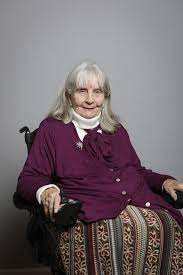
Showing posts with label Jane Campbell. Show all posts

Thursday, April 30, 2026

Defeat of ‘dangerous’ UK assisted suicide bill is just a pause in our fight, say disabled opponents

This article was published by Disability News Service on April 30, 2026.

By John Pring

Disabled campaigners have warned that pressure to push through legislation to allow assisted suicide is sure to continue, even though the “dangerous” and deeply-flawed terminally ill adults (end of life) bill has run out of parliamentary time.

Those supporting the bill in the House of Lords repeatedly lashed out at disabled campaigners and allies who they blamed for blocking the bill, when it was debated for the final time in the House of Lords on Friday.

Because the current parliamentary session ended yesterday (Wednesday), the bill can now not become law, although it is highly likely to be brought back before parliament in the next session, which begins next month.

Disabled peers and others who suggested multiple amendments aimed at fixing the legislation’s many flaws have faced months of attacks in the Lords and the media accusing them of trying to block the legislation by “filibustering”.

Those attacks continued in a bad-tempered final debate on Friday, with the bill’s sponsor in the Lords, Labour’s Lord Falconer, and pro-legalisation colleagues, repeatedly attacking a “small minority” of peers who they accused of blocking the bill.

Lord Falconer said he was “despondent” that the bill had failed due to “procedural wrangling”, and said the Lords had “let down” terminally-ill people, while he later described the day’s debate as “horrible” and suggested opponents were responsible for that.

The disabled crossbench peer Baroness [Tanni] Grey-Thompson, one of the peers who has been targeted by Lord Falconer for her attempts to address flaws in the bill, told fellow peers that many of the amendments she had put forward had been suggested by disability organisations, including disabled people’s organisations, and “disabled individuals who are very worried about the reality of the bill”.

She said: “This bill has failed because there are too many gaps in it.”

And she said the fact that Lord Falconer had himself tabled 76 amendments “shows that there is not the confidence that this bill is safe”.

She said: “We have heard much debate today about the damage to [the House of Lords], but I have had thousands of emails to thank us for what we are doing here to unpack the danger that is in the bill.

“I am very clear on my role. It has not been pleasant to sit here and be targeted by so many people who say that we are doing a bad job, but our job is to protect everyone in British society, and this bill does not do that.”

Baroness [Jane] Campbell, another disabled crossbench peer who has been accused of blocking the legislation, said the number of peers who had taken part in debates on the bill “reflects deep and genuine concerns shared by NHS doctors, human rights bodies and disability organisations about the risks this legislation may pose to the most vulnerable”.

She said: “I have long supported autonomy for disabled people, but autonomy without protection is not freedom – it is risk.

“When the outcome is irreversible, that risk must be treated with the utmost seriousness.”

She said that organisations with concerns about the bill’s safety included the Royal College of Psychiatrists, the Royal College of General Practitioners, the Equality and Human Rights Commission, disability organisations, and the human rights organisation Liberty.

Baroness Campbell added: “Disabled people who have contacted me are very clear: this bill frightens them, and they want me to explain to your lordships why it is dangerous for them.

“They fear unequal access to care shaping their choices, subtle coercion that cannot be easily detected, error in prognosis, persistent assumptions about the value of their lives and a system already under strain being asked to deliver decisions of the utmost gravity.”

And she said it was clear that more work was needed before the bill could be considered safe.

She said: “If the bill is to proceed, it must clearly demonstrate that it can protect those in highly vulnerable situations while respecting the wishes of those it is intended to serve.

“At present, it does not meet that test.”

Not Dead Yet UK, the campaigning organisation that fights attempts to legalise assisted suicide, and which was founded by Baroness Campbell, welcomed the “pause” in the continuing push for legalisation, but warned that the bill would return to parliament.

Phil Friend, convenor of Not Dead Yet UK, said he and fellow campaigners were grateful to the peers who had scrutinised the bill so thoroughly and “found some very serious problems”.

He said: “Many of them were publicly labelled as enemies of democracy – denounced in rallies, criticised in open letters, their constitutional role dismissed as deliberate obstruction.

“Baroness Jane Campbell, Baroness Tanni Grey-Thompson, Baroness Ilora Finlay and others did their jobs.

“They took disabled people’s concerns seriously. They deserve our thanks, not our condemnation.

“And we, as disabled people, find it abhorrent that individuals were personally attacked simply for listening to us.”

Friend said the pressure to change the law “will not stop”.

He said: “We knew this was always going to be a long campaign. That hasn’t changed.

“We go into the next battle with stronger networks, a developing strategy, and a growing community of disabled people and allies who understand what is at stake.”

Picture: Members of NDY UK and parliamentary allies in March last year, including Baroness Grey-Thompson (front row, second from right)

Saturday, March 19, 2022

Disabled members of the House of Lords speak out against assisted suicide amendment.

Alex Schadenberg
Executive Director, Euthanasia Prevention Coalition

UK House of Lords rejects push to legalize assisted suicide (Link)

On March 16, the House of Lords (UK) rejected an amendment to the Health and Care Bill – which would have obliged the UK Government to bring forward an assisted suicide bill within 12 months – by 179 votes to 145. During that debate, members of the House of Lords with disabilities carried the debate.

Baroness Campbell
As reported by John Spring for the Disability News Service, Baroness Jane Campbell spoke against the amendment:
Baroness Campbell, who made a rare appearance in person in the Lords to speak against the amendment, following months of contributing virtually as she shielded from the pandemic, told fellow peers that opening the door to legalisation “would be a monumental change in the criminal law with potentially lethal consequences”.
using the health and care bill to “force the government’s hand” was “a blatant manipulation of the parliamentary process” and set “a dangerous precedent and should be resisted”.
Baroness Grey-Thompson
Spring reported the comments by Baroness Tanni Grey-Thompson who said
hundreds of people – from both sides of the argument – had written to her about the amendment, which would – if passed – “fundamentally change the political and societal landscape for disabled people”.

“If people have not read it, they should look at the article by… Lord Shinkwin this weekend about how disabled people are encouraged to think that they would be better off dead than live with an impairment.

“Even in this chamber, we hear about things such as incapacity and incontinence and all the things that people fear.

“I push back on that, and I push back on the view that public opinion is overwhelmingly in support of this.”
Baroness Masham
Spring then reported the comments by Baroness Masham who said
many disabled and older people were frightened by the prospect of legalised assisted suicide.

“Many vulnerable people feel that, if the assisted dying law is changed, they could be pressured into assisted dying because they feel that they are a nuisance and because they need looking after.

“Whatever… Lord Forsyth says, this bill should be about care, not killing. There should be compassion and palliative care for all those people who need it.”
Lord Shinkwin
Spring finally reported the comments by Lord Shinkwin told fellow peers:
“If this amendment were passed tonight, I firmly believe that in years to come, we would look back and say that today – 16 March 2022 – was a pivotal moment.”

He described how he had been rushed to hospital seven weeks ago for an urgent blood transfusion, and had experienced “unbelievable pain”, helplessness and an “acute sense of vulnerability”.

“If the amendment were passed, would I have felt any safer? Would I have felt any less vulnerable as I lay in agony only seven weeks ago?

“The answer is unquestionably no.

“In the culture to which this amendment would inexorably give rise, with its nuanced assumption that my impaired quality of life somehow made my life less worth living, would I still be here? I do not know.”
Spring also reported that Baroness Brinton spoke in favour of the assisted suicide amendment.

Not Dead Yet UK and their allies have built a fairly cohesive group within the House of Commons and the House of Lords in the UK. I congratulate their actions and their willingness to make sure that their position is heard.

Friday, October 22, 2021

Large number of Peers speak in opposition to UK assisted suicide bill

Date: Friday 22nd October 2021

Release time: Immediate

Very large number of Peers speak in opposition to Lords assisted suicide bill

In line with convention, the Assisted Dying Bill had its Second Reading in the House of Lords today after over 7 hours and speeches from over 60 Peers opposing the Bill. It is the normal custom for Bills to move to Committee Stage without a division at this stage. It by no means implies the support of the House of Lords.

Given the Bill does not have Government support, it is very unlikely to be given the time in Parliament to be debated in the House of Commons and have any chance of becoming law.

The very large number of Peers who spoke against the Bill signifies that assisted suicide and euthanasia are strongly opposed by a large proportion of the House. The content and the quality of their speeches also demonstrated beyond any doubt that this Bill is unsafe and should not pass into law.

It is clear that many within Parliament robustly oppose this Bill.

Baroness Finlay
Baroness Finlay of Llandaff, officer of the All Party Parliamentary Group for Dying Well and a Professor of Palliative Medicine, said:

“Peers have today demonstrated a powerful opposition to this bill. Many vulnerable people are unaware of the dangers in going down this road, as this bill has hidden dangers, unsafe qualifying criteria, and potentially opens the door to even wider legislation.

“Instead, the focus should be on pressing the Government to do more to ensure good palliative and end-of-life care for everyone, everywhere in this country.”
Baroness Campbell
Baroness Campbell of Surbiton, Founder of Not Dead Yet UK and long-term campaigner on disability equality and human rights, said:
“Passing this law would be a dark day in our nation’s history. It would run counter to our duty to protect those in the most vulnerable situations, and would exacerbate their fears, through insidious pressure, of being regarded as an expendable burden. As has happened elsewhere, the Bill would doubtless be extended.

“No major disability rights group in the UK supports legalising assisted suicide. What they support is immediate and sustained improvement in their care. Now is not the time to abandon them to the desperate temptation of an assisted suicide under the guise of compassion.”
Baroness Grey-Thompson
Baroness Grey-Thompson DBE, Crossbench Life Peer and one of Britain’s greatest Paralympic athletes, said:
“The legal, medical and social implications of the Bill for disabled people are enormous. They need to know that doctors are obliged to do all they can to help everyone to live a good life. The current law keeps unconscious discrimination and social bias towards disabled people in check.”
For additional quotes and interviews, please contact Simon Caldwell on 07730 526847;

Or Alistair Thompson from Care Not Killing on 07970 162225;

Or Ben Furner from Not Dead Yet on 07946 355795.

ENDS

Notes to Editors The All Party Parliamentary Group for Dying Well promotes access to excellent care at end of life and stands against the legalisation of doctor assisted suicide in the UK. For more information visit https://www.dyingwell.co.uk/about/

Friday, July 16, 2021

Disability advocates say Assisted Dying Bill poses significant dangers for disabled people

Press release from the APPG for Dying Well - July 16, 2021

Disability advocates say Meacher’s Bill poses significant dangers for disabled people - Founder of Not Dead Yet UK, Baroness Jane Campbell

Founder of Not Dead Yet UK, Baroness Jane Campbell of Surbiton, leads an organisation of disabled people and individuals with progressive and terminal medical conditions campaigning against a change in the law on assisted suicide. Speaking to the All-Party Parliamentary Group for Dying Well, Baroness Campbell argued that in countries where assisted suicide has been legalised, disabled individuals who are identified as potential beneficiaries of an assisted death do not receive the equal right to live with dignity and respect. A change in the law, she said, is “far too dangerous” without greater state investment in support for disabled individuals “not only to live or survive, but to thrive”.

Baroness Jane Campbell
Baroness Campbell continued, “We respect, and we understand so well from our own experience, why some individual disabled and terminally ill people want the right for someone to assist them to end their life. But, contrary to popular belief, this is not the general view held by the majority of people with lived experience of progressive medical conditions. They tell me, until such time that disabled and terminally ill people have enough support to thrive with dignity in society, we cannot contemplate a bill that has the opposite effect.”

During the online meeting chaired by Danny Kruger MP and Baroness Campbell, three presenters, all of whom are disabled, questioned whether the proposed assisted dying legislation stands up to public safety standards.

Dr. Miro Griffiths, a Research Fellow at the University of Leeds, discussed the legalisation of assisted suicide in light of the social injustice and marginalisation experienced by disabled people, which has been exacerbated by the Covid-19 pandemic. He stated, “My argument is that it is not a safe time to be introducing this bill because of the historical legacy of injustice experienced by disabled people, but also because currently we are going through a pandemic which has exacerbated the marginalisation experienced by disabled people.”

Dr. Peter Scott Morgan, a leading robotics and AI scientist living with late-stage ALS, showcased his avatar which has given him back his ability to speak and express himself. As someone with severe Motor Neuron Disease who was given less than six months to live nearly four years ago, he invited the APPG to question “the apparently self-evident truth that, with an untreatable condition such as late stage Motor Neuron Disease (MND), with someone diagnosed as being within six months of death, there is no reasonable expectation that the patient can not only survive, but thrive, for many years with an increasing quality of life.”

Dr Scott Morgan stated his opposition against the legalisation of assisted dying, referring to “uncertainty between being terminal and simply being disabled, and danger that some with extreme disability may unnecessarily kill themselves in anticipation of what they incorrectly believe will inevitably happen”.

Chair of the Research Institute for Disabled Consumers, Philip Friend, raised further concerns that the Meacher Bill contains inadequate safeguards, opening the door to significant dangers for disabled people. Addressing parliamentarians, he urged, “it is our concern that you should not focus on personal choice or personal morality, but focus on public safety. This has to be the primary consideration in all letters, all legislation. What we want you to do is to help disabled people to thrive, not to die.”

ENDS

Notes to Editors

The APPG for Dying Well has the support of more than 70 MPs and Peers including: the former Conservative Party leader Sir Iain Duncan Smith MP; disability rights campaigners Baroness Campbell; Baroness Tanni Grey-Thompson; and Lord Alton; former Labour Minister Stephen Timms MP; former Leader of the Liberal Democrats Tim Farron MP; former BMA president Baroness Hollins and more than 60 other cross-party parliamentarians.

For media inquiries, please contact:

Alistair Thompson Alistair@teambritanniapr.com

Sunday, May 30, 2021

The Government should be helping people to live – not die through assisted suicide

This OP-Ed was published by the UK Telegraph news on May 26, 2021 and republished by Not Dead Yet.

Baroness Jane Campbell

Today a Bill to legalise assisted suicide is being presented in Parliament. Such a change has been considered many times in the past but has always been rejected for the same reasons. Despite what the propaganda says, the majority of people it is intended to help didn’t ask for it and don’t want it. In fact we are fearful of any change in the law that would weaken the protection we rely upon now.

Those seeking to change the law say it is intended to alleviate “intolerable suffering” only for those with a terminal illness and less than six months to live. Whether or not a person meets these criteria will be determined by two independent doctors and a High Court Judge. In effect, they will be required to endorse the suicidal person’s view that they would be better off dead and the state should assist in that objective.

At present, the law treats all suicidal persons equally. We try to deter them from carrying out their wishes. We protect them from themselves by giving support. It is a very necessary protection and must not be withdrawn from those of us who are ill or disabled, especially at our lowest points, when we might question the point of going on, particularly if those around us believe we would be better off dead.

In every jurisdiction where a form of assisted suicide has been legalised, the numbers dying in this way increase over time. It is logical that it should. Why deny someone their wish when safeguards are open to interpretation, or criteria have been changed?

The government should be helping people to live – not to die through assisted suicide.

The best way to help the terminally ill is to better invest in palliative care and find a solution to the social care crisis. Once assisted suicide is law, society has endorsed it as an option, equal to that of life. Those who had never considered it will be told that it is an option. Their families, friends, health and social care professions will all know it as an option too. It is hard enough already for those of us with terminal illnesses and disabilities to get the support services we need to live active independent lives. For essential support to become merely the alternative option to assisted suicide terrifies us. That is why no organisation of terminally ill or disabled people has sought a change in the law. Why do others think they know what’s best for us?

Whilst many reasons are given, they boil down to a fear of illness and disability and the changes to independence that may bring: loss of mobility, loss of income, loss of respect, neglect and, potentially, abuse. Fear of relying on others and of being a burden. It tells us a lot about how society views terminally ill and disabled people.

Of course, the vast majority of us don’t see ourselves in that way. We don’t want the special treatment of an assisted suicide. We want basic human rights to live with dignity and respect so we can enjoy life. With the right support, most of us are pretty good at it.

Covid-19 has been described as “this generation’s polio”. Its effects have been felt by everyone and, for many, it has had life-changing consequences. According to the latest figures, disabled people make up 59% of all COVID-19 related deaths. In meeting this challenge the country has come together in universal praise of those working on the NHS* and social care front lines. The desire for them to receive the funding and resources needed to expand and improve services has been overwhelming.

Legalising assisted suicide, especially now, should not be part of the solution. We need help to live – not to die. That means investment in palliative care, solutions to the social care crisis and continued financial support for our world-class NHS.

Last time the House of Commons considered legalising assisted suicide (in 2015), it was rejected by a majority of 212, affirmation that terminally ill and disabled people are entitled to equal protection under the law. What has changed in the last six years to require the issue to be debated again? Certainly not the views of palliative care doctors or geriatricians, who remain firmly opposed to a change in the law.

Have the lives of terminally ill and disabled people improved to the extent that they are now regarded as equal members of society? Clearly not, because why otherwise would supporters of today’s bill seek to limit its effect to only us?

*National Health Service

Monday, April 20, 2020

Eugenics Must Not Be Allowed To Sneak In With Coronavirus

Alex Schadenberg
Executive Director, Euthanasia Prevention Coalition

Dr Gordon MacDonald
Dr Gordon MacDonald, who is the CEO of the Care Not Killing Alliance in the UK has written an insightful article that was published in the Huffington Post on April 19, 2020.

MacDonald writes about how eugenics must not be allowed to sneak into the healthcare system through our response to the Covid-19 crisis. MacDonald thanks the healthcare providers for their incredible response to the Coronavirus but he sends a warning to the British healthcare system about the dark history of eugenics. MacDonald writes:

Doctors will face difficult decisions over the coming weeks and months as the capacity of the healthcare system is pushed beyond its limits. But we must resist these siren voices, because we can’t allow a return to the eugenics movement and its dark past.
MacDonad explains the history of eugenics:
The eugenics movement started in Britain during the late 19th Century, arising in the context of social Darwinism and the theory of the survival of the fittest. It quickly spread to other Western countries. It led to abuses such as the sterilisation of people with mental illness or learning difficulties in the USA during the 1920s. The movement reached its awful peak in Nazi Germany during the late 1930s with the euthanising of disabled people and those who had learning disabilities.

The underlying philosophy was of racial and genetic superiority and anyone who did not fit this model, or that was considered to be less than perfect, had “a life not worthy to be lived”. This dangerous philosophy ultimately resulted in the slaughter of six million Jews and five million other people in the horrors of the Holocaust.

Following the war, eugenics was discredited because of these atrocities.
MacDonald then comments on the resurgence of the eugenics movement. He writes:
However, in recent years, a new eugenics movement has begun to appear with the opportunity provided by scientific advancement to alter the genetic make-up of human beings and to “breed out” disability and genetic conditions. The re-emergence of the idea that some lives are not worth living is being applied to vulnerable people who are deemed to have become a burden on society.

Worryingly this view has been given oxygen by former BBC Today presenter John Humphys, writing in the Daily Mail: “I know I’m among the vulnerable group for coronavirus, but just don’t believe all lives are equal.”

Similarly, Max Hastings, speaking on BBC World at One, stated that the elderly are “becoming a dead weight on the NHS”. Such thinking and sentiments are troubling.
MacDonald continues by commenting on actions by doctors during the Covid-19 crisis:
Already stories are beginning to emerge of GPs contacting their patients with existing health conditions to ask whether they would want a Do Not Resuscitate (DNR) order to be included in their notes.

This might simply reflect a desire to ensure that if one of their patients with another serious medical condition also develops Covid-19, or gets admitted to hospital for another reason, there is no lack of clarity over the patient’s wishes. But whatever the reason, we must be cautious when extending clinical judgements to the subjective measure of quality of life.

We have already heard reports of DNR notices being placed on groups of vulnerable patients, such as those in care homes, in a carte blanche manner and without any consultation with the patients involved or their wider families. This has now been forbidden by the health secretary, and care homes have been instructed to rip up existing agreements. But concerns remain about whether vulnerable people will receive life saving treatment should they be admitted to hospital with Covid-19, and whether they will even be admitted in the first place.

Although such examples do not constitute euthanasia or assisting suicide because doctors are not actively hastening the end of patients’ lives, there is a danger that the same eugenicist thinking can feature.
He then states that disability rights leaders such as Baroness Jane Campbell or Baroness Tanni Grey Thompson have expressed concerns that disabled people are increasingly being seen as “expendable”. MacDonald concludes his article by restating:
While we live through these unprecedented times, inevitably, very difficult decisions have to be taken about who to treat in a context of grossly overstretched healthcare resources. But we must be aware of the danger of changing medicine in a way which would be detrimental to the most vulnerable in society.

In responding to the Covid-19 virus, we must ensure no back door is left open to the dangerous philosophy of eugenics.
Thank you Dr MacDonald