Alex Schadenberg
Executive Director, Euthanasia Prevention Coalition
The Delta Hospice Society in BC was recently told by Adrian dix, the BC Minister of Health, that they must start doing euthanasia by February 3 or loss provincial funding. In response to this dilemma Dr Tom Koch, a consulting medical ethicist and gerontologist and author of the book Ethics in Everyday Places, wrote an opinion article that was published in the Globe and Mail on January 6.
Koch begins:
Because something is legal doesn’t mean it is ethically acceptable or, in medicine, clinically appropriate. The debate swirling over the Delta Hospice Society’s refusal of medical termination, “medical aid in dying” (MAID), in its beds is an example.
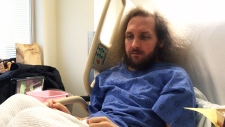
Diagnosed with terminal cancer, Clint Gossard, 59, hoped for a bed at the society’s 10-bed Irene Thomas Hospice in Delta, B.C. But he also wanted what they refuse to permit: medical aid in dying. For that, he had to go to Delta Hospital where his life was ended last January.
His widow and MAID advocates found that unacceptable. As a result, B.C. Minister of Health Adrian Dix has threatened the society’s funding if they don’t permit medical termination on their premises. Hospices I know elsewhere are similarly under pressure.
Koch explains that assisted dying is not part of hospice or palliative care. He writes:
Speaking for the Delta Hospice Society, its founder and former director, Nancy Macey, argued not only that MAID violates the hospice’s constitution but the goals of palliative and hospice care. The society’s position is shared by many including those, like me, who are at best agnostic. Instead, it follows the guidelines in this area.
In November, 2019, for example, the Canadian Hospice Palliative Care Association (CHPCA) and the Canadian Association of Palliative Care Physicians (CAPCP) issued a joint statement stating categorically that “National and international hospice palliative care organizations are unified in the position that MAID is not part of the practice of hospice palliative care."
Medical aid in dying, they argued, is not an “extension of palliative care” but a violation of hospice and palliative medical goals of care.
Koch goes on to explain that good palliative care is not a simple process:
In its focus on the best of life to the end of life, hospice practice requires an understanding not only of clinical but also psychological needs. I have several times been engaged in discussions with those who wanted to die because of problems, clinical, personal or social, that were then addressed by palliative caregivers. In these cases, “I want to die” was really “I need help with this.”
A simple "it's your choice" removes our opportunity to find and provide the necessities of an acceptable life to the end of a patient's days. It replaces complexity with a simple, “Well, they wanted it” even where the reasons for wanting could be palliated.
Koch concludes by stating that he believes that Mr. Dix’s threat seems to violate the spirit if not the letter of enabling federal legislation that assured the rights of practitioner conscience would be protected.
This article was published by the Huffington Post on November 30, 2015.
 |
| Tom Koch |
By Tom Koch, who is an ethicist, author and gerontologist.
The first person who asked me to kill him was my then 72-year old father. If he couldn't work and couldn't drive, what was there left to live for, he asked. "Lots," I said in refusing his request. "I'll show you."
He died peacefully in his sleep five years later.
My oldest brother, seeing our father in decline, asked me to promise to kill him as "an act of brotherly love" if he ever became infirm. During a period of depression resulting from an adverse prescription drug reaction, he refused hospital-based treatment. Instead he put his affairs in order and killed himself, suicide by pistol.
There have been others who wanted my help in dying after amputations, cancer diagnoses, while struggling with multiple sclerosis, paralyzing strokes, and a range of other incapacities.
I told each my job was to help them live as fully as possible despite their limits. That meant fighting for the best possible counseling, palliative (pain control), rehabilitative, psychiatric and social services available. I told each of them that before they gave up, they should try a life that while different could still be worthwhile.

In striking down the section of the Criminal Code that makes "aid in dying" illegal, the Supreme Court justices argued last February for individual autonomy and choice. The courts "pro-choice" judgment made overly simple what is in fact complex. If choice is our goal, we first need to address the reasons people with limits think life has lost its meaning. That's the basis of current challenges to Quebec's law legalizing what the Dutch call physician-assisted or directed termination.
A 74-year-old woman told me she doesn't want to die in pain as others have. "If I get there, end me," she said recently. I told her (and have told others) palliative medicine has come a long way and promised her pain would be treated. And, yes, I can make that promise given the state of medications today if -- a big if -- they're administered by professionals expert in their use.
Some years ago following a stroke, a woman looked down at her body, paralyzed on one side, and said to me that she didn't want to live. I told her she would improve with therapy and time and if she wanted to die today she might not tomorrow, or next week.
She lives, ten years later, with some paralysis but without pain. She uses a cane and has other mechanical aides. She is a volunteer advising new stroke patients of the possibility of life with a body some of whose parts do not respond.
A young amputee lost his right leg in an accident and could not see a future without football, baseball or dancing at parties. It took weeks to get him to accept rehabilitation, and eventually prosthesis. He's alive and well today.
The point is two-fold. First, what we request today or this week, following a grievous injury or serious diagnosis, may not be what we'll want in a month or a year. All those paralyzed by spinal cord injuries go through a depressed period of suicidal thinking. Over two-thirds find, after two years of counseling and rehabilitation that life is at least equally good, if different.
It is not "paternalism" to insist the newly injured or diagnosed take the time to adjust. It is good care and a recognition born of experience that the depressed and fearful patients does not yet have.
The second point is there is no real choice when pain control is absent or inadequate; when rehabilitation is minimal or simply unavailable. Where counseling and support are absent depression is a constant and death seems an increasingly welcome alternative.
Canada has no national program to assure a balance between "aid in dying" and assistance in living despite restrictions. While most major hospitals provide at least some pain management the demand far exceeds the ability to provide relief. In rural areas expertise is limited or non-existent.
Similarly, we have no national rehabilitation program to assure every Canadian receives the best possible rehabilitative services to strengthen the limbs that have been weakened and accommodate to the new realities of a limited body.
Nor do we adequately support the families and friends who assist our fragile citizens on a daily basis. If the newly limited feel themselves a burden on family and friends then, like Willy Loman in A Death of a Salesman, they'll see a quick death as the honorable thing.
In law it's called a predicate act or cause. It's the context in which decisions are made. People usually seek aid in dying because we have not provided aid in living. And if we believe the Supreme Court's insistence on choice, before offering an easy death we need first to assure the support is there for a life with dignity despite restrictions.
In crafting law in this area, Parliamentarians need to insist that jurisdictions offering physician-assisted termination first assure adequate support for the fragile is in place. Where that is not in place, there will be no real choice at all.
Some will say this is simply unaffordable. It will take too long to assure the resources for all Canadians facing limiting conditions. But, if we believe in choice we have to afford it. We have no alternative if we accept the Supreme Court's call for real patient choice. Think of it as infrastructure spending, a predicate act permitting people real alternatives other than a medically delivered, fatal injection.
Without, there is no real choice at all.
If you -- or someone you know -- need help, please call 1-800-273-8255 for the National Suicide Prevention Lifeline. If you are outside of the U.S., please visit the International Association for Suicide Prevention for a database of international resources.
This article was written by Tom Koch and published by the CMAJ on October 13, 2014.
 |
| Tom Koch |
By Professor Tom Koch
For most Canadians, the October 15 arguments at the Supreme Court in Ottawa will be about medical “aid in dying,” what the Dutch bluntly but accurately call physician assisted or directed termination. But what is really at stake in Carter et al. versus Attorney General et al is Canadian law itself, the meaning of its guarantees, promises, and injunctions. In effect, lawyers for and against “aid in dying” are asking the Supreme Court’s justices to interpret two sections of the Canadian Charter of Rights and Freedoms.
The result will define not simply issues of “assisted dying” but the future of Canadian law and society for years to come.
The Charter’s Section 15 guarantees that:
“Everyone has the right to life, liberty and security of the person.” Section Seven promises that “every individual is equal before and under the law and has the right to the equal protection and equal benefit of the law without discrimination … based on race, national or ethnic origin, colour, religion, sex, age or mental or physical disability.”