Showing posts with label Wes Ely. Show all posts

Thursday, September 29, 2022

Brain death? New transplant protocol blurs the line between life and death.

Alex Schadenberg
Executive Director, Euthanasia Prevention Coalition

An article by Randy Dotinga, that was published on September 28 by Medpage Today examines a new "brain death"
method — normothermic regional perfusion with controlled donation after circulatory death (NRP-cDCD) that blurs the line between life and death. Dotinga explains:
With little attention or debate, transplant surgeons across the country are experimenting with a kind of partial resurrection: They're allowing terminal patients to die, then restarting their hearts while clamping off blood flow to their brains. The procedure allows the surgeons to inspect and remove organs from warm bodies with heartbeats.

Transplant surgeons and several bioethicists argue that the procedure is appropriate and crucial to boosting the number of organs that are available for transplant. But critics -- including other bioethicists and the nation's second-largest physician organization -- warn that surgeons are trampling the line between life and death.
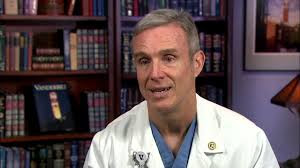
Dotinga interviewed Wes Ely MD, MPH, a critical care physician and transplant pulmonologist at Vanderbilt University, who told MedPage Today:
"We're so hungry for organs right now that we are pushing all the limits,"

"I just want us to be super-cautious. We need to press the pause button on this and have some more conversations so that we can set up boundaries and stay in the right lane. The dignity of the human who donates organs should never be sacrificed."
Dotinga states that The American College of Physicians (ACP), which represents primary care doctors, warned in a 2021 statement that the procedure raises:
"profound ethical questions regarding determination of death, respect for patients, and the ethical obligation to do what is best."
Dotinga explains that hospitals in Nebraska, Arizona and New York are currently doing clinical trials on this procedure. Amy Fiedler, MD, a cardiac and transplant surgeon at the University of California San Francisco, who has performed this procedure several times, told MedPage Today:
"It's expanding rapidly,"

"Every time I talk to colleagues, they want to talk about how to build an NRP program and get it started."

Dotinga explains that since organ donation began more than 1 million organ donations have been done in America and in 2021 more than 40,000 organ donations in America. He explains how organ donation is done and why the new procedure changes everything:

In the organ-retrieval procedures that are most well-known, patients are declared brain dead but they remain on life support: Their hearts beat, their lungs breathe. Surgeons remove organs for transplantation, and then the life support system is turned off.

But there's another category of organ donor: A patient who cannot survive without life support, but is not brain dead -- someone with severe brain injury, for instance, who has no chance of recovery.

In the past, transplant surgeons wouldn't remove organs until the hearts of these patients stopped for good. Now, transplant surgeons have changed the game. 

Matthew DeCamp, MD, PhD, a bioethicist at the University of Colorado and a consultant to ACP, who was lead author of a 2022 commentary in the journal Chest opposing the procedure. Dotinga reports:

"You're reversing the conditions under which death is declared and taking active steps to ensure the progression to brain death," he told MedPage Today. "The person is declared dead, and the subsequent actions invalidate that declaration."

DeCamp said this process bumps into the dead donor rule, an ethical standard within transplant medicine that says the process of retrieving an organ cannot kill a donor. However, the withdrawal of life support with consent, essentially facilitating a death, is allowed.

"The dead donor rule is ethically foundational to organ transplantation. It's the idea that medicine looks out for the best interests of the patients -- do no harm -- and acts cannot be taken that would cause death," DeCamp said. "Resuscitating the patient and reversing those conditions engages with the ethics of the dead donor rule."

He added: "Imagine you're an outside observer watching this procedure take place. You'd be unable to distinguish whether it was proceeding to organ transplantation or the resuscitation of the patient."
The new organ donation method ignores the "dead donor rule." What this means is that people who are possibly dying or nearly dead could be essentially killed for their organs. Several factors that are driving this change are that living donors provide healthier organs for transplant, the medical community is rejecting the concept of "do no harm," and the demand for healthier organs for donation are fulfilled by this procedure.

People who oppose killing may be forced to oppose organ donation.

Tuesday, May 17, 2022

Dr. Husel Acquitted in 14 alleged overdose deaths in Ohio – What Happened?

Sara Buscher is a lawyer and
Chair, Euthanasia Prevention Coalition USA

On April 20, 2022 an Ohio jury acquitted former doctor William Husel of intentionally murdering 14 patients with extremely large and lethal doses of fentanyl. Some claim his acquittal means doctors are free to deliberately overdose patients to hasten their deaths. Apparently, they are unaware he has lost his medical license and still faces civil suits brought by the patients’ families.

Husel worked in the Intensive Care Unit of an inner city hospital in Columbus, Ohio where he ordered lethal doses of fentanyl (500 to 2,000 micrograms) be given to patients, all of whom died within 12 minutes. He was indicted by a Grand Jury for 25 counts of intentional murder. The Prosecution went to trial on 14 counts after Husel refused a plea deal for up to ten counts of reckless homicide. Near the end of the trial, the Prosecution asked the judge to include charges of negligent homicide as “lesser included” offenses. The Defense would not agree, so the judge ruled it was too late to include them for the jury’s consideration.

In a May 10 People Magazine interview Husel said he would prescribe the same doses now for patients. After the trial the Ohio State Medical Board permanently and irreversibly revoked his medical license, which he agreed to surrender. In 2019, the Board had suspended his license after finding his extremely excessive doses of fentanyl and painkillers created a public danger that clearly and convincingly violated the Ohio Medical Practices Act.

Lawyers for the families say, “It would be incorrect to assume that the criminal verdict means Husel cannot be held liable in civil court for his actions…. How did that work for O.J. Simpson?”

The law typically uses three different burdens of proof and all are at play here. To find a person guilty of a crime, the burden is “beyond a reasonable doubt” which you can think of as being 99% certain the defendant is guilty. The Medical Board used the “clear and convincing” standard or about 75% certainty and the civil suits use “a preponderance of the evidence” standard which is anything beyond 50%.

Reasons for acquittal relate to the elements of intentional murder that must be proven under Ohio law: having a purpose to cause death and actually causing the death.

Prosecutors typically overcharge because 90% of criminal cases are pleaded out rather than going to trial. So they overcharge and then plead the case down for an appropriate charge. In Husel, the prosecutor charged intentional murder, would have plead out for reckless homicide and would have given the jury the option of a guilty verdict on negligent homicide. Each degree of guilt is easier to prove and carries a lower penalty. By refusing to deal, Husel forced the Prosecution to prove Husel intended to kill his patients.

The Defense successfully confused the jury into believing the Prosecution had to prove Husel had a motive for killing his patients. Motive is the why-- the reason a person commits a crime. It is never an element that has to be proven. Intent is not the same as motive. Intent means the actor decided to purposely do something criminal. Here, Husel decided to give drugs that would cause deaths. We don't know why he did it. He said he did it to provide comfort care, yet the Prosecution’s expert said Husel’s doses were 5 to 10 times the amount needed to provide comfort. So, he obviously didn’t do it to provide comfort. Maybe he gets a thrill from killing. Maybe he was trying to churn beds faster. Who knows? In any event, the jury struggled with “intent.”

In a May 10 interview with jurors, the Columbus Dispatch reported:
“A juror said ‘he believes Husel was guilty, but said the Prosecution failed to prove its case. The question of intent was just really hard to find beyond a reasonable doubt… and that was a hard, hard burden.’… ‘My honest opinion — that dude is guilty as hell. The Prosecution didn't prove it…. Everyone in that [jury] room felt those (fentanyl) doses (Husel ordered) were insane. We all said that. I believe in my heart that he was guilty of at least four or five that you could actually prove [the hospital’s initial investigation concluded five could have recovered with treatment], but what I feel isn't what we had to go on. The Prosecution just didn't prove intent.’”
Ohio’s intentional murder statute uses the strictest, hardest to prove definition of intent to kill: “the person's specific intention to cause a certain result (e.g., death)”. Other states allow intent to be proven using a “knowingly” standard – “knows or is aware his or her conduct is practically certain to cause the result.” Here, Husel said his intent was to provide comfort to people who were already dying. And, here, the evidence was clear the doses he gave were practically certain to cause death. In my opinion, he would have been convicted under a “knowingly” definition of intent.

The Defense also raised doubts about what caused the people to die. Their expert testified all of these people died from their illnesses. The Prosecution did not call a rebuttal witness. All of the patients were on life support that their families had agreed to have withdrawn. All died in 12 minutes or less after receiving the fentanyl. The question that was left unanswered was whether they died from the withdrawal of life support before the fentanyl would have killed them. Hopefully, the civil suits will shed more light on this.

Article: Dr Wes Ely comments on the acquittal of Dr William Husel (Link).

Friday, April 29, 2022

Dr Wes Ely comments on the acquittal of Dr William Husel in the overdose deaths of 14 patients.

Alex Schadenberg
Executive Director, Euthanasia Prevention Coalition

Dr Wes Ely will be featured in an EPC zoom meeting on May 9 at 4 pm (EST). Dr Ely will speak about the Husel case and the proper use of opioids (Registration Link) 

Dr Wes Ely
Recently a jury found Dr. William Husel NOT Guilty on All 14 Counts of Murder, we learn that, after deliberating for five days, the jury found former physician William Husel not guilty of murder after overdosing patients with fentanyl and benzodiazepines. Husel claimed he was providing "comfort care" even though the doses of drugs were determined to be lethal, the defense claimed that he did not have "intent" to kill.

Charlie Camosy interviewed Dr. Wes Ely who was an expert witness in the Husel trial, a professor at Vanderbilt University Medical Center and the associate director of aging research for the Tennessee Valley Veteran’s Affairs Geriatric Research Education Clinical Center. 

The following comments by Dr Ely create significant concern about the jury's decision in the Husel trial. Dr Ely responded to Camosy about the verdict by stating:

I want to trust the justice system and I want to know that in the United States, that a jury of our peers can make good and well informed decisions that we can live by and achieve justice in our society.

On the other hand, this is a physician who we absolutely know gave upwards of one to 3,000 micrograms of fentanyl to 14 people, actually 25 people, but only 14 were taken to trial.

That amount of medication completely stops the brain from sending signals to breathe so that we would stop breathing at all if we get that amount of a narcotic opioid. In addition to that, with high doses of fentanyl like that in the operating room, we see very tight chest wall muscles so that we physically can’t breathe, even if you want to.

Camosy then asks Dr Ely - did these overdoses kill.

I think that these doses did kill these people. They were very critically ill people, and, yes, they were dying, but we are all dying over time. The patients weren’t going to die in 12 minutes, which was the average time to death after the drugs were injected.

At the end of the day, these actions taken by Dr. Husel, and I testified very clearly on this, did shorten these people’s lives, I think, without any degree of uncertainty.

And so I have mixed emotions because my gut and instinct as a physician and as a person goes against the decision that was made by the jury. However, I will accept the decision, while at the same time hoping for some reforms to prevent this from happening again.

In his conclusion Dr Ely states:

The case of William Husel is a breach of our understanding of truth, in that I think Dr. Husel was giving lethal doses of medications in the name of palliative care. And when he was not found guilty by a jury of his peers, the worry that I have is that it will give other people license to go about giving these sorts of euthanasia style doses to other human beings, even when the patients haven’t asked for it. 

Dr Wes Ely will be featured in a EPC zoom meeting on May 9 at 4 pm (EST). Dr Ely will speak about the Husel case and the proper use of opioids (Registration Link)