Showing posts with label Sandy Buchman. Show all posts

Sunday, February 17, 2019

Euthanasia in Canada: CMA - Take off the rose-coloured glasses.

The following article was published in the British Medical Journal (BMJ) on February 8, 2019 in response to articles published by the BMJ Drs Buchman and Blackmer.
In June 2016, Canadian legislation came into effect with Bill C-14 that legalized Medical Assistance in Dying (MAiD), a euphemism for euthanasia and physician-assisted suicide. In Canada, most cases of MAiD are via euthanasia, where patients’ lives are ended through a lethal injection of drugs administered by a physician or a nurse practitioner. Many palliative care experts object to the term ‘assistance in dying’ because that is what palliative care physicians already do by helping people to die well, without hastening or causing death. Nevertheless, the term was formally adopted by the government, and continues to contribute to confusion regarding palliative care and MAiD.

The President-Elect of the Canadian Medical Association (CMA), Dr. Sandy Buchman, a palliative care physician and euthanasia provider, has exacerbated this confusion further. In his recent invited BMJ essay (2), Dr. Buchman describes providing euthanasia as the most patient- centered way to relieve suffering. Dr. Buchman’s views are not consistent with the official policy of the CMA regarding palliative care (3), or the position of the Canadian Society of Palliative Care Physicians (CSPCP) and the majority of palliative care physicians in Canada who do not view euthanasia as part of palliative care. In a recent survey, CSPCP members strongly agreed that euthanasia is not part of the provision of palliative care. The vast majority (92% of 213 respondents) do not provide euthanasia (4). The CSPCP position that palliative care strives to reduce suffering, not to end life (5), is consistent with international standards for palliative care, such as the World Health Organization definition (6). CMA Policy on Palliative Care also recognizes that palliative care and MAiD are distinct (3).

Dr. Buchman romanticizes euthanasia. He calls it “the most patient-centered service I could offer,” leading to “the most peaceful death I had ever witnessed.” Peer reviewed, published evidence demonstrates that most requests for euthanasia are motivated by a desire for control, or a fear of dying, not by uncontrolled symptoms such as pain or shortness of breath (7). The patient Dr. Buchman refers to in his essay illustrates the existential, not symptom-based, risk factors involved. These existential issues include fear of loss of control, questioning the meaning, purpose and value of life, fear of what comes after death, demoralization, and fear of being a burden to others (8). None of these issues are properly addressed by euthanasia, and hastening the death of a patient removes any further therapeutic opportunities. Simply bowing to “patient autonomy” and ending a life without working hard to alleviate the deeper total pain is hardly “patient centered” in the most robust sense of that term. As Chochinov and Mount beautifully express, “…to be clear, palliative care is not a panacea that can eliminate every instance and every facet of end-of life suffering. However, the physician-patient relationship is complex and profound. Preserving dignity for patients at the end of life is comprised of a steadfast commitment to non-abandonment and a tone of care marked by respect, kindness, and an unwavering affirmation of patient worth.” (9).

The other group of citizens ignored in Buchman’s account are those whose lives are made even more vulnerable by the very existence of euthanasia, including those with disabilities, mental illness, dementia, children, seniors, and those who lack resources including financial, social supports, or access to palliative care. The Vulnerable Persons Standard (VPS) has been developed to provide standards for safeguards needed in Canada to protect those who are most vulnerable to coercion, or who feel that they have no other option than to choose to have their lives ended (10). Sadly, these very practical, broadly supported and meticulously documented recommendations for true “patient-centered care” have been dismissed and ignored by supporters of euthanasia and all levels of government. The few regulations that have been implemented, such as the requirement for capacity – both at the time of request and at the time of delivery of euthanasia, and a ten day waiting period between formal request and death, have no standard system of oversight to ensure compliance, and enforcement is essentially non-existent. There are no standardized training requirements for capacity assessment or psychiatric consultation for MAiD. Individual physicians or nurse practitioners are solely responsible to determine eligibility and whether or not to waive the ten day interval. The assessments for receiving government supported workers’ compensation or home oxygen are often more lengthy and stringent than those done in preparation for MAiD!

Drs. Blackmer and Buchman assert that the CMA supports physicians who refuse to participate in euthanasia (1,2). They fail to note that some provincial medical regulators, including the largest one in Canada with over 40,000 physician members, demand strict physician participation through “effective referral” (11), and that physicians who refuse such participation could be forced to withdraw from practice or lose their licences altogether. Some of these physicians are fighting a lengthy and expensive court battle to resist this coercion (12). A number of medical groups have supported these physicians by requesting intervener status in the case. The CMA has not.

Two and a half years after its legalization in Canada, strong lobbies are intensifying their push for euthanasia as a response to mental illness, physical disability, cognitively incapacitated patients through advance directives, and children. In Toronto, the Hospital for Sick Children has already drafted policy on providing euthanasia to mature minors (children felt to be capable of making their own medical decisions, despite not yet reaching the age of majority), anticipating a change in legislation later this year that would make euthanasia permissible for these children (13).

These developments, and the ongoing jeopardy faced by objecting physicians in Canada, contradict the optimistic, rosy assessment offered by Drs. Blackmer and Buchman. Other jurisdictions need to take a hard look at the reality of the Canadian context before holding Canada up as an example to be emulated.


  • Dr. Leonie Herx, Division Chair & Associate Professor of Palliative Medicine, Connell Chair in Palliative Medicine, Queen's University, Kingston, Ontario, Canada
  • Dr. Srini Chary, Associate Professor, Division of Palliative Medicine, University of Calgary, Calgary, Alberta Canada 
  • Dr. Ed Dubland, Palliative Medicine Consultant, Burnaby, British Columbia, Canada
  • Dr. Robin Fainsinger, Professor, Division of Palliative Care Medicine Medicine, Edmonton, Alberta, Canada 
  • Dr. David Henderson Palliative Medicine Consultant, Truro, Nova Scotia, Canada 
  • Dr. Bernard Lapointe, Associate Professor, Departments of Oncology & Family Medicine, Director of Palliative Care, McGill University, Montreal, Quebec, Canada 
  • Dr. Valerie Schulz, Professor, Schulich School of Medicine & Dentistry, University of Western Ontario, London, Ontario, Canada 

1. Blackmer J. Commentary: How the Canadian Medical Association found a third way to support all its members on assisted dying. BMJ. 2019 Jan 30;364:l415.
2. Buchman S. Why I decided to provide assisted dying: it is truly patient centred care. BMJ. 2019 Jan 30;364:l412.
3. Palliative Care (Policy). Canadian Medical Association. 2016. Accessed on February 6, 2019: (Link)
4. Medical Assistance in Dying Member Survey (October 2017). Canadian Society of Palliative Care Physicians (CSPCP) 2018 February. Accessed on February 6, 2019: (Link)
5. Key Messages: Physician-Hastened Death. Canadian Society of Palliative Care Physicians (CSPCP) 2015, October. Accessed on February 6, 2019: (Link)
6. WHO Definition of Palliative Care. Accessed on February 6, 2019: (Link)
7. Palliative Care (Policy). Canadian Medical Association. 2016. Accessed on February 6, 2019: (Link)
8. Rodríguez-Prat A et al. Understanding patients' experiences of the wish to hasten death: an updated and expanded systematic review and meta-ethnography. BMJ Open. 2017 Sep 29;7(9):e016659. Accessed on February 6, 2019: (Link)
9. Chochinov, H. Dying, Dignity, and New Horizons in Palliative End‐of‐Life Care. CA: A Cancer Journal for Clinicians. 2006; 56: 84-103. doi:10.3322/canjclin.56.2.84
10. Chochinov H, Mount B. Physician Hastened Death: Awaiting a Verdict. CMAJ Blog. 2014 October, 14. Accessed on February 6, 2019: (Link)
11. Vulnerable Persons Standard. Accessed on February 6, 2019: http://www.vps-npv.ca/
12. Medical Assistance in Dying (Policy). College of Physicians and Surgeon of Ontario. 2016 Accessed on February 6, 2019: (Link)
13. Leiva, R et al. Euthanasia in Canada: a cautionary tale. World Medical Journal. 2018 64(3):17 Accessed on February 6, 2019: (Link)
14. DeMichelis C, Zlotnik Shaul R, Rapoport A. Medical Assistance in Dying at a paediatric hospital. J Med Ethics. 2019 Jan;45(1):60-67.

Friday, February 15, 2019

Can doctors be neutral on euthanasia and assisted suicide?

This article was published by Mercatornet on February 14, 2019. 

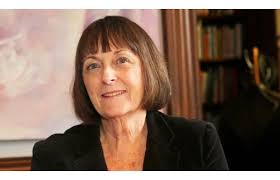
By Margaret Somerville

Margaret Somerville
The BMJ has recently published two articles, one by Dr Sandy Buchman, a palliative care physician and the incoming president of the Canadian Medical Association (CMA), the other by Dr Jeff Blackmer, a physician and vice president of international health at CMA presenting a very positive and benign picture of the implementation of legalized physician-assisted suicide and euthanasia in Canada, euphemistically called “Medical Aid in Dying” (MAiD).

Canadian Medical Association exaggerates its support for conscience rights.
As an academic medical ethicist at McGill University in Montreal for nearly four decades and now living and working in Australia, I am concerned that Australian legislatures, which are currently considering whether to legalize physician-assisted suicide and euthanasia, might accept the picture presented in these articles, without identifying their deficiencies.

In focusing only on respect for the autonomy and relief of the suffering, of an individual, personally identified, educated, mentally competent patient who requests and gives informed consent to MAiD, Dr Buchman makes the strongest case possible for the ethical acceptability of euthanasia and its legalisation. But, apart from other concerns, generalizing even these justifications beyond Dr Buchman’s patient and his specific characteristics and circumstances raises problems. In reality, how many people requesting euthanasia or assisted suicide (MAiD) will have the intensive attention, medical and family support Dr Buchman describes, or be as informed, articulate and highly educated as this patient, who himself was a doctor?

Respect for individual autonomy is used, as Dr Buchman does, by pro euthanasia advocates as a justification for legalizing MAiD. But it is far from the only consideration which needs to be taken into account, even if one does not object to MAiD on the most fundamental basis that we should not authorise anyone, let alone doctors, to intentionally inflict death on other human beings.

Dr Buchman makes no mention of any such considerations, in particular, risks and harms to the “common good” and society. These include breaches of the value of respect for human life at both the individual and societal levels, and serious physical and existential risks and harms to vulnerable people, especially those who are disabled and fragile elderly people.

Whether we agree or disagree with MAiD, we can all agree with Dr Buchman’s goal of relief of suffering, but we must kill the pain and suffering, not the person with the pain and suffering.

Dr Blackmer’s article raises a wide range of important issues, which he does not identify. They include: Is MAiD medical treatment? It can be argued that it is not. Likewise, MAiD is not, as its promoters argue, just a legitimate incremental extension of “good palliative care”. The informing philosophies of MAiD and palliative care are in conflict. Palliative care is based on a commitment to help people to live as fully as possible until they die a natural death. The informing principle of MAiD is that it is ethical to intentionally inflict death to relieve suffering or even the fear of future suffering.

Whether to legalize MAiD is a societal and political decision, not primarily a medical one and it’s suggested that if a society wants it to be available and legalizes it, for many reasons, it should be kept out of medicine. I call this “taking the white coat off euthanasia”.

By embracing euthanasia and assisted suicide as medical treatment the CMA made physician participation an expectation and refusing to provide them became an exception requiring justification. Despite assurances from the CMA leadership, Canadian doctors who object to participation in “therapeutic homicide” now risk discipline and even expulsion from the medical profession.

Euthanasia has been rapidly normalized and routinized in Canada at a rate that even one of its strongest advocates, Dr Yves Robert, registrar of the College of Physicians of Quebec, has found alarming, in that it has quickly become just another choice of how to die.

Not everything that is legal is ethical. So, the Canadian Medical Association could have maintained its long-established stance -- which reflects almost 2,500 years of medical ethics wisdom -- that it is unethical for physicians to participate in MAiD, even though it is now legal in Canada. When the cloak of medical approval is absent, the public are much more likely to question the wisdom of legalizing it.

Finally, while the CMA might be neutral with respect to who may be a member, in that it accepts as members both physicians who are pro-MAiD and those who are anti-MAiD, there is not, as Dr Blackmer claims, any “neutral stance” on the ethical acceptability of MAiD. In not continuing to oppose physicians’ involvement in it as unethical, the CMA is unavoidably supporting it in some or other form, which is not a neutral position. In fact, we can see precisely that outcome in the use of CMA statements by Canadian courts, legislatures and regulators in promulgating and implementing the law legalizing MAiD in Canada.

In short, there is no neutral stance on the ethics of MAiD but a clear choice to be made as to whether one is for or against it, as the present conflict among Canadian physicians so clearly demonstrates, despite the CMA’s and Dr Blackmer’s desire to whitewash the situation.

Margaret Somerville is professor of bioethics in the school of medicine at the University of Notre Dame Australia. This article was originally published in the BMJ Rapid Responses online.

Monday, February 11, 2019

Dr Will Johnston: It has become too easy to end patients' lives.

Dr Will Johnston responded to the article by Dr Sandy Buchman in the British Medical Journal (BMJ) titled: Why I decided to provide assisted dying. Buchman claims that Medical Assistance in Dying (MAiD), better known as euthanasia, is patient centred care.


Will Johnston's response was published in the BMJ on February 8.
As an ordinary Canadian family physician, I have seen a different side of the new ‘Medical Aid in Dying’ regime Dr. Sandy Buchman glowingly describes. The scheme was sold to us and the public as a rare matter of assisting the suicide of extreme terminal illness cases. By a year into it, hundreds (now thousands) had died and over 99% of the deaths were not by self-administration, but intravenously by doctors and nurses. The Canadian euthanasia death rate has continued to escalate, while funding for palliative care services has fallen in several provinces.

The wide eligibility criteria do not require any estimate of prognosis. Yet there is already intense social pressure to widen them further to include euthanasia of children, the healthy disabled, cognitively impaired, and mentally ill.

Ending life has been re-defined as ‘part of care’. An Ontario court ruling has confirmed that doctors who want nothing to do with euthanasia have to get involved by making an “effective referral”.

Few Canada doctors foresaw that “going neutral” would guarantee the arrival of euthanasia, or that promises of a shot in the arm for palliative care would be forgotten. Even fewer realised they would have no option but cooperate with providing death on demand.

It has become all too easy to end patients’ lives. Learn from our mistakes. 
Williard P Johnston
Clinical Assistant Professor, University of British Columbia, Department of Family Practice. Vancouver BC
Links to a few stories of the failed experiment with euthanasia in Canada.