Showing posts with label John Kelly. Show all posts

Wednesday, January 29, 2020

The Extreme Ableism of Assisted Suicide

The following article was published by Not Dead Yet on January 28, 2020

By Diane Coleman, President & CEO Not Dead Yet

Diane Coleman
I just came across a brilliant letter that John Kelly sent to the Washington, D.C. Council when they were considering an assisted suicide bill in 2016. I should have posted it here then, but I am doing so now because it’s one of the best discussions I’ve read of the core problem that assisted suicide advocates have with disability.

Let me just highlight one example from the letter, a Washington Post quote from Dan Diaz, who is still working for Compassion and Choices, traveling around the country doing press conferences and testifying on their behalf in favor of these dangerous bills.

“If I find myself in a situation where I can’t go to the bathroom on my own, where someone has to change my diapers, where I can’t feed myself, where I can’t care for the people around me, where other people have to move me around to keep me from having bedsores, I would then submit, ‘Is that really living?’ ” Diaz said. 
Although assisted suicide proponents often accuse opponents of fearing death, the letter below demonstrates how profoundly proponents fear and loath disability. Their ableism is so extreme that they want to carve a vaguely defined segment of old, ill and disabled people out of suicide prevention, enlist our healthcare system in streamlining our path to death, and immunizing everyone involved from any legal consequences, thereby denying us the equal protection of the law.


November 1, 2016

Chairman Mendelson, Councilmembers:

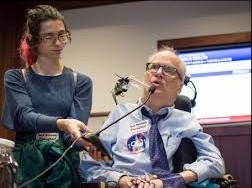
John Kelly
My name is John Kelly. I am the New England Regional Director for Not Dead Yet, the national disability rights group that has long opposed euthanasia and assisted suicide. I am also the director of Not Dead Yet’s Massachusetts state affiliate, Second Thoughts MA: Disability Rights Advocates against Assisted Suicide.


I refer you to two recent articles in the Washington Post. Read together, they must lead you to vote against assisted suicide bill B21-38. Assisted suicide isn’t about physical pain at all, despite what proponents have told you. And assisted suicide benefits one specific group in the district and country, wealthier white people, while disadvantaging poorer people, and people of color specifically.

The first article came out last Monday, October 24. Titled “‘Death with dignity’ laws and the desire to control how one’s life ends,” this article exposes the main argument for assisted suicide, “that terminally ill patients have the right to die without suffering intractable pain in their final days or weeks,” as a big lie.

Author Liz Szabo reports that assisted suicide proponent group Compassion & Choices “focuses heavily on the need to relieve dying patients of pain.” One ad has the assisted suicide bill giving “a dying person the option to avoid the worst pain and suffering at the end of life.”

Yet the latest research shows that terminally ill patients who seek aid in dying aren’t primarily concerned about pain. Those who have actually used these laws have been far more concerned about controlling the way they exit the world than about controlling pain.

As one California doctor said, “It’s almost never about pain. It’s about dignity and control.”

And that’s what the Oregon and Washington data show. Pain is the least of people’s concerns. Doctors report people requesting the lethal drugs because of psychosocial suffering about becoming disabled through their illness. It’s mental distress about becoming dependent on other people (“losing autonomy” 92%), losing abilities (“less able to engage in activities making life enjoyable” 90%), shame and perceived/actual loss of social status (“loss of dignity” 79%), needing help with incontinence (“losing control of bodily functions” 48%), and believing that suicide would leave loved ones better off (“burden on family, friends/caregivers” 41%).

Dr. Ira Byock, a leading palliative care expert, told the Post, “it’s a bait and switch. We’re actually helping people hasten their deaths because of existential suffering. That’s chilling to me.” As Byock said, almost all pain is controllable. Hospice staff are on call 24 hours a day, and caregivers can be trained in administering emergency pain medication until staff arrive.

The real reasons that people want to commit assisted suicide, proponents admit, are about being dependent on other people for personal care. We disability rights activists have been pointing this out all along.

Barbara Coombs Lee, who as an insurance company executive wrote Oregon’s assisted suicide law, brought up the case of the woman who committed assisted suicide because she was incontinent. The woman wrote that “the idea of having somebody take care of me like I am a little 2-month-old baby is just absolutely repulsive. It’s more painful than any of the pain from the cancer.”

Lee described scenarios of disability that she said were “worse than death.” Proponent Dan Diaz emphasized the supposed horrors of disability.

“If I find myself in a situation where I can’t go to the bathroom on my own, where someone has to change my diapers, where I can’t feed myself, where I can’t care for the people around me, where other people have to move me around to keep me from having bedsores, I would then submit, ‘Is that really living?’

This isn’t a public health bill, it’s a death before disability bill.

So this is what some of you are planning to vote for. You are not protecting DC residents from agonizing pain. You are promoting the particular views of one specific group of people, described by Obamacare architect Ezekiel Emanuel as predominantly “white, well-insured, and college-educated.” People who are used to being in control of every aspect of their lives.

So, like so much in the US, assisted suicide is an issue that cuts across class and race. The 2012 election map in Massachusetts shows that wealthier, whiter areas voted heavily for legalization, while working-class whites and people of color voted strongly against. People turning out for Barack Obama and current Sen. Elizabeth Warren defeated the proposal.

The second article, from October 17, by reporter of color Fenit Nirappil, was titled “Right-to-die law faces skepticism in nation’s capital: ‘it’s really aimed at old black people.’” It details the opposition to assisted suicide of Washington’s black majority.

Many in the black community distrust the health-care system and fear that racism in life will translate into discrimination in death, said Patricia King, a Georgetown Law School professor who has written about the racial dynamics of assisted death.

“Historically, African Americans have not had a lot of control over their bodies, and I don’t think offering them assisted suicide is going to make them feel more autonomous,” King said.

District residents told Nirappil of concerns that “low-income black senior citizens may be steered to an early death”, and that in the end, assisted suicide is really all about reducing government healthcare costs.

Derek Humphry, who founded the Hemlock Society (Compassion & Choices’ original name), wrote years ago of the “unspoken argument,” that assisted suicide will gain traction because of “the realities of the increasing cost of health care in an aging society, because in the final analysis, economics, not the quest for broadened individual liberties or increased autonomy, will drive assisted suicide to the plateau of acceptable practice.”

Assisted suicide, like suicide in general, is primarily practiced and promoted by white people. Nirappil reported that national leaders in the assisted suicide movement are all white, and that most of the participants at a recent rally were white. In the 18 year history of the Oregon assisted suicide law, only one black person has used the program. In a state that is now 22% nonwhite, 97% of assisted suicide deaths have been white.

Non-Hispanic whites also commit regular suicide at a rate 2.5 times that of blacks. Rather than importing a predominantly-white practice as a solution for the district, you must say no to this bill and the big lie it hides behind. Assisted suicide is not about protecting suffering people from physical pain, it’s about satisfying the control needs of a group of people, predominantly white, who would rather die than become dependent on another human being.

Please respect your constituents, understand the danger this bill represents, and reject this bill. Thank you.

Thursday, January 16, 2020

Disability rights leaders praise Massachusetts court decision that there is no right to assisted suicide.

Alex Schadenberg
Executive Director, Euthanasia Prevention Coalition


*Massachusetts Court explains why assisted suicide should be prohibited (Link).

John Kelly, Second Thoughts
Disability rights leaders praised the Massachusetts court decision that there is no right to assisted suicide. The assisted suicide lobby doctors have decided to appeal the decision. 

The Second Thoughts Massachusetts media release stated:
Second Thoughts Massachusetts praises the decision by Suffolk Superior Court Judge Mary K. Ames rejecting a right to physician-assisted suicide in the state. She ruled that any Massachusetts doctor who prescribes a lethal dosage of drugs could be subject to prosecution for involuntary manslaughter. 
Second Thoughts director John B. Kelly said, “we are gratified that the court reaffirmed the law against assisted suicide, and referred the matter to the legislature where lawmaking belongs. Disability rights advocates will continue to press the legislature that assisted suicide is just too dangerous.” 
Judge Ames wrote that at the point of a patient ingesting the lethal drugs, they would be vulnerable to improper persuasion. “In such a situation, there is a greater risk that temporary anger, depression, a misunderstanding of one’s prognosis, ignorance of alternatives, financial considerations, strain on family members or significant others, or improper persuasion may impact the decision.” 
Ruthie Poole is president of the board of MPOWER, a group of people with lived experience of mental health diagnosis, trauma, and addiction. Poole said, “Personally, as someone who has been suicidal in the past, I can relate to the desire for ‘a painless and easy way out.’ However, depression is treatable and reversible. Suicide is not. The current bill in the legislature pretends otherwise.”
The Cape Cod Times reported that the assisted suicide doctors, who brought the case to the Massachusetts court, are appealing the decision. The report stated:
“We’re disappointed that the court didn’t rule in our favor,” Kligler said. “We’re hoping that the appellate court or Supreme Judicial Court will.”
The Euthanasia Prevention Coalition (EPC) emphasized that the Massachusetts court decision is not the only court decision stating that there is no right to assisted suicide. EPC hopes that this decision will prevent the legalization of assisted suicide in Massachusetts.

Tuesday, October 8, 2019

Assisted Suicide: What can seem like dignity can turn out to be anything but

This letter was published by the Minneapolis Star Tribune on October 7, 2019.

John Kelly
I sympathize with Bobbi Jacobsen (“I have ALS, and I hope for a dignified death,” Opinion Exchange, Sept. 24). Like her, I became severely disabled as an adult. But I oppose assisted suicide: It’s too dangerous.

Assisted suicide can look appealing from an individual’s perspective, but at the state level, it inevitably leads to the premature deaths of non-dying people. At least 12% to 15% of people judged terminal outlive their six-month prognosis, according to the Journal of Palliative Medicine, sometimes by years and decades. Actress Valerie Harper, who died last month, lived six years longer than predicted. Tragically, there are people who would be alive today but for their misplaced trust in a doctor’s prediction.

Jacobsen cites the absence of disability abuse reports from state protection and advocacy agencies, but abuse gets easily buried. For example, Oregonian Wendy Melcher’s death in 2007 at the hands of two nurses was suppressed by the state nursing board.

Elder abuse is rampant. Safeguards end after drugs get dispensed and, because no witness is required, heirs and abusers can engineer deaths without worry.

As the cheapest “treatment” for serious illness, assisted suicide fattens insurers’ profits and crowds out traditional, more expensive treatment.

Palliative care doctors know how to let people die gently, so it’s inexcusable that anyone die in uncontrolled pain. Everyone has the right to reject any treatment, including food and water, and palliative sedation is available as a last resort.

The Minnesota Legislature should demand excellent palliative care, not put everyone in danger of premature death due to mistakes, abuse and insurers’ bottom lines.

John B. Kelly, Boston

The writer works for Not Dead Yet, an organization opposed to assisted suicide.

Tuesday, September 24, 2019

Webinar: Disability Rights Opposition to Assisted Suicide laws.

Announcing!
Webinar: Disability Rights Opposition
To Assisted Suicide Laws
Wednesday, October 30, 2019, 
3:00-4:30 pm Eastern Time
What Will You Gain By Attending:
  • Familiarity with the key issues, arguments and common questions
  • Materials that explain, detail, and document individual cases of assisted suicide problems and abuses
  • Understanding what disability has to do with assisted suicide
Speakers:
  • Anita Cameron, Director of Minority Outreach, Not Dead Yet
  • Diane Coleman, President/CEO, Not Dead Yet
  • Marilyn Golden, Senior Policy Analyst, Disability Rights Education & Defense Fund
  • John Kelly, Director, Second Thoughts Massachusetts
Topics Include:
  • What is Assisted Suicide?
  • What’s disability got to do with it?
  • Deadly mix between assisted suicide & pressures to cut healthcare costs
  • Elder and disability abuse; effects on other constituencies
  • Palliative care and palliative sedation can address pain
  • Failure of so-called “safeguards”
  • Minimal data and fatally flawed oversight, no investigation of abuse
  • Suicide contagion
  • What’s happening in Canada and other countries?
  • Take action!
For More Information: mgolden@dredf.org

Wednesday, June 26, 2019

Disability rights leaders oppose assisted suicide bill

Press Conference opposing Massachusetts assisted suicide bill.

At least seven disability rights advocates were prepared to testify on one of two panels. The following are links to three of those testimonies with short excerpts from each.


John Kelly
 John Kelly’s Testimony

Like most progressives, I strongly oppose capital punishment. We simply can’t stomach the fact that at least 4% of people sentenced to die are not guilty. We know that when there is a mistake, there’s no remedy.

H.1926 would in effect sentence to death non-dying people. Doctors misdiagnose all the time, and it’s estimated that 12 to-15% of people will outlive their six-month terminal diagnosis. . . .

And when more than half of suicide deaths in Oregon last year were reported to feel like a burden on others, we can see evidence of bullying, shame, and loss of options. When you read the title of the bill with different emphasis, it doesn’t mean options for the end-of-life but “the end [pause] of life-options.”

Ruthie Poole’s Testimony

Those of us in M-POWER know that depression is insidious in how it affects thinking. Against the new provision, we know that depression does impair judgment. As a therapist once told me, depression does not cause black and white thinking; it causes black and blacker thinking. Absolute hopelessness and seeing no way out are common feelings for those of us who have experienced severe depression. Personally, as someone who has been suicidal in the past, I can relate to the desire for “a painless and easy way out.” However, depression is treatable and reversible. Suicide is not.

We applaud the Joint Committee on Public Health and other members of the Legislature who have worked hard to expand funding for suicide prevention efforts. Passing this bill would be a slap in the face of those efforts. Suicide contagion is real. Any assisted suicide program will send the message to people in mental distress – old, young, physically ill or not – that suicide is a reasonable answer to life’s problems.


Anita Cameron
 Anita Cameron’s Testimony Although assisted suicide requests in Oregon (which this bill and others are modeled on) are lower among Blacks and people of color, that doesn’t mean that this won’t change in more diverse areas, especially as healthcare support lessens and assisted suicide becomes more acceptable due to the efforts of groups like Compassion and Choices. . . . Further, doctors often make mistakes about whether a person is terminal or not. In June, 2009, while living in Washington state, my mother was determined to be in the final stages of Chronic Obstructive Pulmonary Disease and placed in hospice. Two months later, I was told that her body had begun the process of dying. My mother wanted to go home to Colorado to die, so the arrangements were made. A funny thing happened, though. Once she got there, her health began to improve! Ten years later, she is still alive, lives in her own home in the community and is reasonably active.

Friday, March 29, 2019

Massachusetts Court case seeks to legalize assisted suicide.

Alex Schadenberg
Executive Director - Euthanasia Prevention Coalition


Masslive published a report by Shira Schoenberg concerning the court case that has been launched to overturn the Massachusetts assisted suicide law. According to Schoenberg, Roger Kligler, who is living with cancer, and Dr. Alan Steinbach launched a lawsuit to legalize physician-assisted suicide in Massachusetts.

This is not the first time similar lawsuits have been filed. There have been several lawsuits that were simply dismissed by the court, while others were heard with the finding that there is no right to assisted suicide.

The Baxter case in Montana didn't legalize assisted suicide but the Montana Supreme Court created a "defense of consent" for Montana physicians and an activist judge in New Mexico found a right to assisted suicide in that state, but her decision was overturned by the New Mexico Supreme Court.

Schoenberg reported that Kligler and Steinbach asked the court to overturn the Massachusetts assisted suicide law:

Kligler and Alan Steinbach, a doctor who wants to write lethal prescriptions for terminally ill patients, have sued Massachusetts Attorney General Maura Healey, arguing that criminal prosecution of a doctor for prescribing a lethal dose of medication to a competent, terminally ill patient is illegal under the state constitution. Today, a Massachusetts doctor who prescribes a lethal dose of medication could be charged with involuntary manslaughter.
Schoenberg reported that the Massachusetts Attorney General believes that the issue of assisted suicide is properly a legislative decision. The article reported:
Assistant Attorney General Robert Quinan said Healey has not taken a position on whether physician-assisted suicide is good or bad policy. But, he said, it is not for Healey — or the court — to decide. The plaintiffs, he said, want “to resolve through litigation a policy dispute that’s properly reserved for the Legislature.”
Nancy Houghton and John Kelly
Disability rights activists, John Kelly from the disability right group Second Thoughts and Nancy Houghton from the disability rights group ADAPT told Schoenberg in the interview:

“There’s no safeguard in place or possible that could prevent the loss of lives due to misdiagnosis, insurer treatment denial, depression and coercion and other forms of abuse,” said John Kelly, director of Second Thoughts Massachusetts, a group of disability rights advocates who oppose assisted suicide. 
Nancy Houghton, who is on the board of the Massachusetts chapter of the disability rights group ADAPT, said she was told she had three to five years to live when she was diagnosed with pulmonary fibrosis, a lung disease. That was 15 years ago.

“If I had listened to the doctors back then, I could be dead now,” she said.
There is no right to assisted suicide in the US or Massachusetts. Legalizing assisted suicide gives doctors the right in law to be involved with killing their patients.

Tuesday, February 26, 2019

Carrie Ann Lucas Dedicated Her Amazing Skills To Save Lives

This article was published by Not Dead Yet on Feb 25, 2019.

Diane Coleman
By Diane Coleman
Not Dead Yet President & CEO

Across the country, people who knew and worked with Carrie Ann Lucas are mourning her untimely death at the young age of 47. Over the last year, we watched as insurers denied what she needed and doctors couldn’t take the time to listen to one of the sharpest minds in our movement explain how to integrate their treatments with her body’s needs. We’re grieving, and we’re angry.

We’re also honoring her amazing life. Carrie began serving on NDY’s national Board in January 2013. She made so many unique and abiding contributions to the disability movement that it would be impossible to capture them all. But here are some of the ways that Carrie worked to save lives through her incredible efforts on behalf of Not Dead Yet.

World Federation Protest

 
In September 2014, Carrie traveled from her home in Colorado to Chicago to participate in the NDY protest of the World Federation of Right To Die Societies’ biannual conference. She was a very skilled photographer who visually documented three days of protest activities which can be viewed via a link on our website page about the protest. One of these photos is the banner on our home page.

Resisting Assisted Suicide in Colorado

Carrie took the lead in organizing a group of disability activists to fight assisted suicide bills and initiatives in Colorado. Not Dead Yet Colorado members testified beginning in February 2015, as shown in a press release: Disability Activists from Not Dead Yet and Other Colorado Organizations to Testify in Opposition to Colorado Assisted Suicide Bill. The bill died in committee, as reported by the Denver Post.

But that wasn’t the end of the issue. Several months later, NDY Colorado Issued a “Media Advisory Opposing Proposed CO Constitutional Amendment on Assisted Suicide.” The amendment didn’t go anywhere.

The bill came back in 2016, and Carrie testified before the Colorado Senate State Senate, Veterans, and Military Affairs Committee on February 3rd that year:

“I am a person with multiple disabilities. I have a progressive neuromuscular disease that has caused me to lose muscle function throughout my entire body. I have weakness in every muscle in my body, including my facial and eye muscles. My organs are affected, I have low vision, and I am very hard of hearing. I have a gastrostomy tube, and I am dependent on a ventilator to breathe. Without my ventilator, I don’t have years to live. I don’t have 6 months, 6 weeks, or 6 days, I have hours. I have a terminal condition – very much like ALS, and I would be covered by this bill. I understand the sponsors have said this bill is not for the disabled, but respectfully the sponsors are incorrect. This bill directly affects me, my family and my community. 
“If I were to become depressed, either situational depression, or major depression, and this bill passes, I could go to my doctor and ask for a lethal prescription. Because I have a disability, and because physicians are terrible at evaluating quality of life of people with disabilities, I would likely be given that lethal prescription, rather than be referred for mental health treatment. And if my doctor did not give me the lethal prescription, I could simply doctor shop until I found one who would. A woman in my situation but without my disabilities would not get a lethal prescription, and would most likely encounter a vigorous effort to ensure she did not take her life. That is disability discrimination.”
She also put on her lawyer hat and further explained what’s wrong with the bill from that perspective. To read her full testimony, go here. Both Carrie and Anita Cameron, who lived in Colorado at that time, also had op-eds published which are excerpted with links in an NDY blog. Again, the bill did not make it through the committee.

So next, assisted suicide proponents went for a ballot measure, which Carrie, the Colorado NDY group and ADAPT protested by holding a funeral march: Disability Activists from Not Dead Yet and ADAPT Engage in Funeral March to Protest Assisted Suicide Ballot Measure. Unfortunately, the ballot measure passed.

Still, it is never too late to educate people about the dangers of making assisted suicide another “medical treatment” in our insensitive and profit conscious healthcare system. This past November, we blogged about how Carrie did just that on a Facebook program called “Imperfect Union”, which produced a Video of Carrie explaining some of the dangers of assisted suicide laws to a proponent.

Me Before You

When the ridiculous assisted suicide movie “Me Before You” came out, Carrie rolled up her sleeves and applied her graphics skills to pull together material from our sister organization, Not Dead Yet UK, and develop a banner and flyers that disability activists around the country used to hold protests of the movie. Many people sent photos from their protests to her, so she put them together in a video, accompanied by Johnny Crescendo’s brilliant song “Not Dead Yet.”

VIDEO: The Disability Community Responds to Me Before You movie

Jerika Bolen

O
Jerika Bolen
f all Carrie’s contributions to NDY’s work, the one I think about most often is her leadership in the effort to save the life of 14-year-old Jerika Bolen. Like Jerika, Carrie along with several of us in NDY experienced teenage years as a person with serious, progressive neuromuscular disabilities. Jerika said she wanted to die, but she was not treated like a suicidal nondisabled 14-year-old would be. We were horrified as her story unfolded. We received hate mail from nondisabled people in response to our efforts.

After Jerika’s death, Carrie did a very moving public radio interview explaining the disability discrimination that ultimately led to her death. John Kelly handled the creation of a captioned video of media photos of Jerika along with the interview to ensure that Carrie’s message would be heard and seen as widely as possible. Here’s a little of what she said:

“If we’re going to let children make these decisions, then we should be able to let children make ‪these decisions regardless of disability. ‪So we have to then be willing to say that the depressed fourteen year old who broke ‪up with her boyfriend who wants to die should get to die as well. ‪Otherwise this is disability discrimination, because some children get intensive suicide ‪prevention and other children don’t. ‪And it’s based only on disability, and that’s discrimination. 
‪”Either it’s okay for everybody or it’s not okay. ‪It’s either one or the other. ‪But we should not be saying it’s okay for a disabled teenager to die, because people who don’t ‪have disabilities have an imagination of what quality of life should be like for a disabled person, ‪and that is poor. ‪ 
“Because they can’t imagine in their own heads what it would be like to live with a disability, ‪when in fact those of us living with a disability, with the same disability ‪are telling you, no, it’s really not bad. ‪There’s something else going on here because we have that lived experience. ‪We know that. ‪We are the experts in this.”
More about the struggle to save Jerika’s life is available in the NDY blog here.

Carrie’s work earned her center seat in the annual award given by New Mobility magazine which named those who fought to save Jerika as its People of the Year – The Resisters. In a drawing, the magazine depicted Carrie as the superhero she was.

Tuesday, December 25, 2018

John Kelly: Massachusetts Legislature Should Reject Assisted Suicide. People lose their lives to misdiagnosis, coercion. abuse and depression.

This article was published by the Worcester Telegram on December 24, 2018.

John Kelly
By John Kelly director of the disability rights group - Second Thoughts Massachusetts

In a recent Wicked Local Lexington commentary (“Medical aid in dying important for some with disabilities,” Sept. 28), Michael Martignetti argues for the legalization of assisted suicide from the perspective of someone with the progressive neurological disability, Friedrichs ataxia. I can relate to the author’s disability experience, as 35 years ago a spinal cord injury left me paralyzed from the neck down. Like Martignetti’s, my disability will present challenges as I age.

But whereas Martignetti frames assisted suicide as a personal choice in the face of “unbearable suffering,” I see a state-run program that will result in people losing their lives to misdiagnosis, treatment denial, and coercion/abuse, and depression. Not all families are united in loving and supporting us.

Doctors often make diagnostic mistakes: between 12 percent to 15 percent of people admitted to hospice as “terminally ill” outlive the six-month prediction. Many more who never enter hospice also outlive their diagnosis. For example, the late Senator Ted Kennedy lived a full year longer than his diagnosis of 2 to 4 months, while Florence resident John Norton credits 60 years of good life to the unavailability of assisted suicide after a mistaken prognosis.

Late last year, the Oregon Health Authority explained that people can become “terminally ill” through insurance denial and unaffordability. For example, Nevada Dr. Brian Callister had two patients denied by California and Oregon insurers for what used to be routine, lifesaving, operations. The insurers only offered the “choice” of hospice or assisted suicide. It’s impossible to talk about individual choice when profit-maximizing companies can – with no accountability – make you terminal.

The Health Authority admits its involvement ends with the dispensing of the drugs by the pharmacy. Of the many reported abuses, see the cases of Thomas Middleton (financial abuse), Wendy Melcher (attempted murder of a trans woman), and Kathryn Judson (physician pressure).

The bill requires no independent witness at the death, so the supposed safeguard of “self-administration” is empty. Especially vulnerable will be the 10 percent of Massachusetts seniors estimated to be abused yearly. A caregiver or heir to an estate can witness a person’s request, pick up the prescription, and then administer the lethal dose without worry of investigation — the bill immunizes everyone involved.

Another safeguard requires applicants to be evaluated by a mental health professional, who in a one-time meeting is tasked with “determining that the patient is capable and not suffering from a psychiatric or psychological disorder or depression causing impaired judgment.” A survey of psychiatrist revealed that most said they could not diagnose depression in a single visit. Meanwhile, “impairing judgment” is what depression does. As peer advocate Ruthie Poole has testified,

“Depression does not cause black and white thinking; it causes black and blacker thinking. Absolute hopelessness and seeing no way out are common feelings for those of us who have experienced severe depression. Personally, as someone who has been suicidal in the past, I can relate to the desire for ‘a painless and easy way out.’ However, depression is treatable and reversible. Suicide is not.”

Martignetti insists that disability does not make people eligible, but the Oregon reports show that the 5 leading “end-of-life concerns” are not pain-related but the “existential distress” (New England Journal of Medicine) experienced through “loss of autonomy” (91%), lost abilities (90%), “loss of dignity” (76%), incontinence (46%), and feeling like a burden (44%).

Indeed, I have found that social prejudice and discrimination are far more injurious than the actual loss of abilities. People have told me to my face that they would rather be dead than like me, while the culture promotes a theme of “better dead than disabled.” Movie examples include “Me Before You,” “Whose Life Is It Anyway,” and “Million Dollar Baby.”

This helps explain why every major national disability rights organization that has taken a position on assisted suicide has come out in opposition.

The legislature should continue rejecting a bill that trades on disability prejudice to push vulnerable people toward early deaths.

John B. Kelly is director of Second Thoughts Massachusetts: Disability Rights Activists Against Assisted Suicide, a grassroots group opposing assisted suicide since 2011.

Saturday, September 29, 2018

New Jersey may vote on assisted suicide bill in October.

Alex Schadenberg
Executive Director - Euthanasia Prevention Coalition


The New Jersey legislature may vote on a bill to legalize assisted suicide in October. According to News 12 New Jersey, Assembly Bill 1504, which is sponsored by Assemblyman John Burzichelli is expected to be voted on in October. News 12 reported that Gov. Phil Murphy has expressed support for the assisted suicide bill.

The bill, that is called Aid in Dying for the Terminally Ill Act, gives doctors the right in law to prescribe lethal drugs. 


Patients who ask for assisted suicide are seeking support and care in response to fear of suffering, depression and loneliness. This bill allows doctors to abandon their patients to death by lethal drugs.

John Kelly, Not Dead Yet.
A Coalition of groups and individuals oppose assisted suicide. In his testimony opposing the New Jersey Assisted suicide bill, John Kelly, the New England Regional Director for Not Dead Yet, a national disability rights organization, told the hearing that the assisted suicide bill:

...threatens you and every single resident of New Jersey, because all of us are vulnerable to misdiagnosis. “Terminally ill” is defined as:

“Terminally ill” means that the patient is in the terminal stage of an irreversibly fatal illness, disease, or condition with a prognosis, based upon reasonable medical certainty, of a life expectancy of six months or less.”When it comes to life and death, there is no such thing as “reasonable medical certainty.” Of the millions of misdiagnoses every year, many are terminal misdiagnoses. We know this because of the thousands of people who “graduate” from hospice each year. Every year in Oregon, people have lived longer than their six-month terminal diagnosis.

Every year in New Jersey, it is estimated that 1/10 people over the age of 60 are abused, almost always by adult children and caregivers. Although “self administration” is touted as one of the key “safeguards”, in about half of Oregon program deaths, there is no evidence of consent or self-administration in the death. If the drugs were administered by others without consent, no one would know. The request form constitutes a virtual blanket of legal immunity covering all participants in the process.

Assisted suicide laws inevitably take the lives of innocent people through mistakes, coercion, and abuse. Please reject this bill.
Legalizing assisted suicide gives doctors the right in law to be directly involved with intentionally causing the death of their patients.

Saturday, September 22, 2018

Case for 'death with dignity' collapses under scrutiny

This letter was written by John Kelly and published in the Berkshire Eagle on September 19.

John Kelly is director of Second Thoughts Massachusetts: Disability Rights Activists Against Assisted Suicide.

John Kelly - Second Thoughts Massachusetts
To the editor:

I write to respond to the oped by John Berkowitz and three Western Massachusetts legislators in support of assisted suicide bill H.1994 (Eagle, Sept. 11).

Unsolvable problems with assisted suicide include the fact that terminal diagnoses are often wrong. Studies show that between 13 percent and 20 percent of people so diagnosed are not dying, and may live years or even decades longer. As examples, the late Sen. Ted Kennedy lived a full year longer than his terminal diagnosis of two to four months, while Florence resident John Norton credits the unavailability of assisted suicide for decades of good life after a mistaken prognosis.

Assisted suicide is a boon to insurance companies, as it instantly becomes the cheapest "treatment." (Search for stories of Californian Stephanie Parker and Nevada doctor Brian Callister.)

Against the writers' claim that there hasn't been one documented case of abuse, I encourage readers to search for Oregonians Thomas Middleton (financial abuse), Wendy Melcher (a trans woman), and Kathryn Judson (physician pressure).

The bill requires no independent witness at the death, so the supposed safeguard of "self-administration" is toothless. Especially vulnerable will be the 10 percent of Massachusetts seniors estimated to be abused every year, almost always by family members. A caregiver or heir to an estate can witness a person's request, pick up the prescription and then administer the lethal dose without worry of investigation — the bill immunizes everyone involved.

The writers say the bill is necessary to prevent "great pain and unrelieved suffering" at the end of life, but official reports from Oregon and Washington show that the top five reasons to request assisted suicide do not include pain, but rather "existential distress" (New England Journal of Medicine) over such issues as dependence on others, loss of abilities and feeling like a burden.

We disabled people reject the prejudice that physical dependence makes our lives undignified. Assisted suicide exacerbates social class distinctions. Support is concentrated in wealthier white communities such as the Pioneer Valley, while opposition is centered in communities of color and the working class. In 2012, black and Latino voters opposed assisted suicide by more than 2 to 1, effectively defeating assisted-suicide ballot Question 2. People historically disrespected and neglected by our health care system are rightly suspicious of the power to prescribe death.

The Legislature should continue rejecting a bill that would push vulnerable people toward early deaths.

John B. Kelly,

Boston

The author is director of Second Thoughts Massachusetts: Disability Rights Activists Against Assisted Suicide.

Friday, March 23, 2018

Massachusetts assisted suicide bills die a natural death.

Alex Schadenberg
Executive Director - Euthanasia Prevention Coalition

C
Massachusetts State House.
ongratulations to the many people who are working in coalition to defeat assisted suicide in Massachusetts. 


The Massachusetts Joint Committee on Public Health decided to send assisted suicide bills H.1194, and companion bill S.1225 to a study committee, effectively causing the natural death of both bills for this legislative session.

Special mention goes to the disability rights groups,  Second Thoughts Massachusetts and Not Dead Yet and the Massachusetts Alliance Against Doctor-Prescribed Suicide.

John Kelly with Second Thoughts Massachusetts wrote a great article that was published in the Boston Globe explaining - Why the Massachusetts legislature must say NO to assisted suicide.

Massachusetts physicians were concerned that these assisted suicide bills would force them to "do or refer" for assisted suicide. A similar assisted suicide bill in Wisconsin, that also died a natural death, also contained a provision to force doctors to "do or refer" for assisted suicide. In May 2017, a Vermont court upheld physicians conscience rights after Vermont physicians were pressured to "do or refer" patients for assisted suicide.

The assisted suicide ballot measure was defeated in Massachusetts in November 2012.