Showing posts with label Medical Error. Show all posts

Wednesday, October 16, 2019

Nick Goiran Makes The Case: No Safe Euthanasia Law

This article was published by the Care Alliance on October 16, 2019.

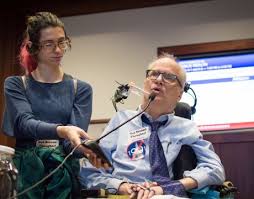
Hon Nick Goiran
In the lead speech opposing the Voluntary Assisted Dying Bill 2019 which would legalise euthanasia and assisted suicide in Western Australia, the Hon Nick Goiran powerfully enunciated the case that it was impossible to create a scheme which could guarantee that there would be no wrongful deaths due to medical errors, elder abuse and patient steering and a lack of equitable access to palliative care.

In his conclusion summing up the argument he made five statements:
  • Firstly, the desire of a significant proportion of confident people for ready access to lethal injections ought never to override the rights of the quiet vulnerable to safety and protection.
  • Secondly, if we are intellectually honest and reason through the theory of a euthanasia regime, we should conclude that it is inherently unsafe. The insufficiency of the criminal justice safeguards informs us of this. The prevalence of medical negligence informs us of this. The ease of doctor shopping informs us of this. The existence of elder abuse informs us of this, and the reality of doctor bias informs us of this.
  • Thirdly, when we engage with the lived experience of the few jurisdictions that have legalised euthanasia or assisted suicide, we know that the theory of an inherently unsafe regime has resulted in casualties of wrongful deaths. In other words, the theory has translated into practice and wrongful deaths have ensued, and there have been casualties.
  • Fourthly, there is another way; there is a better way. There is a safe approach to end-of-life choices; however, it will require all of us to persistently insist that quality palliative care is made available to every Western Australian and until we, the 36 of us, have exhausted ourselves in fulfilling this duty, we should not contemplate a euthanasia regime, let alone this bill, which is more dangerous than the Victorian legislation and more dangerous than the now inoperative Northern Territory legislation.
  • Finally, I oppose this bill because the risks in legalised assisted suicide are simply too great, not the least of which is because the consequences are final.
Read the whole of the Hon Nick Goiran's speech here

Debate on the Bill continues with further second reading speeches.

Wednesday, February 13, 2019

What happened to do no harm? Protecting you from medical homicide.

Alex Schadenberg
Executive Director - Euthanasia Prevention Coalition

I just re-published the excellent article concerning the involuntary euthanasia deaths at Mount Carmel hospitals in Ohio. (Link to the article).

It is shocking that 34 people are known to have died after allegedly receiving an intentional lethal overdose of painkillers from Dr William Husel. Husel had his medical license suspended and he was fired from the hospital, while 20 other hospital employees have been suspended. 

Last night I received a call from a physician who was seeking advice about launching a criminal case into the death a close family member. The cover-up for the death started immediately and no one would have suspected anything if this doctor didn't arrive the afternoon before the death and start asking questions about the lethal levels of drugs that the family member was administered.

We spoke for a long time about his frustration about the lack of response from the local police. We have referred him to an excellent lawyer.

It is not easy to bring medical homicide cases forward. Usually the victim's family do not have a medical background and only suspect that something wrong occurred while the police view medical homicide complaints as "medical error" cases or simply as not in their jurisdiction.

We hope that this case will go forward since the plaintiff is an experienced physician and the circumstances are similar to Ohio.

Become a member of the Euthanasia Prevention Coalition (membership) or make a (donation) to enable us to help you in your time of need.

Sunday, January 27, 2019

Intentional ending of a patient’s life more than ‘ medical error’?

Alex Schadenberg
Executive Director - Euthanasia Prevention Coalition

Last week, Limaohio.com columnist, Melissa Martin comments on the Ohio Department of Health investigation concerning 27 cases of massive overdoses of pain medication by a Ohio doctor and assisted suicide.

Melissa Martin
Commenting on the Ohio overdoses, Martin writes:

According a 2019 article in the Columbus Dispatch, “The Ohio Department of Health has begun an investigation into a Mount Carmel doctor accused of ordering potentially fatal doses of painkiller for 27 near-death hospital patients, all of whom have died. Mount Carmel officials fired the doctor and placed 20 pharmacists and nurses on leave while they look into the cases.” 
“Eighteen months ago, Mount Carmel began work to stop preventable medical errors — work that puts systems into place to make the care we provide highly reliable and consistent,” is another statement on the Mount Carmel website. 
Why is a policy to prevent medical errors not ongoing? Why 18 months ago? Why not prior to opening the hospital for business? It appears that whistle-blowing employees came forth with the allegations. When did the intentional ending of a patient’s life by a physician become ‘a medical error’?
Martin puts the Ohio investigation into the context of other medical professionals. She writes:
Donald Harvey, a nurse’s aide, dubbed “the Angle of Death,” pleaded guilty in 1987 to killing 55 patients in Cincinnati and Kentucky hospitals. Many of his victims were chronically ill patients. He claimed he was ending their suffering. “Harvey told a newspaper after he pleaded guilty to avoid the death penalty that he liked the control of determining who lived and died. Former Hamilton County Prosecutor Arthur Ney Jr. who prosecuted the cases in Cincinnati said Harvey was not a mercy killer,” according to a 2017 article in USA Today. 
Lisa Schattinger, a nurse, founded Ohio End of Life Options in 2015. The members support a Death with Dignity law in Ohio...
Dr. Jack Kevorkian, a medical pathologist, was arrested, tried in a court of law, and convicted of physician-assisted suicide. According to a 2011 article in the New York Times, “The American Medical Association in 1995 called him “a reckless instrument of death” who “poses a great threat to the public.”

Martin concludes the article by stating:
The phrase ‘physician-assisted suicide’ has been replaced by ‘death with dignity.’ Loaded language is a persuasive technique used to heighten emotion, gain support, and sway voters. And loaded phrases are changed to make horrific acts more palatable to the public. 
Do you support or oppose a Death with Dignity law in Ohio for the terminally ill? 
Do you support or oppose the alleged acts of a rogue physician to end the suffering of terminally ill patients by injecting lethal doses of fentanyl at Mount Carmel hospital in Columbus? Mercy killings or playing God?
If you think the article by Melissa Martin is extreme, maybe you need to read about Charles Cullen, a nurse who killed at least 40 patients and said "I thought I was helping."

Tuesday, December 25, 2018

John Kelly: Massachusetts Legislature Should Reject Assisted Suicide. People lose their lives to misdiagnosis, coercion. abuse and depression.

This article was published by the Worcester Telegram on December 24, 2018.

John Kelly
By John Kelly director of the disability rights group - Second Thoughts Massachusetts

In a recent Wicked Local Lexington commentary (“Medical aid in dying important for some with disabilities,” Sept. 28), Michael Martignetti argues for the legalization of assisted suicide from the perspective of someone with the progressive neurological disability, Friedrichs ataxia. I can relate to the author’s disability experience, as 35 years ago a spinal cord injury left me paralyzed from the neck down. Like Martignetti’s, my disability will present challenges as I age.

But whereas Martignetti frames assisted suicide as a personal choice in the face of “unbearable suffering,” I see a state-run program that will result in people losing their lives to misdiagnosis, treatment denial, and coercion/abuse, and depression. Not all families are united in loving and supporting us.

Doctors often make diagnostic mistakes: between 12 percent to 15 percent of people admitted to hospice as “terminally ill” outlive the six-month prediction. Many more who never enter hospice also outlive their diagnosis. For example, the late Senator Ted Kennedy lived a full year longer than his diagnosis of 2 to 4 months, while Florence resident John Norton credits 60 years of good life to the unavailability of assisted suicide after a mistaken prognosis.

Late last year, the Oregon Health Authority explained that people can become “terminally ill” through insurance denial and unaffordability. For example, Nevada Dr. Brian Callister had two patients denied by California and Oregon insurers for what used to be routine, lifesaving, operations. The insurers only offered the “choice” of hospice or assisted suicide. It’s impossible to talk about individual choice when profit-maximizing companies can – with no accountability – make you terminal.

The Health Authority admits its involvement ends with the dispensing of the drugs by the pharmacy. Of the many reported abuses, see the cases of Thomas Middleton (financial abuse), Wendy Melcher (attempted murder of a trans woman), and Kathryn Judson (physician pressure).

The bill requires no independent witness at the death, so the supposed safeguard of “self-administration” is empty. Especially vulnerable will be the 10 percent of Massachusetts seniors estimated to be abused yearly. A caregiver or heir to an estate can witness a person’s request, pick up the prescription, and then administer the lethal dose without worry of investigation — the bill immunizes everyone involved.

Another safeguard requires applicants to be evaluated by a mental health professional, who in a one-time meeting is tasked with “determining that the patient is capable and not suffering from a psychiatric or psychological disorder or depression causing impaired judgment.” A survey of psychiatrist revealed that most said they could not diagnose depression in a single visit. Meanwhile, “impairing judgment” is what depression does. As peer advocate Ruthie Poole has testified,

“Depression does not cause black and white thinking; it causes black and blacker thinking. Absolute hopelessness and seeing no way out are common feelings for those of us who have experienced severe depression. Personally, as someone who has been suicidal in the past, I can relate to the desire for ‘a painless and easy way out.’ However, depression is treatable and reversible. Suicide is not.”

Martignetti insists that disability does not make people eligible, but the Oregon reports show that the 5 leading “end-of-life concerns” are not pain-related but the “existential distress” (New England Journal of Medicine) experienced through “loss of autonomy” (91%), lost abilities (90%), “loss of dignity” (76%), incontinence (46%), and feeling like a burden (44%).

Indeed, I have found that social prejudice and discrimination are far more injurious than the actual loss of abilities. People have told me to my face that they would rather be dead than like me, while the culture promotes a theme of “better dead than disabled.” Movie examples include “Me Before You,” “Whose Life Is It Anyway,” and “Million Dollar Baby.”

This helps explain why every major national disability rights organization that has taken a position on assisted suicide has come out in opposition.

The legislature should continue rejecting a bill that trades on disability prejudice to push vulnerable people toward early deaths.

John B. Kelly is director of Second Thoughts Massachusetts: Disability Rights Activists Against Assisted Suicide, a grassroots group opposing assisted suicide since 2011.

Thursday, November 29, 2018

Are Euthanasia Errors Acceptable?

By Fabian Stahle, a Swedish researcher.
Edited by: Alex Schadenberg, Euthanasia Prevention Coalition


When the advocacy for legalisation of euthanasia/assisted suicide approach a new jurisdiction it is always with the assurance that the proposed practise will only be used for extreme cases – persons in extreme pain and on their death bed. The advocates emphasize that strict safeguards will prevent anyone from being killed by mistake.


Dr Johan Andreen
These two speaking points in their sales pitch - only extreme cases and no mistakes – are constantly repeated in the first phase of introducing the idea of medical killing.

Currently the Swedish debate is in the introduction phase. A Swedish opponent of euthanasia, psychiatrist Johan Andreen, recently addressed the allegations about the proposed strict safeguards in an article in the Swedish Psychiatric Magazine, No 3, 2018. See page 54-56, (link) with translated title: "Taking Position In The Question About Euthanasia."

His article is a sharp and in-depth analysis of the weakness of the proponents claims and a passionate appeal for true compassion for the vulnerable.

The author asks the following question to those who propose euthanasia (and PAS) regime and to those who haven't yet made up their mind:
". . . Is it acceptable that any erroneous deaths at all take place in the context of something that should be a care measure?"
He then continues:
"If your answer is yes, the next question is: “why should we accept that when we do not accept it for other care measures?” Furthermore, how big a proportion is acceptable? Finally, how will we be able to establish and ensure safe control of that proportion of error with “assisted death"?

If the answer is no (which it reasonably ought to be), some of the follow-up questions would instead be: How can the law and its application ensure that mistakes and abuse of the law do not result in patients – who should have had care and support in a dignified life – having their lives shortened as well as a dishonourable ending to their life?


We had better watch out and navigate right in this paradoxical context. Because, although the existence and purpose of the act is to bring about death, and that this has been achieved, it will inevitably also have occurred in cases where care and treatment to live a meaningful and reasonably comfortable life should have been given. The assisted death will have the effect that some patients pass away as a result of the medical act, when this was incorrect and not the patient's actual desire and need. In the name of common sense and honesty, we should all be able to assume and agree that this will be unavoidable. In what world are there laws, doctors and healthcare systems that have no shortcomings and risks, or legal institutions that cannot be used for unintended and therefore illegal purposes?
The starting point must be, for empirical and logical reasons, that it will not be possible to introduce a "Swedish improved" version of the Oregon model that will not kill a number of people in error. . . . Let it be clear that this unintentional mortality would take place at a percentage or even permille level. It would also occur in a Swedish model.

Is any such mortality at all acceptable then? In our current situation, it is difficult to see, let alone find the opportunity to talk about this lethal side-effect or risk in the assisted death debate, since the act itself has the purpose of bringing about death!


So, here we need to see before us people who are depressed or just lonely and despondent. People who with pharmacological, psychotherapeutic and other treatment or just good care, compassion and counselling, together with their near and dear ones receive the support they need – but do not believe they can wish for – to be able to live out the time they have left. And no one can know the length of that time. 


There may be individuals who perhaps enter [into] their terminal condition due to the fact that in a state of depression – or sheer resignation – they stop taking or continuing treatment or investigation, or fail to ensure necessary intake of nutrition, fluid and basic activity and therefore become terminally ill. Is an outcome, involving an act that leads to death, acceptable in any or a few cases of these treatable and care-demanding non-terminal conditions? Should not our compassion, our strength and our resources instead be spent on scientifically developing – and with the use of care programs, focus and standardize – the help provided in cases of such suffering, the underlying disease and the social vulnerability?
In order to see with sharp clarity what we are talking about here – in a concrete corresponding care and treatment scenario – we need to begin to make comparisons with scientific pharmacological treatments.

When certain drugs appear to have clearly identified serious side-effects including fatality, severe illness or foetal damage, they are immediately withdrawn (the list could be long and will not here be encumbered with names). It does not matter that they have cost billions to develop and it does not matter that they may have a very good and important effect for the vast majority. It does not matter that these side effects are rare, if they cannot be safely prevented by any possible method. In those cases, we consider that to be enough. Our modern legislation guarantees that we should not have such drugs. The market for that drug will fall as soon as repeated reports of these outcomes occur. The company loses its credibility and status if, when the risk is clear, it does not immediately withdraw the drug before the drug authority in every country does.

In summary, the questions asked here are necessary and sufficient, and therefore crucial, to answer concerning euthanasia – regardless of model. Do we accept that the medical sector will be required to abolish and violate the thousands of years old parameters in our social contract – between individuals, people and the social system/state – that "you/we shall not kill"? Disregarding that a few countries have introduced euthanasia, do we not in the name of health care security and basic ethics have to talk about the fundamental risk to patients that this entails?

Do we accept that a societal change should be made that involves doctors and nurses participating in something that most of us agree is not, and can never be scientific treatment? Do we accept a state-imposed measure performed on the basis of patients' supposedly well-founded requests, following an arbitrary assessment by doctors – no science for this procedure exists – resulting in the death of a patient, a fellow human being, and that the possibilities for giving proper treatment and care are extinguished – forever? When this, apart from a series of risks and consequences for our society that have not been raised here, actually means that people who would have wanted and could have been helped to live will die of "assisted death"?"
As for Sweden we can already anticipate the second phase in the debate when it becomes clear for everyone, even for the proponents – although not admitted – that some collateral damage is inevitable. But the advocates play down the issue just like the Canadian doctor Ellen Wiebe, who in a debate in The Economist Magazine confessed (Link):
”I agree that one day I may make an error in my assessment and not realise that someone has been pressured into a decision to hasten their death. And the other independent assessor might make the same error. That might mean a person would die earlier than she or he may have preferred.”
Dr Wiebe continues with a rhetoric question that clearly demonstrates how the advocates in the implemantation phase shamelessly propagate for a miserable standard for protecting people from being killed.
"Should that error be the reason hundreds or thousands suffer needlessly against their will at the end of life? I am so glad to be Canadian in 2018 and to say, “No, that is not how it is here."
The confession that she "one day may make an error" may be an understatement in the view of her extensive experience of providing about 150 assisted deaths according to another article by her published in the The Economist Magazine (Link). 

Fabian Stahle is a Swedish researcher who, last year, uncovered hidden problems with the Oregon assisted suicide model.

Monday, October 29, 2018

The Importance of Talking to Patients

This article was published by Nancy Valko on October 29, 2018.

Nancy Valko
By Nancy Valko

As I have related before, back in the early 1970s when I was a new ICU nurse, I was teased for talking to comatose patients. I was even asked if I talked to my refrigerator. I explained that if hearing was truly the last sense to go, it made sense to talk to the patients and explain what we were doing just as we would for any other patient. The other nurses thought this was ridiculous-until “Mike”.

“Mike” was a 17-year old boy who was admitted to our intensive care unit in a deep coma with massive injuries caused by a terrible car crash. The neurosurgeon on duty pronounced, “He won’t live until morning and it’s a good thing, because he’d be a vegetable.” I was shocked that he said this in front of “Mike”!

But “Mike” didn’t die. I kept talking to him and eventually he could even move a finger on command. But he would not respond to the neurosurgeon, even with tests to see if he would move with pain stimuli.

Later on, when “Mike” was able to breathe on his own, he would even say “Hi” for me on command but it was only after I repeatedly begged that Mike finally said “Hi” to the neurosurgeon. The neurosurgeon called this a “miracle” but shortly after that, Mike was transferred to a nursing home. None of us ever expected to see him again.

However, about 2 years later, a handsome young man strode into our ICU and asked “Do you remember me?” It was Mike! He said he had driven 60 miles to tell us thanks for saving his life and we all dissolved in happy tears.

I told him that he wouldn’t remember this, but he would move and say “Hi” for us nurses but not for the neurosurgeon. Mike got very serious and said “I remember him calling me a vegetable and I wouldn’t move for him!”

After that, every nurse on our unit was told to talk to every comatose patient as if he or she was totally awake and soon we found more patients who unexpectedly woke up or improved.

And no one ever teased me about talking to “comatose” patients again.

Throughout the decades since, I have talked to other patients who were considered comatose or otherwise unconscious, not just to patients with a major brain injury but also to patients approaching death and to patients sedated while on a ventilator for breathing. I’ve always considered this talking and explaining just basic respect for every patient. I was pleasantly surprised when I followed up with patients and families after they left our ICU and found many who remembered and told me how much this had helped them.

“Observations From ICU Patients We Thought Were Asleep, But Were Not”

So I was thrilled to see this title for a new Journal of the American Medical Association (JAMA) learning audio for doctors with stories from patients about what they experienced in an ICU while their treating doctors and nurses thought they were “asleep”.

In the audio, most of the patients were on sedation while on a ventilator and assumed unaware. One such woman related how she became so angry at her doctor’s attitude that she wanted to throw something at him and was frustrated when she couldn’t. Another man related how painful it was when the electrodes checking for his level of sedation were used without explanation or warning. Another complained about hearing nurses talking about her mom and dad poorly and their lack of empathy.

But there were also good stories about nurses or doctors taking the time to explain what was happening, talking as if the patient could hear everything and helping patients communicate without words. One doctor told about how his own father was in a hospital for an extended time and his dad remembered hearing the doctor talking about all the things he couldn’t do instead of what he could do. This doctor says that his father’s discouraging experience made him a better doctor.

The audiotape also explains how difficult it can be to not over or under-medicate people, especially when it comes to pain, confusion and anxiety. The audiotape recommends that health care professionals try to avoid long acting drugs with potential side effects and continuous medication infusions and to use simple tools to assess delirium, confusion and anxiety.

The audiotape also recommends that health care professionals “treat patients like real persons”, “take the time to explain”, “be careful to assess level of awareness”, “realize that every action and word have real consequences” and that the “human element” is the most important.

Conclusion

Being in an ICU can be especially stressful for patients and their families and I hope this information is helpful. Medicine can do wonders today but it is the human connection that provides the best environment for healing for both patients and their families.

Wednesday, April 4, 2018

Nancy Elliott: People who qualify for Assisted Suicide are not necessarily dying.

The following testimony was submitted by Nancy Elliott Chair, EPC-USA to each Rhode Island committee member and the committee clerk on behalf of EPC USA.

Dear Health, Welfare and Human Services Committee Member,

Nancy Elliott
Please reject H7297. Proponents say that this is about autonomy and choice. Nothing could be further from the truth. There are no safeguards that ensure that the choice is yours and not someone else's. As a matter of fact all the “so called” safeguards can be gone around. Proponents claim there is no “slippery slope” yet we see as soon as something is passed they go in to expand their death policies. Oregon, where assisted suicide is legal, just passed legislation that will allow for the starvation and dehydration of incompetent people. Belgium’s law has expanded to euthanize children, those who are incompetent and people who are not dying at all. And Canada who recently passed it is has already expanded it to prisoners.


I would like to point out a few of the people who will be hurt. Three groups that are the target for Assisted Suicide are the sick, the elderly and the disabled. While there are many other problems with this kind of law, I want to focus in on them.


It is said this is only for the sick and dying. One of the biggest problems is people who qualify for Assisted Suicide are not necessarily dying. Think of a 21-year-old otherwise healthy insulin dependent diabetic. He qualifies if he rejects his insulin. This would be the same for many other people with serious conditions, who take prescription medications. What about all the curable cancers? They qualify. What about incorrect medical diagnosis? With Assisted Suicide on the table these mistakes can be deadly.

I was at an oral submission on Assisted Suicide in Massachusetts a few years back when a gentleman named John Norton gave evidence, that as a young man he was diagnosed with ALS. He stated that had Assisted Suicide been legal at that time he would have used it. A few years in, the disease’s progression just stopped. Now in his late 70’s he stated he has had a great life with children and a grandchild. With Assisted Suicide on the table he would have lost all of that.

Steering is a big deal with all three of the groups that I mentioned. At that same Massachusetts proceeding, a doctor stated that Assisted Suicide laws were something he was in favor of. He continued with his points and ended by saying that He felt it was the responsibility for a good doctor “to guide people to make the right choice”. I do not think he intended to say that, but is there any doubt that this pro suicide doctor would try to persuade his patients to follow his wishes concerning their Assisted Suicide.

These laws are abusive in their very nature. To suggest to someone that they should kill themselves is abuse. My husband was terminally ill and I went to a lot of doctor appointments with him. If medical personnel were to suggest Assisted Suicide to him, he would have been devastated. While he never would have done that, it would be like saying to him, “You are worthless and should die. That is abuse! The proponents say that would never happen, but that did happen to an Oregon woman named Kathryn Judson. She had gone to a doctor’s appointment with her seriously ill husband and exhaustedly sunk into a chair where she overheard the doctor pitching Assisted Suicide to her husband with the clincher, “Think of your wife.” They left and never came back. The husband went on to live another five years.


Next seniors are at risk and very easily fall victim to coercion as the process is very open to that. In most states, heirs can be there for the request and even speak. Anyone can pick up the lethal dose. Once in the house all oversight is gone, there is no witness required at the death. Even if they struggled who would know. If that is not enough, the death certificate is falsified to reflect a natural death. All the information is sealed and unavailable to the public. Even if someone suspected foul play, the death certificate says no crime here. Taking advantage of seniors is epidemic in the States. Look at the case of Thomas Middleton. He made Tami Sawyer his trustee and moved into her home. Within a month he was dead by Oregon’s Assisted Suicide law. Two day after his death Ms. Sawyer listed his house and sold it and deposited the money into three companies she owned with her husband. We will never know if or how much coercion or foul play took place in this case.

Finally those with a disability are at risk. Most people that “qualify” for Assisted Suicide at that point in their life have a disability. Many with long term disabilities have been labeled terminal all their lives. Without meds, treatments, and assistance they would not survive. This is about disability. If you have a disability you are encouraged to give up, commit suicide. If, on the other hand, you are young and healthy, you are given suicide counseling. This is discrimination against people with disabilities. Why should they trust that they will not be coerced into Assisted Suicide, when they are already discouraged to seek treatments and are not treated fairly? When you think about it this is a law that is written just for them. It is a “special” carve out, for the sick, elderly and disabled.

In closing, I just want to add that Assisted Suicide has been rejected in over 100 legislative, ballot initiative and judicial attempts in the USA, including my state New Hampshire. The more it is studied the more uncomfortable people become with it.

Nancy Elliott 

Former three term NH State Representative 
Chair - Euthanasia Prevention Coalition - USA

Monday, January 15, 2018

In 40 years of terminal care I've never seen unmanageable suffering.

Alex Schadenberg
Executive Director - Euthanasia Prevention Coalition


The New Zealand Herald published an excellent article, on January 15, by Dr David Richmond in response to an article promoting euthanasia by Dr Havill.

Havill, a former intensive care specialist and a current euthanasia promoter, stated in his article that people are dying cruel and painful deaths that can only be solved by legalizing euthanasia. 
Richmond responds by stating:
In more than 40 years of medical practice as a physician, geriatrician and terminal care manager, I cared for many dying people. My testimony is that I have never seen a person dying with unmanageable suffering.
Richmond then questions the training Havill has received in pain and symptom management. Richmond continues by recognizing the problem of medical errors.
Even with the best of equipment and testing, inaccurate diagnoses and prognoses are surprisingly common. People have already died and many more will do likewise because of mistakes in the euthanasia procedures including diagnosis.
Richmond continues by challenging Havills' assertion that doctors regularly kill patients already.
If rogue doctors are doing what Dr Havill says they are doing while we have laws that provide maximum penalties for killing, imagine what freedom they will arrogate to themselves if the current laws are weakened?
Richmond then refers to studies proving that euthanasia without request regularly occurs in the Netherlands and Belgium.

The death lobby has no problem with hiding or exaggerating the truth to accomplish their goal. Recently a Swedish citizen contacted the Oregon Health Authority and learned that the definition of "terminal illness" in Oregon does not require someone to be "terminally ill" to be approved for assisted suicide. One more deception by the death lobby.

Friday, December 8, 2017

Woman attempted suicide based on a terminal illness had a wrong diagnosis

Alex Schadenberg
Executive Director - Euthanasia Prevention Coalition


T
Mya DeRyan
he story of Mya DeRyan is not just about gaining a second chance at life; it is also a warning to Canadians, now that euthanasia is legal, that some people with a misdiagnosis will die by lethal injection (euthanasia).

Jessica Lepp reporting for CTV News Vancouver Island stated in this incredible report that DeRyan, who thought she had a terminal illness, decided to die by suicide. But thankfully she survived. According to the CTV report:

On Oct. 30, DeRyan set the plan into motion. She left behind a book with pertinent information for her son and on top of it, a note that simply read "My body's in pain. My heart is full. It's time. I love you." 
She boarded a BC Ferries vessel travelling from Vancouver's Horseshoe Bay to Departure Bay in Nanaimo. Halfway through the sailing near Bowen Island, she stripped down on a car deck and took the plunge into the icy water...
But...somebody saw her take the leap overboard and the search was on almost immediately. 
"Suddenly I hear an alarm and the announcement of man overboard, and all of the sudden the moment changed," she said.
DeRyan's life changed after that. According to the CTV report:
DeRyan spent about a week in hospital being treated for hypothermia, but that's when the next incredible part of her story materialized. 
Doctors gave her news that would change her life again – DeRyan's terminal diagnosis was wrong. She wasn't dying at all. 
"I think it was that moment, I was still in the hospital realizing there's got to be a plan, and there's got to be an intention," she said. "I feel like it's a new body. Any little malady I had is absolutely gone." 
With a new lease on life, DeRyan said time with her son is her first priority.
Based on her wrong diagnosis, DeRyan would have qualified for euthanasia. If it had been legal in Canada in October 2016, she might have died by lethal injection (euthanasia).

In April 2013, Pietro D’Amico, a 62-year-old magistrate from Calabria Italy, died by assisted suicide at a Swiss suicide clinic. His autopsy found that he had a wrong diagnosis.

The fact is that legalizing euthanasia and assisted suicide directly threatens the lives of people who have received a misdiagnosis. 

Medical error is the third leading cause of death in the United States. Death by lethal euthanasia or assisted suicide can and will occur to people who have received a wrong diagnosis.

Wednesday, August 23, 2017

Medical error is the third leading cause of death. Should legal euthanasia concern you?

Alex Schadenberg
Euthanasia Prevention Coalition


Recent studies indicate that, in the United States, medical errors have become the third leading cause of death.

A recent article by, lawyer Meghan Hull Jacquin points out that one out of every 18 patients in Canadian hospitals will experience a potentially avoidable harmful event.
Unfortunately, surgical and medical errors happen, and they can cause patients injury, disability, or even death. One recent study found that one in 18 people admitted to Canadian hospitals each year – 138,000 patients – experienced a harmful event that was potentially preventable. Of those patients, 30,000 faced more than one preventable harmful event. Some statistics suggest these hospital errors may be the third leading cause of avoidable death.
Now that euthanasia is legal in Canada and assisted suicide is legal in several US States the reality that medical errors will lead to death by euthanasia or assisted suicide.

For instance, the Canadian law permits euthanasia (lethal injection) if a person has a grievous and irremediable medical condition - meaning:
  • the person has a serious and incurable illness, disease, or disability;
  • the person is in an advanced state of irreversible decline in capability;
  • the illness disease or state of disability or the state of decline causes enduring physical or psychological suffering that is intolerable and cannot be relieved under conditions that the person considers acceptable; and
  • natural death has become reasonably forseeable taking into account all of the medical circumstances, although a prognosis as to the specific length of time remaining is not necessary.
Since a grievous and irremediable medical condition, or disability, can be caused by medical error, therefore medical errors will lead to deaths by euthanasia.

Further to that, medical misdiagnosis has led to death by euthanasia or assisted suicide. Laws permitting assisted death require the approval of two doctors (in Canada a nurse practitioner can approve euthanasia), but none of the laws require both doctors to examine the patient to ensure that a proper diagnosis has been made.


For instance, in April 2013, Pietro D'Amico died at a Swiss assisted suicide clinic, after receiving a wrong diagnosis. An article published in the Swiss news service, The Local, stated:
... lawyer Michele Roccisano told Italian newspaper Corriere della Sera. 
An autopsy carried out by the University of Basel’s Institute of Forensic Medicine found that D’Amico was not suffering from a life-threatening illness at the time of his death. 
Roccisano has called on the Italian and Swiss authorities to examine D’Amico’s medical records to determine what went wrong.
Death by euthanasia and assisted suicide will also enable unscrupulous doctors to cover-up their medical errors. It is too late to discover a medical misdiagnosis, after the death.

Legalizing assisted death is not safe.

Wednesday, March 22, 2017

New Mexico Assisted Suicide Bill - Deserved to Die.

This article was published by the Sante Fe New Mexican on March 20, 2017.

By John Kelly, Director of the disability rights group Second Thoughts Massachusetts.

John Kelly
Thanks to the state Senate’s rejection of the assisted suicide bill, Senate Bill 252, residents of New Mexico can breathe easier. As Sen. Craig Brandt said during last week’s debate, “This bill is dangerous. Doctors make mistakes every day.”

CBS News reported in 2014 that 12 million Americans are misdiagnosed yearly. About 15 percent of people given less than six months to live are not “terminally ill.” Thousands of people “graduate” from hospice yearly. Assisted suicide programs turn the best result under hospice — learning that you weren’t “terminal” after all — into the tragedy of dying with years or decades of life remaining. This reality alone should be enough to stop any assisted suicide proposal cold. We cannot predict the future. The “choice” promised by assisted suicide is an illusion.

Assisted suicide hit the news in 2011, when two doctors petitioned District Court Judge Nan G. Nash to declare assisted suicide constitutional. A few months later, Santa Fe resident Aja Riggs joined the lawsuit after doctors gave her slim chance of surviving aggressive uterine cancer. Judge Nash’s 2014 ruling for the plaintiffs was overturned on appeal. Then the state Supreme Court unanimously ruled that there was no constitutional right to assisted suicide. More than five years later, Aja Riggs’ cancer is in remission.

During the Senate debate, senators warned that “undue influence” would lead to wrongful deaths. One out of every 10 older New Mexicans is estimated to be abused every year, mostly by adult children and spouses. A caregiver or heir to an estate could help sign a person up, pick up the prescription and then administer the lethal dose without worry of investigation. To receive immunity, they could simply claim to have acted in “good faith.”

With no official witness required at the death, we can’t know whether someone self-administered the drugs.

Insurers routinely value their bottom line over people’s health. Last summer, Californian Stephanie Packer received a letter from her insurer refusing to cover a prescribed course of chemotherapy. Her co-pay for assisted suicide? $1.20.

Millions of people now face the prospect of losing health insurance if Congress repeals the Affordable Care Act. That will mean even less choice. SB 252 would have put depressed people with a serious health condition or disability at risk. Depression is treatable, death is not.

Supporters of SB 252 said the bill was needed to prevent people dying in agony, but attentive comfort care can control pain in dying patients, through palliative sedation if necessary. People already have the right to refuse any treatment, including food and water.

We now have 25 years of reports from Oregon and Washington, which show that pain (which includes fear of pain) is the sixth-cited of seven “end-of-life concerns.” Oregon physicians report giving lethal drugs mainly due to psychosocial distress about disability, including dependence on other people (“losing autonomy,” 91 percent), grief over lost abilities (90 percent), loss of the respect of others (“loss of dignity,” 77 percent), needing help with incontinence (“losing control of bodily functions,” 47 percent) and believing that suicide would leave loved ones better off (“burden on family, friends/caregivers,” 42 percent).

What we disabled people see in legalizing assisted suicide is that some people receive suicide prevention, while others get suicide assistance, based on value judgments and prejudice. Instead, let’s make sure that people have the choice and support to live — and die — comfortably, at home, with pain controlled and dignity intact.

As a progressive, I am heartened that seven Democrats joined Republicans in defeating the measure. Protecting innocent people from misdiagnosis, insurers’ bottom lines, suicidal depression and abuse is a cause that everyone can embrace.

John B. Kelly is a Boston-based disability rights activist and writer. He is the director of Second Thoughts Massachusetts: Disability Rights Advocates against Assisted Suicide. The group’s website is www.second-thoughts.org.

Wednesday, September 14, 2016

New Zealand Medical Association states: Euthanasia - The risk is too great and the consequences are final.

Alex Schadenberg
International Chair - Euthanasia Prevention Coalition


The New Zealand government Health Select Committee is currently gathering evidence as it considers the issues of euthanasia and assisted suicide.

According to Newshub the New Zealand Medical Association (NZMA), representing 5500 medical professionals, stated that it opposes changing the law to allow euthanasia.

Stacey Kirk with Stuff New Zealand reported that Dr Stephen Child, chair of the NZMA said:
"the scope for error was too large when weighed against the outcome." 
"This is an irreversible decision in which the consequences are final."
Dr Child argued that doctors are not always right in forming a patient's prognosis. According to Newshub Dr Child said:
10 to 15 percent of diagnoses are incorrect, and three percent of diagnoses of cancer are incorrect," 
"We're not always right in diagnosis, and we're not always right in prognosis. 
"In principle and in practice, the association does not support a change in the legislation."
Dr Child told Stacey Kirk of Stuff New Zealand:
"We also believe in the right of the administration of... pain relief and other medications, for the purpose of relieving pain and suffering, even if the secondary consequence of that treatment may hasten death," 
"Decisions however are often influenced by circumstance, by fear of what the future might hold, by concern for loved ones and by societal expectations, which can cause direct and indirect coercion in decison-making."
Radio New Zealand, reported that Not Dead Yet Aotearoa stated to the health committee that:
people with disabilities suffered from negative attitudes, and voluntary euthanasia would add to that.
The New Zealand Parliament's Health Select Committee is hearing oral submissions based on receiving more than 1800 responses form New Zealanders and organisations on the issue of euthanasia, out of a record of 21,435 submissions.