Showing posts with label Living with Dignity. Show all posts

Wednesday, June 20, 2018

Our right to quality palliative care in Québec?

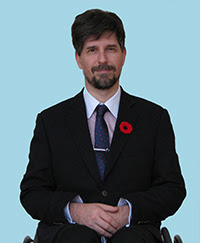
Aubert Martin
This article was published by Mercatornet on June 20, 2018
By Aubert Martin

The Act Respecting End-of-Life Care was sold to us as "first and foremost, a law of access to quality palliative care throughout the territory, at the patient's choice.” When it was adopted – not so long ago – its promoters insisted that it only legalized "medical aid in dying" (euthanasia) as an "exceptional measure for exceptional cases."

However it is now obvious that, almost four years since the day of its adoption and close to three years after its coming into effect, the public authorities have essentially concentrated their efforts on this famous "exceptional measure", giving the impression that the act of killing people to end their suffering – still very controversial – was a cool and trendy way of ending one’s life.

Recently, faced with this regrettable reality, several personalities in the health care community have publicly denounced the fact that, ultimately, the Act Respecting End-of-Life Care does not fulfill its main promise: to guarantee to all of the approximately 60,000 Quebecers who die each year the right to receive quality palliative care if it is needed.


Thus, after the heartfelt appeal of Quebec's two major palliative care associations denouncing the lack of efforts and resources to make quality palliative care accessible in all Quebec nursing homes (CHSLDs), or that of physicians who claimed that some patients are turning to physician-assisted suicide for lack of palliative care options, the Collège des médecins du Québec (CMQ) has also expressed its concerns by highlighting the disorderly application of the Act Respecting End-of-Life Care.

In a letter sent to Dr. Gaétan Barrette, the current Minister of Health, the Collège des médecins mentions that, in some cases, “patients, unable to benefit from [clearly identified palliative care], may have had no choice but to ask for [euthanasia] to end their days...".

Even worse, the College reports a disturbing fact that suggests that the exceptional measure may be imposing itself as a supreme: “The College has been told that patients seeking medical aid in dying were becoming the priority for access to available resources (...) to the detriment of other end-of-life patients with similar needs.”

In other words, those who choose euthanasia are entitled to the best support available in the last moments of their lives, while many others – the vast majority – do not receive the care promised to them in the law. Is that really the ideal of justice that we pursue as a society? Or is it for fear of making tomorrow’s headlines that the medical personnel are rushing to satisfy patients who choose euthanasia? Are they trying to avoid being publicly singled out for not immediately providing the act that has been promoted as the new way to die 2.0?

Meanwhile, instead of strengthening palliative care, the current situation threatens its very sustainability, as the College of Physicians also observes, reporting that “doctors are leaving and not being replaced in many palliative care settings, compromising access to such care.”

In conclusion, it is time to step back and reflect on the entirety of the commitments made in the Act Respecting End-of-Life Care. It is also time to listen carefully to what palliative care professionals have to propose as ways to make our end of life comfortable: after all, they are the experts. And it is time to claim the right that has been legally granted to us as citizens to have access to such care. Any delay in that respect abandons citizens to death without the support of the comfort care they were promised.

On the eve of the provincial elections in October, now is the time for the Quebec population to mobilize and demand that the future government finally listen to the vast majority of the electorate who wish to live with dignity until the end of their lives with the help of quality palliative care.

Aubert Martin is the Executive Director of Vivre dans la Dignité (Living with Dignity), a Quebec-based organisation.

Tuesday, December 12, 2017

Two years of euthanasia in Quebec: the facts

This article was published by Mercatornet on December 12, 2017

By Aubert Martin
The Canadian province is accelerating past Belgium
The law that legalized euthanasia in Quebec – under the euphemism “medical aid in dying” – came into effect exactly two years ago, on December 10, 2015. Many promises preceded its intrusion into our health system: that this would be an exceptional measure for exceptional cases, that there would be safeguards to prevent abuse, and that very strict criteria would protect vulnerable people. In any case, they told us, it was “first and foremost a law about access to quality palliative care throughout the province.”

Today, we have concrete experience, from right here at home, that allows us to respond to a crucial question: what are the facts after two years?

First of all, the statistics blew reassuring forecasts out of the water, so much so that, in the public discourse, exceptional measures rapidly transformed into a response to a need. In fact, while we were offered a hundred or so requests in the first year, the final result shows that 469 people died by euthanasia in 2015-2016, and 638 in the following year.

In comparing our numbers to those of Belgium (as a percentage of total deaths), we observe that the first year in Quebec corresponds to the sixth year in Belgium, and that our second year is between the seventh and eighth years following the Belgian law. This is to say that Quebec threw itself headlong into death as a solution to suffering.

With respect to the “safeguards”, it is already clear that they do not work. First, let us recall that these safeguards are based on a biased foundation: that of self-reporting. In fact, the physician who evaluates the patient and makes the diagnosis is also the one who causes the patient’s death, and the one who then completes the declaration form to explain to the oversight commission the conformity of his act.

Yet, despite this conflict-of-interest situation which works in favour of the people who administer the deadly injection, the Commission sur les soins de fin de vie (CSFV), in charge of evaluating the application of the law, concluded that there were 21 cases of abuse during the first year and then 31 cases of abuse in the following year. Needless to say, so many infringements put vulnerable people at great risk. However, the most dramatic failure came from the College of Physicians, which judged that “no case justified a punitive intervention.” In doing so, it opened the door wide to repeated violations of the law, justifying their impunity.

Meanwhile, these two years of euthanasia in Quebec have turned the exceptional measure into a promotable solution: safeguards became barriers to access, and the strict criteria – intended to protect vulnerable people – became cruel and discriminatory.

Unsurprisingly, we are also seeing strong pressure to expand access, particularly to people who are not at the end of life, who are unable or too young to consent, or who suffer from psychiatric disorders. By the same token, the tendency that is taking shape before our eyes is transforming euthanasia, originally sold as a personal choice – which nevertheless involves the whole of society – into a choice… for another person.

In conclusion, the facts show that, for the past two years, the situation in Quebec is falling increasingly out of control. Moreover, there has been no effective follow-up on access to palliative care as priority is given only to euthanasia. Thus, for the second year in a row, the Commission mentioned in its report that the “variability of reported information with respect to the number of individuals at the end-of-life who received palliative care does not allow for the processing of these data at this time” (CSFV Report 3.2.1).

Of course, once euthanasia has been sold as a benefit, a gesture of compassion and even a form of health care, this reversal of collective thought is far from surprising.

Yet as a young French writer recently wrote, better to fight so that the last caress of a physician to comfort a patient in her last anguish be by a hand that heals and not one that kills. And so that the last glance received be one of love, humanity, and life.

And while waiting for this salutary reversal, we should ask ourselves, in the light of the facts after two years of euthanasia in Quebec, what is the purpose of having a law, an oversight committee and criteria if it is optional to respect them?

Aubert Martin is the Executive Director of Vivre dans la Dignité (Living with Dignity), a Quebec-based organisation.

Friday, September 29, 2017

Quebec moves toward euthanasia for dementia

This article was published by Mercatornet on September 29, 2017

Aubert Martin
By Aubert Martin


A high-profile murder case has sparked a debate about whether people who cannot consent can be killed ethically

According to a survey conducted last week by the Université de Sherbrooke, in Quebec, 91% of the family caregivers surveyed would agree to extending euthanasia to terminally ill people who are incapable of decision-making, if there were “signs of distress and a written directive”. These latter “conditions” remind us of what was supposed to be the principal criterion in the Quebec law, that of the person being at the “end of life”, which is already being challenged in the courts at the present time.

As usual, instead of seeing in these results a cry of distress from family caregivers of persons with Alzheimer and other dementias, the spotlight is once again focused on euthanasia with its public aura as a solution to suffering. At the same time, it is a real cold shower on all the organisations that accompany with such dedication incapable people and their families. Could we not also infer from this result that only 9 percent of caregivers in Quebec have access to high-quality professional support?

However, before getting carried away by the frenzy of a debate on euthanasia, it would be wise to consider the implications of extending induced death to incapable persons.

First of all, we must recall that the drive for extension of euthanasia to this group was triggered by the high-profile murder of a woman with Alzheimer’s by her husband who “cracked” because he felt left alone. “No one asked me how I’m doing,” he confessed immediately after his act of homicide. Our political decision-makers have turned this murder motivated by desperation into a Trojan horse to promote including a group of extremely vulnerable people among those eligible for medically induced suicide.

In the event of this extension of euthanasia being accepted – less than two years after the law came into force – two “safeguards” that were deemed fundamental at the outset would automatically fall: decision-making capacity and consent to choose death.

Nothing less.

Moreover, in the depth of the current debates, a dramatic message hides behind the possibility of extending euthanasia to people who are no longer able to make their own decisions. Presumably, these people would no longer be fully considered as human beings.

Indeed, their will to live at the moment of their killing would no longer have to be respected, under the pretext of their having written an advance directive in the past. Therefore, it is not a question of consenting or refusing consent to medical care in the event of incapacity – as is the case with the advanced medical directives that are already legal in Quebec. Rather, it is a matter of allowing a person to kill someone who is unable to consent, even when there is no question of artificial life support.

The difference is essential.

In such circumstances, it would be legally – and appear to be morally – possible to explain to them that they are no more than the shadow of a real person who is somehow already dead and who put in writing, in their “true lifetime”, that they would like us to kill them if they became incapable. “You no longer agree? You seem happy now? It does not change anything, you cannot change your mind. Your will to live no longer counts,” we would answer them. “What matters is the document you signed when you were a real person, saying that you must now be put to death. Yes, putting you to death are the exact words since you are in such a vulnerable state that you have become incapable of making an informed decision about yourself or your property. This is the definition of incapacity.”

Thus, by denying their right and even their desire to live, people living with a form of dementia will be implicitly regarded as sub-human beings who will inevitably have to bow to the will of their "former self".

Moreover, this scenario is not some kind of scarecrow. It is not at all hypothetical since we had a concrete example recently in the Netherlands, where a woman with dementia was euthanized against her will. Moreover, the possibility of such a turn of events is reinforced by another result of the Université de Sherbrooke's poll, which reveals that 72 percent of respondents were in favour of euthanasia “even in the absence of a written directive".

Of course, the suffering of family caregivers is very real, but their reaction stems largely from the woeful lack of support for the majority of the people affected by this type of disease. As serious and revealing as it may seem, it has unfortunately become common to hear that death is preferable to life in a CHSLD (nursing home). It seems to me that this would be a good starting point for tackling the problem at the source...

Meanwhile, the dangerous tangent that legal euthanasia installs in every society that has endorsed it continues fatefully its advance in Quebec. It is insinuating into our collective thinking the notion that death – not good health care, quality support and adequate living conditions – is a solution to suffering for you and your loved ones. In the current debate, the logic inherent in assisted suicide now plunges another condition of life into disgrace, such that the death of the people who live with it is presented as preferable.

Yet, in a promotional trailer about the Carpe Diem approach, Ms. Blandine Prévost, 38, suffering from Alzheimer's disease, perfectly sums up the human alternative that should be advocated: "It is in changing the way we are seen by people that lies the hope that I can be a person right to the end."

In other words, beyond debates on euthanasia, it seems therefore urgent to ask ourselves, as a society, how we consider people who have rendered incapable because of illness. Do we still grant them their full humanity?

Aubert Martin is the Executive Director of Vivre dans la Dignité (Living with Dignity), a Quebec-based organisation.

Tuesday, July 4, 2017

Euthanasia: when safeguards become barriers to access.

This article was published by Mercatornet on July 4, 2017

B
Aubert Martin
y Aubert Martin, Executive Director of Vivre dans la Dignité (Living with Dignity) Quebec

A month after the publication of a letter by the secretary of the College of Physicians of Quebec – in which he expressed his concern about a growing “pressure, demanding a form of death à la carte” and in which he denounced those who interpret refusals of euthanasia as a form of exclusion – lawyer Jean-Pierre Ménard is challenging before the courts the cases of two people living with disabilities who were refused the assistance of a physician to kill themselves.

The plaintiffs requested the removal of the “reasonably foreseeable death” clause of the federal law as well as the “end of life” requirement in the Quebec law.

More voices were added to the chorus of “rebels” decrying the cruelty of all criteria that dare make reference to the proximity of death.

Yet not so long ago, the elected Members of the National Assembly in Quebec (MNAs) were congratulating themselves on the wisdom of their law that made reference to… the end of life. This is another reversal of logic in the long list of changes of rhetoric we have already witnessed.

Indeed, at the time of the adoption of the Quebec bill, words like “safeguard” and “strict conditions” peppered the speech of those seeking to calm the fears of people wary of allowing homicide under certain circumstances.

Today, potential extensions of the law are justified by referring to “consensus” and “the will of the people,” while the “safeguards” have turned into “barriers to access”.

Meanwhile, the same promoters of euthanasia who claimed that it was only a matter of “exceptional requests for exceptional cases” have updated their rhetoric to justify the explosion of euthanasia requests: it has become “a response to a need.”

Yet, before the legalization of euthanasia and assisted suicide in Quebec and in Canada, warnings of the slippery slope were met with mockery and contempt from those who embraced medical suicide with open arms.

At best, this cautious warning, based on the experience of countries that legalized euthanasia before us, was treated as a scarecrow brandished by alarmists. “The slippery slope doesn’t exist!” responded those anti-skeptics and other merchants of death.

Today, slightly more than a year after the Quebec bill 52 that legalized euthanasia came into force, we see the first obvious signs of the slippery slope: we have gone from exception to promotion. Already the “end of life” criterion is presented as discrimination which prevents people with disabilities from committing suicide, implying that their living conditions justify their desire to die.

Secondly, the argument that euthanasia is about “capable and consenting people” is giving way to the idea of killing an incapable person (with Alzheimer’s or dementia) regardless of the person’s consent at the time of death.

Finally, according to a Canadian study published in May, the proverbial patient writhing in pain on his deathbed has morphed into a person in existential crisis over his loss of autonomy (read: disability).

So we won’t be surprised if tomorrow we are presented with other ludicrous propositions, such as the one currently gaining popularity in the Netherlands: opening “medical aid in dying” to elderly people who feel they have accomplished their lives.

A society does not accept overnight the idea that the state should endorse the suicide of an elderly and healthy person simply because she is tired of living. It must first live through the deep malaise that accompanies every new expansion of euthanasia access that is sold to us as progress.

In fact, when we think about it, the only thing that is “reasonably foreseeable” is the extension of medically assisted suicide to more and more groups of people. If death is sold as a solution to suffering, and if suicide is viewed favourably when a doctor is involved, the real question is not why some are opposed to it, but rather “why say yes to one and no to others?”

Aubert Martin is the Executive Director of Vivre dans la Dignité (Living with Dignity), a Quebec-based organisation.

Monday, June 12, 2017

What is the difference between euthanasia and suicide?

Living with Dignity asks: What is the difference between euthanasia and suicide?


Living with Dignity network is an autonomous, non-religious, non-profit Quebec organization with no political affiliation, opposing euthanasia and assisted suicide.

Monday, June 5, 2017

Behind Euthanasia: Existential Distress

This article was published by Living With Dignity - Québec on May 31, 2017.

Canadian study recently examined the reasons behind euthanasia cases in four major hospitals in the Toronto area.

The results of the study demonstrate that the main factor behind euthanasia deaths relates to existential distress. Indeed, the primary reason given by patients concerned the loss of autonomy – and not the unbearable pain that was conveniently sold to us from the beginning. Other reasons included fear of becoming a burden to those around them, fear of losing one's dignity, or the fact of no longer appreciating one's life.

In other words, the Canadian picture continues a portrait well known in other parts of the world, in which the same motives are evoked to request assisted suicide. This pattern also confirms what we already knew: euthanasia is primarily a question of how we relate to others and how society views vulnerable people. Moreover, when loss of autonomy is evoked as an indignity that deserves death, we should first see it as a petty social judgment that affects all persons who suffer from a disability or a serious illness. Furthermore, we have the duty to fight this pernicious and intolerable verdict.

Besides, Dr. Yves Robert, secretary of the Collège des médecins, recently published a letter in which he expressed his concern at the emergence of "speech demanding a form of death à la carte." Among other things, he rebelled against opinion leaders and media chroniclers who denounce euthanasia refusals as a form of exclusion, by asking a crucial question about the logical sequence of events: "Why and to what extent should new criteria be introduced when, no matter the criteria for access to PAD, there will always be some excluded by definition?”

Indeed, this is the logic inherent in all laws on euthanasia as they sell induced death as a blessing and as an adequate response to suffering. In the face of this real ideological scourge, we must continue to promote a benevolent and inclusive vision that values ​​those who are made vulnerable by sickness, old age, or disability by giving them the means to live with dignity and to be accompanied and comforted until their last breath.

Tuesday, April 18, 2017

Killing by lethal injection. A psychological torment.

This article was published by Living With Dignity Quebec on April 18, 2017.


Who said that medical aid in dying is not killing? When one uses the right words, logic and common sense do the rest:
Medical aid in dying = lethal injection = euthanasia = killing = psychological torment for executioners & psychological torment for doctors.
Conclusion:

Killing (medical aid in dying / euthanasia / assisted suicide) is not a health care.

"Unlike the “kill or be killed” mindset in war or other forms of self-defense, carrying out executions felt very much like participating in premeditated and rehearsed murder. Either from religious training (“thou shall not kill”) or established societal norms, every person knows that taking a human life is one of our culture’s most serious offenses. It exacts severe mental trauma - even when done under the auspices of state law." (Link)
Dr. Ault, former commissioner of the Georgia, Mississippi and Colorado Departments of Corrections.

Monday, February 27, 2017

Euthanasia and Alzheimers in Canada.

This article was published by Mercatornet on February 27, 2017.

By Aubert Martin

The euthanasia machine has once again become activated, following the “compassionate” murder of a woman with advanced stage Alzheimer’s. Although the details are not yet known, it appears that her exhausted spouse may have “cracked”. The despair into which this poor man plunged demonstrates well the harsh reality that caregivers can endure when providing for a relative with Alzheimer’s disease.

However, instead of questioning the support offered to the sick and their loved ones, the debate was immediately channeled towards euthanasia, conveniently called “medical aid in dying”.
Murder of woman with dementia in Montréal leads to demand for more euthanasia.
Thus, while the first year of euthanasia has just ended – with 21 cases of abuse which will not lead to any disciplinary action – supporters of euthanasia are crying out for an expansion of the law which they denounce as cruel because it is too restrictive. They hope that the justice system – which today accuses this man of murder – will revise its position so that in the future a doctor can perform the same act with impunity.

By this very fact, they confirm the existence of the famous slippery slope that opens the ever-enlarging door to “emotionally acceptable reasons” to expand the scope of euthanasia. In fact, this kind of reasoning that trivializes such acts has recently resulted in a bill in the Netherlands which would permit euthanasia for elderly people in good health who feel they have lived their lives to completion.

There are inherent contradictions in this poisonous logic – such as hearing, in the same breath, that compassionate murder is an “inexcusable act”, but that people should have access to medical suicide under the guise of “health care”. But the emotional picture of the drama that took place on Monday at a nursing home hits hard enough on the public imagination to such a point that we are hearing demands to formalize the marriage between “love” and “murder” by a certificate of advance consent.

However, wanting to broaden the law to give advanced consent to suicide – through an advance directive – raises many ethical and moral questions.

What is the status of people with dementia such as Alzheimer’s? Are we talking about a subcategory of human beings that could be eliminated if their “old self” asked for it? Or is it a group of people that society considers henceforth unworthy but tolerated if it is a personal choice – as already implied in our laws on euthanasia and assisted suicide with respect to people with disabilities? Are there categories of “unworthy” people?

Is it really this condescending look that we want to give to people weakened by disease? Recently, the Netherlands provided us with a concrete example of how such logic was achieved: a woman with dementia was euthanized against her will.

Indeed, despite her dementia, she had clearly expressed that she no longer wanted to die; but she was trapped by her advanced directive. She even struggled to resist the doctor who was injecting the deadly poison. The doctor had to resort to having the woman’s family members forcefully restrain her to ensure that the verdict of her paper, signed in the prime of her life, was respected. Her refusal to die was not taken into account, merely because of her mental state; as if this woman was only identified with her illness.

The tragedy that is making headlines now in Quebec should be a wake-up call to prevent our society from taking another step in the wrong direction. There is still time to change our perspective on people made vulnerable by sickness, old age, or disability.

Someone I know took care of his mother who had Alzheimer’s for several years. There is no doubt that being welcomed by his own mother with a “good morning dear sir” sometimes felt like a dagger in his heart. Yet this worthy man, putting aside the fact that his mother no longer recognized him, kept honouring her because he, on the other hand, remembered that she was his mother.

Aubert Martin is the Executive Director of Vivre dans la Dignité (Living with Dignity), a Quebec-based organisation.

Wednesday, November 2, 2016

Euthanasia: When the suffering of one becomes the misery of others.

This article was published on the Vivre dans la Dignité blog on October 27.

Aubert Martin
Aubert Martin is the Executive Director of Vivre dans la Dignité

Recently, a lady told me that she had just lost her brother who died suddenly, three days after a fall on the sidewalk. Unfortunately, the circumstances of his death leave some doubt as to the exact cause of death. Is it due to his cancer, discovered a few days earlier? Is it related to his psychiatric problems? Is it a case of “strongly encouraged” euthanasia?

The lady has a lot of questions, but no answer will be given. Indeed, despite her legitimate doubts, nobody is able to enlighten or reassure her.

On one hand, Quebec’s College of Physicians asked not to include "medical aid in dying" on the death certificates of patients. Instead, doctors must identify the main disease of the deceased. Therefore, it is impossible, for those who survive the deceased, to find a paper trail if euthanasia is the actual cause of death.

On the other hand, the lady has been given the answer that her brother being dead, there is nothing they can do for her. This is the uncompromising truth of death: it is irreversible.

Thus, survivors like this lady find themselves left behind. Alone in their grief. They are set aside to preserve the supreme principle of the autonomy of individuals.

In legalizing euthanasia, society has crowned the splendor of individualism in balancing the weight of two pains: the suffering of an individual versus the suffering of their relatives. They have decreed that the suffering of relatives should not be considered in calculating the benefit of euthanasia.

To reinforce this point, the flattering and illusory portrait presented to the public always depicts the same picture: a family and an entourage who fully agree with the decision of their relative’s wish to die, and a medical team in total harmony with the family.

Of course, the reality is much more nuanced, and suffering is so much more widespread than the rosy photoshops offered by the promoters of euthanasia.

Imagine that your father was euthanized by a doctor without you having been consulted – as recommended by the law – and perhaps even without you being able to say one last goodbye. How would you feel: grateful or betrayed? How would you see this doctor who gave death to your father without consulting his own children? How would you mourn your father knowing he preferred the advice of two random doctors who judged, after meeting him briefly, that they approved of his desire to die?

The reality is that we may praise euthanasia with soft, buttered words, we may celebrate those who die with champagne and selfies, there will always be people who will have in their heart a painful sense of betrayal after the voluntary death of their relative.

But from now on, they will have to keep their pain to themselves until the end of their lives, since medical suicide is, more than ever, presented as the ideal way to die. Unfortunately, the story of the lady who lost her brother whom she loved so much illustrates the suffering that can result from euthanasia.

And it brings out a troubling question: where is the suffering of the relatives in the new equation of compassion?

Tuesday, May 24, 2016

June 1 rally on parliament hill: Euthanasia and Assisted Suicide Are Not The Answer.


Euthanasia and Assisted Suicide Are Not The Answer

Join the Euthanasia Prevention Coalition, the Living with Dignity Network and the Physicians Alliance Against Euthanasia for a demonstration on Parliament Hill on Wednesday June 1, 2016 (12 noon to 1:30 pm)
.

To ride the bus from Toronto for the Rally. Contact: Bernadette Cheng at: 647-221-8410.

The Supreme Court of Canada imposed a June 6 deadline upon parliament to pass a bill to regulate euthanasia and assisted suicide in Canada. Parliament could follow the Supreme Court decision and still protect Canadians from euthanasia and assisted suicide.

Bill C-14 is a dangerous bill that does not protect vulnerable Canadians. Bill C-14 provides a perfect cover for murder.

Friday, April 15, 2016

The federal government provides exemptions for murder, aiding suicide and administering poison

FOR IMMEDIATE RELEASE 
Montreal, April 15, 2016

In the midst of one of the worst suicide crises in our country’s history, the federal government has tabled Bill C-14, which proposes to legalize both euthanasia and assisted suicide across Canada under the pseudonym “medical assistance in dying". The waltz of words continues, as we malign palliative care by presenting "medical assistance in dying" as the only alternative to an agonizingly painful death.

From the outset, the bill makes clear the gravity of what our society is about to accept: it amends the Criminal Code to "create exemptions from the offences of culpable homicide, of aiding suicide and of administering a noxious substance, in order to permit medical practitioners and nurse practitioners to provide medical assistance in dying and to permit pharmacists and other persons to assist in the process".


These people would not be criminally responsible if they practice euthanasia or helping a patient to commit suicide. Nor would the people helping the physician or nurse practitioner "if they do anything, at another person’s explicit request, for the purpose of aiding that other person to self-administer a substance that has been prescribed for that other person as part of the provision of medical assistance in dying". Therefore, every citizen will be able, without fear of prosecution, to help another person to commit suicide if his condition meets the criteria established by law: a parent, a friend, a brother, a sister, etc. 

Not surprisingly, there is no requirement that people who suffer be at the end of life to have access to assisted suicide. Only that “their natural death has become reasonably foreseeable (...) without a prognosis necessarily having been made as to the specific length of time that they have remaining". It seems to us that everyone’s death is reasonably foreseeable.

Moreover, the federal government casts a wide net in its list of lives that are not worth living, including people with a serious and incurable disease, condition or disability, those losing autonomy and those with persistent physical or psychological suffering "that is intolerable to them and that cannot be relieved under conditions that they consider acceptable." In drawing up a set of circumstances in which it is now acceptable to commit suicide with the help of a doctor and the complicity of the state, the federal government endorses the choice of death for a host of reasons... on the condition of being at least 18 years old.

We are already far from the idea that was sold to us when this debate began: from proposing death for a few exceptional cases, we’ve reached the point where it’s considered "health care" like any other. Access to euthanasia and assisted suicide is such a priority that the federal bill suggests that a person be allowed to shorten his time of reflection (fixed at 15 days) if natural death becomes imminent – which invalidates the argument of the Supreme Court of Canada who claimed that "medical assistance to die" would help prevent people from taking their life prematurely...

In short, after the smoke screen that was the scandalous report of the Special Joint Committee, Bill C-14 gives the false impression of being prudent and restrictive. But a further reading enables us to understand where we are heading: the government is already expecting a need for "further studies on requests by mature minors, advance requests and requests where mental illness is the sole underlying medical condition" after the implementation of the law.

An even more permissive law won’t be long in coming. As soon as the population has swallowed this first poison pill.

Anyone who still respects the inherent and inalienable dignity of every human person and is concerned for the common good has one thing to do right now: call his or her MP to try to block this Bill unworthy of Canadian society.


For more information contact:
Catherine Ferrier, president
Physicians’ Alliance against Euthanasia
438.938.9410  info@collectifmedecins.org

Aubert Martin, Executive Director
Living with Dignity
438.931.1233  info@vivredignite.org


Wednesday, April 13, 2016

Groups opposing euthanasia warn Canadian government.

On April 11, 2016; Alex Schadenberg, executive director of the Euthanasia Prevention Coalition, and Aubert Martin executive director of Living with Dignity Québec, held a press conference in Ottawa to warn the federal government about abuse of the law before it introduces euthanasia legislation. QMI reported on the press conference by publishing an article by Guillaume St-Pierre.
Aubert Martin & Alex Schadenberg 
The Quebec organization, Living with Dignity, warned the federal government, which is preparing to introduce a bill on medical help to die, against possible abuses. 
"After only four months since the start of the law that legalized euthanasia in Quebec, we are already witnessing the first slip," said the CEO of the organization during a press briefing in Ottawa on Monday, Aubert Martin. 
In early March, the Collège des médecins du Québec (CMQ) had to issue an opinion in which he reminded members that attempted suicide is not a refusal of treatment. 
The warning served to rein in doctors who chose not to resuscitate patients who have tried to kill themselves by poisoning when they came to the emergency. 
This example demonstrates, according to Mr Martin, that the health system needs to "relieve, not kill." 
"From the beginning the play on words, calling medical assistance to die that is actually human euthanasia," he added. 
The Trudeau government is drafting future legislation governing medical help to die for people with severe and irreversible diseases. 
Parliament has until June 6 to pass the legislation giving effect to a judgment of the Supreme Court, which invalidated sections of the Criminal Code prohibiting euthanasia. 
However, the Quebec organization to live in dignity continues to oppose any form of supervision of what he still considers to be a "homicide". 
"We're talking about a law that will allow in certain circumstances, another person to kill or help to someone to kill oneself. Instead of promoting assisted suicide, the provincial and federal governments should work to improve palliative care," insisted Mr. Martin.
We expect that the euthanasia legislation will be introduced next week.

Friday, December 18, 2015

Panel recommends a 'dangerous approach' to regulating assisted suicide.

This article was published by Advocate Daily on December 17, 2015

Hugh Scher
Recommendations in the report of the Provincial-Territorial Expert Advisory Group on Physician-Assisted Dying are an “irresponsible and dangerous approach” to the legalization and regulation of assisted suicide across Canada, says Toronto health, human rights and constitutional lawyer Hugh Scher.

The panel’s 43 recommendations, are a “startling display of a lack of informed understanding of the risks and harms associated with measures to legalize euthanasia and assisted suicide in Canada,” says Scher. “They particularly reflect a complete lack of understanding of considerations such as vulnerability, depression and the requirement for fully informed decision-making based upon clear information and full options being presented to the patient.”

Among recommendations in the 134-page report that was received by federal health and justice ministers earlier this week, is that children 12 years of age or younger be eligible for assisted suicide or euthanasia,and included a series of options around euthanasia and assisted suicide.

The report comes while the Supreme Court of Canada is weighing the federal Liberals' request to delay the implementation of the court's decision in Carter v. Canada (Attorney General), 2015 SCC 5, which will be addressed by the top court at a hearing on January 11, 2016. The Feb. 6, 2015 ruling strikes down the country's Criminal Code ban on assisted suicide, but gave lawmakers 12 months to adopt new rules and to implement effective oversight and safeguards.

Scher represents the Euthanasia Prevention Coalition, which acted as an intervener at all levels in Carter, and is also an intervener before the Quebec Court of Appeal in D'Amico, which is being heard tomorrow.

“The provincial panel has demonstrated a clear bias in its approach to the issues of euthanasia and assisted suicide in its recommendations,” says Scher. “This is most clearly demonstrated in its recommendation that 12-year-olds be permitted to access euthanasia on-demand, paid for by the public.”
Scher says the recommendations would represent the broadest available regime of euthanasia of any jurisdiction around the world including where those practices have been in place for many years.
“Even the Province of Quebec in its own legislation has been far more limited and restricted in its requirements in order to access euthanasia. Such restrictions include the requirement to be of adult age, competent, consenting and to be experiencing a terminal illness which is certified by at least two doctors,” he says. 
“The panel recommended broad and sweeping legislation, implementing a regime of euthanasia and assisted suicide available on-demand across the country and paid for by tax dollars.”
In fact, he says the proposed recommendations are more sweeping than those in Carter.
“These measures pay significant attention to protecting doctors from the risk of criminal prosecution and lawsuits, but pay little or no attention to the risk of harm to vulnerable people,” says Scher. “The proposals set out by the panel provide little if any safeguards and absolutely no effective oversight in order to properly and responsibly address and respond to the SCC decision in Carter.”
In particular, he notes there is no consideration of the fundamental requirement of before-the-fact adjudicative oversight to ensure compliance with requirements set out by legislation, in order to ensure that those who are put to death do not have their lives taken from them against their will, and without strict compliance with nationally established safeguards and requirements aimed at ensuring that both an informed and responsible decision can be taken.
“Such measures would have to include universal access to quality palliative care, adequate measures to determine capacity and consent, and assurance that all possible options have been reviewed with the patient in order to enable a fully informed decision.”
Scher adds that such measures would also require the engagement of multiple doctors of different specialties, including palliative care and psychiatric experts, in order to ensure that capacity and vulnerability are appropriately assessed and identified before the fact and that legitimate informed consent is possible in the circumstances.
“The absence of any consideration of the requirement of before-the-fact adjudicative oversight or any meaningful oversight relative to legalized assisted suicide stands in stark contrast to the ruling in Carter and reflects a misguided and dangerous approach to the assisted suicide question,” says Scher. 
“The need for before-the-fact adjudicative oversight, assessment and identification of vulnerability and depression, in order to prevent improper deaths and to ensure compliance with established national and universal safeguards is essential, however, this panel has sacrificed those fundamental requirements in favour of an approach that protects doctors from risk of civil or criminal liability including in cases of wrongdoing,” says Scher. 
“Such an approach is dangerous and misguided. It reflects the clear pro-euthanasia bias of the panel," says Scher.
Scher adds that several organizations, including the Euthanasia Prevention Coalition and the Physicians Alliance Against Euthanasia, are reacting with "dismay and concern at the unbalanced focus of the panel and have raised particular concerns regarding the notion of euthansia on demand for minor children of 12 years old, to the fact of protection of doctors from criminal responsibility, including in cases where strict requirements and safeguards are not adhered to."

Scher has acted as counsel to the Euthanasia Prevention Coalition in several high-profile cases including Rasouli v. Sunnybrook Health Sciences Centre, 2011 ONCA 482 (CanLII); Cuthbertson v. Rasouli, 2013 SCC 53, [2013] 3 S.C.R. 341; Bentley v. Maplewood Seniors Care Society, 2014 BCSC 165 (CanLII); Bentley v. Maplewood Seniors Care Society 2015 BCCA 91; Carter v. Canada (Attorney General), 2012 BCSC 886 (CanLII); Carter v. Canada (Attorney General) 2013 BCCA 435 (CanLII); and Carter v. Canada (Attorney General), 2015 SCC 5.

Thursday, December 3, 2015

Superior Court calls the Government of Québec to Order

This article was published by Living with Dignity on December 3, 2015.

In a decision rendered on December 1st, the Superior Court of Quebec calls to order the Quebec government that attempted to have "medical aid in dying" recognized as a medical care while in practice, as highlighted by the Court, it is indeed euthanasia of human beings.

Consequently, it declares inoperative all the articles of the Act respecting end-of-life care (the "Act") related to "medical aid in dying" that were to come into force on December 10 until the effective date of the Declaration of invalidity of Articles 14 and 241b) of the Criminal Code issued by the Supreme Court of Canada in the Carter decision.

As the Superior Court said, "the fact of qualifying assisted suicide and euthanasia of a human being with another name, a euphemism, namely medical aid in dying, could not have the effect of automatically exempting from the application of a federal law a gesture or an act specifically prohibited by Articles 14 and 241 b) of the Criminal Code and to confer immediately to Quebec jurisdiction over medical aid in dying under the pretext that it was therefore health care that would be part of the continuum of other health care administered to a patient. " (at para. 122). The Court recalls that in Carter, "the Supreme Court did not rule that assisted suicide was in some cases medical care..." (at para. 129).

Furthermore, the Court continues: "... to add the word medical to the term aid in dying cannot have by itself the effect of sheltering provincial legislative provisions that are incompatible with federal legislation in criminal matters, a jurisdiction conferred exclusively to the federal Parliament by the Constitution. "(at para. 139). And the Court states that from the patient's perspective, he or she may not request medical aid in dying without infringing Article 14 of the Criminal Code and, from the point of view of the physician administering medical aid in dying, he may be guilty of a criminal offense and the simple refusal by the physician to provide medical aid in dyingis insufficient since he or she has the obligation to transfer the request to ensure its realization (at paras. 146, 147, 152).

And the Court finally added some very scathing words about the position taken by the Government of Quebec: "To deny this glaring inconsistency is to deny the obvious" (at para. 167). The Court recalls that Quebec participated in the hearing of theCarter case, and that the Supreme Court did not accept Quebec's position to the effect that "the provincial power over health excludes the power of the federal Parliament to legislate on physician-assisted dying". (at para.170 quoting para. 53 of the Carter decision)

This is also the first court decision that corrects this manipulation of language that was purposely committed by the Quebec government in order to evade its euthanasia program contained in the Act from the context of criminal law that must apply everywhere across Canada.

Thus, the Court agrees with Dr. Paul Saba and the Coalition of Physicians for Social Justice, Living with Dignity, the Physicians’ Alliance against Euthanasia, the Euthanasia Prevention Coalition and the vast majority of palliative care doctors who have always stated publicly that "medical aid in dying" was a euphemism to legalize euthanasia.

With this clarification by the Quebec Superior Court, one cannot hide behind the obligation to provide "medical care" in order to force Quebec physicians to participate, directly or indirectly, in the euthanasia of human beings, as provided by those provisions of the Act dealing with “medical aid in dying” which were to come into force on December 10.

The Attorney General of Canada has also demonstrated her "concern that the provisions of Article 31 of the Act [of Quebec] which requires physicians who refuse a request for medical aid in dying to participate, despite their objection, in the process of finding another physician willing and consenting to perform the act".

Friday, October 30, 2015

Montreal Euthanasia Symposium: Theory and Reality about Euthanasia

Media Release - October 30, 2015

The Physicians’ Alliance against Euthanasia, the Living with Dignity network and the Euthanasia Prevention Coalition (EPC) are coming together for a one day conference on Saturday October 31, 2015 at the Best Western Ville Marie hotel in Montréal, to discuss our common concerns and directions.

The Quebec euthanasia experiment is scheduled to begin on December 10. The vast majorityof physicians around the world have always rejected euthanasia, above all because it is a public safety hazard: it can drive people to throw away years of their lives and provide caregivers and heirs with enormous power. Although it gives an illusion of control, the option of euthanasia will undoubtedly erode medical diligence and creativity in the medical care of people both chronically disabled and acutely disabled by illness.  

Most patients fear suffering at the end of life. This has always been the case. But we must find a less dangerous option than the constant availability of “death on demand” to address these fears. In extreme cases, i.e. for the small minority of patients for whom other options are not completely effective, palliative sedation can answer all symptom control problems.

Quebec has the only law in the world which attempts to coerce doctors to refer patients for euthanasia. Such pointless authoritarianism, of which we already had a taste in September, is a dangerous precedent which must be formally rejected.   

From a logistical point of view patients do not need help from their treating physician to access euthanasia: the government could easily set up a system of self-referral to voluntarily licensed doctors who are willing to practice euthanasia. This would avoid trampling on the professional judgment and conscience of the rest of the medical profession. 

We reject the concept that euthanasia is any kind of health care. We reject bullying physicians into referring their patients for death. And we reject the concept that intentional death is a solution to human distress.

Dr Catherine Ferrier – President, Physicians Alliance Against Euthanasia (514) 623-5737
Dr Will Johnston – Chair, EPC - BC (604) 220-2042
Dr Margaret Cottle – Vice President, EPC (604) 222-0288
Dr Marc Beauchamp – President, Living with Dignity Network.

Alex Schadenberg - Executive Director, Euthanasia Prevention Coalition (519) 851-1434

Monday, October 5, 2015

Assisted suicide and euthanasia: political parties are fleeing their responsibilities

The election campaign is moving ahead and politicians are firing out their promises. Yet despite their life or death implication for all Canadians, the issues of assisted suicide and euthanasia remain taboo! The next government will have as a first duty the enormous responsibility of passing a law to regulate assisted suicide in time for the Supreme Court’s February 6, 2016 deadline.

Moreover, the aggressive reaction of Quebec politicians against palliative care professionals who refuse to kill people under their care announces a serious danger for all of Canada. This attack on freedom strongly suggests that the "right to die" will inevitably become an obligation to kill if we do not take all legislative precautions to avoid it.

We recognize that the wording of laws and regulations will either enable or discourage misuse of assisted suicide or euthanasia. However, it is well known that no safeguards can entirely prevent the deaths of ineligible and non-consenting people. The data from a recent study in Belgium, where euthanasia is legal, found that 1.7% of all deaths were intentionally hastened without request and people with depression and cognitive disorders are dying by euthanasia. The new Canadian government must use all means available to prevent such tragedies.

Faced with the silence of the political parties, the Physicians’ Alliance against Euthanasia, the Euthanasia Prevention Coalition (EPC), the EPC – BC, and Living with Dignity are adding their voice to those calling for a clear position with firm commitments from all political parties before the end of the election campaign so that Canadians can make an informed choice.

Together, we ask that all political parties publicly commit themselves to enact legislation and implement regulations which:

• protect vulnerable citizens from inducement to suicide, including people with physical and intellectual disabilities, those with mental illness, loss of autonomy or advanced chronic disease, and those at the end of life; 
• improve the quality and accessibility of palliative care for all Canadians, for there is no true free and informed consent to death if the patient is not aware of, or has no access to, the alternatives; 
• uphold freedom of conscience for caregivers in all health care environments by preventing any form of coercion and pressure to participate in the killing of persons under their care.
It would be a serious injustice to Canadians to leave unaddressed such fundamental issues for the future of our society. Canadians have the right to know how our elderly, disabled and terminally ill citizens will be treated after the federal election of October 19.

For more information contact:

Wednesday, September 16, 2015

Euthanasia Symposium 2015


The Euthanasia Symposium 2015 is in Montreal at the Best Western - Ville Marie Hotel and Suites on October 31, 2015 from 9 am to 5 pm.

Book your room at the hotel for $119 single or $149 double by calling: 1-800-361-7791.

The Euthanasia Symposium 2015 is an event of the Euthanasia Prevention Coalition, the Physicians Alliance Against Euthanasia and the Living with Dignity.

Registration is only $50 and includes lunch and coffee breaks.


Margaret Somerville
Speakers include:
  • Dr Margaret Somerville: She will be speaking from her new book: Bird on an ethical wire.
  • Dr Margaret Cottle: Palliative care physician and Vice President of EPC.
  • Dr Will Johnston: Family Physician, Chair of EPC - BC.
  • Dr Patrick Vinay: Former Dean of the Faculty of Medicine, University of Montreal.
  • Dr Catherine Ferrier: Geriatrician, President - Physicians Alliance Against Euthanasia.
  • Amy Hasbrouck: Lawyer and Director of Toujours Vivant - Not Dead Yet Canada.
  • Nic Steenhout: Former Director of Living with Dignity Québec.
  • Albertos Polizogopoulos: Lawyer, who will be speaking on Physicians Conscience Rights.
  • Alex Schadenberg: Executive Director - Euthanasia Prevention Coalition
  • Hugh Scher: Legal Counsel - Euthanasia Prevention Coalition
  • Jen Romnes: Will be sharing her story (book) about caring for her mother.
Register by contacting the Euthanasia Prevention Coalition at: 1-877-439-3348 or info@epcc.ca