Showing posts with label Quebec Bill 52. Show all posts

Friday, December 14, 2018

Canada: Recent History of Euthanasia Legalisation

By Richard Egan (with the Australian Care Alliance)

On 21 April 2010 the Canadian House of Commons defeated Bill C-384 An Act to amend the Criminal Code (right to die with dignity) by 228-59.

The Quebec National Assembly passed an “An Act respecting end-of-life care” by a vote of 94-22. It came into effect on 10 December 2015. This Act permits euthanasia on the request of an adult who is “at the end of life; with a serious and incurable illness; and in an advanced state of irreversible decline in capability”.

On 6 February 2015 the Supreme Court of Canada in Carter v Canada (Attorney General) declared that provisions in the Canadian Criminal Code making it an offence to aid or abet suicide “unjustifiably infringe” section 7 [“Everyone has the right to life, liberty and security of the person and the right not to be deprived thereof except in accordance with the principles of fundamental justice.”] of the Charter of Rights and Freedoms “and are of no force or effect to the extent that they prohibit physician-assisted death for a competent adult person who (1) clearly consents to the termination of life and (2) has a grievous and irremediable medical condition (including an illness, disease or disability) that causes enduring suffering that is intolerable to the individual in the circumstances of his or her condition.” The declaration was suspended for a year, giving the opportunity for the Parliament to amend the offending laws by providing a scheme for physician assisted suicide.

The core paragraph in the judgement reads that: “The right to life is engaged where the law or state action imposes death or an increased risk of death on a person, either directly or indirectly. Here, the prohibition deprives some individuals of life, as it has the effect of forcing some individuals to take their own lives prematurely, for fear that they would be incapable of doing so when they reached the point where suffering was intolerable. The rights to liberty and security of the person, which deal with concerns about autonomy and quality of life, are also engaged. An individual’s response to a grievous and irremediable medical condition is a matter critical to their dignity and autonomy. The prohibition denies people in this situation the right to make decisions concerning their bodily integrity and medical care and thus trenches on their liberty. And by leaving them to endure intolerable suffering, it impinges on their security of the person.”

The argument based on the right to life is specious as it takes no account of the inevitability that a law permitting euthanasia will result in wrongful deaths based on medical errors, coercion, discrimination against or differential treatment of the disabled and mentally ill and suicide contagion.

The argument from liberty, if pressed to its logical conclusion, would require a law permitting assisted suicide or euthanasia on request by any person, including a minor, with capacity.

The argument from security is based on a false claim that pain and other physical symptoms cannot be relieved by best practice palliative care.

In response to the Supreme Court judgment, the Canadian parliament passed Bill C-14 which came into effect on 17 June 2016 and legalised euthanasia and assisted suicide on request for any adult who has “a serious and incurable illness, disease or disability”; is in “an advanced state of irreversible decline in capability”; and whose “natural death has become reasonably foreseeable, taking into account all of their medical circumstances, without a prognosis necessarily having been made as to the specific length of time that they have remaining”.

Increase in numbers

There have been three interim reports providing national data on euthanasia as well as reports on the data from Quebec, the most recent of which covers 1 July 2017 to 31 March 2018.

First report.
Comparing the data for the three six month periods covered by the national data reports - 17 June 2016-31 December 2016; 1 January 2017-30 June 2017 and 1 July 2017-31 December 2017 – the number of deaths by euthanasia almost doubled (189%) between the first and third six month periods from 805 to 1525 increasing from 0.6% of all deaths in Canada to 1.07% of all deaths.

Similarly the data for Quebec shows that official reports of euthanasia almost doubled from an average of 46 per month for the six month period 1 July 2016-31 December 2016 to an average of 90 per month for the three month period 1 January 2018-31 March 2018.

Reported acts of euthanasia in Quebec accounted for 1.18% of all deaths in 2017.

Unreported cases

There is a discrepancy of 171 cases of euthanasia between the number of official reports received (1493) and the number of cases reported by institutions (1664) in Quebec suggesting a failure by physicians to report in 10.3% of euthanasia cases.

Failure to comply with the legal processes

Quebec euthanasia
Six per cent of all forms reporting euthanasia in Quebec are received late and 42% off all forms received have insufficient information and require follow up requests.

Even after repeated requests for further information there is insufficient information to conclude whether or not the act of euthanasia complies with the law in 5% of cases.

In a further 5% of cases (62 cases out of 1374 for which a final assessment has been made) there was a failure to comply with the law, including:

  • 29 cases in which the consulting physician was not independent from the physician who carried out euthanasia. However, this has been addressed by officially slackening the interpretation of the requirements for independence! 
  • 9 cases in which the physician who performed euthanasia did not ensure that the request for euthanasia was voluntary, informed and persistent  
  • 6 cases in which the consulting physician examined the person before a request for euthanasia was formally made
  •  5 cases in which the approval was countersigned by an unqualified person  
  • 5 cases in which the person did not have a serious and incurable illness  
  • 4 cases in which the person did not have the required Quebec health insurance  
  • 2 cases in which the person was not at the end of life  
  • 2 cases in which the physician failed to verify that all the conditions for euthanasia were met.
In summary of these 62 cases at least 23 could be characterised as possible wrongful deaths.

Underlying conditions


Very limited data is provided on the underlying condition for which euthanasia is performed. In the last reporting period 9% of cases involved either an unreported condition or a condition other than cancer related, neurodegenerative or circulatory/respiratory system.

Some of the “other” conditions have included osteoarthritis, rheumatoid arthritis and “age-related frailty”.


The Canadian law only requires that “death be reasonably foreseeable”. The decision of the Ontario Superior Court of Justice in AB v Attorney General of Canada delivered on 19 June 2017, in paragraph 81, interpreted this requirement as not requiring any connection whatsoever between the underlying conditions for which euthanasia is sought and the reasonable foreseeability of death – which can be based simply on advanced age. The woman in this case was 79 years old.

Additionally there are the 5 cases from Quebec in which the person did not have a serious and incurable illness and the 2 cases from Quebec in which the person was not at the end of life.

Short time between initial request and euthanasia being performed

Section 29 (c) of the Quebec law requires that before performing euthanasia the physician must verify “the persistence of suffering and that the wish to obtain medical aid in dying remains unchanged, by talking with the patient at reasonably spaced intervals given the progress of the patient’s condition”.

Section 241.2 (3) (g) of the Canadian Criminal Code requires a physician to “ensure that there are at least 10 clear days between the day on which the request was signed by or on behalf of the person and the day on which the medical assistance in dying is provided or — if they and the other medical practitioner or nurse practitioner referred to in paragraph (e) are both of the opinion that the person’s death, or the loss of their capacity to provide informed consent, is imminent — any shorter period that the first medical practitioner or nurse practitioner considers appropriate in the circumstance”.

Nonetheless according to a recent study of euthanasia at three institutions in Quebec the median number of days between the request for euthanasia and the patient’s death was just 6 days.

This study also found that in 32% of cases a palliative care consultation only took place less than 7 days before euthanasia was requested and in a further 25% of cases it took place on the same day or AFTER euthanasia was requested. This suggests that euthanasia is being routinely provided to people before they have had a chance to experience the full effect of palliative care to relieve their suffering and concerns.

Reasons for requesting euthanasia

A study from an Ontario hospital reported that those who received euthanasia tended to be white and relatively affluent and 95% of them indicated that loss of autonomy was the primary reason for their request. Other common reasons included the wish to avoid burdening others or losing dignity and the intolerability of not being able to enjoy one’s life. Few patients cited inadequate control of pain or other symptoms.


Disability – the story of Candice Lewis


Candice Lewis with her mother.
Candice Lewis is a 25 year old Canadian woman who happens to have been born with cerebral palsy.

In September 2016 Candice went to the emergency room at Charles S. Curtis Memorial Hospital in St. Anthony after having seizures.

Dr. Aaron Heroux told her she was very sick and likely to die soon. He offered her assisted suicide. The doctor also proposed assisted suicide for Candice to her mother Sheila Elson.

This offer was repeated despite both Candice and her mother making it clear that this was not an option Candice would consider. Dr Heroux told Sheila she was being selfish by not encouraging her daughter to choose assisted suicide.

Candice describes how bad it made her feel that a doctor was offering her assisted suicide.

More than twelve months later Candice has recovered well and her health was much improved. Candice hasn’t been having any seizures, is now able to feed herself, walk with assistance, use her iPad. She is more alert, energetic and communicative. She was able to "walk" down the aisle as a bridesmaid at her sister’s wedding in August 2017. She is doing what she loves most, painting and being with her family.

Candice and her mother Sheila have been interviewed by Kevin Dunn, who produced a film on euthanasia and assisted suicide called Fatal Flaws. The film of the interview can be viewed here.

There are several take home lessons from Candice’s experience:

  • Doctors can get the prognosis wrong. Candice was told she was dying but was flourishing twelve months later. A wrong prognosis can lead to assisted suicide or euthanasia. A life can be thrown away needlessly;
  • People with a disability already suffer discrimination in health care. When assisted suicide and euthanasia are legal, people with a disability are more at risk of being offered death as a solution because doctors and others consider that they would be better off dead; 
  • Once doctors are authorised by the law to provide assisted suicide and euthanasia some of them will feel empowered to offer it to anyone they think would be better off dead. This undermines patients’ trust in doctors and can cause great distress.
Roger Foley
Financial issues: Denied assisted living but offered assisted suicide
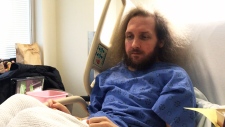
Roger Foley, who has a crippling brain disease, has been seeking support to live at home. He is currently in an Ontario hospital that is threatening to start charging him $1,800 a day. The hospital has told Roger that his other option is euthanasia or assisted suicide under Canada’s medical assistance in dying law.

Tuesday, July 4, 2017

Euthanasia: when safeguards become barriers to access.

This article was published by Mercatornet on July 4, 2017

B
Aubert Martin
y Aubert Martin, Executive Director of Vivre dans la Dignité (Living with Dignity) Quebec

A month after the publication of a letter by the secretary of the College of Physicians of Quebec – in which he expressed his concern about a growing “pressure, demanding a form of death à la carte” and in which he denounced those who interpret refusals of euthanasia as a form of exclusion – lawyer Jean-Pierre Ménard is challenging before the courts the cases of two people living with disabilities who were refused the assistance of a physician to kill themselves.

The plaintiffs requested the removal of the “reasonably foreseeable death” clause of the federal law as well as the “end of life” requirement in the Quebec law.

More voices were added to the chorus of “rebels” decrying the cruelty of all criteria that dare make reference to the proximity of death.

Yet not so long ago, the elected Members of the National Assembly in Quebec (MNAs) were congratulating themselves on the wisdom of their law that made reference to… the end of life. This is another reversal of logic in the long list of changes of rhetoric we have already witnessed.

Indeed, at the time of the adoption of the Quebec bill, words like “safeguard” and “strict conditions” peppered the speech of those seeking to calm the fears of people wary of allowing homicide under certain circumstances.

Today, potential extensions of the law are justified by referring to “consensus” and “the will of the people,” while the “safeguards” have turned into “barriers to access”.

Meanwhile, the same promoters of euthanasia who claimed that it was only a matter of “exceptional requests for exceptional cases” have updated their rhetoric to justify the explosion of euthanasia requests: it has become “a response to a need.”

Yet, before the legalization of euthanasia and assisted suicide in Quebec and in Canada, warnings of the slippery slope were met with mockery and contempt from those who embraced medical suicide with open arms.

At best, this cautious warning, based on the experience of countries that legalized euthanasia before us, was treated as a scarecrow brandished by alarmists. “The slippery slope doesn’t exist!” responded those anti-skeptics and other merchants of death.

Today, slightly more than a year after the Quebec bill 52 that legalized euthanasia came into force, we see the first obvious signs of the slippery slope: we have gone from exception to promotion. Already the “end of life” criterion is presented as discrimination which prevents people with disabilities from committing suicide, implying that their living conditions justify their desire to die.

Secondly, the argument that euthanasia is about “capable and consenting people” is giving way to the idea of killing an incapable person (with Alzheimer’s or dementia) regardless of the person’s consent at the time of death.

Finally, according to a Canadian study published in May, the proverbial patient writhing in pain on his deathbed has morphed into a person in existential crisis over his loss of autonomy (read: disability).

So we won’t be surprised if tomorrow we are presented with other ludicrous propositions, such as the one currently gaining popularity in the Netherlands: opening “medical aid in dying” to elderly people who feel they have accomplished their lives.

A society does not accept overnight the idea that the state should endorse the suicide of an elderly and healthy person simply because she is tired of living. It must first live through the deep malaise that accompanies every new expansion of euthanasia access that is sold to us as progress.

In fact, when we think about it, the only thing that is “reasonably foreseeable” is the extension of medically assisted suicide to more and more groups of people. If death is sold as a solution to suffering, and if suicide is viewed favourably when a doctor is involved, the real question is not why some are opposed to it, but rather “why say yes to one and no to others?”

Aubert Martin is the Executive Director of Vivre dans la Dignité (Living with Dignity), a Quebec-based organisation.

Monday, June 12, 2017

Dr Yves Robert concerned about evolving euthanasia laws in Québec.

This article was published by the Physicians Alliance Against Euthanasia on June 12, 2017.

Dr Yves Robert Secretary of the
Collège des Médecins du Québec
On May 10, 2017, Dr. Yves Robert, Secretary of the Collège des médecins du Québec, asked the following question in a thoughtful article published on the CMQ website:
“If the goal is euthanasia on demand based on a “right”, are we still talking about Medical Aid in Dying? Or simply Aid in Dying? And what, then, would the medical profession have to do with it?”
Considering the past positions espoused by the College and by Dr. Robert personally – “The debate is only beginning…” (words of Dr. Robert at 18 minutes 24), such a quote is reminiscent of the classic novel Frankenstein, where that high-minded scientific genius, having created a humanoid monster threatening to the human race, is forced to confront the reality of his acts and of his responsibility for them. Tragically, but also heroically, he feels obligated, in the end, to hunt and destroy that creature – loved by him as a son – which his imprudent skill had set loose upon the world.

This reading of the text may be well beyond the Secretary’s intention. However, he has raised a clear statement of principle: if there are no criteria for euthanasia other than client demand, then medical wisdom, medical art and medical science have no role to play.

Once we allow any person to choose state-assisted suicide, and any doctor to perform it, we are legitimizing a purely subjective choice of death. There remains no logical reason why the right to exercise such choices should be restricted to this or that medical condition, or to medical conditions at all. Whatever limits are set, someone will feel constrained by them; and the state will continually be called upon to justify a discriminatory regime (where group “a” is allowed subjective decision, but group “b” is not).

Dr Robert apparently believes (or at least did believe) that protection of the common good can perform a limited retreat before the pressure of unfettered individual liberty, and that stable compromise can be established between these two visions. But the legal and moral change, from euthanasia-as-criminal-homicide to “medical aid in dying”, is not a difference in degree; it is a difference in kind. No compromise is possible. There is only a clearly perceptible earth-moving shift towards a radically different medical paradigm based, solely, upon personal subjective choice – a shift which the Physicians’ Alliance, palliative care providers and many others have opposed from the beginning.

The politicians who promoted Bill 52 insisted it was “an evolution, not a revolution”. But, as we observe the public opinion shift that alarms Dr. Robert – “the paradoxical discourse that calls for safeguards to avoid abuse, while asking the doctor to act as if there were none” – it becomes obvious that it is indeed a revolution, planned as such by its authors, wilfully ignoring the opposition of those who care for the dying. The ink is barely dry on Bill 52 and euthanasia enthusiasts are already demanding further concessions. The interim demands were never an acceptable final destination, only legal waystations on the path to complete liberty of personal choice. As Dr. Robert calls it, death à la carte.

And so it is, that even Dr. Robert has begun to speculate publicly upon the medical significance of such an extreme outcome. And these are the logical implications which he has now had the honesty and rigour to bring forward: The medical profession has no duty (or competence) to define, staff or take any responsibility for a public regime of death on demand. Whatever form such fundamental social change might take, it is NOT a medical problem. And (we would add) the sooner we realise this fact, and act upon its wisdom, the better things will be for all concerned.

Indeed, simple prudence would suggest that we show restraint right now in the administrative implementation of the euthanasia regime. Decontamination is always easier in proportion as the contaminated area is smaller. Hubris-driven attempts to impose MAID upon all corners of the health care system should be abandoned. Refusal of individuals and institutions to collaborate in this practice should be scrupulously respected.

Dr. Robert ends his article with a simple and sober admonition:

“Let us take the time to reflect carefully before going any further… Death is not that urgent.”
It is a sentiment with which we entirely agree.

Translated from the original article in French by the Physicians’ Alliance against Euthanasia.

Tuesday, April 4, 2017

Québec pushes the euthanasia boundaries again.

Alex Schadenberg
Executive Director - Euthanasia Prevention Coalition
 

Québec pushed the boundaries by legalizing euthanasia, through Bill 52, before the criminal code was amended by defining lethal injection as medical treatment.

Gaétan Barrette, Québec's Health Minister, is now considering incrementally extending euthanasia to incompetent people with Alzheimer's or Dementia, even though the law states that "medical-assistance-in-dying" is limited to competent people.
 

The Federal government is also examining extending euthanasia to persons under 18, people who are incompetent with Alzheimer's or Dementia and people who are "psychologically suffering" but not dying.

Konrad Yakabuski expressed his concerns with permitting "MAID" for incompetent people in an opinion article published in the Globe and Mail yesterday. Yakabuski stated:
On March 24, Health Minister Gaétan Barrette announced a three-pronged approach aimed at potentially broadening the eligibility requirements for medical aid in dying. First, a provincial commission will examine the more than 250 requests for the procedure that have been either rejected or withdrawn since the practice was legalized. A group of experts will subsequently re-examine the question of allowing advance consent for MAID by people diagnosed with degenerative diseases such as Alzheimer’s and other forms of dementia. Quebec’s Justice Ministry, meanwhile, will ask the courts to clarify the federal MAID law’s limit of the practice to only those facing a “reasonably foreseeable” death, which health professionals have complained is too vague.
When the Québec government was debating euthanasia, they insisted that they would implement the law carefully. Now that euthanasia is legal, the Federal and Québec governments are making plans to expand the law, just as we had predicted.

Yakabuski states his concerns:
None of this will make the path we have embarked on any less fraught with ethical red flags than it should be. There can be nothing ethically clear-cut about deciding when to end the life of an Alzheimer’s sufferer who is no longer cogent enough to consent. The whole notion of “unbearable suffering” (one of the federal law requirements for MAID) is in itself inscrutable when it comes to Alzheimer’s and dementia. Unbearable for whom? Just whose suffering is being alleviated when loved ones ask God or the state for their dementia-stricken ward to die?

For what it’s worth, the Alzheimer Society of Canada argues that “MAID should only be possible when a person is deemed competent at the time of MAID. … [P]eople with dementia need to be safeguarded as they will be extremely vulnerable at the end of their life [and] do not have the capacity to make an informed decision and consent to end their life at the later stages of the disease.”

Personally, that’s enough guidance for me.
When the government permits the killing of its citizens by lethal injection, it crosses the clear line, that killing a human being is always wrong. Now that one person can kill another person in Canada, the only question that remains is for what reason will it be permitted to kill. Incremental extensions are inevitable. 

The answer is to Care for people and not kill people.

Tuesday, November 1, 2016

Québec euthanasia deaths higher than expected.

Alex Schadenberg
Executive Director - Euthanasia Prevention Coalition

The Québec euthanasia commission has reported that during the first 7 months of the euthanasia law there were 262 reported euthanasia deaths, a number that is much higher than expected. The annual report of the commission is based on euthanasia deaths from Dec 10 to June 30, 2016.

Caroline Plante reported in The Montreal Gazette that Québec's Health Minister, Gaétan Barrette, seemed surprised by the number of deaths:
He expressed surprise that since the law came into effect Dec. 10, 2015, 262 people have resorted to what the provincial government calls “end-of-life care” and what Ottawa refers to as voluntary euthanasia. 
“I mentioned many times that I was expecting about 100,” 
“It’s almost three times that. Actually, on a one-year period, it will be over 300 … that in itself is surprising to me.” 
The report says medical aid to die wasn’t administered for 87 requests: 36 of them did not meet the criteria set out in the law, 24 people changed their minds, 21 died before receiving the aid, one has asked for a delay and five requests are still being processed.
The Montreal Gazette article also reported that the health Minister may reduce the requirement that two independent physicians approve the death:
... the minister said he is considering making some adjustments to simplify the paperwork and ease the obligation of seeking a second opinion from an objective and independent doctor, who must agree that there is no hope of recovery. 
Barrette said in certain, more isolated towns, it is difficult to find a second doctor who is completely independent from the patient.
Barrette first extended the law last June when he stripped palliative doctors and institutions of their conscience rights by ordering them to participate in the euthanasia law

Ingrid Peritz reported in The Globe and Mail that of the 262 deaths, 21 failed to meet the legal requirements of the law: 
The report found that of the cases it examined, 21 failed to meet the legal restrictions. 
The vast majority of those – 18 – involved questions about the independence of the second doctor who is required to sign off on the assisted death. Mr. Barrette said the problem often arises in smaller communities where doctors know one another. 
Of the remaining three cases, two were instances in which assisted death was administered without proving the patient was at the end of life. In one case, it wasn’t proven that the patient was facing a serious and incurable illness, as required under the law. 
All 21 cases have been referred to Quebec’s College of Physicians, which will review them, a spokeswoman said.
There were 262 reported euthanasia deaths in the first 7 months of the euthanasia law. Since the Québec euthanasia law is based on the Belgian law and since nearly half of the assisted deaths in Belgium are not reported we wonder how many euthanasia deaths have actually occurred in Québec?

Important articles:

Thursday, March 31, 2016

For the Sake of Families Please Do Not Go Down Canada’s Dark Road of Euthanasia and Physician Assisted Suicide

Open letter to Governor Hassan of New Hampshire – From Dr Paul Saba

Dr Paul Saba
March 28, 2016

As the state of New Hampshire considers establishing an end-of-life choices study commission, I strongly advise against this. This will only lead down the same dark road that Canada has travelled. Although in the United States euthanasia and physician assisted suicide falls under state jurisdiction, in Canada this falls under both Federal and Provincial jurisdictions.

Presently, Canada is proposing doctor assisted suicide and euthanasia of its most vulnerable citizens including children who are “mature minors” and the depressed.

Children possibly as young as 11 or 12 could see their lives ended prematurely without parental consent or prior notification. The serious consequences of enacting such a provision is illustrated by the case of Nadine (Video Link). At 14 years old, she was diagnosed with an aggressive form of leukemia. She underwent multiple chemotherapies and a failed bone marrow transplant. She was told that she had little chance to survive. She states that without the loving support of her family, she would have given up. Today at 19 she is well and happy to be alive.

History has taught us that killing the weak and vulnerable is a formula for disaster. The Romans encouraged the weak, sick and depressed to kill themselves. In 1938, Germany started euthanizing handicapped children. Today, Belgium and the Netherlands euthanize children, the depressed and those tired of life.

As a physician with dual USA and Canada citizenship, I have studied and practiced medicine in both countries. I presently live in Montreal. As President and Founder of the Coalition of Physicians for Social Justice my progressive ideas have included promoting quality medical care for the poor, incapacitated, the elderly and the young. However, I do not consider euthanasia and doctor assisted suicide as progressive. Presently in the province of Quebec many citizens have already been euthanized under a cloud of government controlled secrecy despite a requirement of an oversight committee.

Physicians have been mandated by our provincial medical board not to write on the death certificate that their patients have been euthanized with the threat of sanctions and possible loss of their license. Physicians in Quebec and across Canada are awaiting the passage of a new federal law which will set national standards of extending euthanasia to children and the depressed. As a physician, I refuse to inject or refer any patient to be injected with a lethal substance. As a dad with young children, I will never give the right to another person to lethally inject my children or my neighbor’s children. For these reasons I have launched court challenges in the province of Quebec to stop this law. Disobeying the euthanasia law risks the possible loss of my medical license. Why am I opposing this law?
First, and foremost, every life is valuable. 
Second, there are errors in medical diagnosis in up to 20% of cases. 
Third, prognosis may be incorrect, as in the case of Nadine. 
Fourth, “mature children’ do not have the psychological or cognitive ability to reason like adults—that is why they cannot drive, vote, enter into civil contracts or get married. 
Fifth, a depressed person cannot make a free and informed decision to end her/his life because of feelings of hopelessness. 
Sixth, people faced with a serious diagnosis are more likely to be depressed. 
Seventh, quality medical care includes providing palliative care -- which is different from euthanasia. Doctors can reduce the suffering of end-of-life patients’ with palliative care. However, unfortunately many Canadians and Americans do not have access to quality palliative care. 
Eighth, the few jurisdictions that practice euthanasia are unable to establish workable safeguards. For example: in Belgium, 32% of euthanasia deaths are performed without specific request or consent; and, 47% of cases go unreported. 
Ninth, many civilized societies (e.g. the United Kingdom. Scotland and France) have recently rejected such legislation because of the inherent dangers to its citizens.

Tenth, euthanasia and assisted suicide are denounced by the World Medical Association that represents 9 million doctors in over 100 countries.
Governments and healthcare providers should adequately fund and provide the best health care for all its citizens and especially the children. Euthanizing citizens may save money, but this goes against all decent civilized human values.

Will New Hampshire go down the same dark road of Canada and euthanize its citizens? What about the children, the depressed and those tired of life? What about those too sick and too poor to fight for their lives?

Therefore I ask you not to establish an end-of-life choices study commission. This will only lead New Hampshire down the same dark road that Canada has travelled. The evidence is overwhelming clear—euthanasia and assisted suicide is not the solution for suffering. Many wise people have stated that insanity is repeating the same thing over and over again and expecting a different result.

Our citizens need to be cared for and not killed. How we treat the most vulnerable in our society, is a measure of who we are as a society.

Dr. Paul Saba M.D.
Lachine Québec

Friday, December 11, 2015

Is the Québec law euthanasia or assisted suicide.

By Alex Schadenberg
Executive Director, Euthanasia Prevention Coalition

Those who follow the Euthanasia Prevention Coalition (EPC) newsletters and blog will know that in June 2014 the Québec government legalized euthanasia, not assisted suicide in a manner that is similar to the Belgian euthanasia law, by claiming that lethal injection is a form of medical treatment.

Many Canadians remain confused about the Québec euthanasia law. Graeme Hamilton, the National Post's Québec corespondent, explained in his December 11th article what Québec's "Medical-aid-in-dying" law (Bill 52) actually says. Hamilton wrote:
Is it euthanasia or assisted suicide that Quebec has legalized? 
Under the Quebec law, physicians will administer lethal injections to consenting patients. Quebec calls this “medical aid in dying,” but it is more commonly known as euthanasia. Assisted suicide, which is currently legal in three American states, occurs when a physician provides a patient with lethal medication that the patient uses to end his or her own life. Quebec considered but rejected the legalization of assisted suicide, concluding that it was preferable to have the physician administer the medication. 
How might a federal law differ from what Quebec has done? 
Ottawa has been spurred to action by last February’s Supreme Court of Canada ruling, which invalidated the Criminal Code prohibition of physician-assisted death. The high court gave the federal government and provinces one year to come up with new legislation, but Ottawa has requested a six-month extension and it has not indicated whether it will opt for euthanasia or assisted suicide.
Clarification: The dangerous Supreme Court decision struck down Canada's assisted suicide law (Section 241b of the Criminal Code) and offered limited reasons as to when euthanasia could be legal.

Therefore, "medical-aid-in-dying" in Québec is euthanasia. The Québec government published euthanasia guidelines, that disability rights leader, Amy Hasbrouck, explains are clear as mud.

On December 4, Canada's federal government requested a six-month extension to enable them to legislate on the issues of euthanasia and assisted suicide. 

EPC intervened in the Carter case at all levels and has submitted its legal analysis to the Supreme Court whereby EPC agrees with the six-month extension and we oppose the request by the Québec government that they be exempt from the six-month extension.

Thursday, December 10, 2015

Status of Québec Euthanasia Law Remains in Flux


Press Release - December 10, 2015

On December 9, 2015 the Québec Court of Appeal granted permission for Québec to appeal a declaration rendered by the Québec Superior Court on December 1, 2015, which rendered inoperable the euthanasia provisions set out in the Québec euthanasia law, finding that they were in conflict with existing Criminal Code prohibitions against homicide


The Court of Appeal made it clear that it was not making any decision on the merits of the case, but did note that the issues raised by the case are of significant public importance and should be addressed swiftly. A hearing has been scheduled for December 18, 2015 to address the appeal, putting in flux the status of the Québec law, which was to come into effect on December 10, 2015.

As such, a doctor in Québec can still be prosecuted if they participate in an act of euthanasia.

In February 2015, the Supreme Court of Canada in Carter v. Canada (Attorney General), found that existing laws against homicide and assisted suicide to be unconstitutional, but kept those laws in effect and gave Parliament one year to enact a new law that provides for a regime of effective oversight and safeguards.

The Euthanasia Prevention Coalition (EPC) was an intervenor at all levels of court in the Carter case and is also an intervenor before the Québec Court of Appeal in D’Amico c. Procureure générale du Québec.

EPC's position in the D'Amico litigation is that Québec's euthanasia law goes beyond the jurisdiction of the Province of Québec and falls under the jurisdiction of the Parliament of Canada. The intentional killing of patients by doctors is not medical treatment or health care, and the lack of before the death oversight represents a fatal flaw in the proposed Québec law that puts the safety of the public at risk, contrary to s.7 of the Charter.

EPC Counsel, Toronto Constitutional Lawyer, Hugh Scher states:

A national approach to the regulation of assisted suicide is the only way to avoid an inconsistent patchwork quilt of regulation of assisted suicide laws across Canada, which could leave Canadians at risk.
EPC Executive Director, Alex Schadenberg states:
The Federal Government could take a very different approach to regulation than the much riskier regime of euthanasia that has been endorsed in Québec, which is similar to the Belgian regime, where deaths without request have occurred, and where a lack of compliance with the enacted safeguards is evident.
EPC Vice President, Amy Hasbrouck notes that:
The Supreme Court’s conclusion that assisted suicide could be legalized safely is predicated on the notion of strong federal regulation. The lack of a comprehensive national response to these issues risks sowing incoherence, an approach that would put all Canadians at risk.
The Federal Government has indicated its intention to hold all-party Parliamentary Committee hearings to study and respond legislatively to the Supreme Court’s ruling in Carter.


For more information contact:
Hugh Scher (Toronto), EPC Legal Counsel (416) 816-6115 or hugh@sdlaw.ca
Alex Schadenberg (London), EPC Executive Director (519) 851-1434 or info@epcc.ca
Amy Hasbrouck (Montreal), EPC Vice President (450) 921-3057 or tigrlily61@gmail.com

Quebec's attempt to oust federal govt over assisted suicide troubling

This article was published by Advocate Daily on December 10, 2015

Hugh Scher
A national approach to the regulation of assisted suicide is the only way to avoid an inconsistent patchwork quilt of assisted suicide laws across the country, which could leave Canadians at risk, says Toronto health, human rights and constitutional lawyer Hugh Scher.


The Quebec Court of Appeal has said it will hear arguments from all sides later this month on a provincial law allowing euthanasia following a recent Quebec Superior Court decision — D'Amico c. Procureure generale du Quebec — suspending key aspects of the legislation.

The Quebec euthanasia law is now in a state of flux until the Dec. 18 appeal hearing.

News of the appeal came just days after Justice Michel Pinsonnault ruled that key pieces of the Quebec law, which were adopted in June 2014, clash with existing federal criminal laws against homicide. In permitting the appeal to proceed next week, the Court of Appeal was clear it was making no ruling on the appropriateness of the order of the Superior Court to suspend its operation.

The judge noted that last February’s Supreme Court of Canada decision carving out exceptions to the Criminal Code prohibitions that ban physician-assisted suicide — Carter v. Canada (Attorney General), 2015 SCC 5 — gave Parliament one year to legislate new rules to give effect to the ruling. Ottawa has since asked for an extension, which would bump the response time from one year to 18 months.

Scher represents the Euthanasia Prevention Coalition, which acted as an intervener at all levels in Carter and is also an intervener before the Quebec Court of Appeal in D'Amico.

“Quebec's attempt through its euthanasia law to oust the federal government’s jurisdiction — which has been clearly and historically recognized by the Supreme Court of Canada to regulate the area of euthanasia and assisted suicide — is a troubling abuse of Canadian constitutionalism,” says Scher, a well-known voice in the end-of-life care debate.
Scher has acted as counsel to the Euthanasia Prevention Coalition in several high-profile cases including Rasouli v. Sunnybrook Health Sciences Centre, 2011 ONCA 482 (CanLII); Cuthbertson v. Rasouli, 2013 SCC 53, [2013] 3 S.C.R. 341; Bentley v. Maplewood Seniors Care Society, 2014 BCSC 165 (CanLII); Bentley v. Maplewood Seniors Care Society 2015 BCCA 91; Carter v. Canada (Attorney General), 2012 BCSC 886 (CanLII); Carter v. Canada (Attorney General) 2013 BCCA 435 (CanLII); and Carter v. Canada (Attorney General), 2015 SCC 5.
“The Supreme Court of Canada has ruled that an exception should be carved out of criminal law with respect to assisted suicide for people experiencing incurable conditions and intolerable suffering who choose assisted suicide," says Scher. 
“It has indicated that the federal government should seek to implement a series of carefully tailored safeguards in order to protect against the serious risk of abuse to all Canadians in the event that assisted suicide or euthanasia are left unchecked.” 
Scher says, “Quebec now seeks through its euthanasia law to occupy the entire sphere of regulation related to assisted suicide and euthanasia and through its actions, attempts to exclude the federal government from occupying and regulating the jurisdiction over euthanasia and assisted suicide, which the Supreme Court acknowledged was appropriate, as Parliament has done for more than 150 years.”
The fact that the federal government is seeking to take appropriate time to review and respond comprehensively to the Supreme Court decision, says Scher, “does not give the Province of Quebec or any other province licence to exclude the jurisdiction of the federal government merely because of the fact that the province acted first.”

Scher will be asking the Supreme Court of Canada and the Quebec Court of Appeal to recognize and allow Parliament to exercise its proper jurisdiction over this subject matter, particularly with regard to the need for before-the-fact adjudicative oversight to assess and identify vulnerability and ensure compliance with federally-established safeguards.

Tuesday, December 1, 2015

Québec Superior Court decision prevents December 10 launch of Québec euthanasia law.


For Immediate Release - December 1, 2015


Justice Michel Pinsonnault of the Québec Superior Court made the right decision, today,  by preventing the Québec euthanasia law from coming into effect on December 10, 2015.
The Euthanasia Prevention Coalition (EPC) intervened in the court case by the Coalition of Physicians for Social Justice.

EPC is a national non-profit corporation that exists to build a broad based network of groups and individuals that support measures that will create an effective social barrier to euthanasia and assisted suicide.

EPC argued that euthanasia does not constitute health care. EPC Executive Director, Alex Schadenberg, stated:

Euthanasia is done by lethal injection which does not constitute a form of health care.
EPC is also convinced that Québec does not have jurisdiction to legalize euthanasia. EPC legal counsel, Hugh Scher, stated that the Supreme Court of Canada recognized the role of the federal government to legislate on the issues of euthanasia and assisted suicide.
The federal government either has sole jurisdiction or shared jurisdiction concerning these issues. The decision was necessary based on the federal right to legislate on these issues.
Amy Hasbrouck, the Director of Toujours Vivant – Not Dead Yet said:
Inconsistency between federal and provincial regulation for death could foster confusion and dangerous errors. We must handle these policies with extreme care.
For more information contact:

Hugh Scher, EPC legal counsel (Toronto): (416) 816-6115 or hugh@sdlaw.ca
Amy Hasbrouck, Toujours Vivant – Not Dead Yet (Montréal): (450) 921-3057 or tigrlily61@gmail.com
Alex Schadenberg, EPC Executive Director (London): (519) 851-1434 or info@epcc.ca


Monday, October 19, 2015

Beware of Assisted Suicide Bullies.

This article was published in the National Post on October 19, 2015.

Will Johnston
By Will Johnston


Dr Will Johnston is a family physician in Vancouver and the chair of the Euthanasia Prevention Coalition of BC

For at least a few more months, the Canadian medical system will continue to be a safe space, free of assisted suicide and euthanasia. But all that is about to change. In order to ensure our hospitals and palliative care centres remain places where patients feel safe and secure, we must respect doctors’ conscience rights, rather than listen to activists who seek to impose their one-size-fits-all policy on the rest of us.

For instance, the palliative care centres in Quebec that refuse to have anything to do with euthanasia, for reasons of medical judgment and ethics, have apparently angered Jean-Pierre Menard, the lawyer who helped write Quebec’s euthanasia law, Bill 52. The act specifically states that palliative care centres are not required to provide euthanasia service — but maybe to Menard, those were just soothing words to get the bill passed. Now Menard says money should be taken away from palliative services that won’t provide euthanasia on their premises. And the minister of health, Gaetan Barrette, has threatened to revoke the hospital privileges of doctors who won’t comply.

This is wrong. The doctors and nurses who devote themselves to the care of dying people reject euthanasia because it is a tempting substitute for diligence and creativity. People with exceptionally difficult end-of-life illnesses can have reversible palliative sedation, which preserves their life and completely alleviates their symptoms. This makes intentionally killing the patient an unnecessary, dangerous and irreversible intrusion.

Quebec’s hospice workers are wary of the risks and harms, which include causing distress among many dying patients and their family members who want safe spaces with no risk of interaction with euthanasia-minded doctors or nurses. (The broadly worded law would seem to allow for disabled or depressed people who are not dying to be killed as well, but these people are living in the community, not in palliative care centres.)

So why the temper tantrum from the euthanasia enthusiasts who designed Bill 52? We are seeing a winner-takes-all mentality among the activists who recently celebrated the Supreme Court’s carter decision legalizing assisted suicide and possibly euthanasia. These activists are far from planning a peaceful coexistence with those many doctors and nurses who want nothing to do with killing or suicide.

After years of agitation by publicly funded activist Jocelyn Downie, an assault on the objectors’ rights to exist as doctors and nurses in the Canadian health-care system is underway. Downie and others claim that unless their version of medical ethics reigns, a patient’s choice to undergo euthanasia and assisted suicide is threatened.

But many patients would choose against having suicide pills and lethal injections available in their hospital. And Downie and company seem oblivious to the demoralization of doctors and nurses who are being told to do what they think is wrong because tax dollars pay for the buildings.

It is alarming to see an activist assault on medical judgment inside Quebecois politics, but truly dangerous when officials in the provincial colleges of physicians and surgeons buy in. Using bits of Downie’s preferred “model conscience policy” word-for-word, the college in Saskatchewan has been angling to coerce its members into referring patients for assisted-suicide and euthanasia services, just as Ontario’s college did a few months ago. This arm-twisting is notable for its pointlessness. In our totally connected world, suicidal people and others under their direction will have no more trouble contacting euthanasia providers than ordering pizza.

With a little creativity and a spirit of fairness, it would be easy to design a system that allows legal but unsavory practices like euthanasia without bullying those who want to continue providing actual medical care. Our hospitals and hospices are national treasures that are awaiting an invasion by bitterly contentious new practices. This is faced with deep foreboding by many of us.

Tuesday, September 29, 2015

Euthanasia: Theory and reality

By Alex Schadenberg
Executive Director, Euthanasia Prevention Coalition

On Feb. 6, 2015, the Supreme Court of Canada struck down Canada’s assisted suicide law, opening the door to assisted death (Carter v. Canada).

Canadians have been sold the theory that euthanasia can freely end one’s life at the time and place of their choosing. This theory assumes that euthanasia will be voluntary and that the decision and the act is controlled by the person who dies by euthanasia.

The Euthanasia Prevention Coalition (EPC) contends that the theory of legal euthanasia and its practice are very different. Since euthanasia, by definition, means that the physician will cause the death of the patient, therefore misuse of the law resulting in a person’s death would normally be understood to be homicide.

Euthanasia in practice


A study published in March 2015 concerning end-of-life practices in 2013 in Belgium found that 4.6 per cent of all deaths were euthanasia. The same study also found that 1.7 per cent of all deaths were hastened without explicit request. This means that approximately 1000 people were intentionally killed without request in 2013. The data indicates deaths that were hastened without request were more likely to occur when a patient was in a hospital and incompetent to make medical decisions.

How did this occur?


The guidelines in Belgium and the Netherlands require the physician who causes death by euthanasia to report the euthanasia after the patient has died. Since the doctor who approves the death is the same doctor who submits the report, and since there is no third-party oversight of the law, therefore the system has been designed to “cover up” misuse of the law.

The same misuse of the law will likely occur in Canada. The proposed Quebec euthanasia guidelines also require the physician who lethally injects the patient to submit the report to the government. The Quebec system also provides no third-party oversight of the law, while enabling physicians to cover up misuse of the law when directly killing a patient.

The announcement that Quebec doctors will be sent euthanasia kits with step-by-step instructions is also rife with possible misuse of the law. The physician will receive the euthanasia kit, containing a double dose of lethal drugs. These kits will be used to lethally inject patients without third-party oversight of the use of the kit. Once again, reporting of the death will be done, after the death, by the doctor who lethally injects the patient.

The data in the Belgian study on end-of-life practices in 2013 also uncovered that almost half of the assisted deaths were not reported. The data in the study suggests that when the euthanasia death may not have followed the guidelines of the law, that Belgian physicians failed to report it.

Further to that, in January 2014, Dr. Mark Cosyns admitted in an article published in a leading Belgian newspaper that he does not report the euthanasia deaths that he does. Dr. Cosyns has not been penalized for his indiscretion.

The theory that euthanasia will always be voluntary


The Quebec government recently announced that doctors would need to falsify death certificates when the patient died by euthanasia (by representing the cause of death as the underlying illness of the person, rather than euthanasia). This is an affront to medical ethics, transparency and accountability.

When euthanasia becomes legal, doctors are given power to cause the death of their patients. Life and death decisions should require the highest level of oversight and transparency.

What about patients who are not terminally ill but living with psychological conditions such as mental illness, depression or loneliness?

In 2013, euthanasia for psychiatric reasons in the Netherlands tripled and euthanasia for dementia more than doubled.

The data from a study — published in July — concerning 100 requests for euthanasia for psychiatric reasons in Belgium indicated that: 58 people were depressed, 50 had a personality disorder, 13 had post-traumatic stress disorder, 12 were autistic, 11 had anxiety disorder and 10 had an eating disorder. The 100 requests for euthanasia resulted in 48 people with psychiatric conditions being approved for euthanasia.

The proposed Quebec euthanasia guidelines and the Supreme Court of Canada decision allows euthanasia for psychological suffering, a term that they did not define.

The practice of euthanasia is very different than euthanasia in theory.

In reality, legalizing euthanasia gives doctors the right, in law, to cause the death of their patients. The decision to lethally inject a patient is made by two doctors without third-party oversight and the doctor is required to report their decision after the patient has died.

The concept that euthanasia is about individual choice and autonomy is only a theory.

In other jurisdictions there is proof that the law is misused, that lives are ended without request, that the reporting procedure is intentionally ignored, and that euthanasia is regularly ending the lives of people who are depressed and/or incompetent.

In theory euthanasia appears to offer freedom; in reality, legalizing euthanasia is not safe.