Showing posts with label Vincent Lambert. Show all posts

Monday, August 11, 2025

UN Committee launches investigation into France's proposed euthanasia law.

Alex Schadenberg
Executive Director, Euthanasia Prevention Coalition

The European Centre for Law & Justice reported that the UN Committee on the Rights of Persons with Disabilities has sent a letter to France stating that it has launched an investigation into France's proposed euthanasia law.

The European Centre for Law & Justice stated:

The UN worries that the “proposed eligibility criteria . . . appear to be based in ableist perceptions of the quality and value of the life of persons with disabilities.” In fact, under the proposed law, while a person with a disability who is suffering may be eligible for aid in dying, an able-bodied person who is suffering is not. This corresponds to what the Committee calls “ableist.” The UN is also concerned about the lack of “alternatives to assistance to dying,” the creation of a new felony of obstructing an assisted-suicide, and the minimum mandatory cooling-off period of only two days before euthanasia or “suicide” can be performed.

At the same time, in its letter to the French government, the Committee on the Rights of Persons with Disabilities called on civil society organizations to send “information to the above-referred questions”. We have done so. On August 1, the ECLJ sent the Committee a written memorandum explaining how the Government has actively supported euthanasia for persons with disabilities and responding point by point to the questions raised by the Committee.

One of the points raised concerns persons subject to legal protection measures, in particular persons under guardianship. Basing the decision to euthanize purely on their expressed desire to do so is particularly shocking, given that they are considered incapable of looking after their own interests in other decisions, however serious or even trivial.

We also encouraged our partners to send their memorandums, a request that was favorably received by Claire Fourcade, on behalf of the French Society for Accompaniment and Palliative Care (SFAP), and Louis Bouffard, on behalf of the group “Les Éligibles” (“those who qualify to be euthanized”). We have also explained in the French and foreign media, as well as in the European Parliament, that the proposed law on euthanasia violates the rights of persons with disabilities.

The French government's response to the Committee on the Rights of Persons with Disabilities will be examined during its session between August 11 and 29 in Geneva. We do not yet know its content. This UN session is a new step in these proceedings.

This Committee has already acted on the basis of this international treaty in previous proceedings. In April 2025, it asked Canada to review its legislation on the rights of persons with disabilities. It was also this Committee that asked France not to euthanize Vincent Lambert in 2019, as the Committee believed that he had been deprived of food and water because of his disability.
The Euthanasia Prevention Coalition is encouraged by this development. We plan to gather information concerning Canada's euthanasia law and share it with the UN Committee on the Rights of Persons with Disabilities and encourage other friendly organizations to do the same.

More information on similar topics:

  • The International disability rights community is concerned with Canada's euthanasia law (Link).
  • UN demands change: Canada must end MAiD for people without terminal illness (Link).
  • United Nations Committee directs Canada to repeal Track 2 euthanasia deaths (Link).
  • Canada's euthanasia deaths continue to rise with approximately 16,500 euthanasia deaths in 2024 (Link).
  • Has Canada's euthanasia law gone too far (Link).

Monday, July 22, 2019

Vincent Lambert: Death by discrimination

This article was published by Toujours Vivant - Not Dead Yet on July 16, 2019.

Taylor Hyatt
By Taylor Hyatt
- Policy Analyst & Outreach Coordinator, Toujours Vivant-Not Dead Yet

Vincent Lambert died recently.

For the past few weeks, all eyes have been on the French courts as they determined his fate. Mr. Lambert was severely injured in a car accident in 2008. Various news reports described him as “quadriplegic” with a brain injury, in a “vegetative state,” in a minimally conscious state, or used multiple terms to describe his condition. The phrase used most consistently throughout the media coverage, “right to die,” does not capture what the case was really about: disability rights.

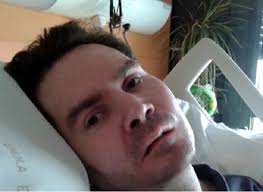
Vincent Lambert
After the accident, Mr. Lambert used a feeding tube, but could still breathe without assistance. He could not speak, nor did he appear to respond to questions or commands. He had cycles of sleeping and waking, where he opened his eyes, moved his limbs and sometimes smiled or cried. In 2011 he was evaluated by the Coma Science Group at the Liège University Hospital in Belgium, which determined that he was in a “minimally conscious, plus” state and recommended that attempts be made to find a way to communicate with him. He subsequently received physiotherapy for one year, and 87 sessions with a speech/language therapist, which were deemed “unsuccessful.” Evaluations done in 2014 and 2018 by a team of doctors affiliated with the hospital in Rehms where Mr. Lambert was treated described his condition as “vegetative,” a view that was still contested at the time of his death.

Mr. Lambert had no directive in place expressing what he wished to happen if he ever became incapacitated. A bitter family feud arose as a result. Mr. Lambert’s wife Rachel, and six of his eight siblings, maintained that he would not want to live with a severe cognitive disability. The two remaining siblings joined their Catholic parents, Pierre and Viviane Lambert, in fighting to continue the tube feeding. Since 2013, Mr. Lambert’s parents have appealed to various authorities on multiple occasions using different legal arguments, including the European Court of Human Rights (under Article 2 of its convention, the Right to Life) and the United Nations Committee on the Rights of Persons with Disabilities. Article 25 of the Convention on the Rights of Persons with Disabilities calls on states to “prevent discriminatory denial of…food and fluids on the basis of disability.”

The Court of Cassation – the highest applicable appeals court in France – finally ordered that his feeding tube be removed on July 2 of this year. Anyone familiar with Terri Schiavo’s story will see multiple parallels between the two cases, and the questions raised therein.

The campaign to withdraw food and fluids was prompted by Mr. Lambert’s supposed “resistance” to care he was receiving. As Kevin Yuill pointed out, this points to an inconsistency in the position of those advocating the withdrawal of food and fluids; was Mr. Lambert capable of having and expressing an opinion about his care through his behaviour, and therefore possessing the right to refuse care? Or was he in a vegetative state, in which case his movements should be interpreted as reflexive and meaningless?

Another crucial issue raised by the Lambert case is the idea that disabled people must meet a certain threshold of functioning, or potential for improvement, in order to justify their existence and to receive the necessities of life (food and fluids). The view that death is preferable to severe disability led to a modification of France’s Public Health Code in February of 2016 to allow for the passive euthanasia of people like Mr. Lambert who were receiving “artificial life support” (tube feeding). The law allows treatments that are “unnecessary” or “disproportionate” to be stopped; in Mr. Lambert’s case food and fluids were deemed to be “unnecessary” and “disproportionate” because he was unlikely to achieve a certain level of functioning.

As well, the record is unclear as to what kind of ongoing rehabilitative care Mr. Lambert received, aside from the physiotherapy and speech/language sessions recommended by the Coma Science group three years after his injury. The team who evaluated Mr. Lambert in 2014 and 2018 noted that his condition had deteriorated; can that be linked to the kind of care he was (or was not) receiving?

Finally, the question of whether a feeding tube constitutes “artificial” life support was not sufficiently addressed. Not Dead Yet raised this question in the California Supreme Court in the Wendland case in 2000; if a person receives nutrition through a tube taken by mouth, that is not medical treatment; why should that same tube be considered “medical treatment” because it goes into the person’s stomach?

If nothing else, courts should have given more weight to the fact that death is permanent. Mr. Lambert’s life changed drastically after the accident. Requiring the support of family and professionals does not make a person’s life “pointless” or “a waste of resources.” When Mr. Lambert’s wife no longer wished to care for him, calling for his death was not a humane response – especially when his parents were willing to take over. We only get one chance at life.

Another disabled person starved and dehydrated to death while the world watched. I take some solace in the fact that he was sedated when his feeding tube came out, though this does not make his fate right or less unnerving. May Vincent Lambert rest in peace.

Friday, July 12, 2019

Of Vincent Lambert and Ethical Rubicons

This article was published by National Review online on July 12, 2019.

Wesley Smith
By Wesley J Smith


Vincent Lambert is dead.

The forty-two-year-old Frenchman, who breathed his last yesterday in Reims, didn’t die by accident. It wasn’t “his time.” He died slowly, over nine days, by forced dehydration—a demise that causes radical drying of tissues, cracking membranes, potential seizures, and slow organ failure.

This was not a case of euthanasia, per se—even though taking away a person's sustenance can only have one outcome. Rather, Lambert’s forced dehydration was deemed simply a matter of bioethics carried out in law, an emotionally difficult but routine matter of removing the “medical treatment” of “artificial nutrition and hydration”—because his wife wanted it and the courts judged it to be in his best interests.

How was this in his best interests? Lambert was profoundly disabled with a catastrophic brain injury that left him diagnosed as permanently unconscious (although his parents insisted that he was minimally aware). But he did not require mechanical breathing assistance or kidney dialysis. All the poor man needed to survive was what every human requires: food and water.

Lambert’s case made huge news in Europe because it was the subject of a bitter court fight between his wife and his parents (both his mother and father wanted Lambert to live). The story was less discussed in the United States, partly because of distance, but also because we crossed the dehydration Rubicon in 2005 with the death of Terri Schiavo, when courts ordered her tube-feeding halted.

Lambert's case closely paralleled Schiavo's. Both were profoundly disabled with a severe brain injury. Neither had left formal written instructions about their desires if they became seriously incapacitated. Both deaths were preceded by bitter intra-family legal disputes. Schiavo’s two siblings opposed her dehydration; Lambert’s full-siblings supported it, but his half-siblings sided with his parents. Both Schiavo and Lambert were Catholic patients, and in both cases pro-dehydrators accused family members opposed to dehydration of being motivated merely by religion, and not by true concern for the patients.

Some argue that these cases demonstrate a bias against the equal worth of cognitively disabled patients. That argument went nowhere in the Schiavo case. But in the Lambert case, the Committee on the Rights of Persons with Disabilities at the United Nations intervened, requesting that his dehydration be delayed while it investigated whether removing his food and water would be a discriminatory act. That request gave Lambert a temporary reprieve when a French Court of Appeals reversed a trial court’s approval of the dehydration. But the victory was short-lived, as the French Supreme Court later reversed the decision.

I hope the U.N. Committee continues its investigation. Lambert (and Schiavo) were not terminally ill. They only died because those with the power to decide deemed their lives not worth living. Is it not discrimination based on disability to decide that death is in a patient’s best interests because a patient is cognitively incapacitated? Is it discrimination based on disability to remove food and water from people because they are cognitively incapacitated, when we would not (yet) starve incompetent patients who willingly eat?

In the U.S., popular support for Schiavo’s dehydration was a Rubicon. Before the national imbroglio about her dehydration, many Americans were unaware that the cognitively disabled could die in this way. Post-Schiavo, polls showed that most Americans supported the approach, and that settled the “food and fluid” issue. Today, unconscious and minimally conscious patients are dehydrated in all fifty states as a matter of medical routine, usually with the family's acquiescence. If there is a family dispute, the law will usually give the benefit of doubt to death instead of life, unless the patient made it abundantly clear before injury or illness that they wanted care to continue. I suspect that Lambert will be such a Rubicon throughout much of Europe.

But that will not be the end of it. Bioethics is never static. The mainstream movement’s utilitarian reasoning is based on a “quality of life” ethic, instead of a “sanctity/equality of life” approach. That philosophy, embraced by the medical establishment, will lead the country to view induced death as the proper response to serious illness and injury. Prepare for the following trends:

  • Advocacy to withhold spoon feeding from people with advanced dementia: The euthanasia movement wants the law to allow advance medical directives to instruct caregivers to starve the signer—even if they willingly eat and drink—once their dementia reaches a predetermined level of decline. If adopted, it would force nursing homes and family members to starve and dehydrate these patients to death—perhaps even if they ask for food. 
  • Increase in “futile care” laws: Texas, Virginia, and other states permit doctors and/or hospital bioethics committees to refuse wanted life-sustaining treatment based on their views about the quality of the patient’s life and/or costs of care. In the future, such laws could permit doctors to order tube-feeding withheld over the objections of family.  
  • Healthcare rationing: With the increased crisis in medical costs, we could one day see laws placing time limits on coverage for the cost of care of profoundly disabled patients like Lambert and Schiavo.  
  • Lethal injection instead of dehydration: If euthanasia/assisted suicide spreads, at some point people will conclude that lethally injecting these patients is more humane than dehydration—which it undoubtedly would be. One of the advocacy points behind these dehydration cases has been to acclimate us to eliminating suffering by eliminating the sufferer. Once that premise is accepted, lethal injection becomes the logical choice.  
  • Harvesting the organs of profoundly disabled patients: Dehydrating patients to death renders their organs unusable for transplantation. But if we ever allow their euthanasia killings, that paradigm would change. Belgium, Netherlands, and Canada already conjoin euthanasia with organ harvesting and some bioethicists have opined in professional journals that the cognitively disabled (and others) should be organ harvested as the means of euthanasia.
As Fr. Richard John Neuhaus once wrote, bioethicists “professionally guide the unthinkable on its passage through the debatable on its way to becoming the justifiable until it is established as unexceptional.” With the Schiavo and Lambert dehydrations, removing sustenance from the cognitively disabled has been “established as unexceptional.” Futile care is at the “justifiable” stage. Organ harvesting conjoined with euthanasia, as the means of killing patients, has become “debatable.”

Unless society collectively rejects the logic and moral premises of the “quality of life” ethic, I see few impediments—other than the weak reed of emotional revulsion—to keep us from following a dark bioethical path.

Wesley J. Smith is a senior fellow at the Discovery Institute. His latest book is Culture of Death: The Age of “Do Harm” Medicine.

Thursday, July 11, 2019

We mourn the death of Vincent Lambert, while thankful that an agreement will protect the life of Hannah Cement.

Alex Schadenberg
Executive Director - Euthanasia Prevention Coalition


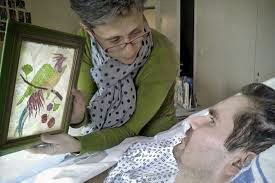
Vincent Lambert with his mother.
We mourn the death of Vincent Lambert, a cognitively disabled man who died by dehydration after France's highest court ordered that he be denied food and fluid, that they defined as medical treatment.


Our online petition pleading that President Macron save his life received more than 139,000 signatures.

While the death of Vincent Lambert is a tragic case of disability discrimination, Hannah Cement, a woman in Ottawa, will live until her natural death.

In early May, 2019, the United Nations Committee on the Rights of People with Disabilities intervened in the Lambert case stating that causing Lambert's death by dehydration contravened his rights as a person with disabilities. 


Section 25f of the United Nations Convention on the Rights of Persons with Disabilities requires nations to:
25(f) Prevent discriminatory denial of health care or health services or food and fluids on the basis of disability.
The decision of the highest court of appeal in France, to withhold food and fluid from Lambert, was a death sentence and a denial his human rights.

Lambert was a cognitively disabled man who was not otherwise dying or nearing death. To directly and intentionally cause his death by withholding fluids is euthanasia by dehydration. Lambert's fluids were withheld for the purpose of causing his death, rather than allowing a natural from his medical condition.

Today EPC was informed that Hugh Scher, the lawyer for the Cement family, achieved a negotiated agreement whereby Hannah will continue to be fed and hydrated and receive basic medical care until she dies a natural death.

Hannah Cement is a 62 year-old woman with Down Syndrome and dementia, who is a life-long member of an Orthodox Jewish family and community. The substitute decision makers for Hannah, her family, refused to consent to a course of treatment that constituted the withdrawal of all treatment and care, including food and fluids and providing only comfort care.

The Euthanasia Prevention Coalition (EPC) was granted limited intervention standing, in the court, based on our concerns related to the definition of food and fluid as medical treatment.

In late March, 2019, the Consent and Capacity Board (medical decision making tribunal) made a terrible decision in the Cement case, essentially ordering the withdrawal of all medical treatment from Hannah. This would have led to Hannah dying a similar death as Vincent Lambert.

The family appealed the decision to the Ontario Court of Appeal and the Euthanasia Prevention Coalition, once again, sought intervention standing in the case.

The news that the doctor, the hospital and the Cement family reached an agreement to assure that Hannah will continue to receive basic medical care until she dies a natural death is an incredible victory.

While we mourn the death of Vincent Lambert, we are very thankful for the legal agreement to enable Hannah Cement to continue living until she dies a natural death.

Tuesday, July 9, 2019

10 reasons why Vincent Lambert should live

Vincent Lambert is being dehydrated to death.
Christophe Foltzenlogel has been a legal expert with the European Center for Law and Justice.

The determination of Vincent Lambert’s parents to save their son’s life, despite his heavily disabled condition, arouses admiration but also a lot of misunderstanding and contempt.
Vincent Lambert ordered to die by French high court. 
Sign the petition: Protect Vincent Lambert's life. 
At a time when Vincent is literally dying of hunger and thirst, these questions and objections, which are either general or particular to Vincent Lambert's case, deserve answer.

1. “His mother should just take her son home and care for him herself!”

Vincent Lambert with his mother.
As a matter of fact, his parents wish to do so and several medical authorities have recognized that Vincent could be perfectly cared for in his parents’ home. They have made several requests to the French courts and this has been expressly and systematically refused. This is the first fundamental problem that is specific to this case: Vincent Lambert is not in a care unit adapted to his situation. He should not be in a palliative care service but in a house or clinic that is adapted and specialized for his disability. Some hospitals and private clinics specialized in this type of disability have offered to welcome Vincent Lambert into their facilities. This was also systematically refused.

In a collective opinion page on April 18, 70 “doctors and professionals specialized in the care of persons with cerebral palsy in a vegetative or pauci-relational state” said about Vincent Lambert that “it is obvious that he is not at the end of life”. The average length of stay in a palliative care unit in France is 16 days. Vincent has been living in a palliative care unit for 10 years. This does shows that he is not at the end of his life.

2. “Nobody would want to live like this, it's not a life!”

Indeed, nobody would want to live in such a situation. It is however a sophism to conclude that one should therefore euthanize a person living in such a situation.

Indeed, it is not because one suffers from one or several illnesses that one would necessarily want to die. Nobody wants to lose an arm in a work accident and become unemployed. However, if such a thing happens, a person does not necessarily lose the will to live. The response of an empathic society should not be to keep a person in his pain by inviting him to put an end to his life so as not to suffer anymore, but to treat him, and to help him understand that life is worth living.

In addition, judging the value of a person’s life is dangerous. What criteria allow to say that a life is worth living? Are they universal and accepted by everyone?

3. “He said that he did not want to be kept in such a state, respect his will!”

This is a point heavily discussed in this case. In fact, he did not write advance directives, although he was a nurse and well-informed of such a possibility.

Moreover, his wife alone claims to report what he would have said, as well as a brother who claims to report his “last wishes”. All his other brothers, sisters, and even his half-nephew stated that Vincent had never said anything to them about it. They all, however, deduced this alleged desire not to be kept alive by virtue of his personality. Is this deduction reliable?

The reality is that most of us have already told our loved ones that we would not want to live in a disabled or declined state. This does not mean, however, that we would want to be euthanized in this case. Even when expressing such a desire clearly while one is in good health, the unanimous experience of caregivers is that once the accident has occurred, the will evolves because the will to live is often the strongest.

Vincent Lambert had his car accident in 2008. But it was only in 2013, after a long conversation with Dr Kariger, favourable to “a path of end of life”, that Rachel Lambert claimed such was the will expressed by her husband. She had not previously made any public comments about that.

On this basis, Dr Kariger initiated the first euthanasia attempt that year on Vincent Lambert. As the doctor continued to hydrate him a minima (250-300mL / day), Vincent Lambert survived hunger and thirst for 31 days. This resilience, which has been maintained until now, is a serious indication of a personal will to live. This is what all the specialist caregivers of these patients say, and according to their experience, patients like Vincent Lambert who no longer want to live or who “drop out psychologically” die in a few days, or even a few hours, without warning signs.

4. “He is no longer conscious of himself; he is a vegetable!”

The question is debated but the various diagnoses established throughout the judicial process indicate that Vincent Lambert is in a chronic state of altered consciousness that includes states ranging from “vegetative” to “minimally conscious state”. He breathes alone, sleeps and wakes up. He is fed by a gastrostomy (feeding tube). His movements and facial expressions are difficult to interpret medically, but there is no doubt that there is a possible interaction with people, however small it may be. For example, he turns his eyes and head towards his mother when she calls him. Several videos taken by his mother attest to his reactions to solicitations and at least a clear awakening of Vincent Lambert, demonstrating that he is not a “vegetable”.

If we consider Vincent Lambert to be in a vegetative state such that he cannot express anything nor even possess awareness of his surroundings – which is contested by his parents, although to this day they cannot claim to know his true will or claim with certainty that would prefer to die. This makes the euthanasia of Vincent Lambert even more shocking. The traditional wisdom is that “when in doubt, the best thing is not do anything”. Here, despite being in doubt, they have already begun to kill him. And if Vincent Lambert were really nothing but a vegetable who does not feel anything and is no longer aware of his environment, why sedate him so that he does not “suffer anymore”?

5. “No to Endless Medical Treatment!”

We entirely agree. However, in the case of Vincent Lambert, he does not need nor is receiving medical treatment. He does not take any medications, undergo regular surgeries, or rely on a respirator to breathe. He is not at the natural end of his life. On 21 November 2018, the medical experts appointed by the Courts affirmed that the “fundamental and primary needs [of Vincent Lambert] do not reveal endless medical treatments or any unreasonable obstinacy toward that end”, and that Vincent Lambert’s medical situation “call[ed] for no emergency measures.”

Admittedly, his feeding and nutrition is accomplished by a tube. This method of administration constitutes a form of care. But what is administered is not medication, nor treatment, nor artificial: it is food, no different than that needed by all other human beings. In addition, in Vincent Lambert’s specific case, it is necessary to note that he is able to swallow small quantities of food. However, his doctors have never sought to stimulate this ability in order to encourage the recovery of his faculties.

Thus, to deprive Vincent Lambert of his nutrition is not to “let him go” or to “let him die”, but to purposefully cause his death. It is erroneous and alarming to see in the assisted nutrition of a disabled person the existence of “unreasonable obstinacy.” There are thousands of people in France today who cannot feed themselves, some of whom are merely ill or extremely aged. Would it be right to let them die as well simply by refusing to feed them?

6. “I am against euthanasia, but I’m not sure that’s actually happening here…”

Yes, it is certainly euthanasia that is occurring here: a decision has been made by a third party, Dr Sanchez, to deliberately deprive a person of food and water in order to bring about his death. Refusing to feed and hydrate a disabled person in order to provoke his death because of the serious nature of his disability constitutes, for a doctor, a denial of the Hippocratic Oath.

If we do not stand firm on general moral principles, we put ourselves directly onto a slippery downhill slope. Admittedly, the medical situation of Vincent Lambert is terrible and difficult, but if he can be euthanized by the will of his guardian and his doctor, why shouldn’t people who have been in a coma for 20 years also be permitted a “worthy” end? And why even wait 20 years? If receiving nutrition by a device is a treatment, why not stop the treatment of other people who cannot feed themselves?

The direction of this slope is that of Belgium, where euthanasia is legally accessible to individuals suffering from depression and other mental disorders, including minors.

7. “His mother is a traditionalist Catholic who makes her son suffer as a consequence of her beliefs—this is revolting!”

When people say it is better to euthanize because “no one would want to live in such a condition,” these people are essentially imposing their convictions on Vincent. As soon as Vincent Lambert could no longer express his own will, any actions taken toward him necessarily became imposed, whether in favour of life or of death. Why would an atheist who does not believe in life after death have any greater right to impose his beliefs on Vincent? It is completely absurd that some people mock the beliefs of Vincent Lambert’s parents in assessing that, once dead, he will not have to suffer anymore. What do they really know about his suffering, anyway?

8. “What enormous costs to the Social Security System!”

Yes, but to base a judgment of life or death on financial considerations is dangerous—for everyone. What about all the people who are stuck in a coma? Or those suffering from serious forms of cancer, whether in the advanced or beginning stages? Should we set an age past which the right to live becomes too expensive for society to support, thereby justifying the euthanasia of all individuals who live past that age? This goes directly against the fundamental principle of our (French) Social Security System: to make contributions according to our level of ability and later receive care in accordance with our needs.

In the specific case of Vincent Lambert, given that he had his car accident while driving from his home to his place of employment, his care is primarily financed by his employer’s insurance company, and not actually “by our taxes”. In addition, the daily fees charged by a specialized facility to which he would be better adapted are two to three times less than that of hospice care. The transfer requested by his parents for the last several years would reduce these costs just as much.

9. “The United Nations has nothing to do with this case. The requirements of its Committees carry no weight in France!”

The United Nations is an international organisation that the Member States have themselves created and accepted by ratifying a constitutional treaty. Indeed, according to our Constitution and the jurisprudence of the Constitutional Council, international treaties ratified by France are integrated into our legal system and have binding force superior to domestic laws.

In this case, the moment France signed the Convention on the Rights of Persons with Disabilities and its Optional Protocol, the government committed itself, according to our own national laws, to recognising that “handicapped persons have the right to enjoy the best possible conditions of health without discrimination based on their disability” and to “prevent all discriminatory refusals to provide medical care or services or nutrition and hydration based on a person’s disability”.

When Vincent Lambert’s parents failed to obtain recognition of their disabled son’s right to life and to care from the French government, it was legitimate for them to bring their case before the Committee on the Rights of Persons with Disabilities, which is charged with ensuring the proper application of said Convention by France.

France has an obligation to respect the request of this Committee to not provoke the death of Vincent Lambert because it has recognised the power of this Committee to prescribe “necessary interim measures to avoid irreversible harm to victims of a presumed violation.” In addition, respect for these measures is a condition of the effectiveness of the right to recourse and appeal in this instance.

10. “All these years of procedures constitute a massive waste of judicial and medical resources!”

No one goes through years of judicial proceedings because they want to or find it pleasing, and this was not what Vincent Lambert’s parents imagined nor wanted either.

At the root of their will to protect the life of their son is obviously parental love, but there is also the conviction to fight injustice and to work for the protection of certain principles and the lives of other people who are in situations similar to that of Vincent Lambert.

It is the injustice and scandal of this case – that of seeing their disabled son suffer from thirst and starvation to the point of death by the decision of a doctor and the judicial system – that morally justify pursuing all possible forms of recourse available under French and International law.

The obstinacy in this case is neither therapeutic nor judicial, it is that of ensuring Vincent Lambert’s death.

Monday, July 1, 2019

Vincent Lambert ordered to die by France's highest appeal court.

Alex Schadenberg
Executive Director - Euthanasia Prevention Coalition


Sign the petition: Protect Vincent Lambert's Life.

Vincent Lambert
On Friday, June 28, France's highest appeal court ordered that treatment and care, including food and fluid, be withdrawn from Vincent Lambert, a man who was cognitively disabled in a motorcycle accident injury in 2008.

On May 20, Euro news reported that doctors, at a hospital in Reims France, were sedating Lambert as part of the process to withdraw fluids and food to cause him to die by dehydration, as approved by a court order.

Later, that day, Euro news reported that the Court of Appeal in Paris ordered that Lambert be fed and hydrated. The decision was in response to the UN Disability Rights Commission appeal. BBC news reported Lambert's mother as saying:

"They are going to restore nutrition and give him drink. For once I am proud of the courts," she said.
According to France 24, on Friday the Cour de Cassation reversed the decision of the Paris Court of Appeal. The article stated:
The ruling reverses a decision by another Paris court which last month ordered that Lambert's feeding tubes be reinserted, just hours after doctors began switching off life support.

The Cour de Cassation did not consider the arguments for or against keeping Lambert alive, but only the question of whether the lower court was competent to rule on the case. 
In Friday's decision, it found that the appeal court was not competent in a ruling that is final.
The news article misrepresents Lambert's condition by stating the court approved turning off life support mechanisms. Lambert is not on "life support" he only needs to eat and drink.

In early May, 2019, the United Nations Committee on the Rights of People with Disabilities intervened in the Lambert case stating that causing Lambert's death by dehydration contravened his rights as a person with disabilities. Section 25f of the United Nations Convention on the Rights of Persons with Disabilities requires nations to:
25(f) Prevent discriminatory denial of health care or health services or food and fluids on the basis of disability.
Therefore the decision of the highest court of appeal actually denies Lambert human rights.

Lambert is a cognitively disabled man who is not otherwise dying or nearing death. To directly and intentionally cause his death by withholding fluids is euthanasia by dehydration. If his fluids are withheld his death would not be from his medical condition but rather, he would die by dehydration, a terrible death.

Monday, June 24, 2019

France's highest appeal court will hear death by dehydration (Lambert) case.

Alex Schadenberg
Executive Director - Euthanasia Prevention Coalition

Vincent Lambert
France's top appeals court will hear the case concerning the withdrawal of food and fluids from Vincent Lambert, a man who was cognitively disabled in a motorcycle accident injury in 2008. 


In 2015, Lambert's wife petitioned the court to have all treatment and care ceased including food and water. His parents urged that their son be transferred to a rehabilitation center. The legal battle concerning withdrawing fluids and food from Lambert has continued.

Euro news reported, on May 20, that doctors, at a hospital in Reims France, were sedating Lambert as part of the process to withdraw fluids and food and cause him to die by dehydration, as approved by a court order.

Vincent Lambert's mother.
Later, that day, Euro news reported that the Court of Appeal in Paris ordered that Lambert be fed and hydrated. The decision was in response to the UN Disability Rights Commission appeal. BBC news reported Lambert's mother as stating:

"They are going to restore nutrition and give him drink. For once I am proud of the courts," she said.
According to an article by Juliette Monteese published by AFP news:
the Cour de Cassation will begin examining whether a lower Paris court was within its rights to order that Lambert's feeding tubes be reinserted last month, just hours after doctors had begun switching off life support. 
The Cour de Cassation, which will not rule on the merits of maintaining Lambert's treatment, is expected to give its judgement later this week.
It is a disappointment that the court has limited the scope of its inquiry.

In early May, 2019, the United Nations Committee on the Rights of People with Disabilities intervened in the Lambert case stating that causing Lambert's death by dehydration contravened his rights as a person with disabilities. Section 25f of the United Nations Convention on the Rights of Persons with Disabilities requires nations to:
25(f) Prevent discriminatory denial of health care or health services or food and fluids on the basis of disability.
Lambert is a cognitively disabled man who is not otherwise dying or nearing death. To directly and intentionally cause his death by withholding fluids is euthanasia by dehydration. If his fluids are withheld his death would not be from his medical condition but rather, he would die by dehydration, a terrible death.

Monday, May 27, 2019

French society will be stepping off a moral precipice should it decide to starve Lambert to death.

Alex Schadenberg
Executive Director - Euthanasia Prevention Coalition

Vincent Lambert
The Vincent Lambert case which concerns the withdrawal of food and fluids of a cognitively disabled man, also opens the question of the goals of the euthanasia lobby.


Sign the petition: Protect Vincent Lambert's Life (Link). 

Kevin Yuill, author of the book Assisted Suicide: The Liberal, Humanist Case Against Legalisation, examines the Lambert case from a different perspective in his article published by Spiked on May 27, 2019. 

Kevin Yuill
Yuill examines the Lambert case based on the involvement of the euthanasia lobby. Yuill writes:

Vincent Lambert has become central to the right-to-die debate in France. His face has appeared in French media over the past six years as a symbol of a passionate argument over his future and the future of euthanasia law in France. Lambert, 42, a former nurse, has spent the past 11 years in a vegetative state since suffering severe brain damage from a 2008 motoring accident. 
His high-profile case, which pits his wife and five of his siblings against his devout Catholic parents, a sister and a half-brother, has become a judicial soap opera. It has also divided France, where euthanasia is illegal but doctors are allowed to put terminally ill patients into deep sedation or to withdraw their treatment altogether. The case turns on questions about the degree of Lambert’s consciousness, and about whether or not he would wish to live in such a condition. 
Since 2013, Lambert’s medical team has favoured removing the feeding and water tubes that keep him alive. His parents have resisted. On the evening of 20 May, a French court dramatically ordered doctors to resume life support, reversing an earlier judicial ruling by the European Court of Human Rights that said Lambert should be removed from life support. This follows a request by the Committee on the Rights of Persons with Disabilities at the United Nations, which demanded that the removal of nutrition and hydration be delayed pending further study.
Yuill examines the issues in the case:
There are several significant elements to the story. The first concerns Lambert’s condition... His doctors consider him to be suffering not from ‘brain death’, but rather from severe brain damage. He can open his eyes. He can look at a person. He wakes up, sleeps, smiles, sometimes cries, and responds to stimulations – but there is little evidence that he can communicate. 
Lambert, who breathes on his own, does not benefit from his life, his doctor and his wife and five of his siblings argue. ... 
Second, as the medical team has hinted, the question of assisted suicide and euthanasia overshadows the case. Lambert could have had his treatment removed had he left a living will, which are legal in France. Doctors may withdraw care under a 2005 law that says life should not be prolonged ‘artificially’ through ‘unnecessary or disproportionate treatment’. Those opposing the withdrawal of hydration and nutrition point out that a precedent might be set where those whose lives are considered to be ‘without meaning’ might be starved to death.
The Lambert case may affect Organ Donation:
There is another concern. Setting a precedent for Lambert might endanger other young people in similar circumstances because of the potential that their organs might be considered more valuable than their lives. From 2020 in the UK, organ donation will be automatic under the term ‘presumed consent’. A person will have to opt out, actively, of organ donation. The Lambert case is significant for the UK. Will medical teams make decisions about the value of a young accident victim’s life based on the desirability of his or her organs?
Yuill shows how the Lambert case shows the euthanasia lobby lie.
The Lambert case also gives the lie to assisted-dying campaigners’ purported concerns for autonomy. Lambert has no say in the matter – it is impossible to work out what his wishes are. Wesley Smith, with the Patients Rights Council, has argued that cases like this are less about a ‘right to die’ than about having ‘no right to live’. Everyone would be up in arms if a vulnerable person in care was starved to death, but that is where the Lambert case is heading – towards a medically unnecessary but, in some people’s view, a socially desirable killing. 
It is not surprising that right-to-die advocates have leapt upon the case, despite it not being about autonomy or rights. Former French president Francois Hollande used the case in 2014 to publicise his attempt to change the law to allow ‘medical assistance to end one’s life in dignity’. Michel Neveu, a representative of the French campaign for euthanasia and assisted suicide – L’Association pour le droit de mourir dans la dignité (ADMD) – said Lambert ‘would have told his wife that, if he were in a state like the one we know today, he would like to benefit from deep sedation…’. 
Right-to-die campaigners already project their worst nightmares (‘I would never want to live like that’) on to disabled people. As a result, the lives of many disabled individuals are valued as considerably less worthy than others. It is not that Lambert suffers, as neuroscientists noted – it is that his continued existence is an inconvenience. Rather than allow him to live out whatever limited life he has, many in French society argue that it is ‘undignified’ for his life to continue.
Yuill then concludes that food and drink are not futile.
Whereas aggressive medical treatment can and should be withdrawn when it is futile, denying a vulnerable person the food and drink necessary to keep them alive cannot be seen as futile. Lambert’s death will only serve a social purpose. There are no medical reasons at all for it. French society will be stepping off a moral precipice should it decide to starve Lambert to death.
Sign the petition: Protect Vincent Lambert's Life (Link). 

Kevin Yuill teaches American studies at the University of Sunderland. His book, Assisted Suicide: The Liberal, Humanist Case Against Legalisation, is published by Palgrave Macmillan. (Buy this book from Amazon (UK).)

Monday, May 20, 2019

Vincent Lambert is saved from death by dehydration for now

Alex Schadenberg
Executive Director - Euthanasia Prevention Coalition


Sign the petition: Protect Vincent Lambert's Life (Link).

Vincent Lambert
The case of Vincent Lambert has become an emotional roller coaster as one court orders him to be dehydrated to death while another court orders food and water to continue.


Two weeks ago the United Nations Committee on the Rights of People with Disabilities intervened stating that causing Lambert's death by dehydration contravened his rights as a person with disabilities. Section 25f of the United Nations Convention on the Rights of Persons with Disabilities  requires nations to:
25(f) Prevent discriminatory denial of health care or health services or food and fluids on the basis of disability.
Euro news reported, on May 20, that doctors, at a hospital in Reims France, were deeply sedating Lambert as part of the process to withdraw fluids and food, causing him to die by dehydration, as approved by a court order.

Vincent Lambert with his mother
Later, that day, Euro news reported that the Court of Appeal in Paris ordered that Lambert be fed and hydrated. The decision was in response to the UN Disability Rights Commission appeal. BBC news reported Lambert's mother as stating:


"They are going to restore nutrition and give him drink. For once I am proud of the courts," she said.
The Lambert case has been winding through the French and European courts for several years.

Lambert was cognitively disabled from a motorcycle accident in 2008. In 2015, his wife petitioned the court to have treatment and care ceased including food and water. His parents wanted that their son transferred to a rehabilitation center. The legal battle concerning withdrawing water and food has continued.

Lambert is a disabled man who is not otherwise dying or nearing death. To directly and intentionally cause his death by withholding fluids is euthanasia by dehydration because he is not otherwise dying. His death would not be from his medical condition but rather, he would die by dehydration, a terrible death.

Sign the petition: Protect Vincent Lambert's Life (Link). 

Tuesday, May 7, 2019

UN Committee prevents disabled man from being dehydrated to death in France.

Alex Schadenberg
Executive Director - Euthanasia Prevention Coalition

Vincent Lambert's mother has been fighting for his life.
The United Nations committee on disability rights is intervening in the Vincent Lambert case in France. 


Lambert was cognitively disabled in a motorcycle accident injury in 2008. In 2015, his wife petitioned the court to have all treatment and care ceased including food and water. His parents urged that their son be transferred to a rehabilitation center. The legal battle concerning withdrawing fluids and food from Lambert has continued. 

According to France24.com, the French government responded to the UN disability rights committee by suspending any decision to withdraw fluids and food from Lambert. France's Health Minister, Agnes Buzyn stated:
...that although France would answer the committee, it was not under any legal requirement to abide by its request

"We are not legally bound by this committee, but of course we will take into account what the UN says, and we will respond," she told BFMTV on Sunday.
Vincent Lambert is a man with disabilities, who is not dying or nearing death. To intentionally kill a person by withdrawing fluids, when the person is not otherwise dying is euthanasia by dehydration since the person is directly and intentionally dies of thirst.

Recently a UN disability rights envoy urged Canada to amend its euthanasia law to ensure protections for people with disabilities from euthanasia.
 

Link to previous Vincent Lambert case articles.

Monday, April 23, 2018

Vincent Lambert given temporary clemency from death by dehydration.

Alex Schadenberg
Executive Director, Euthanasia Prevention Coalition

Vincent Lambert with his mother.
According to Figero news Viviane Lambert, the mother of Vincent Lambert was informed on April 9, that her son would die a slow and agonizing death by dehydration, also known as euthanasia by dehydration.


Today Francetvinfo reported that Vincent Lambert will not die by dehydration, at this time, as the court approved a complete assessment of his condition by three qualified doctors. According to Francetvinfo (google translated):

A new expertise is ordered by the Administrative Court of Châlons-en-Champagne in order to be able to pronounce "definitively" on the stop of the treatments decided by the University Hospital Center of Reims. 
.. A college of three qualified doctors "in neurology, physical medicine and rehabilitation" will be appointed soon by the court. He will then have one month to draw up the real state of health.
Vincent Lambert was cognitively disabled in a motorcycle accident injury in 2008. In 2015, his wife petitioned the court to have all treatment and care ceased including food and water. His parents urged that their son be transferred to a rehabilitation center.

To intentionally kill a person by withdrawing fluids, when the person is not otherwise dying is euthanasia by dehydration since the person is directly and intentionally killed by dehydration.

Saturday, April 14, 2018

France: Vincent Lambert to die by dehydration (euthanasia).

Alex Schadenberg
Executive Director, Euthanasia Prevention Coalition.

Vincent & Viviane Lambert
On April 12, Figero news reported that Viviane Lambert announced that she was told on April 9, that her son Vincent Lambert, would have his fluids and food withdrawn and die a slow and agonizing death by dehydration, also known as euthanasia by dehydration.

Vincent Lambert was cognitively disabled in a motorcycle accident injury in 2008. His wife unsuccessfully petitioned the court to have all treatment and care ceased including food and water in 2015. His parents urged that their son be transferred to a rehabilitation center.

In the Figero news report Viviane Lambert stated (google translated):

My son was sentenced to death. His name is Vincent Lambert, he is the father of a little girl, he lives, and has committed no crime. And yet, this Monday, April 9, 2018, in France, a doctor told me that in ten days my son would begin the slow and long agony of dying of hunger and thirst. 
...Mr. President: my son did not deserve to be hungry and dehydrated. Who would dare, in this respect, to speak of "dying with dignity"? Why impose this sentence?
To intentionally kill a person by withdrawing fluids, when the person is not otherwise dying is euthanasia by dehydration since the person is directly and intentionally killed by dehydration.