Wednesday, September 9, 2020

Book Review - The Final Choice: End of Life Suffering: Is Assisted Dying the Answer?

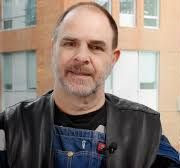
Reviewed by Adrian Rhodes

The book: The Final Choice: End of Life Suffering: Is Assisted Dying the Answer? written by Caralise Trayes and published by Capture & Tell Media, 2020, New Zealand.

This book is a nonfiction work, written by a journalist who is exploring the issue of euthanasia in a series of thematically linked essays. People against euthanasia will find information to use against proponents. People for euthanasia will like this book.

There are two cases presented in the first two chapters; in one case, the person was in favour of euthanasia but changed her mind. In the second case, the person was in favour of euthanasia and campaigned to legalise the practise, but died before this could happen.

The third essay outlines a meeting where a politician – the same one who wrote the euthanasia law in New Zealand – appears at a euthanasia society meeting. He says, in one passage, “I am right and they are wrong…” speaking of people against euthanasia.

That statement summarizes the entitled attitude of anyone I’ve met who campaigns in favour of euthanasia. Notice: there is no room for discussion; the statement as quoted does not include palliative care, hospice or alternatives. Death and that’s the only action offered.

There is another part of this politician’s speech where he encourages people to get bumper stickers for their cars and adds, “…Don’t worry about putting a sticker on your car – I have my face and name plastered over mine and it never gets damaged…” While this is a jest, according to the context, consider the implication: people who are opposed to euthanasia will think nothing of damaging a car to make a political point. Remember, he’s right and people opposed are wrong, without qualification.

Considering I have had four people online wish me a terminal, painful illness so I will “…change my mind…” on the issue, it’s clear that he is not joking. Yes, that might be a stretch, but once more, the statement encapsulates the attitude of people willing to kill the vulnerable.

There is a politician quoted as saying “75 percent of New Zealanders who watched their loved ones die, often badly, feel they need more choice and control.” (36) Look at this quote: “…watched their loved ones die…” removes the action from the person involved and puts the choice in the hands of observers. “…often badly…” so a smaller percentage of the 75 percent have seen people die this way: how often? We don’t know. “…feel…” The people observing feel that the right thing to do is kill the observed. “…more choice and control?…” 

At risk of belabouring the point, whose choice? And why control? The observer is obviously the focal point of this statement, so it’s the observer’s control, not the person suffering. In a very short quote, this parliamentarian gave the game away. It’s got nothing to do with the person dying, it’s about the observer controlling the death.

The essays are peppered with commentaries like this, and the book therefore rewards a close reading. If you skip over details, you will miss cues. The organization of the book moves from legislation, to opponents, to lawmakers in an organized fashion. Yet there are little clues here and there that the person writing this book is not against the practice.

So read this book as a contemporary snap-shot of the issues within the action of euthanasia. Read it carefully, since the writing can come across as subtle. Personally, I saw the same ideas and ideologies presented as in other books showing euthanasia as a socially virtuous act; this is why I suggest caution in the reading of it.

The subtitle: Is Assisted Dying the Answer? Can be answered with a ‘no’, since we see the problems the practice has created in Canada, and in other parts of the world. Is caring or killing the solution?

Having said this, the book is clear, concise and a good introduction to the issues. But it’s an introduction: the defense of life is more complex than this book would have you believe and requires a more cautious consideration than the ease of its reading would otherwise suggest.

Life choices of the common person (Who really wants to die? : Part III)

This is the third in a series of articles by Gordon Friesen.
By: Gordon Friesen
http://www.euthanasiediscussion.net/

-- the prosaic commonality of perseverance in life
Objectively speaking, ordinary folk are in no way more likely to seek voluntary death than are their privileged counterparts; and probably much less.

In actual fact, people who accept humbly the changes of time and fate, with philosophy and fortitude, are everywhere to be found. We all know them. They are our family; our friends; our workmates; and indeed, ourselves.

The famous public obstinacy of Terry Fox, to remain standing regardless of the pain incurred, finds a more modest yet perfectly faithful reflection among that vast throng of ordinary people, for whom each active day is, also, a marathon: the waitress with swollen ankles; the mechanic with stiff knees and a sore back; all of those whose pressure is too “high” or whose sugar is too “low”; those who consume phenomenal quantities of ineffective pain remedies; all of those -- when healthy neighbors are leaving for evening activities on a Thursday night – who can think only of bed (and dream of sleep), in the hopes that tomorrow, again, they will once more be able to take up the same extenuating tasks, responsibilities and satisfactions.

But such, to be sure, is the shared destiny of everyone, and particularly as we grow older; a destiny assimilated naturally (with greater or lesser serenity) by nearly everyone, including those, also, who have been unhappily placed -- despite themselves -- in that newly targeted class of individuals for whom medicalised suicide (voluntary euthanasia) is now presented as the preferred option.

It is these people, then, who bear the brunt of this extraordinary innovation in social and medical policy. It is they who are so particularly ill-served by the mainstream media renderings of “death with dignity”; accounts which are biased in vocabulary and in tone; a bias which undermines both the personal confidence, and the public perception, of such “everyday heroes”.

And yet it is they (and not their suicidal brethren) who so obviously comprise the overwhelming majority of those now designated, as the intended clientele for euthanasia!

Surely it must be possible to create a vehicle, by which these typical patients might benefit from the euthanasia free institutions (and from the unconditionally life-centric care), which they deserve and desire.


But here again, in making such sweeping and general statements, one might easily predict forthcoming accusations of scholarly malpractice, in a lack of rigorous quantitative argument. With the reader’s permission, therefore, it would now seem necessary to reveal a few hard numbers.

Tuesday, September 8, 2020

Suicide doctor conducts human experiments in killing people.

This article was published by National Review online on September 8, 2020

Wesley Smith
By Wesley J Smith

How in the tank for assisted suicide are the media? This much. A headline in the Mercury News about assisted suicide exclaims: “How Doctors are Fixing How We Die.” Good grief.

The story is about Lonnie Shavelson, formerly a part-time ER doctor who spent most of his working life as a photo journalist. He first came to my attention years ago when he wrote A Chosen Death, a book about witnessing assisted suicides (this, when it was still illegal in California). One story recounted how he watched a Hemlock Society leader murder a disabled man — when he tried to change his mind about dying — by tying a plastic bag around his head He. Just. Sat. And. Watched.

Shavelson is now a death doctor charging $2000 to make sick people dead and has become the toast of the media. But guess what? Assisted suicide turns out to be much less easy than its sellers promised. Indeed, some people have a very tough time when they take prescribed poison, lingering hours or days.

So, Shavelson and his cohort of death doctor pals decided to conduct human experiments. From the puff piece:

While sitting at the bedsides of several six-hour deaths, Shavelson pondered what was going wrong. He speculated that one cardiac drug was rendered ineffective by the large quantities of the other drugs. So he separated that out and gave it earlier, so it had time to act.

When some delays persisted, he replaced one of the heart-slowing drugs for a heart-damaging drug.

Based on newly compiled data from Academy [a grouping of death doctors] clinicians, the formula is about to be improved again, pending confirmation of results.
Let’s label this what it is: Shavelson using sick suicidal people as human guinea pigs in being made dead:
“We’re learning. Hypothesis, data and confirmation. This is what science is,” he said. “Our job is to stop the heart; that’s what they want us to do.
This is incredibly unethical. But that’s how Shavelson rolls.

Doctors are supposed to heal and bring comfort, but Shavelson and his ilk are just about stopping hearts. Ugh.

Those with eyes to see, let them see.

Do euthanasia drugs cause a painful death?

Alex Schadenberg
Executive Director, Euthanasia Prevention Coalition


The question of a painful euthanasia / assisted suicide death is important as recent news articles and the euthanasia lobby promote death by lethal drugs as a death with dignity.

Hannah Martin writing for Stuff News published an article concerning the New Zealand euthanasia referendum where she quotes Dr Cameron McLaren, an oncologist in the Australian state of Victoria who states that he has assisted more than 80 people to access assisted death drugs. McLaren is the most active euthanasia doctor in Victoria, as the recent statistics indicate that 124 people died by an assisted death in the first year of its euthanasia law.

Cameron's comments should be questionned since a death by lethal drugs that does not go as planned would lead to opposition to euthanasia. Nonetheless, Martin reports McLaren as stating:

There is no chemical reason why a person taking these medications would feel any pain, as they are simply sedatives, he says. 
When a person is put into that level of medically-induced coma, there is no reason to have pain. 
Even if there was pain, the body would be unlikely to register it because of the profound nature of the coma, he says. 
McLaren says of all the deaths he has been present at, the word which keeps coming up is ‘beautiful’.
A recent American court case concerning the use of euthanasia drugs for execution challenges the assertion that these drugs provide a pain free death. An article by Candace Sutton published by News.com.au reported:
An autopsy performed on (Wesley) Purkey ... revealed he suffered “severe bilateral acute pulmonary oedema” and “frothy pulmonary oedema in trachea and main stem bronchi”. 
This means fluid quickly entered Purkey’s lungs and trachea, causing “a near-drowning” sensation which a medical expert described as “among the most excruciating feelings known to man”. 
The information from the autopsy was made public by the legal team that was trying to prevent the capital punishment death of Keith Nelson. Sutton reported:
Dr Gail Van Norman, a medical expert retained by Nelson’s lawyers to interpret Purkey’s autopsy, said the flash flood-like filling of Purkey’s lungs could only occur when a person was still alive. 
“It is a virtual medical certainty, that most, if not all, prisoners will experience excruciating suffering, including sensations of drowning and suffocation from (the drug) pentobarbital,” she said.
This is not the first time that an article opposing capital punishment stated that Pentobarbitol caused a painful death. An article by Josiah Bates published by Time Magazine stated:
In 2014, Oklahoma used a combination of pentobarbital, potassium chloride and vecuronium bromide to execute convicted murderer Michael Lee Wilson. As the drugs were administered Wilson said, “I feel my whole body burning” before he died.
In February 2019 I published the article - assisted dying can cause inhumane deaths based on research by Professor Jaideep Pandit that was published in the British Medical Journal. Pandit researched complications with assisted suicide and capital punishment deaths which included:
difficulty in swallowing the prescribed dose (up to nine per cent) and vomiting in 10 per cent, both of which can prevent proper dosing. 
Re-emergence from a coma occurred in two per cent of cases, with a small number of patients even sitting up during the dying process, the authors said.  
After oral sedative ingestion, patients usually lose consciousness within five minutes. However, death takes considerably longer.  
But in a third of cases, death can take up to 30 hours.
Due to the cost and availability of Seconal and Pentobarbital, the assisted suicide lobby began to create new lethal drug cocktails for assisted suicide.

An article by JoNel Aleccia published by Kaiser Health News in March, 2017 examined the experiments by assisted suicide activists to find a cheaper alternative drug cocktail for assisted suicide. The article states:
The first Seconal alternative turned out to be too harsh, burning patients’ mouths and throats, causing some to scream in pain. 
The second drug mix, used 67 times, has led to deaths that stretched out hours in some patients — and up to 31 hours in one case. 
These lethal drug cocktail experiments were human experiments. Even though people suffered greatly from the lethal cocktail, the lethal drug experiments were done on 67 people.

An article by Jennie Dear published on January 22, 2019 in the Atlantic reports on the development of these lethal drugs cocktails.

I wrote about the drugs used for capital punishment since these are the same drugs that are used for euthanasia. The euthanasia lobby and the media want you to believe that euthanasia is a quick and peaceful death. The fact is that some of these deaths take many hours and are sometimes painful.
 

Dr Jacqueline Abernathy wrote an article on the connection between lethal injection and assisted suicide. She explains that: "Lethal injection supplies the same class of drugs as assisted suicide does. It uses the same means toward the same end: premature and imposed death."

Lethal drugs do not provide a dignified death and as I have previously stated assisted dying can be an inhumane death.

More articles on this topic:

Sunday, September 6, 2020

Requests for euthanasia based on insufficient support for disabled Ontarians

By Taylor Hyatt
Euthanasia Prevention Coalition board member & disability rights activist

At the beginning of August, the Ottawa affiliate of the StopGap Foundation started a Twitter campaign using the hashtag #ODSPoverty. (For those readers who may not be familiar, the StopGap Foundation builds custom ramps for businesses with one-step entrances in cities across Canada, to improve access for people with disabilities. Local StopGap teams rely on donations of building materials from local stores and time from volunteers.) The goal of the campaign is to make the difficulties – more accurately, the impossibilities – of life on Ontario's disability assistance system more widely known.

On August 21, I saw that someone responded to the campaign with the news that they had “enrolled in MAID.” Given the meager financial supports available to them through the Ontario Disability Support Program, necessities of life such as food and medication are now unaffordable. My heart broke for the person on the other side of the screen.

Eleven days later, CityNews Toronto published an article on the matter. It includes some responses collected from Twitter, along with longer interviews of ODSP recipients. After rent is accounted for, some people reported having little more than a dollar a day for food. Others have less than $5 in their accounts after the month’s bills and essential medications are covered. One woman named Kim, who uses a feeding tube, told journalists that she feels “like I’m being punished for being born disabled, like I committed some kind of crime.”

The maximum amount of social assistance a single person can receive each month is $1169. The addition of a $250 food subsidy allows her to survive on just over $1400. All but a few hundred dollars goes towards rent for her RV. Kim notes that six of her friends have ended their lives since the COVID-19 pandemic began. She has considered applying for MAID as well. Kim’s landlord is evicting her in favour of making money through AirBnB, and she will be unable to meet her basic needs once her new – higher – rent is paid. She sums up her situation by saying: “I have no dignity left… I don’t feel like I’m worth anything to anyone anymore.”

No matter how much I want to be surprised by Kim’s conclusion, it’s old news. I’ve been in her place – twice. First, I depended on ODSP in university, so that I could keep up with a full course load when financial support from family wasn’t possible. Strange as it may seem, I was truly lucky in one sense. Most of my expenses – including housing, transit, utilities, and cafeteria food that lived up to the stereotypes – were part of a flat fee that I paid to my university over the course of the school year. (Now that I have my own apartment and multiple bills, this isn’t possible anymore!) Though I was able to work full-time during the summers, a significant chunk of my income went towards the upcoming year…and from September to May, the measly leftovers only allowed for survival. One luxury in particular still stands out: a $3 box of French fries from a little restaurant in the ByWard Market. Relying on the generosity of friends for more costly treats was an embarrassment. Sometimes I went without; as much as I loathed it, it was what I did in order to avoid the shame of being in anyone’s debt.

In my last year of university, I landed a well-paying contract – again, with the help of friends. I was able to pay off my student loans, continue working until the fall after graduation, and build up some sizable savings. Once my contract expired, however, the job search was harder than I anticipated. Those funds ran out after about six months. ODSP was all I had left. By then, I had moved off campus to a tiny bachelor apartment with utilities included in the rent – one of the few in the city that was both big enough for my mobility devices and affordable while on ODSP. After paying for rent, my bus pass, and my phone bill, about $130 remained. Let’s just say my diet at that time was…not ideal. Month after month of this scarcity began to wear on me. At times, I was in a dark place, and I’d be lying if I didn’t admit to clouds hanging over me. Whole weeks went by where my strongest thought was that I needed to – to put it gently – “put myself out of my misery.” I'm grateful for the support of friends and loved ones, the lists I made of reasons to keep going, and the mental health supports I was able to use. Life-sustaining services like these are often out of reach for many on ODSP.

Three years later, I'm in the middle of another job hunt after confronting the instability of the non-profit sector. This time around, I have much less to fear, and yet much more. If the worst happens once my employment insurance runs out, financial support is available to help cover the cost of rent for my now-accessible apartment. This would leave me with a few hundred dollars more than I’m used to. Still, I’m afraid that it may not be enough to do more than simply “exist” and I have now had a taste of life beyond “the bare minimum.” For example, my beloved cat Nibs has been a real lifeline for me in these months of limited socialization. There is no way I’d be able to afford her food, litter, vet appointments, grooming appointments and everything else needed to give her a fulfilling life while barely scraping by myself. Of course, I’d be willing to do what’s best for her…but could I cope with suddenly seeing her handed over to the care of friends, or a shelter? I doubt it!

Premier Doug Ford has recently, and rightly, come under fire for suggesting that ODSP recipients should “get a job” since “they’re healthy and they’re able to work.” For people like Kim, that might not be possible, and their survival should not depend on their ability to produce quantifiable output. Does the premier remember that someone on ODSP can only earn $200 per month before the province claws back their earnings? Who ever heard of rent that cheap? On top of this, supporters of (MAiD) euthanasia and assisted suicide say that the procedures allow people to exercise autonomy in the face of life-limiting medical conditions. They forget that a person cannot only be pressured into ending their life by another person; circumstances like living in poverty, lack of needed supports, or fear of institutionalization can have the same effect.

As disability rights activists often say, one cannot make a free choice to die if they do not also have a choice in where and how to live. A choice, by definition, includes more than one possible outcome. The provincial government, and the social services it controls, need to recognize that some Ontarians are now making false “choices” to escape unbearable circumstances. The latest provincial slogan, “Ontario: A Place to Grow,” does not apply to everyone unless Ontarians with disabilities are helped to thrive.

Thursday, September 3, 2020

People with disabilities in Ontario are asking for euthanasia

Alex Schadenberg
Executive Director, Euthanasia Prevention Coalition

Cynthia Mulligan and Mahnoor Yawar reported for CityTV News that people with disabilities in Ontario are seeking an assisted death during the COVID-19 crisis. 

The story follows Kim who is a recipient of the Ontario Disability Support Program (ODSP) and says her life has been “pure hell” during the pandemic.

According to the CityTV news report:

A single person with disabilities in Ontario can earn a maximum of $1,169 in social assistance.

Kim also receives a food subsidy of $250 a month due to health issues, giving her just over $1,400 per month to live on.

She pays $1,000 to rent a 300-square foot RV in a trailer park, leaving her with $421 for all other expenses.

Kim says she usually never has any extra money left over and often doesn’t make it to the end of the month for food.

Her story is echoed by many on social media.

One man, Patrick Doherty, tweeted last month that after dropping off his rent cheque he only had $2 a day to spend on food for the rest of the month.

Another woman said after paying her bills this month, she is left with just under $4.

“This is because I chose my medication which I cannot live without for mental health issues,” read her tweet.
The CityTV report states that people with disabilities are asking for euthanasia.
Even more chilling is that some are talking online about applying for Medically Assisted Dying (MAID).

One woman on Twitter said she enrolled because she “can no longer afford to live, nor can I afford the food and medicine I need to get better.”

Kim says she knows of more than 50 people who have applied for MAID while some, she says, are taking other routes.

“I’ve lost six friends to suicide since [the beginning] of COVID,” said Kim.

Kim admits she has thought about applying for MAID herself. She says her landlord is evicting her because he can get an additional $400 a month on AirBnB and she can’t afford that. Paying $1,400 in rent would leave her with $21 a month for food and all expenses.
Clearly, there is a problem with housing and income support for people with disabilities. Sadly, people are dying from despair as COVID-19 increases the cost of living and leads to greater isolation. 

Recently a BC woman requested euthanasia based on the loneliness and isolation due to COVID-19 restrictions. (Link).

It was argued, from the beginning, that people with disabilities would be affected by the legalization of killing by euthanasia. Sadly, this indicates that people with disabilities are losing their lives to neglect and euthanasia.

Australia Care Alliance: Victoria's first year euthanasia report.

This article was published by the Australia Care Alliance on September 3, 2020.


On 19 June 2019 both assisted suicide and euthanasia became legal in Victoria. In a world first since ancient times, Victoria is experimenting with a system of permits for the State authorised suicide of a particular, named person using a specified lethal substance as well as permits for State authorised euthanasia of a named individual by a named doctor using a specified lethal substance (This was last done in Germany in the 1940s.)

Assisted suicide and euthanasia become legal in Victoria on June 19, 2019 when the Voluntary Assisted Dying Act 2017, which passed the Legislative Council on 22 November 2017 by just two votes (22-18) came in to full operation.

Regulations were gazetted in September 2018.

Numbers

The Voluntary Assisted Dying Review Board’s Report of operations January to June 2020 reports that 104 people died by assisted suicide following ingestion of a prescribed lethal substance and 20 people were killed by euthanasia by a physician - 124 people in total – between 19 June 2019 and 31 December 2019. Of these 78 died in the second six months period - up 70% from the 46 in the first six months.

This represents approximately 0.38% of all deaths in Victoria for the period January-June 2020. It is worth noting that it took sixteen years of legalised assisted suicide before Oregon got to this rate in 2015.
A further 50 people were prescribed and supplied with a lethal substance before June 30, 2020 but had not yet been reported as having ingested it by that date; and 47 additional people were given VADSAPs – a permit for a doctor to prescribe a lethal substance for a person to use to commit suicide – but had not yet been dispensed the lethal substance.

10 additional people had received VADPAPs – a permit for a doctor to kill a person by lethal injection – but had not yet been killed by June 30, 2020.

41 permits were not issued when first applied but all were subsequently issued after a further application.

Eligibility criteria

The core eligibility criterion is set out in Section 9 (1) (d) of the Act:
  • the person must be diagnosed with a disease, illness or medical condition that—
  • is incurable; and 
  • is advanced, progressive and will cause death; and 
  • is expected to cause death within weeks or months, not exceeding 6 months; and 
  • is causing suffering to the person that cannot be relieved in a manner that the person considers tolerable.

The first three elements of this criterion are to be assessed by two doctors, one of whom is required to “relevant expertise and experience in the person's disease, illness or medical condition”, the nature of such expertise and experience to be stated on Form 1 or Form 2 as set out in Schedule 1 of the Act.

None of the terms used in this provision are further defined in the Act nor any guidance given in the Regulations as to how they are to be assessed.

During debate on the Bill it became clear that there are uncertainties around the meaning of “incurable” and “will cause death” so that, for instance an insulin dependent diabetic who declines to take insulin may qualify under this criterion.

It was also accepted that there are misdiagnoses and errors in prognosis so that there will inevitability be some wrongful deaths.

It is important to note that the fourth element in the criterion relating to “suffering” is specifically NOT to be assessed by the two doctors. It is entirely subjective and therefore entirely meaningless. A person is suffering in the required sense simply if the person asserts that this is the case.
This approach applies in Canada but notable not in the Netherlands or Belgium where the objective nature of the suffering – and the incapacity to relieve it – is a matter for professional assessment by the physician, including a relevant specialist.

There is no definition of suffering and therefore nothing to exclude forms of existential suffering such as loss of autonomy, lack of capacity to enjoy former hobbies, feeling a burden on family or financial concerns to be the only suffering experienced. There is absolutely no requirement for the person to be experiencing pain or other physical symptoms.

Mental illness

Section 9 (2) of the Act provides that:

A person is not eligible for access to voluntary assisted dying only because the person is diagnosed with a mental illness, within the meaning of the Mental Health Act 2014.

The force of the word “only” is the key to understanding the limited usefulness of this provision in protecting persons with mental illness.

It does not preclude a person with a profound mental illness but who also has another “a disease, illness or medical condition” that meets the criterion set out in section 9 (1) (d) of the Act from accessing assisted suicide or euthanasia.

Nor does it explicitly preclude a mental illness from itself being considered to be “a disease, illness or medical condition” that meets the criterion set out in section 9 (1) (d) of the Act. For example, a person with anorexia who is expected to die within 6 months as a result of refusing treatment could qualify or even a person with treatment resistant suicidal ideation. It remains to be seen whether the Act will be applied in this way.
Sections 18 (1) and 27 (1) provide respectively that if the co-ordinating medical practitioner or the consulting medical practitioner:

is unable to determine whether the person has decision-making capacity in relation to voluntary assisted dying as required by the eligibility criteria, for example, due to a past or current mental illness of the person, [he or she] must refer the person to a registered health practitioner who has appropriate skills and training, such as a psychiatrist in the case of mental illness.

It is entirely up to the assessing doctors to form their own view as to their expertise in assessing decision-making capacity. This provision is weaker than the corresponding provision in Oregon which refers to “impaired judgement” rather than a lack of “decision-making capacity” which is defined in section 4 in purely cognitive terms, taking no account of the effects, say, of depression or demoralisation on a person judging what is truly in his or her best interests.

The evidence from Oregon shows that even with this stricter approach “as many as 150 people with depression may have been helped to commit suicide without any such referral”.

Under section 36 of the Act the two people witnessing the signature on the written declaration must certify in writing “that, at the time the person signed the declaration, the person appeared to have decision-making capacity in relation to voluntary assisted dying”. This hardly adds any extra assurance to the process as the witnesses do not need to have any expertise or prior knowledge of the person.

There is a provision in section 68 of the Act for a person who is considered by VCAT (Victorian Civil and administrative Tribunal) to have “a special interest in the medical treatment and care of the person” assessed as eligible for assisted suicide or euthanasia to apply to VCAT for a review of the decision that the person has decision-making capacity.

Disability

Section 9 (3) of the Act provides that “A person is not eligible for access to voluntary assisted dying only because the person has a disability, within the meaning of section 3(1) of the Disability Act 2006.”

Once again the key word is “only”. Nothing precludes a person with a disability – physical or intellectual – from accessing assisted suicide or euthanasia provided the person meets the other eligibility criteria. Nothing precludes the person’s disability from being considered as “a disease, illness or medical condition” expected to cause death within 6 months.

Nor are there any explicit provisions to protect people with disability from discriminatory assessment under the required processes by doctors who would consider a person with a particular disability as “better off dead”.

People with disability are more likely to experience undiagnosed depression especially following initial acquisition of a disability or adverse developments in their physical, psychological or social condition.

The Act explicitly provides for requests for assisted suicide or euthanasia to be made by gestures. It is not made explicit in the Act whether or not an accredited interpreter is required in this case. A recent court case in the Netherlands determined that “hand squeezes, nods, eye blinking and crying were all sufficient signs of” a request for euthanasia.

Coercion

The Act requires the two assessing doctors, as well as the witness to an administration request in the case of euthanasia, to certify that the person requesting assisted suicide or euthanasia is “acting voluntarily and without coercion”.

Assessing doctors are required to complete training approved by the Secretary of the Department of Health on “identifying and assessing risk factors for abuse or coercion”.

However, this training consists of just ten minutes of slides and videos as a small part of the online mandatory training that most doctors are completing in four hours or less[1]. Ten minutes of training cannot guarantee that assessing doctors never miss the signs of coercion or abuse given the well-documented evidence of failure by professionals in Australia to identify elder abuse.[2]
There is no provision for anyone to seek a review at VCAT of an assessment by the two doctors that a person is acting “voluntarily and without coercion” in requesting assisted suicide or euthanasia. A family member or friend who becomes aware that a person is being coerced has no formal recourse under the Act at all.

State issued permits

Form 3 in the Regulations sets out what a VADSAP or “voluntary assisted dying self-administration permit” looks like.

“This self-administration permit in respect of Mary Brown authorises Dr John Smith for the purpose of causing Mary Brown death, to prescribe and supply the substance specified in this permit to Mary Brown that is able to be self-administered; and is of a sufficient dose to cause death”.

The permit will be signed by the Secretary of the Department of Health and Human Services or his or her delegate.

The permit will also directly authorise Mary Brown to “use and self-administer the substance” specified in the permit in order to cause her death.

This is clearly not just State sanctioned suicide but – in a world first since ancient times – State authorised suicide of a particular, named person using a specified lethal substance.
Form 4 in the Regulations sets out what a VADPAP or “voluntary assisted dying practitioner administration permit” looks like.
“This practitioner administration permit is issued to Dr John Smith … this practitioner administration permit in respect of Jim Brown for the purpose of causing Jim Brown death, authorises Dr John Smith to administer the substance to Jim Brown.”

This is State authorised euthanasia of a named individual by a named doctor using a specified lethal substance. It was last done in Germany in the 1940s.
The Regulations specify that the Secretary of the Department of Health and Human Services or his or her delegate will have 3 business days from receiving a VADSAP or VADPAP application form (accompanied by five other forms) to either issue the permit or refuse to do so. 68% of applications are processed in just two business days - unheard of public service efficiency - all in the service of poisoning Victorians.

All that the Secretary or his or her delegate will do is to check that two doctors have ticked the right boxes and filled in the blanks on the six forms.
None of this checking of ticked boxes can possibly guarantee that the person who the Secretary or delegate will authorise to commit suicide or to be killed by euthanasia really:
  • is not being discriminated against due to disability; and 

Assisted suicide

The processes for assisted suicide are deeply flawed.

The “poison or controlled substance or a drug of dependence specified in a voluntary assisted dying permit for the purpose of causing a person's death” approved by the Secretary, prescribed by the doctor and issued by a pharmacist to the person will be 20g of sodium pentobarbital.

On 5 January 2019 the Minister for Health, Martin Foley, announced that The Alfred Hospital pharmacy would be "the sole service for dispensing" the lethal cocktail across Victoria. "For people too sick to travel, the pharmacy service will deliver them their medication and provide information on administration".

The notion of a kind of "uber-poison" service to country Victoria - where there is a chronic shortage in ready access to palliative care medicines as needed - is particularly disturbing.

There is no requirement for any doctor or other health practitioner to be present when the poison is ingested.

In Oregon, under a similar scheme, in 2019 for two out of three people there was no physician or other healthcare provider known to be present at the time of ingestion. In one out of ten cases where a health care provider was present they reported that the person either had difficulty ingesting or regurgitated the lethal dose, or had other complications. In previous years, complications have also included seizures. Eight people have regained consciousness and died subsequently from the underlying illness.

The interval from ingestion of lethal drugs to unconsciousness was as long as four hours while the time from ingestion to death was as long as 104 hours with one person in 2019 taking 47 hours to die.

Imagine these complications occurring for a person who is home alone when they ingest the poison.

The Act does not require any assessment of decision-making competence or absence of coercion at the time of ingestion nor does it set any time limit on the length of time between the poison being prescribed under a VADSAP and it being ingested. In Oregon the longest duration between initial request and ingestion recorded is 1009 days (that is 2 years and 9 months).

There is no provision for the Voluntary Assisted Dying Review Board to collect or report data on complications or time between ingestion and unconsciousness or ingestion and and death.

The Regulations provide the specifications for the locked box in which the Act requires the lethal poison issued under a VADSAP to be stored. It must be made of steel. It must be “not easily penetrable”. It must be “lockable with a lock of sturdy construction”.

The last two requirements are entirely subjective. What counts as “not easily penetrable” or as a “lock of sturdy construction”? Who knows? Almost any steel petty cash box could be thought to qualify.

There are no requirements for where the box containing the lethal poison is to be kept. However, section 126 of the Act does specifically exclude it from the usual protective requirements for dangerous medication in aged care services - so it may have to be kept under grannie’s bed in her aged care room.

Nor are there any limits on how many keys there can be to the box or on who can have a key (or the code in case of a combination lock).

And of course if there is no witness we will never know if the person really self-administered the poison or if it was administered to them by a family member or other person under duress, surreptitiously or violently.

Euthanasia

Section 48 of the Act allows for euthanasia (practitioner administration of the poison) as an alternative to assisted suicide in the case where a single doctor certifies that he or she is satisfied that “the person is physically incapable of the self-administration or digestion of an appropriate poison or controlled substance or drug of dependence” and provides a reason for this incapacity in completing Form 8 of schedule 1 of the Act and Form 2 as set out in the Regulations .

In the first twelve months to 30 June 2020, some 16.1% (20 out of 124) of cases involved euthanasia by lethal injection.
The Board actively encourages recourse to euthanasia in its Report:

“While self-administration might be appropriate for the applicant initially, it may not always be when close to death. Coordinating medical practitioners can apply for a new practitioner administration permit if the applicant has lost the physical capacity to swallow or digest the medication. ‘I was worried she wouldn't be able to swallow the medication.’ – Contact person.”


The Report does not provide any data on how often, if ever, this has occurred to date.
It does indicate that the threshold for justifying euthanasia as the method of bringing about death is so low that vague concerns about an ability to swallow the (liquid) medication would be sufficient.
Comparative statistics between jurisdictions permitting only assisted suicide and those permitting both assisted suicide and euthanasia suggest that where euthanasia is available the overall rate of deaths from assisted suicide and euthanasia is significantly higher.
This may explain why Victoria has reached a death rate of 0.38% from prescribed lethal poisons in one year of legalisation sixteen times faster than Oregon which only permits assisted suicide.
Conclusion

On 19 June 2019 Victoria embarked on the fifteenth in a series of experiments in legalised euthanasia or assisted suicide begun in the Northern Territory in 1996. Each of these experiments has proved to be fatally flawed resulting in wrongful deaths. There is nothing in the design of the Victorian experiment or the data so far to justify any expectation of better results.

Tuesday, September 1, 2020

Victoria Australia: 124 assisted deaths in the first year of its euthanasia law.

Alex Schadenberg
Executive Director, Euthanasia Prevention Coalition


The Victoria Australia Assisted Dying Review Board reported that in the first year of its euthanasia law there were 124 assisted deaths. Victoria passed its euthanasia law in November 2017 and instituted the law on June 2019.

Reporting for the Age
, Melissa Cunningham stated:
Ten times more people than expected have chosen to end their lives under Victoria's landmark voluntary assisted dying legislation in the first year.

State government-sanctioned lethal medication was used to end the lives of 124 terminally ill Victorians in the 12 months since the state's landmark euthanasia laws came into effect in June last year, far surpassing initial estimates of just 12 people in the first year.

Since the assisted dying laws were introduced last year, 231 permits to die have been issued, the new Voluntary Assisted Dying Review Board report, which examined the first year of the legislation, found.
Cunningham stated that the Assisted Dying Review Board is concerned that the government extended approvals to internet assessments rather than in person consultations, as the law originally required. 

Cunningham reported the following data:
Almost 350 terminally ill people were assessed for eligibility to end their own lives legally, while 272 eligible applicants applied for a permit, the report found.

There were 134 cases in which applications were withdrawn by a doctor or a person died before obtaining a permit. Applicants were aged from 32 to 100, with an average age of 71.
Cunningham reported that one case was sent for review.
One application was deemed non-compliant after the board identified an administrative error within the paperwork completed by a medical practitioner.

Although the person was deemed eligible to access the scheme, their death has been referred to the Australian Health Practitioner Regulation Agency for review.

On an ominous note, Cunningham reported

The findings come as the independent Voluntary Assisted Dying Review Board called for a Commonwealth law that requires face-to-face consultations for voluntary assisted dying to be abolished
At least for now, “Attorney-General Christian Porter said there were no plans to abolish the law and it remained the responsibility of the Victorian Government to ensure its laws comply with Commonwealth law,” Cunningham reported.

The Victoria government claims to have the most conservative euthanasia law in the world, and yet, in the first year there were 10 times the number of deaths than projected. Some consider this to be a success whereas I don't ever consider killing people as a success.