Monday, November 10, 2014

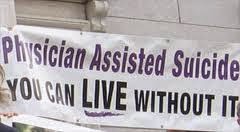
UK proposes to Create “Suicide Courts?”

This article was published by Wesley Smith on his blog on November 8, 2014. 

Wesley Smith
By Wesley Smith

Talk about a death panel!

The House of Lords is debating again to legalize assisted suicide–struggles with the nonsense of fashioning ”strict guidelines” to protect against abuse. (As I have repeatedly shown, guidelines don’t protect, they just give the illusion of control.)

The latest scheme is to create what could be called “suicide courts,” where suicidal people will ask a judge to approve their doctor-prescribed suicide. From the Independent story:
Judges could routinely be given the power of life or death over patients who are determined to die to end their suffering. 
Proposals to use judges as the final arbiters of who can be helped to die go some way to satisfying opponents to Lord Falconer’s Assisted Dying Bill. Lord Pannick QC proposed judicial oversight in amendments to the Bill which went before the House of Lords yesterday. The Lords, in the first Parliamentary vote on the Bill, gave it their approval.
This is nuts! This would be worse than Oregon, in some ways, more destructive than Belgium and the Netherlands!

Assisted suicide should be illegal because it amounts to a joint enterprise to end a human life.

With legalization, you have private transactions between doctors and suicidal patients. It’s wrong, but the government isn’t officially or directly involved in the death.

But a suicide court would make the government a direct participant in suicide. The State would be ruling that some lives are not worth living. It would give an explicit imprimatur to suicide.

That’s a huge and dangerous step that should never be taken.

And here’s the irony: The UK opposes the death penalty. Trying to accommodate the Culture of Death is driving us out of our minds.

Friday, November 7, 2014

Dutch euthanasia law needs reform. Euthanasia is granted to people who have years to live

By Alex Schadenberg
International Chair - Euthanasia Prevention Coalition

Theo Boer
An article published in the NL Times on November 7, reports that Theo Boer, an ethicist and former 9 year member of a Regional Euthanasia Review Committee in the Netherlands is stating that doctors, politicians and the review committees need to re-evaluate the euthanasia law.


The NL Times articles begins by stating that Boer believes that:
Euthanasia Doctors sometimes give in too quickly to the claims of patients that they are suffering unbearably. It can therefore not be ruled out that in the Netherlands euthanasia is granted to people who still had years to live.
The article explains that Boer (54), who recently left the Regional Euthanasia Review Committee in September after working there for more than nine years, has evaluated more than 4 thousand cases of euthanasia. Based on that experience Boer concludes that doctors, politicians and review committees should seriously consider re-evaluating the euthanasia law.

There are 5 review committees, in the Netherlands, that assess,  after the death, whether physicians have complied with the legal due diligence in the performance of euthanasia.


According to the article, Boer is convinced that, the requirement that the patient must be suffering unbearably was not properly considered when the law was created. Boer says that physicians will not tell their patients that they do not qualify for euthanasia because their suffering is not unbearable. The article stated:
In the first years after the introduction Boer had fewer problems with the provision on unbearable suffering because almost only people with a terminal, physical condition were given euthanasia. But now euthanasia is often given to people who still had some time to live.
According to the article, Boer wants to add a stronger medical component in the law or in its review. The fact that some conditions may fall by the wayside is outweighed by the advantages of a more objective criterion. Boer is concerned that if developments continue in this way, he expects a strong increase in the number of cases of euthanasia because people do not want to be put in a nursing home.

A woman was recently euthanized in the Netherlands because she didn't want to go to a nursing home.

Boer wants a moratorium on any more groundbreaking cases. Boer stated:
If it were up to him, he would form a committee that will conduct a public and cross-party discussion. This should be about what practice of euthanasia in the Netherlands is most future-proof and safe.
Links to similar articles:

UK poll: Assisted suicide is not safe.

This article was published by the Care Not Killing Alliance in the UK.

Peers urged to ditch dangerous assisted suicide bill, as new polling shows that one in ten Britons would favour rewarding older people for ending their lives.

1. More than four in 10 believe assisted suicide will be extended beyond the terminally ill if the current law is changed. 
2. Clear majority of public says there is no safe system of assisted suicide. 
3. Fewer than three in 10 believe changing the law on assisted suicide will not lead to increase in abuse of vulnerable people.
Peers are being urged to ditch a dangerous assisted suicide bill that could lead to more than 1,200 deaths a year. Lord Falconer's Assisted Dying Bill has its committee stage in the House of Lords on Friday 7 November.

This is a joint call from disability rights campaign, Not Dead Yet and from Care Not Killing.

The two groups say that changing the law on assisted suicide would weaken protections for vulnerable people. They highlight the findings of a new poll from ComRes, which reveals high levels of concern among the British public around the proposed changes.

The poll found a clear majority believe that it is impossible to make a completely safe system.

Child with disabilities dies by euthanasia by dehydration.

By Alex Schadenberg
Executive Director - Euthanasia Prevention Coalition

Nancy Fitzmaurice
The death by intentional dehydration of Nancy Fitzmaurice, a 12 year-old child with significant disabilities in the UK, is clearly a case of euthanasia by dehydration and not a case of withdrawing medical treatment.


I have a relative who lives with a very similar condition to Nancy, a condition that developed in a samilar manner.

The British case, that became known when an article was published in the Daily Mirror on October 25, 2014, is based on a decision by Justice Eleanor King in August, to approve the withdrawal of hydration and nutrition from Nancy.

This case set a terrible and dangerous precedent as this was the first time that a person, who was breathing on her own and not on life support or suffering from a terminal illness, died by dehydration with the approval of the court.

Euthanasia is the intentional action or omission of an action to cause death, where the death is the direct result, for reasons of "mercy." 
Since Nancy was not otherwise dying, and since the withdrawal of hydration and nutrition was done to cause the death of Nancy by dehydration and since she died by dehydration, this is clearly a case of euthanasia by dehydration.

This decision differs from the decision to withdraw hydration and nutrition from someone who is dying and nearing death. 

This was a terrible legal precedent that approved death by dehydration for someone who was not otherwise dying, this decision also has significant negative ramifications for people with disabilities. Nancy was dehydrated to death, not because she was dying or nearing death, but because she was living with disabilities and her life was deemed to be "Not Worth Living."

The fact that Nancy lived for 14 days before dying from dehydration is a clear illustration of the difference between this decision to cause death and the withdrawal of hydration and nutrition to allow someone to die a natural death.

Thursday, November 6, 2014

Oregon Oncologist Speaks of the Tragedy of Physician-Assisted Suicide

By Kenneth R. Stevens Jr. · November 4, 2014

Lauren Hill
(Lauren Hill, has been diagnosed with an inoperable brain tumor and has been given only a few months to live. She just played in the opening basketball game at Mt. St. Joseph University.)

Physician-assisted suicide has recently been in the media because of Brittany Maynard, diagnosed with a brain tumor earlier this year, who came to Oregon and died of suicide from an overdose of barbiturates on November 1, 2014. The assisted suicide proponent organization, Compassion & Choices (former Hemlock Society), has orchestrated and centered a skillful media campaign about her story to promote further legalization of physician-assisted suicide.

She was attractive, young, recently married, and diagnosed with a malignant brain tumor. Even though she was very functional and able to travel to the Grand Canyon in recent weeks, she ended her life prematurely a few days ago with the drug overdose.

My 47-year experience caring for patients with cancer in Oregon has been rich with experiences with patients. Since Oregon’s assisted suicide law was passed by voters in 1994, I have studied the law and its effects and led efforts to fight it.

Brittany Maynard’s story is currently in the news, but there are other stories regarding assisted suicide in Oregon.

I first became involved with assisted-suicide in 1982, shortly before my 39-year old wife died of cancer in the brain. We had just made what would be her last visit with her doctor. As we were leaving the office, he said that he could provide her with an extra-large dose of pain medication. She said she did not need it because her pain was under control. As I helped her to the car, she said “Ken, he wants me to kill myself.” She had suffered a lot over the prior 18 months, but her doctor’s statement caused the most suffering to her. It devastated her that her doctor, her trusted doctor, would suggest that she kill herself. Two weeks later she peacefully died in our home without pain, and with dignity. We treasured all of our time together, even to the natural end of her life on earth.

Monday, November 3, 2014

Dying with dignity – really?

By Dr Kevin Fitzpatrick OBE 
Director of the Euthanasia Prevention Coalition International.
Spokesperson/Convener of the Not Dead Yet UK Campaign. 

Kevin Fitzpatrick
Death is not an event in life, like marriage, or buying your first car or home, not even like losing a limb. It is not a catastrophe to be ‘cured’ or fixed or accommodated going forward. Death is the end of all the possibilities of life. It is both more terrible and more important than injuries suffered in a car accident, or the suffering a cancer brings. We have lost that sense of its importance.

We live in a time when we are constantly bombarded by atrocities from across the globe. We say ‘life is cheap’ when what we really mean is that death is, when our sense of what it is for a human being, any human being, to die, is corrupted beyond repair. We have lost any sense of the ‘terrible beauty’ that Leon and Jill Uris photographed in Ireland in the 1970s, that even in such horrific and deadly circumstances there can still be something there for us to find profound, even beautiful. We only count death now as a degrading ‘failure’, as though we can and should be able to defeat it, if we only worked a little harder, did a bit more research. 

Death has become the cheapest of all commodities and dying is our new atrocity in western, wealthy cultures where the luxury of false ‘choice’ exists. Dying has become an abomination, in which we are supposed to be absolutely and irrevocably excluded from the new alchemists’ panacea…dignity.

So Brittany Maynard, faced with dying in a way she found unacceptable, has committed suicide with the help of the state of Oregon. There are so many questions left unresolved by her final act – would there have been any kind of dying she might have found acceptable? is it really so simple ‘Her life her choice?’ are there no concerns about how she has used her dying to promote a cause?

But my question here is not ‘Whose life is it anyway?’ – that question is a false one – oh, it looks like a question , has all the words in the right order - but it is actually nonsensical. Any part of this debate focusing on her ‘right’ to do this is specious, and no help whatsoever.

No, my question is ‘Whose dignity is it?’ I have lived for more than forty years with indignity after indignity – like the apoplectic railway worker screaming at me at 6 in the morning that my wheelchair was too big for the train carriage. Did he upset me? For sure. Did I lose my dignity? Well, actually, not that time. I kept my composure, my dignity. So whose indignity was it? His. My wheelchair is a standard, relatively-compact size, like the majority. His fury was entirely disproportionate, blaming me/my ‘chair was stupid and he was certainly not fit for his job in that moment.

Euthanasia Prevention Coalition challenges Quebec euthanasia law


By Hugh Scher, Legal Counsel - Euthanasia Prevention Coalition

Hugh Scher
Québec’s landmark law allowing euthanasia contravenes Canadian criminal homicide laws and represents a dangerous step towards a patchwork quilt of provincial regulation of serious criminal conduct, which is why the issue must be handled federally, says Toronto health, human rights and constitutional lawyer Hugh Scher.

The Euthanasia Prevention Coalition (EPC), represented by Scher, was granted leave to intervene in a constitutional challenge brought by the Physicians Alliance Against Euthanasia and Vivre Dans La Dignite, Living With Dignity, against both the federal and Québec provincial governments arguing Québec’s law, which was adopted last summer and will go into effect in December 2015, is stepping on federal jurisdiction by undercutting sections of the Criminal Code that outlaw assisted suicide and euthanasia and by attempting to define the intentional killing of patients by doctors as healthcare.

The proposed safeguards in the law are discriminatory and violate ss. 7 and 15 of the Charter of Rights and Freedoms, says an affidavit filed by the Coalition.

“Any change to decriminalize euthanasia is properly the jurisdiction of the Parliament of Canada, as it is in its pith and substance a question of criminal law,” says the court document. “The federal law is and should be paramount in order to ensure certainty, universality and equal benefit and protection of the criminal law across Canada.”

Sunday, November 2, 2014

Assisted Suicide is bad medicine.

This article was published in the Sacramento Bee on November 1, 2014

By Marilyn Golden 

Marilyn Golden
Why, when listing opponents, did The Sacramento Bee editorial pushing an assisted-suicide law ignore the disability community? (“Give the dying the right to pick how and when to die”: Editorials, Oct. 26) We could be those most affected.

As a disability-rights advocate and person living with a disability, I know our concerns aren’t just “fear-mongering.” Rather, legalizing assisted-suicide is a direct threat to our community as well as to the elderly, people with chronic illness and others marginalized by society.

The Oregon assisted-suicide experiment has major problems.

When Oregonian Barbara Wagner was prescribed chemotherapy for aggressive lung cancer, the Oregon health plan refused to cover it. They offered, instead, among other things, to pay for her assisted suicide. Randy Stroup, another Oregonian with cancer, received a similar denial. Is there any wonder why? Treating people with terminal or chronic illness is expensive. At roughly $300, assisted suicide is the cheapest “treatment.”

Direct coercion is not even necessary. Denying, or even merely delaying, expensive, life-sustaining treatment can drive patients toward assisted suicide. It is a deadly mix with our cost-driven health care system.

This is partly why every major disability organization taking a position opposes legalizing assisted suicide.

Saturday, November 1, 2014

Five reasons why Assisted Suicide should not be legal

This article was published by the Corsicana Daily Sun on November 1, 2014

By Scott Middleton M.D., FACS
A 29-year-old California woman changed her mind about dying this week. Brittany Maynard, who has terminal brain cancer, moved to Oregon for the announced purpose of taking her own life, under that state’s Death With Dignity Act. She was set to commit suicide, legally, with the assistance of one of my fellow physicians.

I believe this is a tragedy. We, as physicians, certainly have a role in end-of-life care. Admittedly, we sometimes abdicate that role. In reality, there is much truth in Hippocrates’ statement that we should “Cure sometimes, treat often, comfort always.”

“Physician-Assisted-Suicide is fundamentally incompatible with the physician’s role as healer, would be difficult to control and would pose serious societal risk” — from the Code of Ethics, American Medical Association.
Five of my reasons why Physician-Assisted-Suicide should not be legal:

An open letter to Brittany Maynard from Maggie Karner

Maggie Karner, a Connecticut woman who has a glioblastoma brain tumor, has written a letter to Brittany Maynard expressing her hope that Brittany decides not to die by assisted suicide.

Since early October, Brittany Maynard, who also has a glioblastoma brain tumor, has captured the emotions of Americans while she considers dying by a lethal dose of assisted suicide drugs.

In her Youtube video, Maggie Karner reads her open letter urging Brittany not to take her life by assisted suicide.

The assisted suicide lobby has turned the Brittany Maynard story into a new campaign to legalize assisted suicide throughout the United States.

The Euthanasia Prevention Coalition hopes that Brittany Maynard will release herself from the grip of Compassion & Choices and find the necessary medical care that will enable her to fight her terrible disease, and if she dies, that she will die a peaceful death.

Friday, October 31, 2014

Assisted suicide laws are more dangerous than people acknowledge

This article was published by NewJersey.com on October 31, 2014

John Kelly
By John B Kelly - the New England regional director for Not Dead Yet, a grassroots disability group opposed to the legalization of assisted suicide.

The media is flush with the sympathetic story of Brittany Maynard, the 29-year-old newlywed with aggressive brain cancer. Her video advocating expanded assisted suicide laws has been seen millions of times, prompting another push in the State Assembly to pass an assisted suicide bill.

When the focus is on an individual, assisted suicide can sound good – who’s against compassion or relieving suffering? But a closer look reveals that assisted suicide puts vulnerable people in mortal danger. The more people learn about the real-world implications of these bills, the more they oppose them. (Our group takes its name – Second Thoughts – from this fact). Last year, the Legislatures of New Hampshire, Massachusetts and Connecticut rejected assisted suicide bills.

The simple truth is that not all families are loving. Elder abuse is a nationally recognized epidemic. Every year, New Jersey elders suffer an estimated 175,000 cases of reported and unreported abuse, most by adult children and caregivers. Financial gain or emotional relief creates motives for steering someone toward death. The two witnesses to the death request could be an heir and the heir’s accomplice. Once the lethal prescription leaves the pharmacy, there is no further supervision and no independent witness required at the death to ensure that the lethal dose is self-administered.

Depressed people will be harmed. Under Oregon’s program, Michael Freeland obtained a lethal prescription for his terminal diagnosis, despite a 43-year history of severe depression, suicide attempts and paranoia. The prescribing doctor said a psychological consult was not “necessary.” When Freeland received volunteer suicide prevention services, he was able to reconcile with his estranged daughter and lived two years post-diagnosis. Oregon’s statistics for the last four years show that only 2 percent of patients are being referred for psychological evaluations.

Maynard story raises issue: How to care for the dying besides killing them

This article was published by OneNewsNow.com on October 31, 2014.

Alex Schadenberg
For a person going through terminal illnesses or pain, assisted suicide is not the answer, says an expert on assisted suicide and euthanasia.

Brittany Maynard, 29, is dying from terminal cancer and moved to Oregon where assisted suicide is legal. She had planned to kill herself Saturday, Nov. 1, but she has had a change of heart and postponed it.

Alex Schadenberg of the Euthanasia Prevention Coalition sheds some light on the situation, saying first that Maynard has become a poster girl for the movement.
"I think that you have to understand the problem with this situation is that Brittany has become part of a whole media campaign," he tells OneNewsNow. "So whether she decides to wait to cause her death or not, she is now part of a system which is trying to gain from her death."
Schadenberg says her story has given national exposure to lobbying group Compassion and Choices while mostly ignoring a genuine solution for her problem, and others.

What happened when euthanasia became legal. The Netherlands experience.

By Alex Schadenberg
International Chair - Euthanasia Prevention Coalition

The following is the video of the presentation by journalist, Gerbert van Loenen, from the Netherlands to the Euthanasia Symposium on October 4, 2014 in Ottawa-Gatineau.


While watching the video, you will notice that van Loenen is not opposed to euthanasia but rather he is explaining the changes that occurred in the Netherlands, from when euthanasia was first legalized until the present day. He refers to the Netherlands as the laboratory.

van Loenen explains how euthanasia has expanded in the Netherlands, not only in the number of yearly deaths by euthanasia, but also the reasons for euthanasia. After van Loenen has completed his explanation of the growth in the practice of euthanasia he states:
It's up to you to judge this development. You may be of the opinion that it is a disgrace that the position of the Netherlands has shifted this far, you can also be of the opinion that in all of these cases termination of life is the best of the available options, is indeed the lesser evil. The one thing you cannot do is deny that the boundaries are continually pushed back, moving the Netherlands a considerable distance from its original position. The discussion about one category of people for whom termination of life is suggested draws attention to an adjacent category of suffering individuals and the same arguments for termination of life can be applied to. And so the position of the Netherlands is shifting. Again, we need not consider this a disgrace. But the shift itself cannot be denied. 
Making euthanasia and physician-assisted suicide legal started a development we did not foresee. The old limit 'thou shalt not kill' was abandoned, a new limit is yet to be found.

East Coast Conference Against Assisted Suicide


Attend the East Coast Conference Against Assisted Suicide on November 21 - 22, 2014 at the Double Tree by Hilton Hotel (Bradbury Airport) near Hartford Connecticut.

Link to the registration.


The East Coast Conference Against Assisted Suicide will provide you and your group effective information to oppose assisted suicide in your state.

Wesley Smith
Speakers include:

Wesley Smith - Attorney and award winning author and a senior fellow at the Discovery Institute's Center on Human Exceptionalism.


Alex Schadenberg - Executive Director and International Chair of the Euthanasia Prevention Coalition. He is an author and a well known speaker against euthanasia and assisted suicide.

John Kelly - Director, Second Thoughts Massachusetts and New England Regional Director, Not Dead Yet.

Dr Kevin Fitzpatrick - Director of the Euthanasia Prevention Coalition - International and leader of Not Dead Yet - UK.


Nancy Elliott - A former three term New Hampshire State Representative, and organizer of Living with Dignity - New Hampshire.

Catherine Glenn Foster - Litigation counsel with Alliance Defending Freedom. She is a key member of the Life Litigation Team at its Washington, D.C., Regional Service Center.
Nancy Elliott

Peter Wolfgang - Executive Director of the Family Institute of Connecticut and speaker against assisted suicide in Connecticut and regionally. Peter led the charge in Connecticut against assisted suicide. You won't want to miss his insights and experience gained by going up against the multi-million dollar organizations working hard to bring assisted suicide to your state.

Registration cost.
Friday November 21
Attend one of the sessions: Legal, Medical or Leadership sessions. $30.00.

Saturday November 22
Full day conference includes breakfast, coffee breaks, lunch and all speakers. $100.00.
Full day conference rate for students and people with disabilities. $30.00.

Wednesday, October 29, 2014

David Mixner claims to have killed eight people.

By Alex Schadenberg
Executive Director - Euthanasia Prevention Coalition

David Mixner, during his recent Oh Hell No! one-man autobiographical stage show, described how he killed eight people. Mixner stated:
A doctor would leave a morphine drip at the patient’s property for him. Mixner would insert it via an IV and hold his friend until the drip was completed. He would call that person’s friends and loved ones and tell them they should come and say goodbye. Before they arrived, he would remove the evidence, and when they did arrive he would leave and let the patient and their loved ones be alone to share those final moments. The effects of the morphine “could take four hours, it could take 12 hours.”
If Mixner is telling the truth, Mixner has killed eight people not by assisted suicide, but rather he has killed eight people by euthanasia.

Euthanasia as an act whereby one person kills another person. Euthanasia is a form of homicide. Assisted suicide is an act whereby one person assists another person in suicide.

There are no exceptions to homicide in all 50 US states and in nearly every country in the world.


In February 2010, Ray Gosling, a broadcast journalist in the UK confessed to killing his lover, many years earlier. After 32 police officers worked 1800 hours investigating Gosling's murder confession, it was determined that Gosling never killed a former lover.

Gosling was given a 90-day suspended prison sentence at Nottingham Magistrates' Court after pleading guilty to wasting police time. The judge in passing sentence branded him: 
‘a sheer liar and fantasist’ guilty of ‘creating and maintaining this cruel fabrication’.
Based on the timing of Goslings "confession" he may have been wanting to increase public pressure on the UK government to legalize assisted suicide.

I have no idea whether or not Mixner actually killed eight people, but since he has confessed to the killings, it is incumbent on legal authorities to investigate the alleged crimes. 

Considering the timing of Mixner's "confession" in relation to the Brittany Maynard story, Mixner may also be wanting to increase pressure on US states to legalize assisted suicide.

I wonder if Mixner realizes that homicide is treated more harshly by the law than assisting a suicide?

Monday, October 27, 2014

Why I’m afraid of Steven Fletcher’s assisted-suicide bill

This article was published in the Toronto Star on October 26, 2014.

Heidi Janz
By: Heidi Janz

Like many Canadians with disabilities, I have been following the renewed national debate on legalizing assisted suicide and euthanasia with growing fear and trepidation.

I am at the point where, to put it bluntly, I am sick and tired of hearing about how TABS (temporarily able-bodied people) and former TABS want the “right” to die, lest they have to live with some of the limitations that I do. The (not so) implicit message is: People with disabilities have crappy lives, therefore, they should want to die.

It’s true that I have some significant advantages that many disabled people don’t: I have a PhD; I live in my own home, and I direct my own care. It’s also true that I live with some limitations that many TABS would deem intolerable — namely, I’m bladder incontinent and eat via a g-tube.

But my dignity/worth as a human being is neither defined by my advantages, nor diminished by my limitations. Rather, as a human being, my life has intrinsic dignity and worth. It is when my life is devalued by society as a “fate worse than death” that I am robbed of my rightful human dignity.

Indeed, like most people born with disabilities, I have had a lifetime of encountering temporarily able-bodied people who automatically assume that the fact that I need other people to assist me with personal care means that I have neither personal dignity nor quality of life. In latter years, I have developed a swallowing disorder that has made it necessary for me to receive part of my daily nutrition via a g-tube. This further lowers my perceived quality of life in the eyes of many people.

Sadly, this includes medical practitioners, as they are not immune to the same able-ist biases which afflict the general public. Consequently, I already live with the fear that, the next time I’m admitted to ICU in severe respiratory distress, a physician could read my medical history, see my feeding-tube, conclude that I have a poor quality of life already, and therefore deem further treatment as “futile.”

The legalization of euthanasia and assisted suicide would inevitably, exponentially increase my social vulnerability, along with the social vulnerability of every single disabled and elderly Canadian, thus putting our lives in real and present danger.

Scotland's anyone assisted suicide bill.

This article was published on Wesley Smith's blog on October 26.


By Wesley Smith

So much for “aid in dying” as a “medical treatment.”

In Scotland, a bill is pending to authorize anyone-assisted suicides. From the honestly named–as opposed to US proposals--”Scottish Assisted Suicide Bill:”

No criminal liability for assisting suicide (1) It is not a crime (of any kind) to assist a person to commit suicide.
That basically means anyone can assist.

The person who wants to die has to be age 16 or higher, have two doctors state that he or she has a terminal or “life-shortening” illness–which,when you think about it, could be almost anything:

(5) The kind of illness or condition referred to in subsection (4)(a) is—(a) an illness that is, for the person, either terminal or life-shortening, or (b) a condition that is,;for the person, progressive and either terminal or life-shortening.
That’s a wide enough gap to drive a hearse through. Many conditions are far from terminal but could be considered “life shortening,” including diabetes, asymptomatic HIV infection, MS, plugged arteries in the heart, bi-polar disease, Lupus, perhaps even, obesity or nicotine addiction.

Saturday, October 25, 2014

Former Montana legislator now opposes assisted suicide.

By Alex Schadenberg
Executive Director - Euthanasia Prevention Coalition

Jim Shockley, a former member of the Montana legislature, was published in the Revalli Republic newspaper in response to a pro-assisted suicide letter. Shockley explaining that, in the past, he had supported assisted suicide but he changed his mind after looking at the evidence.

Shockley, a lawyer and a former candidate for Attorney General in Montana first commented on the legality of assisted suicide in Montana. He wrote:

William Clarke is wrong about the legality of assisted suicide, and his definition of suicide, as described in his letter of Oct. 15, 2014. Physician assisted suicide is against the law in Montana and killing oneself is suicide regardless of your health. The present law is the Baxter case which says that under certain circumstances a physician who assisted someone to kill herself/himself has a defense to a charge of homicide. It is a defense if the doctor is charged with homicide, that does not make it legal. If the doctor is charged with homicide and can convince a jury of certain facts, he will not be convicted. If he fails to do so, he is convicted of a felony. Of course, there is the civil liability of the doctor, which is not addressed at all by Mr. Clarke.
Shockley then commented on why he now opposes assisted suicide. He wrote:

Friday, October 24, 2014

Brittany Maynard - Don't rob them of hope.

This article was published on October 24 by Mercatornet.

Brittany Maynard is a 29-year-old woman who learned not long after her wedding that she had an aggressive brain tumour. She has announced that she has chosen to die on November 1, by assisted suicide in Oregon. A video that she made by the leading assisted suicide organisation in the US, Compassion and Choices, has been a huge hit on YouTube. Dennis Strangman is an Australian whose wife died of a similar disease.

By: Denis Strangman the former chair of the International Brain Tumour Alliance.
Dennis Strangman (middle)
I am very sorry to read that you have a brain tumor, and especially that you plan to kill yourself.

Although we live on different continents thousands of miles apart, and belong to different generations, I sympathise with your situation, though not with your plans. I am glad that you say your proposed suicide date is not “set in stone.” I sincerely hope you will quietly forget about it and choose life. Do not be stampeded in trying to meet your “deadline” by “Compassion and Choices” or other advocates for assisted suicide.

You say you are speaking to fellow “millennials.” I don’t think they have yet invented a catchy title for us septuagenarians but you and I are fellow humans, and I would like to tell you about my own experiences in the world of brain tumors. You see, we have something in common – those terrible words “glioblastoma multiforme,” the most lethal of the primary, malignant brain tumors. I lost my wife Marg, aged 55, to this same type of brain tumor some years ago.

Thursday, October 23, 2014

Dr Ira Byock: Brittany Maynard is being exploited by Compassion & Choices, ... And I think that’s a tragedy.

By Alex Schadenberg
Executive Director - Euthanasia Prevention Coalition.

Ira Byock
In a debate format interview on the PBS Newhour, Ira Byock, a leading palliative care physician, author, and public advocate for improving care for the end of life debated Barbara Coombs Lee the leader of the assisted suicide lobby group Compassion & Choices.

Byock, with reference to the Brittany Maynard story stated on PBS Newshour that:

My heart goes out to Brittany Maynard. It’s a heart-wrenching story. But I want to assure ... people watching that she could get excellent whole person care and be assured of dying gently in her bed surrounded by her family. 
It’s ironic that we know how to give extremely good care, not only comprehensive medical care, but tender, loving care. But ... as the Institute of Medicine report shows, we’re just not doing it in this country. And it really is a national disgrace. 
And giving doctors now authority to write lethal prescriptions fixes really nothing, none of the deficiencies in practice or medical training. It’s really a socially dangerous thing to do.
Byock then examined the reality of legalized assisted suicide.
You know, Oregon’s law was modeled after Holland and Belgium. And in Holland and Belgium these days, people are being euthanized, by their own volition, for things like depression or ringing of the ears, not just pain. 
You know, Compassion & Choices actually sold to the public the legalization of physician-assisted suicide because of unremitting pain. But we can control pain. What’s happening now is that over 85 percent of people who use Oregon’s law and end their life do so because of existential or emotional suffering, feeling of being a burden to their families, feeling the loss of the ability to enjoy life, feeling the loss of meaning. 
Well, once those become criteria, there are a lot of problems and human suffering that then becomes open to assisted suicide and euthanasia. It’s an undeniable fact that the slippery slope exists.

Wednesday, October 22, 2014

Scotland: Assisted suicide plan 'unethical and uncontrollable'

By Alex Schadenberg
International Chair - Euthanasia Prevention Coalition

Sign the CNK Scotland online petition against the assisted suicide bill.

The BBC reported that the Care Not Killing (CNK) in Scotland has launched an online petition calling on MSPs to reject a bill that would allow people to end their life by assisted suicide.

This bill represents the second attempt to pass assisted suicide at the Scottish Parliament, the first having been voted down by MSPs in 2010. The justice committee is due to take evidence on the practical application and legal aspects of the bill at its meeting on Tuesday October 28.

The BBC reported that CNK, which includes disability and human rights groups, healthcare providers and faith-based bodies, said the current law making assisted suicide illegal is "clear and right". CNK stated that:
Proposals to legalise assisted suicide are "unnecessary, unethical and uncontrollable", according to campaigners opposed to the move.
Gordon Macdonald
The BBC stated that CNK Spokesman Dr Gordon Macdonald said: 
Any change in the law to allow assisted suicide would place pressure on vulnerable people to end their lives for fear of being a financial, emotional or care burden upon others. 
This would especially affect people who are disabled, elderly, sick or depressed. 
The Scottish Parliament rightly rejected the legalisation of assisted suicide and euthanasia just four years ago out of concern for public safety. 
In every free democratic society, there are limits placed on human freedom in order to protect the common good and vulnerable people. 
The law must not be changed to accommodate the wishes of a small number of desperate and determined people at the expense of the rights of others." 
Once any so-called 'right-to-die' is established, we will see incremental extension with activists applying pressure to expand the categories of people who qualify for it. The right to die will become a duty to die."

What will happen to Brittany Maynard?

This article was published on the Choice Is An Illusion blog.

By Margaret Dore, Esq., MBA

Margaret Dore
The suicide advocacy group, Compassion & Choices, is running a public relations campaign featuring the story of Brittany Maynard, a 29 year old woman with a brain tumor. According to media reports, she intends to take her life under Oregon's assisted suicide law in the near future. [1]

Lovelle Svart

In 2007, there was a similar case in Oregon involving Lovelle Svart, which was also promoted by Compassion & Choices. Svart, who had cancer, died at the end of a party in which she had been having a great time. The party was reported in the Seattle Times, which described her as being in control. [2] When it was time for her to die, however, she engaged in stalling behaviors ("a hugging line" and a cigarette break). 

There was also this exchange between her and George Eighmey, a member of Compassion & Choices:
“Is this what you want?” 
“Actually, I’d like to go on partying,” Lovelle replied, laughing before turning serious. "But yes."
The situation was similar to a wedding when it’s time to take your vows. Everyone is watching and it's the thing to do. Even if you're having second thoughts or would rather “go on partying,” you go forward. If Eighmey had wanted to give her an out, he could have said:
“You're having so much fun, you don’t have to do this today or even next week.”
Instead, he closed her by guiding her to take the lethal dose, which killed her.

Will Ms. Maynard get her choice?

It may be hard to know.

Compassion & Choices, regardless, will have an interest in getting the best promotional material possible from her death.

Tuesday, October 21, 2014

Unconscious Patient Heard Push to Stop Care

This article was published on Wesley Smith's blog on October 21, 2014.

By Wesley Smith

Wesley Smith
Sometimes, I think, the medical system is in too big a rush to assume that people with brain damage are out and gone.

This is the fruit of a “quality of life” value system that increasingly infects medicine. Human life matters far less now than the supposed quality of the life expected to be lived.

That’s very dangerous. Here’s an example: An Australian woman had a stroke. She appeared completely unconscious, but was really awake and aware. And she heard the push by her medical team to end life support. From the story:

Sunday, October 19, 2014

Physicians Alliance Against Euthanasia on Global News

By Alex Schadenberg
Executive Director - Euthanasia Prevention Coalition


Tom Clark from Global News, interviewed Dr Catherine Ferrier, the leader of the Physicians Alliance Against Euthanasia. Clark fails in his attempt to discredit Ferrier in a one-sided interview, The interview is based on the - Open Letter to Canadians on Euthanasia and Assisted Suicide.

The Physicians Alliance are urging Canadian physicians to sign the Open Letter to Canadians.

Link to the video of the interview.

Saturday, October 18, 2014

People in a vegetative state may be aware

By Alex Schadenberg
Executive Director - Euthanasia Prevention Coalition

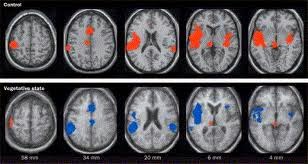
The UK Independent published an article on a study by scientists at Cambridge University concerning tests on people considered to be in a vegetative state or a minimally conscious state.

The Independent is reporting that:
Severely brain-damaged patients in a persistent vegetative state may be capable of being consciously aware of the outside world, scientists said.
Scientists at Cambridge University have developed a test to determine whether people in a vegetative state can respond to their surroundings. Dr Srivas Chennu reported that:
“Our research could improve clinical assessment and help identify patients who might be covertly aware despite being uncommunicative,”
“... for patients diagnosed as vegetative and minimally conscious and their families, this is far more than just an academic question; it takes on a very real significance,”
The article in the Independent explained the research data:
The researchers analysed the brainwaves of 32 patients using 128 electrical sensors fixed to the scalp to measure electroencephalograph (EEG) activity. 13 members of the group were classed as being in a persistent vegetative state, with the rest being minimally conscious. 
The study, published in the online journal Plos Computational Biology, found that four of the 13 patients with persistent vegetative state had a “robust” network of brain activity that would allow conscious thoughts, which was confirmed when they were asked to imagine playing tennis when their brains were scanned using a magnetic resonance imagining (MRI) machine.

Friday, October 17, 2014

Catherine Frazee: There can be dignity in all states of life

This article was published in the Ottawa Citizen on October 15, 2014.

By Catherine Frazee

In his article of Oct. 9, Desmond Tutu emphasizes the importance of language on the sensitive issue of medically assisted dying. In the spirit of advancing a respectful dialogue, I must urge him to consider the deeper meanings of dignity, and how our experience of human dignity leads disabled Canadians to a very different conclusion about end-of-life interventions.

Last week I had the opportunity to share my thoughts with a small group of parliamentarians on the subject of medically assisted dying.

I was not alone. Several friends and colleagues from the disability rights community were each given five minutes to present an argument against amending the criminal code to sanction medically assisted dying.

One spoke about the discriminatory implication of offering state-sanctioned assistance not for everyone, but only for persons who are frail, very ill, or seriously disabled. Another presented a chilling account of the “creep” of euthanasia in permissive jurisdictions.

Another spoke from personal experience, about the time someone said to him, “I don’t know how you do it; I’d rather be dead than in a wheelchair.” There were nods of recognition around the room. This is a common experience.

I spoke about dignity. The suffering that medically assisted dying is said to alleviate most often correlates with loss of dignity. I don’t believe that anyone should take a position on medically assisted dying without first understanding what dignity is, and what it is not.

Assisted suicide often involves pain and suffering.

This article was published by the Providence Journal on October 17, 2014.
By Lani Candelora
Did you know that many assisted suicides experience complications? Assisted suicide is wrongly marketed to the public as a flawless, peaceful escape from suffering. It can be a painful and scary death. It can include gasping, muscle spasms, nausea, vomiting, panic, confusion, failure to produce unconsciousness, waking from unconsciousness and a failure to cause death.

Just recently, we saw a heartbreaking article about a woman named Brittany Maynard who has planned her assisted-suicide death for Nov. 1. She is clearly terrified of a hard and painful death, and has been led to believe that assisted suicide is the best way out. However, Compassion and Choices, the leading advocates of assisted suicide, cannot guarantee her the easy death they advertise.


The most comprehensive study on clinical problems with assisted suicide (published in the New England Journal of Medicine on Feb. 12, 2000) was conducted over a six-year period in the Netherlands, where assisted suicide has been legal for many years. It found that over 18 percent of assisted suicides experienced problems severe enough to cause a doctor to step in and euthanize the patient. In at least 14 percent of assisted suicides the patient had problems with completion including waking up from coma, not becoming comatose, and not dying after becoming comatose. Another 7 percent of assisted suicides reported muscle spasms, extreme gasping for air, nausea and vomiting.

The New England Journal of Medicine study insightfully mentions that all reporting doctors are practitioners and supporters of assisted suicide and euthanasia who are less likely to report unfavorable data. They “may have underestimated the number and seriousness of problems,” causing complications to be under reported to an unknown degree.