
Monday, May 16, 2011

Swiss reject assisted suicide restrictions


By Alex Schadenberg
Executive Director - Euthanasia Prevention Coalition

Yesterday, the voters in Zurich rejected two initiatives to restrict assisted suicide. Many people are viewing these results as support for the concept of assisted suicide, but after reading many articles and commentaries on the voter initiative I think it is very clear that the people of Zurich were fed a false premise that was not effectively countered.

The supporters of assisted suicide claim that assisted suicide is a type of freedom. They suggest that assisted suicide relates to autonomy and personal choice. Therefore, it is implied, that opposition to assisted suicide is a denial of freedom, autonomy and personal choice.

In reality, legalizing assisted suicide gives another person the right to cause the suicide death of another person. Legalizing assisted suicide eliminates the societal protection for people with disabilities, the frail elderly and those with chronic conditions. It is not about granting freedom, but rather exposing the most vulnerable in society to pressure, even if only subtle to die by an imposed death.

The greater question is why did the person seek suicide?

In Canada the laws that protect people from assisted suicide are designed to help vulnerable people. The law states that a person must not aid, abet or counsel suicide. But when we consider why people consider suicide and the vulnerable position of that person, one realizes how the current law needs to be upheld as a protection for all Canadians especially when they are experiencing the most vulnerable time of their life.

Stephen Drake Isn't Dead Yet

Daniel J Vince, has written an excellent article for the Rocklin and Roseville Today, titled: Drake Isn't Dead Yet. Stephen Drake, the research analyst for Not Dead Yet, is a leader in the disability community and a fabulous advocate and speaker against euthanasia and assisted suicide.

Drake and his partner Diane Coleman, are amazing advocates and leaders who both hero's at upholding legal protections for people with disabilities.

Stephen Drake writes regularly on the Not Dead Yet blog site.

Drake Isn't Dead Yet

When infant Stephen Drake was being born sideways breech in a New York hospital in the mid-'50s, a doctor wrongly used forceps to pull him from the womb. The resulting brain injury gave Drake hydrocephalus, which would require a lifelong brain shunt to manage. He also would have permanent challenges with nonverbal learning, tremors, body movement, and coordination.

Now Drake works for Not Dead Yet of Rochester, New York. In part, it's a nonprofit group for people with disabilities opposed to assisted suicide laws.

In a telephone interview, 55-year-old Drake said, "Not Dead Yet was founded in 1996, shortly after the third time Dr. Jack Kevorkian was acquitted for being involved in suicides, the last time with two women with non-terminal disabilities. That same year, the Supreme Court had two cases on whether a person had a constitutional right to assisted suicide. At that time, many individual disability advocates were speaking out against assisted suicide, but it was clear a group was needed to focus on that issue alone."

Drake cited a recent poll of people with disabilities in the United Kingdom. Although some people with disabilities there have pushed hard for having a legal right to assisted suicide, the majority of people with disabilities were against it.

In the U.S., Drake and many others with disabilities also have serious concerns. For one, people with disabilities are increasingly seen as a financial and emotional burden on society. If an assisted suicide law existed nationally, said Drake, medical professionals and family members would be in a position to consciously or unconsciously coerce vulnerable people with disabilities into making a lasting decision they normally wouldn't consider.

"And another concern is that [assisted suicide laws] are discriminatory," said Drake. "If, as advocates argue, giving someone assistance for suicide is honoring their suicide (choice), then assistance should be offered to anyone committing suicide, not just the ill, elderly or disabled."

Drake said media bias was one reason Americans haven't been better informed. For example, he said, "There has been an uptick (in the U.S.) in the number of elderly husbands killing their (disabled) wives, then killing themselves. In almost every case, the press has called this a 'mercy' killing. But studies looking into the details have shown no evidence at all the wife knew she was going to be killed, let alone asking for it."

We need Stephen Drake and Not Dead Yet to continue its work and we need more people like Drake and Coleman, who are willing and able to articulate on behalf of others.

Wednesday, May 11, 2011

Swiss voters to vote on assisted suicide in Zurich Canton

This Sunday, the Canton of Zurich will be voting on whether or not to ban or restrict assisted suicide in the Canton by stopping death tourism.

An article by Ariane Gigon in Swissinfo explains how assisted suicide has become a political issue in Zurich. The article states:

Swiss law tolerates assisted suicide when patients commit the act themselves and helpers have no vested interest in their death. But since the 1990s pressure has grown on politicians following various scandals involving the deaths of mentally ill patients and so-called “suicide tourists”.

Christoph Blocher, justice minister from 2004-2007 and a member of the rightwing Swiss People’s Party, didn’t want to change the status quo. His successor Eveline Widmer-Schlumpf from the centre-right Conservative Democratic Party wanted to ban assisted suicide but nothing happened.

The ball is currently in the court of Simonetta Sommaruga, from the centre-left Social Democratic Party, who has promised a new bill “in the first half of 2011”.

This explains the high symbolic value of the Zurich vote. No one is giving either vote a chance of passing – they are judged almost impossible to apply because they violate the principle of non-discrimination between citizens.

But Bernhard Sutter, spokesman for assisted suicide organisation Exit in the German-speaking part of the country, is hoping for a clear result “to send Simonetta Sommaruga a strong signal”.

Sommaruga has indicated she wishes to include questions of suicide prevention and palliative care in her response.

The parties seeking to ban assisted suicide in canton Zurich are the Christian-based Evangelical People’s Party and the Federal Democratic Union.

The advocates of the ban believe palliative care is the best option to take care of seriously ill people at the end of their lives.

They also believe that assisted suicide damages Zurich’s image, not to mention the cost to the taxpayer of SFr3,000-5,000 ($3,400-5,700) per case for the legal medical tests.

“Those who take their own life do not die in dignity but in moral distress and despair,” they claim.

Supporters of assisted suicide insist on the right to self-determination. However, a majority reject suicide tourism: when foreigners travel to Switzerland to end their lives.

Exit and Dignitas, the two biggest assisted suicide organisations in Switzerland, are not working together on a campaign, but they both warn against banning assisted suicide or creating insurmountable obstacles to getting a doctor’s approval.

Canadian criminologist Russel D Ogden, who considers the current Swiss model one of the best in the world.

“Every case of assisted suicide is subject to an official enquiry and can be documented,” he said.

But he fears that if the government introduces greater obstacles to gaining access to assisted suicide, “it will lose the control that it is looking to obtain. As a result, people will observe the precautionary criteria less than the specialist organisations do today”.

Ogden points to the increasing use of helium in suicides in countries that ban assisted suicide, such as Germany.

Dignitas, which helps around 100 people end their lives a year (a third less than before 2008 and the introduction of the obligation in Zurich to consult a doctor twice instead of once), resorted to helium four times in 2008 but has not used it since. Exit says it has never used gas.
We hope that the citizens of Zurich will recognize how assisted suicide threatens the lives of vulnerable people. That suicide tourists are often subtly coerced into an assisted death out of fear of being abandoned rather than being assured that they will be cared for until they die a natural death.

It is interesting that Russel Ogden, the leader of the Farewell Foundation, a group in British Columbia Canada that has been set-up in a similar fashion to the Dignitas suicide clinic in Zurich, continues to pass himself off to the media as a researcher and expert instead of promoting himself as a suicide activist and an activist who has been involved with NuTech.

The Farewell Foundation is attempting to overturn Canada's assisted suicide law through the court.

Suicide Kits Under Fire as Oregon Proposes Ban of Sale

Oregon legalized assisted suicide more than thirteen years ago through a plebiscite measure. In that time, the official statistics state that there have been 525 reported assisted suicide deaths in Oregon. At the same time there has been more than a 30% increase in suicide deaths in Oregon. Now the Oregon government is attempting to take some action on the problem.

An article by Mikaela Conley that was published by ABC News on May 10 explained that the Oregon legislature unanimously voted to ban the sale or marketing of suicide kits.

The bill is a response tot he death of Nick Klonoski, a 29 year old Oregon resident who was experiencing long term depression who ordered the Exit/Suicide bag (helium hood) through the mail from a assisted suicide activist group in California.

State Senator Floyd Prozanski, who sponsored the bill stated:
"After learning of a young man who took his life using a helium hood he bought, it became obvious that there were no checks and balances of marketing suicide kits. Minors had access to the kits through the Internet, and I personally don't believe we need to be marketing an object like a suicide kit."
Prozanski further stated that:
"Any kid who suffers from depression after losing their first boyfriend or girlfriend and thinking the world is over has access to this right now,"
Sharlotte Hydorn, the assisted suicide activist from La Mesa California who sold the "Helium Hood" to Klonski stated:
she makes no apologies for his death.

"I cannot take all the sadness of the world on my shoulders. I feel so sorry for the mama, but I'm not at fault. That's his choice, not my choice."
Hydorn then stated:
"Since this bill came out, I've received many many orders from Oregon. They haven't benefited themselves, and now people are stocking up before the law closes on them."
Business doubled after Klonoski's death made headlines and she plans on continuing to grow her small company. Hydorn said she has received requests for kits from all over the world.

Derek Humphry
People should not be surprised by the fact that an elderly woman in La Mesa California is distributing "Helium Suicide Hoods" nationally and internationally. Hydorn admits that she works directly with the leaders of the euthanasia lobby, the article stated:
Three years after her husband's death, Hydorn met Derek Humphry, author of "Final Exit" and founder of the right-to-die organization, the Hemlock Society. Hydorn believed in Humphry's mission and began to volunteer, and ultimately became a board member, for the organization.
A similar fact was exposed when it was discovered that George Exoo was assisting the suicides of depressed people. Humphry admitted that when he received calls from people who were unstable but wanted to die he gave them Exoo's contact information. Link to article.

The Euthanasia Prevention Coalition is happy that the State of Oregon recognizes the horrific problems in relation to the Helium Hood but at the same time they are not investigating the leading assisted suicide lobby group Compassion & Choices who in 2009 facilitated 57 of 59 reported assisted suicide deaths in their state.

It should cause an alarm to go off when the group that promotes assisted suicide is also the group that facilitates the deaths and the reporting mechanism.

Knowing the role that Compassion & Choices plays in facilitating the Oregon assisted suicide law should create huge concerns as to what is actually happening in Oregon.

Tuesday, May 10, 2011

MacDonald promises to introduce bill to legalize euthanasia in the Scotland

Margo MacDonald vows to once again attempt to legalize euthanasia and assisted suicide, after winning her seat in the recent Scottish election.

MacDonald, whose bill to legalize euthanasia and assisted suicide, was stunningly defeated in the Scottish parliament on December 1, 2010 by a vote of 85 to 16, has vowed to bring forth a new bill to legalize euthanasia and assisted suicide. Link to article about the stunning defeat of MacDonald's bill

Last year, the MacDonald bill was intentionally written with imprecise language so she could falsely claim that the bill was limited to assisted suicide and had strict safeguards. My assessment of the bill showed how the bill had few, if any restrictions and it legalized euthanasia and assisted suicide.

MacDonald recently stated to the Scotland Herald that:
her assisted suicide Bill, which was rejected last year, could find more support in the new session.

“There might be an entirely different balance in Parliament,” she said. “It’s a personal thing.”

I predict that MacDonald will try to fool the Scottish people by claiming that she is trying to legalize assisted suicide with strong restrictions, but in fact the bill will once again be a wide open euthanasia bill. I also predict that her bill will once again be strongly defeated.

The Care NOT Killing Alliance is sure to work very hard to defeat the new bill.

Elder abuse reportedly increased by 13% in Ireland

By Alex Schadenberg
Executive Director - Euthanasia Prevention Coalition


The Irish Times has reported that the incidence of elder abuse has risen by nearly 13% in 2010.  Is it that people are now reporting elder abuse or is it that the actual rates of elder abuse are increasing?

The Irish Times reported:
More than 2,000 cases of elder abuse were reported to the Health Service Executive (HSE) last year, up almost 13 per cent on the previous year.

The figures, presented at the annual conference of the Irish College of General Practitioners in Galway at the weekend, show that in 95 per cent of cases the abuse was alleged to have occurred in the older person’s home. Gardaí were notified about some 17 per cent of cases.

About 65 per cent of the alleged victims were women and half the victims were over 80 years of age.

The cases were notified to the HSE in the first instance by public health nurses in 33 per cent of cases, by other HSE staff in 16 per cent of cases, by families of older persons in 12 per cent of cases, by hospitals in 11 per cent of cases and by GPs in 2 per cent of cases.

The data was presented by Oonagh McAteer, elder abuse officer for the HSE Dublin Mid- Leinster region, who said it was likely more cases of elder abuse were reported last year than in previous years due to a greater awareness of the elder abuse services provided by the HSE. There are senior social workers dealing with reported cases of elder abuse in each of the HSE’s areas.

A total of 2,110 cases of elder abuse were reported last year, up from 1,870 in 2009 and 1,840 in 2008. Ms McAteer said the indications were these figures under-represented the prevalence of elder abuse, which can take many forms, including psychological abuse, financial abuse and neglect, as well as physical and sexual abuse. She urged GPs to be alert to cases of elder abuse saying risk factors included being a woman of advanced age living in an intergenerational household and being socially isolated.

One GP questioned how many cases of elder abuse were perpetrated by the HSE as a result of leaving older people on trolleys in hospital emergency departments.
The Irish government is attempting to create more abuse about the scourge of elder abuse and they are attempting to protect seniors by making it a requirement to report incidence of elder abuse. Whether or not the increased incidence of elder abuse is related to increased reporting, it is important to note that society must improve protections for its elderly citizens.

The concept of legalizing euthanasia or assisted suicide actually removes protections for elders who are often dependent on family members or medical care givers who do not respect the right of the vulnerable elder to live.

Societal discrimination that exists toward people with disabilities is very similar to the attitudes towards vulnerable elders. Many elderly people become people with acquired disabilities and they experience a very similar negative social attitude that people with disabilities experience.

Elder Abuse: The silent Epidemic.

A recent report from the National Center on Elder Abuse states that it is estimated that every year, 1 in 10 people over the age of 65, experience some form of physical, financial or emotional abuse.


Sadly the report indicates that only 1 in 14 report incidents of abuse.

Rhonda Randall, executive vice president and chief medical officer at United healthcare Medicare and retirement stated:
“We need to educate ourselves to recognize the warning signs of elder abuse so that we can better protect our loved ones from abuse or exploitation. Seniors should feel empowered to talk with their caregivers, family members, physicians or other health care providers anytime they feel threatened, or when they suspect someone is trying to exploit them. In order to stop elder abuse, we must talk about it openly.”
She then stated that much abuse can be prevented by following these recommendations.
• Know the warning signs of physical and emotional abuse: Clues to the presence of abuse include unexplainable bruises or injury, unreasonable fearfulness or suspicion, and changes in personality, attitude or behavior.

• Take precautions to prevent Medicare fraud: Never give out Medicare, Social Security or credit card information to anyone without proper identification. If a Medicare card is lost or stolen, report it immediately by calling: (800) 772-1213. Never sign your name to a form you do not fully understand. Ask questions of Medicare and health care providers in order to clarify any questionable charges or claims.

• Take advantage of resources that can assist you. Look to your community for support—seek help from family members, friends and neighbors, senior organizations and physicians.

• The most important thing is to speak up. Elder abuse thrives on silence. By educating ourselves to recognize the signs and through taking smart, preventive measures, we are working together to ensure aging Americans are no longer abused or exploited. To learn more about elder abuse, including information on recognizing and reporting abuse, visit the National Center on Elder Abuse at: www.ncea.aoa.gov.
Society needs to identify and eliminate the societal scourge of elder abuse before it could ever consider legalizing euthanasia or assisted suicide.

The ups and downs of euthanasia debates in South Australia

I am reprinting the blog comment by Paul Russell, the founder of HOPE, concerning the euthanasia debates in South Australia. Paul Russell is a speaker at the upcoming Third International Symposium on Euthanasia and Assisted Suicide (June 3 - 4, 2011) in beautiful Vancouver BC.

The bill in question, Steph Key’s: CRIMINAL LAW CONSOLIDATION (MEDICAL DEFENCES—END OF LIFE ARRANGEMENTS) AMENDMENT BILL, has indeed taken some heavy blows of late. I’ve reported before of the doctor’s group publicly opposing the bill and the Law Society expressing their reservations. Into the mix Dr. Nitschke’s interventions seem to have played against the bill and the rushed second reading vote (later rescinded) must surely have added to MP’s reservations.

Read commentary on the bill.
Paul Russell

By Paul Russell

On May 5, 2011, the debate resumed and the earlier vote was rescinded five MPs spoke in succession against the bill which provided the impetus for the Advertiser’s headline.

But the thrust of the article wasn’t so much about the predicted decline of the Key bill but, rather, another MP, Bob Such, talking up his alternative bill.

Such has put up the same Oregon-style assisted suicide bill in the last three or four parliaments in succession. Rarely has his bill had more than a few speech contributions and, previously, it has always languished low down on the notice paper only to fall off at the proroguing of parliament.

The article has Such juxtaposing his bill with Steph Key’s proffering his effort as a more reasonable alternative.

“The concern among members is that this one (being debated) doesn’t have enough safeguards,” he said. “When you talk about ending someone’s life it has to have pretty strict safeguards.”

Wow! Hand-on-heart sincerity; or is it. The day of the earlier debate when the bill was rushed through to a vote, Such gave a short speech that included the following:

“This bill will allow a medical practitioner, using their normal standards of medical care, to ensure that a person does not suffer and that their life is ended with dignity. I agree with what the Minister for Health said: the other options are more complex and more complicated but this is a very simple proposal which basically allows a medical practitioner to end a life with dignity… I support this measure.” HoA Hansard 24th March 2011.

It must be said that, last Thursday, after the motion to rescind the earlier second reading was passed, Such did ask the Speaker of the House whether that meant that those who spoke earlier could speak again. It is not clear from the exchange whether Such would have declared a change of mind about the Key bill had he been given the opportunity.

Time will tell us whether Such was genuine or whether this is simply another case of ‘any bill will do’; a little like a jockey changing horses mid-race.

Wesley Smith
Of course, the two bills are distinctly different as Such describes. The question is whether the ‘good-bill-bad-bill’ play for votes will work. No doubt, there will be those who are happier with a safeguards model. But, as Wesley J. Smith observed when he was in Adelaide early last year, safeguards are only there to make us feel better about killing people; they are never effective, cannot define every circumstance or the progress of any illness and, ultimately, will very likely be ignored by degrees anyway.

Having said that, the Key bill is not finished yet. The five speeches last Thursday were all excellent contributions and there will, no doubt be more to come. But the numbers are far from certain.

Monday, May 9, 2011

True Dignity Vermont celebrates the defeat of the assisted suicide bill.

Vermont
With the current defeat of the attempt to legalize assisted suicide in Vermont, True Dignity Vermont sent out the following message.

We are celebrating because the coalition that formed to defeat assisted suicide was broad-based, including doctors and other medical personnel, disability rights advocates, religious groups, and concerned citizens from all walks of life. We were joined by the editors of the Burlington Free Press, the Bennington Banner, and the Caledonian Record. The Rutland Herald and Times Argus stayed silent after two, admittedly unscientific but front page polls showed huge majorities opposed to legalization. This was truly a grassroots movement. People examined the legalization of assisted suicide from very different perspectives, and came together because every perspective revealed it to be unneeded and dangerous.

We are rejoicing because we fought assisted suicide with civility, with reason, respecting but not pandering to the fears of the proponents. We did not respond in kind to the other side’s taunting and baiting talking points, especially the accusation repeated like a mantra that we were religious fundamentalists trying to impose our religious and moral views on everyone. The very experienced pro-assisted suicide activist, George Eighmey, brought in from Oregon in a failed effort to persuade Vermonters to follow his state’s example, did not manage to incite the kind of angry verbalizations that one might have expected and that he no doubt hoped for from his assertion that the nuns running a hospice where he worked as a teenager purposely withheld pain medications from dying patients so they could experience redemptive suffering. Really, this was the kind of thing they said.

We are celebrating because we were not distracted from our reasoned objections to legalization, which were based on the flaws in this year’s Vermont bill and on the problems that have arisen everywhere in the US and in the world where assisted suicide has become legal. We did not stop pointing out that the dangers of legalizing assisted suicide cannot be solved by any safeguards that could be written into any piece of legislation. We argued that assisted suicide is inherently pressuring and therefore fundamentally incompatible with freedom of choice for the sick, the elderly, and people with disabilities.

We are celebrating despite knowing that the proponents of assisted suicide will use the huge resources of the national assisted suicide/euthanasia lobby, from which the Vermont proponents admitted to getting $100,000 this year, to try to get legalization enacted in the second session of this biennium. Until recently they thought they had their best chance ever, because they have at least the spoken support of the governor, though this did not translate into any apparent effort in 2011.

We, however, have each other, as long as we do not become complacent. We are the people of Vermont. With the conclusion of this session, we have successfully fought off eight efforts to legalize assisted suicide in our state. If we have to, we can and will do it again.

We are indeed celebrating, but we are not letting down our guard for one minute.

Friday, May 6, 2011

Oregon Death with Dignity house doc loses medical license

Dr. Stuart Weisberg, the Portland Oregon Psychiatrist who made news last June 2010 for planning to establish an assisted suicide center in a similar manner to the Dignitas assisted suicide house in Switzerland, under the name "Death with Dignity" house.

After a disciplinary hearing, related to other issues, on April 8, 2011, the Oregon Medical Board removed the license from Dr. Weisbergs to practise medicine.

People who follow the issues of euthanasia and assisted suicide would remember the story of Dr. Weisberg. Link to a previous article.

What happened:
On June 1, 2004 Dr. Weisberg was put on probation by the Oregon Medical Board for:
1. Violations of the Medical Practice Act,
2. Gross negligence or repeated acts of negligence in the practice of medicine,
3. Prescribing controlled substances without a legitimate medical purpose,
4. Failing to follow accepted procedures for record keeping

After fulfilling the requirements related to the probation, Dr. Weisberg was assigned a practice mentor who was approved on June 9, 2009. On June 14, 2010 Dr. Weisberg informed the Oregon Medical Board that his practice mentor no longer supported his ideas and he requested "removal from his services."

Meanwhile, his practice mentor, before being removed as practice mentor, reviewed several of his cases. During the hearing it was explained that at least two of the cases that were reviewed by the practice mentor not only recommended treatment that was not medically indicated, but also an unnecessary risk to his patients.

Compassion & Choices, the assisted suicide group in Oregon, is probably celebrating that they will not face new competition for assisted suicide any time soon.

Now that the Farewell Foundation is attempting to establish a Dignitas style assisted suicide group in Canada, maybe they will invite Weisberg to apply for the right to practise medicine in British Columbia.

Thursday, May 5, 2011

Alzheimer's Australia states: euthanasia debate is clouded in confusion

A document released on May 3, 2011 by Alzheimer's Australia expresses concerns that the euthanasia debate in Australia is "clouded by confusion."

It is clear that Australians living with Alzheimers need to both understand their current options and be offered the necessary support system for their care before Australia ever considers legalizing euthanasia.

The media release concerning the document - Planning for the End of Life for People with Dementia, part 2 - quotes Liz Fenwick, a family carer who chaired the working group:
“I know from personal experience that the current system for planning end-of-life care is confusing and can be challenging to those who do not know where to start - it was a shock to be faced with decisions I was not ready for.

“Taking together our two discussion papers on end of life it is clear to me that the community needs to be better informed about the options that are legally available such as advance directives and palliative care.”

Professor Colleen Cartwright was quoted in the media release to state:
“End-of-life issues are complex, personal and sensitive but they are made all the more difficult if the wishes of the person concerned are not properly understood or set out, especially in cases where the person has dementia.

“There is reluctance in our society to discuss end-of-life issues, which translates to a failure by many to plan properly for the end of their life.”

Many of the issues discussed in the paper are of general relevance to all Australians but there are particular issues relevant to people with dementia.

“More discussion, debate and community-wide research is needed to ensure the more complex and specific issues of dementia are covered,” said Professor Cartwright.

“It is clear that, even if voluntary euthanasia were to be legalised, it would be wrong to end the life of an individual who does not have the capacity to make the decision and who has not expressed previous wishes."

Surrounding the debate on euthanasia is also the confusion in relation to the terminology used.

“There are many people who do not understand the definitions or what is considered euthanasia or physician-assisted suicide,” said Professor Cartwright.

“Giving pain relief which may also shorten life, respecting a patient’s right to refuse treatment, withholding or withdrawing futile life-support systems and, finally, terminal sedation are all currently legal options and they are not forms of euthanasia.”

Glenn Rees, CEO Alzheimer’s Australia was quoted as stating:
“Our focus is to ensure that individuals are both aware of the options that are currently legally available to them, and encouraged to start planning early in the disease process.

“It is clear that if the present system is to work better for people with dementia and their families more resources are needed for palliative care services in the community.

“We also need to ensure that there are sufficient residential aged care places for people with dementia, and that there is a bigger investment in services designed to promote planning at end life, including through advance care directives.”

Alzheimer's Australia also expressed concern that studies have proven that a significant number of people die by euthanasia even though they did not provide consent.

If euthanasia is legalized, will it ever be possible to ensure that all people are protected from euthanasia without consent? The answer is NO.

Melchert-Dinkel sentenced in his double conviction for internet suicide predator crimes.

Nadia Kajouji
By Alex Schadenberg
Executive Director - Euthanasia Prevention Coalition

Three years after the death of Nadia Kajouji, William Melchert-Dinkel, a former nurse from Minnesota, was sentenced for his actions as a internet suicide predator. There are many questions concerning the length of the jail sentence, but at least the Minnesota court carried out the prosecution, a prosecution that could have been carried out by Canadian authorities as well.

The Minnesota Star Tribune quoted Judge Neuville as stating to Melchert-Dinkel:
"The court finds that you were stalking and soliciting people to die. ... You knew it was wrong."
The Euthanasia Prevention Coalition (EPC) is pleased that Melchert-Dinkel was prosecuted and sentenced and we urge Melchert-Dinkel not to appeal the conviction so as to allow closure for the families. EPC recognizes that Melchert-Dinkel will serve time in prison, he has lost any opportunity of returning to his nursing profession, and the law did convict him for his heinous crimes.

The Melchert-Dinkel case proves that internet suicide predators are not that different from other cases of assisted suicide. The victim is vulnerable and the assisted suicide is counseled by a person who alleges concern for the victim, but who acts based on their own concerns. Link to article.

Information about the Melchert-Dinkel case and his victims.

Melchert-Dinkel was given a sentence of 360 days in jail and fines and restitution payments equaling $47,450. His actual sentence was for two - 15 year sentences, with 15 years probation. If he breaks his probation by committing similar crimes, he would supposedly have to serve the full-sentence.

Drybrough
Melchert-Dinkel was also told that he must do 8 hours of community service each year in the months of March and July for 10 years, that he must serve 2 days in jail on the anniversary of the deaths of Kajouji (18) and Drybrough (32) for 10 years, he cannot have any internet access, other than for work, he cannot be employed within the health care profession, and he must continue therapy.

The Star Tribune quoted Crown attorney Paul Beaumaster in this way:
the sentence was "well reasoned and supported by the facts."
With so few assisted suicide convictions in state history, there's no recommended sentencing level in state guidelines.
The Toronto Star quoted Beaumaster as stating:
"I hope this case stands as a warning to other predators on the Internet who advises, aides or encourages suicide that they will be held accountable."
Deborah Chevalier
The Star Tribune quoted Deborah Chevalier, Nadia's mother, who stated:
"For months afterward, nightmares haunted me, I would give everything I have to be able to spend just one more minute with my child again."
Outside of the courthouse Chevalier stated:
"I'm her mother. Obviously I was disappointed. ... Justice can never be served."
The Toronto Star quoted Mohammed Kajouji, Nadia's father as stating:
"When the judge called, I couldn't stop crying. It brought everything back. And I was so scared. I was reading online and everyone said he might not even go to jail. But he will go to jail and he will pay the fines so there is some closure. It won't bring Nadia back, but I'm glad it's over."
The editorial in the Brampton Guardian , the city where Nadia grew up, stated: No Justice for Nadia. The editorial stated:
Kajouji needed help, but sadly the only help she got was from a deranged man who helped her kill herself.

There is no telling what would have happened if Melchert-Dinkel had not entered Kajouji’s life. She could have got help and moved on to be a successful and happy young woman, or she may have ultimately killed herself without any help. But we will never know.

This sentence is not a deterrent, and in the dark, shadowy world of the Internet, strong deterrents are the only thing that will stop those who look for the vulnerable.

Melchert-Dinkel likely would have received more jail time if he threw fire on a burning house. But stoking the flames of mental illness in the U.S. justice system seems to mean little.
To give the Minnesota justice system credit, at least they prosecuted Melchert-Dinkel. That is more than can be said for the Canadian justice system.

In the previous parliamentary session, Harold Albrecht, Member of Parliament from Kitchener-Conestoga, introduced Motion 388 to ensure that Canada's assisted suicide act also applies to Internet Suicide Predators, such as Melchert-Dinkel. Motion 388 passed in the House of Commons unanimously.

EPC will urge the government to bring forth a bill that clarifies that Internet Suicide Predators, and those who counsel suicide via communications devices, will be prosecuted under Canada's assisted suicide act.

For more information about the Melchert Dinkel case go to: Link

Assisted suicide is not legal in Montana

Bradley Williams from the group Montanan's Against Assisted Suicide, and a speaker at the upcoming Third International Symposium on Euthanasia and Assisted Suicide, was published concerning the article that was published by Senator Blewett that claimed that assisted suicide was legal in Montana.

Bradley stated:

To the editor:

I disagree with Senator Blewett's editorial implying that assisted suicide is somehow legal in Montana. During this last legislative session, he proposed a bill seeking to accomplish that goal. The bill, however, died in Committee the day after it was heard.

Senator Blewett's bill, SB 167, was a response to the Baxter decision, which gives doctors who assist a patient's suicide, a potential defense to criminal prosecution. During hearings on the bill, Senator Blewett conceded that without the bill's passage, that there was nothing to prevent a doctor from being prosecuted for assisting a suicide. In other words, he conceded that assisted suicide was not already legal in Montana. He said: "[U]nder current law, a – there's nothing to protect the doctor from prosecution." I, personally, appreciate a little more credibility from our elected officials.

SB 167 would have imposed Oregon-style assisted suicide on our state. We do not need the "Oregon Experience." Oregon's regular suicide rate increased after that state legalized assisted suicide. Montana already has one of the highest suicide rates in the country. The Oregon Health Plan, a government entity, has also used Oregon's law to steer patients to suicide. The most well known cases involve Barbara Wagner and Randy Stroup. Each wanted treatment, the Oregon Health Plan offered them suicide instead.

I am 62 years old and a taxpayer. I do not want a doctor or the State of Montana telling me or my wife to go kill ourselves. State-sanctioned suicide empowers the government and other people, not the individual.

For accurate information about Senator Blewett's bill, Link

Don't be fooled.

Bradley D. Williams, Coordinator
Montanans Against Assisted Suicide & For Living with Dignity
http://www.montanansagainstassistedsuicide.org

Monday, May 2, 2011

BC group challenging Canada’s assisted suicide law through the court.

The Farewell Foundation in British Columbia is challenging Canada’s assisted suicide law through the court. The Farewell Foundation applied to become a non-profit corporation with the purpose of assisting the suicides of their members, in a similar manner to the Swiss suicide group Digitas. The Registrar of Companies rejected the Farewell Foundation corporation application based on the fact that the Farewell Foundation would exist to break the law.

The Farewell Foundation case is based upon their belief that Canada's assisted suicide law infringes upon Section 7 & 15 of Canada's constitution, making it unconstitutional and therefore the assisted suicide law is unenforceable.

The assisted suicide act is designed to protect vulnerable people from acts to cause their death, from taking advantage of a person who is depressed and suicidal and to prevent the ultimate form of elder abuse, imposed death.

In a media release, the Farewell Foundation announced that they were launching their case on April 20, 2011. The Euthanasia Prevention Coalition is following the case and will apply for intervention status at the appropriate time.

Russell Ogden, a criminologist in BC, is one of their director. He claims that times have changed and he expects that they will successfully challenge section 241(b) of the criminal code that prohibits - aiding, abetting and counseling suicide.

The Euthanasia Prevention Coalition recognizes that Section 241 of the Criminal Code acts as a deters people from pressuring vulnerable people to kill themselves. The law is designed to protect people from others in society. We reject that concept that assisted suicide is an autonomous act. By its very nature assisted suicide involves other people being involved in the cause of death of a person.

Third - International Symposium on Euthanasia and Assisted Suicide Vancouver BC - June 3 - 4, 2011.

Celebrating our successes; preparing for new challenges.

Learn from: International Speakers from Canada, Quebec, the US, Australia, England, Netherlands and Scotland.

For more information or to register: http://www.euthanasiaprevention.on.ca/symposium.pdf

Where:
Vancouver Airport Marriott Hotel in beautiful Vancouver BC. Call 1-877-323-8888 for special room rates: $139 for a room; $159 for a suite (let them know that you are attending the Euthanasia Symposium). For more information about the hotel, go here: http://www.marriott.com/hotels/hotel-information/travel/yvrsa-vancouver-airport-marriott-hotel/

When:
Start: Friday, June 3, 2011 at 9 am. -
Finish:
Saturday, June 4, 2011 at 4:30 pm

Societies are facing continuous social attacks on vulnerable people under the guise of freedom and choice. Learn how others have successfully defeated the euthanasia lobby and how we can effectively work together to defeat it everywhere.

Registration:
The registration fee is: $199 regular or $149 for a student or a person with a disability (does not include banquet fee). The Friday night banquet is $50.00.
Use this form: http://www.euthanasiaprevention.on.ca/symposium.pdf

When booking your flight with Air Canada at www.aircanada.com use promotion code: FNKB4F91.

Donations Appreciated!
Consider donating $199 to enable a student or a person with a disability to attend the Symposium at no cost.
How to donate: http://www.euthanasiaprevention.on.ca/Donations.htm

Looking forward to meeting you!

Co-Sponsored by: Euthanasia Prevention Coalition (EPC), Care Not Killing Alliance - UK, HOPE - Australia, Vivre dans la Dignite - Quebec, Compassionate Healthcare Network, True Dignity Vermont, Montanans Against Assisted Suicide, Physicians for Compassionate Care, EPC - BC, No Less Human - UK, Signal Hill - BC, HLI, World Congress of Families.

Friday, April 29, 2011

Euthanasia Prevention Coalition to intervene in BC court case that threatens to legalize euthanasia and assisted suicide in Canada.

The BC Civil Liberties Association (BCCLA) has launched a court challenge (the Carter case) to overturn Canada's prohibition of assisted suicide and euthanasia. The Euthanasia Prevention Coalition (EPC) will intervene, when appropriate, in the case. EPC believes that the case should not be given standing by the court; however, if the case proceeds EPC will seek intervention status.

The case is based on Kay Carter, who was diagnosed with spinal Stenosis in 2008. Kay was a member of the euthanasia lobby for many years, and was brought to Switzerland in January 2010, by her daughter Lee Carter and son-in-law Hollis Johnson. She died by assisted suicide at the Dignitas suicide clinic in Zurich. Lee and Hollis claim that they technically broke the law. The case also includes Dr. William Shoichet, a physician in Victoria BC who claims that he is willing assist the suicides of his patients, if the law were changed or struck down by the court.
The BCCLA is attempting to overturn the Criminal code provisions prohibiting euthanasia and assisted suicide by asserting that the law is unconstitutional. The BCCLA hope to bring the case to the Supreme Court with the expectation that the Court will reverse the Rodriguez decision (1993) and strike down the assisted suicide act. They also want to strike down the provisions in the Criminal Code that prohibit euthanasia.

EPC challenges BCCLA’s assertion that the Assisted Suicide Act is unconstitutional. The very basis of their case is incorrect, for several reasons. The Criminal Code does not infringe individual autonomy but rather it protects vulnerable persons. Canada has an interest in protecting its citizens from having death or harm imposed on them. The government must protect elders and people with disabilities from abuse and undue influence.
The BCCLA states in its “Notice of Claim” that the provisions in the Criminal Code that are unconstitutional, in relation to this case are: Sections 14, 21, 22, 222, and 241.

Section 14 states:
no person is entitled to consent to have death inflicted on him, and such consent does not affect the criminal responsibility of any person that inflicts on the person who consents.

Section 21 states:
(1) Every one is a party to an offence who: (a) actually commits it; (b) does or omits to do anything for the purpose of aiding any person to commit it; (c) abets any person in committing it.
(2) Renders two or more persons carry out an unlawful intention to carry out an unlawful purpose and to assist each other to carrying out the common purpose, commits an offence, each of them who knew or ought to have known that the offence would be a probable consequence.
Section 22 states:
(1) and (2) Renders a person who counsels another person to be party to an offense, where the person counselled is thereafter a party to an offence, also a party to the offence.

Section 222 is the homicide provision of the Criminal Code. Euthanasia is defined as a form of homicide.

Section 241 is the assisted suicide provision in the Criminal Code. Section 241 prohibits, aiding, abetting (encouraging) and counselling suicide.

The BCCLA asserts that the Criminal Code prevents people from having control over personal choices. In fact the Criminal Code does not prevent personal choice, but rather it prevents another person from causing death or being involved with causing the death of another person. The Criminal Code prohibits a person from aiding, encouraging or counselling a person to commit suicide and it prohibits a person from directly and intentionally causing the death of another person.

The BCCLA also falsely asserts that withholding medical treatment or care that may result in the death of the person is that same as actively causing the death of a person. The courts have correctly recognized that there is a difference between causing a person’s death and letting them die.

EPC holds that the Criminal Code, when effectively applied, is designed to protect vulnerable people from another person influencing, encouraging, counselling or physically assisting the suicide of a person or directly causing that persons death. The Criminal Code protects people with disabilities from others who may consider their lives as not worth living and it protects seniors and other vulnerable people from the ultimate form of elder abuse, an intended death.
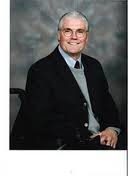
Disability activist, Mark Pickup, from Alberta stated to EPC:
"the newspaper described Kay Carter (89) as a Right to die proponent. She developed spinal stenosis in 2008 which causes "pain, lack of coordination, numbness, loss of bladder and bowel control and paralysis." That was enough reason to overturn laws against assisted suicide? I disagree. I've had those very same symptoms (and many others) throughout my 27 year journey with multiple sclerosis. I want our laws prohibiting assisted suicide to stay in effect and enforced, in case I despair and happen to meet someone like Kay's daughter and son-in-law who agrees with killing me."
Based on negative social attitudes toward people with disabilities and the growing awareness of the social scourge of elder abuse, society must not remove the protections in law that exist to prevent assisted suicide or euthanasia, but rather society needs to uphold and maintain these laws while enhancing the care and protection that is provided for people with disabilities, people with chronic conditions, the frail elderly and those who are nearing death.

Tuesday, April 26, 2011

Pope comments on man in PVS

Pope Benedict, recently had a rare televised interview, where he commented on the difficult case of a man in PVS since April 2009.

He reportedly told the mother of an Italian man who has been in PVS since Easter Sunday 2009 that her son's soul was still in his body and that he could feel the presence of love.

"The situation, perhaps, is like that of a guitar whose strings have been broken and therefore can no longer play," the pope told Maria Teresa.

Benedict, who frequently reminds the faithful that according to Catholic teachings euthanasia is wrong, then told her that spending hours a day by her son's side was an act of faith in God and of "respect for human life, even in the saddest of situations."

The Pope was emphasizing the humanity of the person, even while in PVS. The fact is that this man remains a human person deserving of love, care and respect.

Friday, April 22, 2011

Baby Joseph is home and breathing on his own

Alex Schadenberg
Executive Director, Euthanasia Prevention Coalition

Baby Joseph with his father.
Now that baby Joseph is home, having had a tracheotomy and breathing on his own without a ventilator, it is important to once again consider why this legal battle occurred and why the Ontario government needs to change the Health Care Consent Act. The fact that Joseph is breathing on his own, without a ventilator, proves that the request that a Tracheotomy be done was appropriate and was not extra-ordinary, excessive or burdensome. It would be good to find out why the hospital actually refused to do a Tracheotomy when their proposed plan of treatment was to cause him to die of asphyxiation?


The Euthanasia Prevention Coalition (EPC) became involved in the baby Joseph case because of the way that the Consent and Capacity board and the Ontario Superior court decided to withdraw the ventilator from baby Joseph without the consent of his parents. The error in judgment by these legal bodies affects us all.

The meaning and value of life cannot be assessed by medical tribunals and the court and it is not measured in years, months, or days. It is measured in the giving and receiving of love. Love is the greatest quality of life that there is. This is the lesson that the Ontario/Canadian medical system needs to learn. This is what they are blind to.

Who has the right to decide?
The baby Joseph case was about who has the right to make medical treatment decisions and what is in the best interest of baby Joseph. The Children's hospital in London Ontario wanted to withdraw the ventilator from Joseph, which would likely have resulted in him dying, grasping for air. The family wanted to bring Joseph home to care for him in the same way that they cared for their first child who died of a similar condition 9 years ago. The family asked that a tracheotomy be done to allow Joseph to breathe on his own, so they could bring him home.

The Baby Joseph case was not about futile care.
The baby Joseph case was different than previous cases because the family was not requesting treatment or care that was futile, excessive, extra-ordinary or burdensome. The family simply wanted to bring Joseph home, which required that a Tracheotomy be done to enable Joseph to breath.

The Baby Joseph case was not about euthanasia.
Some people have suggested that withdrawing the ventilator from baby Joseph would constitute an act of euthanasia. Euthanasia is an action or omission of an act that directly and intentionally causes the death of another person with the intention of relieving suffering. Euthanasia is a form of homicide. If the ventilator had been withdrawn from baby Joseph, he was likely to die, but he might have survived. If he died, his death would have been caused by his medical condition and therefore it is not euthanasia.

The legal system in Ontario is unfair.
A significant problem in Ontario is that the legal system is loaded against families. When a family and the doctor/hospital disagree about the treatment plan for a person, these cases are sent to the Consent and Capacity board for a decision. This is where the inequality begins. The doctor/hospital have nearly unlimited financial resources to hire a top lawyer who has experience in this area of law. The family often has limited resources and sometimes hires a legal aid lawyer who lacks experience in this area of law. When the Consent and Capacity board sides with the doctor/hospital, often the family will give up, but sometimes they appeal the decision to the Superior Court. It is prohibitively expensive for the family to bring a case to the Superior Court and yet the doctor/hospital has no fear of the cost because the health care institution has significant legal resources provided by the taxpayer. Because of the inequity in the legal defense, case after case has resulted in decisions by the Consent and Capacity board or the Superior court supporting the doctor/hospital. The law's inequality has resulted in a growing body of precedent-setting cases that have increased the power of the doctor/hospital to make medical decisions against the wishes of the family. The Ontario government must change the Health Care Consent Act.

It is unreasonable that families are required to spend an incredible amount of money in order to defend their rights. If doctors/hospitals have access to huge legal budgets that are from the taxpayer, that is spent to fight families (taxpayers) who are simply attempting to make medical care decisions on behalf of family members, then the system should also pay the cost for the family. Ontario citizens should recognize that the great majority of precedent-setting legal cases have given more power to the doctors/hospital. The rights of each citizen in Ontario to make medical treatment decisions have been eroded. We hope that the energy that has been created around baby Joseph can be used to help other people by changing our health care statutes.

The Rasouli case
This is why EPC sought and become an intervenor in the Rasouli case. The Rasouli case will determine if doctors are required to obtain consent before withdrawing life support. This means that the Rasouli case will determine that a doctor is required to obtain consent to withdraw a respirator, or even fluids and food. It is euthanasia to cause a persons death by withdrawing fluids and food when that person is not otherwise dying. Death is then caused by dehydration.

You also need to protect yourself. You can protect yourself by contacting EPC and ordering the Life-Protecting Power of Attorney for Personal care. The cost for this legal document is only $10.00.