By Charles Lewis
For those who know me or have heard me speak against assisted suicide and euthanasia, you will be familiar with my struggle with spinal problems. I realize that my testimony about my own experience with horrific pain was fair game to use in my arguments against legalized euthanasia, given that legalized killing in this country would also include those with chronic pain.
Pain is universal. It is almost a common denominator of our humanity. Some lucky few will escape the worst of it or will only be plagued for a short time. For me it is now four years and counting. During that time I was forced to leave my beloved newspaper, The National Post, and my position as religion reporter — the greatest beat I had during my 33 years in journalism. And with that I lost the addictive camaraderie of the newsroom.
I was forced to cease nearly every activity I loved: cycling, hiking in the Rockies and moderate consumption of beer and wine — as well as the odd glass of bourbon or single malt scotch. The decision to stop drinking was not my own choice but the reality that after taking morphine every day it is simply too dangerous to consume alcohol.
None of these things should elicit pity. But my condition, along with two surgeries, knocked me into a world I did not expect to visit for many more years.
Pain is isolating. It can play mental tricks on you. It can make you sick to your stomach on some days and cause long bouts of insomnia. And then there is the isolation and the overriding feeling of worthlessness when you are no longer vital and creative.
In the Netherlands and Belgium those with chronic pain, as well as those with depression and other forms of mental illness, can qualify for state-sanctioned suicide. It appears from the Supreme Court of Canada’s decision of last February, when the Court ruled on assisted suicide and by extension euthanasia, that it will not only be the dying who will be granted the wish to die from a physician’s needle.
People who know more than me say that if I were a resident of either Holland or Belgium I could find a fast exit from this life. I believe sadly that the same option will be available to me and others like me in the near future in Canada.
While I was in the worst of the pain, I began to take stock of my situation. One thing about being alone and also suffering from insomnia that was there is plenty of time to think.
I realized that for all my problems, I was still in a good situation. In other words, it was easier for me to be sick than many others.
There was very good disability insurance from work. I had great support from my wife, Kathryn, and from friends and colleagues. My wife has a good job. We have no debts and our home is paid off. This sounds like bragging but it is not to boast that I bring this up. It meant that all I had to worry about was getting well. I was not going to wind up in the street, I did not have to worry about how we would put food on the table or pay our bills. I am also a devout Catholic and the Church assisted me in ways too many to name.
Many people work in jobs that have no security. Benefits that used to be the norm are no longer being provided. This trend of contract labour, I believe, will soon be the norm. It may already be.
Now imagine these same people grievously ill. Think of all the things they will struggle to afford: rent, mortgage payments, food, and clothing for their children. Unless you happen to be lucky enough to have a good spouse or great friends, everything will become a monumental chore.
I remember it taking me all day to work up the strength to take a shower or even go downstairs for a meal.
Worse still, imagine living with someone who is simply fed up with your complaints and who makes that clear every day. Not everyone is bound for sainthood or even capable of compassion.
Now imagine you can let go of all your cares and woes with a simple visit to the doctor or a clinic? Instead of getting advice on how to cope and get through it, you are offered death. Painless, quick and a reliever of all pain and worry. No worry about botching a suicide and being left in even worse shape.
I have actually heard people I know, friends, listen to this argument and respond by saying: 'Well, isn’t it a good thing that people will have an out?'
I would like to think that I would never take my own life. But I also realize that my situation helped give me the means to fight back. And when I was tired or just overwhelmed I could at least be comforted by a warm home and someone I love always making sure I was okay.
Without all that my anguish would have gone through the roof. I might have lost hope. And without hope death can seem like your only friend.
Thursday, February 4, 2016
Wednesday, February 3, 2016
Joint Parliamentary Committee on Assisted Suicide Refuses to hear from leading experts on the need for effective oversight to protect Canadians
TORONTO, Feb. 3, 2016 (GLOBE NEWSWIRE)
Fundamental to keeping Canadians safe in the operation of a state-sanctioned assisted dying regime is the need for rigorous before the fact oversight by an independent judge or tribunal stated Hugh Scher, Toronto constitutional lawyer and disability rights advocate. Scher stated:
A study published in the NEJM (March 19, 2015) found that 1.7% of all deaths in the Flanders region of Belgium in 2013 were assisted without request. Therefore more than 1000 deaths were intentionally hastened without request. The same study determined that nearly half of the assisted deaths went unreported states Alex Schadenberg, EPC executive director.
Dr. Will Johnston states that adoption of a Belgian-style euthanasia regime in Canada, such as has been adopted in Quebec, without effective before the fact judicial oversight to ensure compliance with legislative requirements would be a recipe for disaster that is certain to put Canadians at risk.
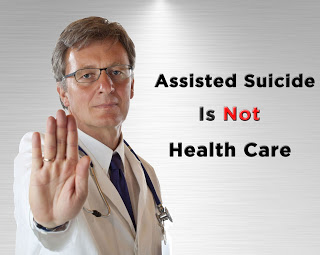
Euthanasia is not a form of health care. Defining euthanasia as health care would mean that lethal injections become a form of medical treatment. Not only is this an Orwellian concept, but it is one that would certainly leave Canadians without a safe space within the healthcare system, states Dr. Johnston, Chair of EPC – British Columbia.
Despite more than 15 years of extensive experience with the legal, medical and practical challenges associated with assisted suicide practices in other jurisdictions, the Joint Parliamentary Committee has deliberately refused to hear from leading constitutional, medical and sociological experts, who have previously advocated against the adoption of euthanasia or assisted suicide in Canada because of the risks that it poses to all Canadians and our healthcare system.
Failure to hear particularly from those who are experts who raise concerns about euthanasia practices in other jurisdictions represents a fatal flaw to the committee's deliberations and an intentional attempt to silence those with differing viewpoints while embracing those who promote unbridled euthanasia. Such an approach runs completely contrary to the Government's stated objective of conducting a comprehensive consultation with all relevant stakeholders in order to implement a safe and measured response to the Supreme Court's ruling.
The Supreme Court's conclusion that assisted suicide could be legalized safely in Canada is predicated on the notion of strong federal regulation. The court concluded that a legislative response would require a "carefully designed and monitored system of safeguards." It was only the possibility of crafting a scheme with such effective oversight and safeguards that led the court to reject the argument that weakening the prohibitions will inevitably lead to the casual termination of life including the lives of individuals who do not wish to die, notes Scher.
The Committee's exclusion and refusal to hear from leading national experts on the subject call into question its motives and actions and greatly undermines the conclusions it may draw as a consequence of its limited and self-selected inquiry.
For more information contact:
Alex Schadenberg, Executive Director (London) 519-851-1434, info@epcc.ca
Hugh Scher, EPC Legal Counsel (Toronto) 416-816-6115, hugh@sdlaw.ca
Dr Will Johnston, Chair EPC – BC (Vancouver): 604-220-2042, willjohnston@shaw.ca
Amy Hasbrouck, EPC – VP (Montréal): 450-921-3057, tigrlily@gmail.com
![]() |
| Hugh Scher |
Before the fact judicial oversight is essential to any assisted suicide regime that Parliament may seek to introduce. It is the only way to ensure compliance with legislative criteria established to identify vulnerability and prevent abuse before people are put to death.EPC VP Amy Hasbrouch stated that:
This position is endorsed by multiple stakeholders across the country including from the disability community, the medical community and legal experts.In all jurisdictions where assisted death is legal, the laws lack effective oversight. Consequently, safeguards, including the need for consent from the patient are routinely ignored.
A study published in the NEJM (March 19, 2015) found that 1.7% of all deaths in the Flanders region of Belgium in 2013 were assisted without request. Therefore more than 1000 deaths were intentionally hastened without request. The same study determined that nearly half of the assisted deaths went unreported states Alex Schadenberg, EPC executive director.
Dr. Will Johnston states that adoption of a Belgian-style euthanasia regime in Canada, such as has been adopted in Quebec, without effective before the fact judicial oversight to ensure compliance with legislative requirements would be a recipe for disaster that is certain to put Canadians at risk.
Euthanasia is not a form of health care. Defining euthanasia as health care would mean that lethal injections become a form of medical treatment. Not only is this an Orwellian concept, but it is one that would certainly leave Canadians without a safe space within the healthcare system, states Dr. Johnston, Chair of EPC – British Columbia.
Despite more than 15 years of extensive experience with the legal, medical and practical challenges associated with assisted suicide practices in other jurisdictions, the Joint Parliamentary Committee has deliberately refused to hear from leading constitutional, medical and sociological experts, who have previously advocated against the adoption of euthanasia or assisted suicide in Canada because of the risks that it poses to all Canadians and our healthcare system.
Failure to hear particularly from those who are experts who raise concerns about euthanasia practices in other jurisdictions represents a fatal flaw to the committee's deliberations and an intentional attempt to silence those with differing viewpoints while embracing those who promote unbridled euthanasia. Such an approach runs completely contrary to the Government's stated objective of conducting a comprehensive consultation with all relevant stakeholders in order to implement a safe and measured response to the Supreme Court's ruling.
The Supreme Court's conclusion that assisted suicide could be legalized safely in Canada is predicated on the notion of strong federal regulation. The court concluded that a legislative response would require a "carefully designed and monitored system of safeguards." It was only the possibility of crafting a scheme with such effective oversight and safeguards that led the court to reject the argument that weakening the prohibitions will inevitably lead to the casual termination of life including the lives of individuals who do not wish to die, notes Scher.
The Committee's exclusion and refusal to hear from leading national experts on the subject call into question its motives and actions and greatly undermines the conclusions it may draw as a consequence of its limited and self-selected inquiry.
For more information contact:
Alex Schadenberg, Executive Director (London) 519-851-1434, info@epcc.ca
Hugh Scher, EPC Legal Counsel (Toronto) 416-816-6115, hugh@sdlaw.ca
Dr Will Johnston, Chair EPC – BC (Vancouver): 604-220-2042, willjohnston@shaw.ca
Amy Hasbrouck, EPC – VP (Montréal): 450-921-3057, tigrlily@gmail.com
Colorado Assisted Suicide Bills Recipe for Elder Abuse
FOR IMMEDIATE RELEASE - WEDNESDAY, FEBRUARY 3, 2016
Dore: "Even if you like the concept of assisted suicide and euthanasia, the proposed Colorado bills have it all wrong.”
Contact: Margaret Dore (206) 697-1217
Denver, CO -- Attorney Margaret Dore, president of Choice is an Illusion, which has fought assisted suicide legalization efforts in many states and now Colorado, made the following statement in connection with legislative hearings being held today and tomorrow on bills seeking to legalize assisted suicide and euthanasia in that state.
"The bills, SB 16-025 and HB 16-1054, seek to legalize physician-assisted suicide, assisted suicide and euthanasia as those terms are traditionally defined," said Dore. "The bills are described as 'aid in dying,' but their reach is not limited to dying people. 'Eligible' persons may have years, even decades, to live."
Dore said, "The bills are a recipe for elder abuse. The patient's heir, who will financially benefit from the patient's death, is allowed to actively participate in signing the patient up for the lethal dose. There is no oversight over administration." Dore elaborated, "No doctor, not even a witness, is required to be present at the death. Even if the patient struggled, who would know? The bills create the perfect crime."
"It gets worse," said Dore. "The bills require the death certificate to be falsified to reflect a death by a terminal illness. The significance is a loss of transparency as to the true cause of death and an inability to prosecute in the case of an outright murder for the money; the death, as a matter of law is a terminal illness."
The Colorado bills seek to legalize assisted suicide and euthanasia for people who are "terminal," which is defined as a doctor’s prediction of less than six months to live. In real life, such persons can have years, even decades, to live.
“Doctors can be wrong about life expectancy, sometimes way wrong," Dore said. "This is due to actual mistakes: They evaluated another patient’s test results. More typically, however, doctors are wrong because predicting life expectancy is not an exact science. A few years ago, I was met at the airport by a man who at age 18 had been diagnosed with ALS and given 3 to 5 years to live, at which time he was predicted to die by paralysis. The diagnosis had been confirmed by the Mayo Clinic. When he met me at the airport, he was 74 years old. The disease progression had stopped on its own.”
“If the Colorado bills become law, there will be new lethal paths of elder abuse, which will be legally sanctioned and hidden from view," said Dore. "People with years, even decades to live, will be encouraged to throw away their lives. Even if you like the concept of assisted suicide and euthanasia, the proposed Colorado bills have it all wrong.”
For back up documentation, please see below:.
1. Memo from Margaret Dore, Esq., MBA, to the Colorado Senate State, Veterans & Military Affairs Committee and to the Colorado House Judiciary Committee, January 30, 2016, available here: and here.
2. Margaret K. Dore, "'Death with Dignity': What Do We Advise Our Clients?," King County Bar Association, Bar Bulletin, May 2009,
3. Nina Shapiro, "Terminal Uncertainty: Washington’s new "Death With Dignity" law allows doctors to help people commit suicide-once they’ve determined that the patient has only six months to live. But what if they’re wrong?" Seattle Weekly, 01/14/09, available here.
Tuesday, February 2, 2016
Euthanasia for depression to be debated in Canada
By Alex Schadenberg
Executive Director - Euthanasia Prevention Coalition
Canada's parliament will soon debate whether to euthanasia should be permitted for psychological suffering.
Executive Director - Euthanasia Prevention Coalition
![]() |
| Tara Brousseau-Snider |
The Supreme Court of Canada, on February 6, struck down Canada's assisted suicide law and used language that permits euthanasia. The Supreme Court did not define the terminology but it stated that an assisted death could be permitted for someone who has irremediable pain caused by physical or psychological suffering.
CBC Manitoba reported on an unnamed Winnipeg woman is pushing the issue by requesting a euthanasia based on psychological suffering. Tara Brousseau-Snider, executive director of the Mood Disorders Association of Manitoba stated that woman who wants euthanasia said: "If it was in place, they'd apply for it."
Brousseau-Snide told CBC Manitoba that she is concerned about a law permitting euthanasia for depressed people.
CBC Manitoba reported on an unnamed Winnipeg woman is pushing the issue by requesting a euthanasia based on psychological suffering. Tara Brousseau-Snider, executive director of the Mood Disorders Association of Manitoba stated that woman who wants euthanasia said: "If it was in place, they'd apply for it."
"And I'm very concerned about this law. It's not a permission-giving thing. Governments should not mandate that if you're depressed, it's OK to kill yourself."John Melnick told CBC Manitoba that:
"Let's just say I am glad it wasn't legal before now," said John Melnick, who's lived with depression for decades, and tried three times to kill himself.
"Because if [physician-assisted death] was in place then, I likely would have tried to get one. And I wouldn't be here today."
Melnick said thanks to a combination of therapies, he is today alive and well.Whereas Queens University philosophy professor, Udo Schuklenk, said that he hopes euthanasia will be approved for depression.
Euthanasia based on psychological suffering is permitted in the Netherlands, Belgium and Québec. The 2014 Netherlands euthanasia report stated that there were 5306 assisted deaths with 41 assisted deaths for psychiatric reasons and 81 assisted deaths for dementia in 2014.
In 2015, euthanasia for psychiatric reasons included a healthy 63 year old autistic man who was depressed and felt that he had no reason to live and a healthy woman with tinnitus.
There were several controversial Belgian psychiatric euthanasia cases in 2015.
In June, psychiatrist, Dr Lieve Thienpont approved the euthanasia death of Emily, a 24-year-old physically healthy woman who was living with suicidal ideation. The good news is that Emily decided to live. In October the euthanasia death of Simona de Moor was done by Dr Van Hooy based on psychological suffering connected to the death of her daughter.
In 2015, euthanasia for psychiatric reasons included a healthy 63 year old autistic man who was depressed and felt that he had no reason to live and a healthy woman with tinnitus.
![]() |
| Emily |
In June, psychiatrist, Dr Lieve Thienpont approved the euthanasia death of Emily, a 24-year-old physically healthy woman who was living with suicidal ideation. The good news is that Emily decided to live. In October the euthanasia death of Simona de Moor was done by Dr Van Hooy based on psychological suffering connected to the death of her daughter.
The Euthanasia Prevention Coalition rejects all forms of assisted death, especially lethal injections based on psychological suffering.
Thursday, January 28, 2016
France approves terminal sedation legislation.
By Alex Schadenberg
International Chair - Euthanasia Prevention Coalition
Politicians in France have been debated the legalization of euthanasia for many years.
In January 2011, the French Senate rejected a euthanasia bill by 170 - 142. During the 2012 election President François Hollande promised to legalize euthanasia but since then Hollande has faced strong opposition to his plan. In June 2015, France's Senate rejected a bill that permitted euthanasia by dehydration and in October 2015, a French court decided that Vincent Lambert should continue to receive food and fluids.
The Associated Press has now reporting that French lawmakers approved a bill that allows "terminal sedation" but not euthanasia.
I am also concerned, that the bill allows doctors to sedate and withdraw food and water from a person who is incompetent based on an advanced directive or based on the decision of a proxy. I fear that the protocols established in this bill will be followed, when a person is deemed incompetent even when the person is not otherwise dying.
International Chair - Euthanasia Prevention Coalition
![]() |
| Paris protest against euthanasia (June 24, 2014) |
In January 2011, the French Senate rejected a euthanasia bill by 170 - 142. During the 2012 election President François Hollande promised to legalize euthanasia but since then Hollande has faced strong opposition to his plan. In June 2015, France's Senate rejected a bill that permitted euthanasia by dehydration and in October 2015, a French court decided that Vincent Lambert should continue to receive food and fluids.
The Associated Press has now reporting that French lawmakers approved a bill that allows "terminal sedation" but not euthanasia.
According to the media report the French government approved a bill that allows doctors to sedate a person, upon request, who is nearing death, and withdraw life-sustaining treatments including nutrition and hydration (food and water). According to the article:
The European Institute of Bioethics outlined three main concerns with the legislation:
The new law will allow patients to request "deep, continuous sedation altering consciousness until death" but only when their condition is likely to lead to a quick death. Doctors will be allowed to stop life-sustaining treatments, including artificial hydration and nutrition. Sedation and painkillers will be allowed "even if they may shorten the person's life."
The bill will also apply to patients who are unable to express their will, following a process that includes consultation with family members.
The methods can involve medicating patients until they die naturally of their illness or until they starve. Some doctors, however, say it may be more human to euthanize.I have not read the bill, but if the bill allows doctors to intentionally cause the death of a person by dehydration, when the person is not otherwise dying, then the act is "slow euthanasia" or euthanasia by dehydration. If the bill clearly limits sedation and dehydration to people who are actually nearing death, then the act is closer to palliative sedation.
The European Institute of Bioethics outlined three main concerns with the legislation:
1. The new law introduces end of life in its Article 2 to an extent that many Health professionals denounce as dangerous. "Artificial" nutrition and hydration is referred to as medical treatment and not care. As such, it can be stopped at the patient's request or following a collegial procedure if the patient can not speak.
2. Article 3 establishes a new "right of continuous deep sedation [...] until death." Many parliamentarians, health professionals, lawyers and patient organizations have denounced this fuzzy measure as unclear in its framework and conditions it poses, which could lead to a form of masked euthanasia. Indeed, the criteria often appear subjective. The terms "commits its short-term prognosis" or "likely to cause unbearable suffering", are not defined by law. The law can then be applied to a variable conditions which creates genuine legal insecurity.
3. We strongly denounce that ... advance directives become binding and come to impose the doctor "except in life-threatening emergencies [...] and when directives are manifestly inappropriate or inconsistent with the medical situation." The risk is that it causes a shift in the role of the doctor, possibly imposing acts contrary to the doctors ethics and his conscience.
I am concerned that the bill defines food and fluid as a form of medical treatment. Food and fluid are not medical treatment but rather normal care.
I am also concerned, that the bill allows doctors to sedate and withdraw food and water from a person who is incompetent based on an advanced directive or based on the decision of a proxy. I fear that the protocols established in this bill will be followed, when a person is deemed incompetent even when the person is not otherwise dying.
Acts of sedation and dehydration can be ethically the same as euthanasia when the intent is not based on palliating symptoms but rather causing death.
CARP is now a pro-euthanasia advocacy group.
By Alex Schadenberg
Executive Director - Euthanasia Prevention Coalition
The Canadian Association of Retired Persons (CARP) under the leadership of Moses Znaimer, the former owner of CITY TV, has officially become an advocacy group promoting unfettered euthanasia.
According to an article by Gloria Galloway in the Globe and Mail, Susan Eng, the long-time Executive Vice President of CARP was fired by Moses Znaimer based on her neutral position on euthanasia and assisted suicide and replaced by Wanda Morris, the former CEO of Dying With Dignity. According to the article:
Executive Director - Euthanasia Prevention Coalition
![]() |
| Susan Eng |
According to an article by Gloria Galloway in the Globe and Mail, Susan Eng, the long-time Executive Vice President of CARP was fired by Moses Znaimer based on her neutral position on euthanasia and assisted suicide and replaced by Wanda Morris, the former CEO of Dying With Dignity. According to the article:
The woman who has been the public face of Canada’s leading seniors organization for the past eight years says she has been dismissed by media mogul Moses Znaimer, who is also the organization’s president, because she insisted on taking a neutral approach to the emotionally charged issue of assisted dying.
Susan Eng was told on Tuesday that she was no longer needed as the executive vice-president of advocacy at CARP Canada. She then learned on Wednesday that she was being replaced by Wanda Morris, the head of Dying with Dignity Canada, which advocates for access to physician-assisted dying and against unnecessary barriers when safeguards are being imposed to protect the vulnerable.
... “The only reason he fired me was so that they can put out an official position for CARP saying that they want to insist on assisted dying on demand,” said Ms. Eng, a Toronto lawyer and former chair of the city’s police services board.
Znaimer has been promoting a radical pro-euthanasia position for some time. He his written one-sided propaganda articles urging "euthanasia on demand." Znaimer also wrote an article misconstruing the Bentley case in BC, a case that concerned the issue of whether normal feeding is medical treatment.
Many seniors are members of CARP to enjoy the travel, insurance and other benefits that are obtained through a CARP membership. Many seniors will now not renew their CARP membership or seeking an alternative organization to attain similar benefits.
Canadian seniors need to know that purchasing a membership in CARP is actually supporting a euthanasia advocacy group.
The CARP media release stated:
A New Vision of Aging for Canada, Chairman, President and CEO Moses Znaimertoday announced that Susan Eng has departed CARP effective immediately.
Moses has also announced that Wanda Morris has been appointed as CARP’s new Vice President of Advocacy and COO.
Most recently, Wanda was CEO of Dying With Dignity Canada (DWD Canada) where she led a strategic campaign for legislative change leading up to the Supreme Court of Canada’s decision in the ground-breaking Carter v. Canadacase for the right-to-die with dignity.
Dying With Dignity also changed its position while under the leadership of Wanda Morris. Historically, Dying With Dignity officially supported assisted suicide but opposed euthanasia. Dying With Dignity is now a radical supporter of euthanasia.
Last year Dying With Dignity lost its charitable status based on the fact that had become a political lobby group and their purpose ceased being charitable. It is possible that Znaimer hired Morris because Dying With Dignity was unable to continue paying her a competitive salary.
Labels:
Alex Schadenberg,
CARP,
euthanasia,
euthanasia lobby,
Margot Bentley,
Wanda Morris
Honouring Kevin Fitzpatrick (OBE).
![]() |
| Dr Kevin Fitzpatrick |
International Chair, Euthanasia Prevention Coalition
Dr Kevin Fitzpatrick (OBE) passed away two weeks ago but tomorrow is his funeral.
For me, Kevin was a trusted colleague and friend who I will always miss. I learned a lot from Kevin and I will carry those lessons with me forever.
Kevin accepted many leadership roles and he was an example of what can be done when people work together. Kevin was the director of EPC - International, the director of Hope Ireland and the past director of EPC - Europe.
![]() |
| Spokesperson for Not Dead Yet UK |
Kevin's professional background gave his approach to the debate on how to care for and support people with terminal and incurable illnesses and disabilities a particularly well-rounded quality. From disability (Disability Wales; Disability Rights Commission; Inclusion21; Not Dead Yet UK) to adoption (the Welsh Government's Adoption Expert Advisory Group; St David's Children's Society), not to mention five years with the Welsh Ambulance Trust, Kevin's outlook was firmly rooted in seeking answers to a single question: 'how can we as a society work to support and uphold the value of every person around us?' This was his life's work, with a particular focus on the most vulnerable and marginalised. (borrowed from the Care Not Killing Alliance)
Kevin was a great communicator. Kevin wrote many articles, he did many debates, he was interviewed on countless occasions and he provided excellent conference speeches. Here are links to his recent articles:
- Judgement day in Supreme Court of Canada decision - Disability discrimination to death. (July 31, 2015).
- Opposition to euthanasia and assisted suicide based on evidence of disability discrimination. (July 2, 2015).
- Belgium euthanasia leads to a decline of society. (June 26, 2015).
- Assisted suicide for disabled people - Democracy in Britain? (June 23, 2015).
- Let's have an open, honest and balanced conversation on assisted suicide in Ireland. (May 5, 2015).
- Level headed assisted suicide debate based on real evidence not misplaced emotion. (May 4, 2015).
- Deep sedation: France is in danger of buying a deadly illusion. (March 17, 2015).
- Conversation with Terry Pratchett. (March 13, 2015).
- Canadian Supreme Court condemns disabled people to death. (February 20, 2015).
- Assisted suicide campaigners' deaths prove we do not need to change assisted suicide laws. (January 7, 2015).
| Hope Ireland conference |
Kevin was a leader. Kevin knew the direction that we needed to go and he shared his wisdom with everyone who he worked with. He had a way of listening to perspectives and carefully correcting false ideas. Several leaders have shared with me the way that Kevin would help them and advise them in their advocacy. He was a patient leader, even when he didn't agree.
![]() |
| Launching EPC Europe in Brussels |
There are so many people who experienced Kevin, as a gifted friend, in their lives. I for one, will always be thankful for the opportunity of having him in my life.
Wednesday, January 27, 2016
Belgium 2015 euthanasia report: Deaths continue to rise.
By Alex Schadenberg
Executive Director, Euthanasia Prevention Coalition
The 2015 Belgian euthanasia data indicates that the number of euthanasia deaths continue to increase. According to the Belgian media, in 2015, there were 2021 reported deaths by euthanasia, up from 1924 reported euthanasia deaths in 2014.
But Wim Distelmans, the chairman of the euthanasia commission reminded the media that they cannot say for certain the actual number of euthanasia deaths. Distelmans stated:
Second: The data uncovered a significant cultural problem in with Belgian physicians hastening deaths without request. The Associated Press article reporting on the NEJM study interviewed Belgian ethicist Freddy Mortier as stating:
Executive Director, Euthanasia Prevention Coalition
The 2015 Belgian euthanasia data indicates that the number of euthanasia deaths continue to increase. According to the Belgian media, in 2015, there were 2021 reported deaths by euthanasia, up from 1924 reported euthanasia deaths in 2014.
But Wim Distelmans, the chairman of the euthanasia commission reminded the media that they cannot say for certain the actual number of euthanasia deaths. Distelmans stated:
"Remember, there could be some euthanasia cases carried out but which are not declared so we cannot say for certain what the number is,"Distelmans remarks are confirmed by research published in the New England Journal of Medicine (NEJM) on March 19 2015 concerning the euthanasia practice in Belgium which indicated that:
- 4.6% of all deaths in 2013 in the Flanders region were euthanasia.
- .05% of all deaths in 2013 in the Flanders region were assisted suicide.
- 1.7% of all deaths in 2013 in the Flanders region were hastened without explicit request.
First: The data uncovered significant under-reporting of euthanasia in the Flanders region of Belgium. The official 2013 euthanasia data found that 2.4% of the deaths in the Flanders region were euthanasia, while the study examining all deaths found that 4.6% of the deaths in the Flanders region were euthanasia. Therefore nearly half of the euthanasia deaths in the Flanders region of Belgium were not reported.
In January 2014, Dr Marc Cosyns, was quoted by De Standard news saying that he never reports his euthanasia deaths, even though it is a requirement of the Belgian euthanasia law.
Mortier was not happy, however, that the 'hastening of death without explicit request from patients,' which can happen when a patient slumbers into unconsciousness or has lost the capacity for rational judgment, stood at 1.7 percent of cases in 2013. In the Netherlands, that figure was 0.2 percent.
There were 61,621 deaths in Flanders in 2013. The study reported that 1.7% of all deaths were hastened without explicit request, therefore it is likely that more than 1000 people died by a doctor intentionally causing their death without explicit request in 2013.
There were several controversial Belgian euthanasia cases in 2015.
- In June we learned that Psychiatrist, Dr Lieve Thienpont had approved the euthanasia death of a 24-year-old physically healthy woman who was living with suicidal ideation. The good news is that Emily has decided to live.
- In October the euthanasia death of Simona de Moor was sent for a review. It is likely that the review occurred because Dr Van Hooy agreed to have the decision making process and the death filmed.
In 2014, Belgium extended euthanasia to children. Distelmans stated that there were no reports of child euthanasia in 2015.
Euthanasia in Belgium has been approved for people with dementia, people with depression and other psychiatric conditions,
The dark history of eugenics.
This article was written by Michael Cook and published by Bioedge on January 23.
The dark history of government-sponsored eugenics before World War II has largely been forgotten, although it is well documented. A new book, Illiberal Reformers: Race, Eugenics, and American Economics in the Progressive Era (Princeton UP, 2016), by Thomas C. Leonard, is a painful reminder that some of the best minds in the United States and Britain were in favour of purging the “race” of “defectives”.
The heyday of the eugenics movement was during World War I and the 1920s. Some geneticists distanced themselves from eugenics, but usually because it had been tainted by racism and anti-Semitism.
Eugenics was literally regarded as a religion by leading economists. In 1915 Irving Fisher, one of the greatest of the early 20th century, told a Race Betterment Conference organised by cornflakes inventor and eugenicist John Henry Kellogg, that eugenics was “the foremost plan of human redemption”. Religious opponents (notably the Catholic Church) were a shrinking minority which had also opposed Copernicus, Galileo and Darwin.
It all seemed very scientific. In The Great Gatsby, F. Scott Fitzgerald’s famous novel, the central character complains that civilization is spinning apart and that “ if we don’t look out the white race will be — will be utterly submerged. It’s all scientific stuff; it’s been proved.”
D.H. Lawrence, best known as the author of Lady Chatterley’s Lover, believed that inferior stock should be eliminated. Anticipating the horrors of Auschwitz, he wrote in 1905:
The heyday of the eugenics movement was during World War I and the 1920s. Some geneticists distanced themselves from eugenics, but usually because it had been tainted by racism and anti-Semitism.
Eugenics was literally regarded as a religion by leading economists. In 1915 Irving Fisher, one of the greatest of the early 20th century, told a Race Betterment Conference organised by cornflakes inventor and eugenicist John Henry Kellogg, that eugenics was “the foremost plan of human redemption”. Religious opponents (notably the Catholic Church) were a shrinking minority which had also opposed Copernicus, Galileo and Darwin.
It all seemed very scientific. In The Great Gatsby, F. Scott Fitzgerald’s famous novel, the central character complains that civilization is spinning apart and that “ if we don’t look out the white race will be — will be utterly submerged. It’s all scientific stuff; it’s been proved.”
D.H. Lawrence, best known as the author of Lady Chatterley’s Lover, believed that inferior stock should be eliminated. Anticipating the horrors of Auschwitz, he wrote in 1905:
If I had my way, I would build a lethal chamber as big as the Crystal Palace, with a military band playing softly, and a Cinematograph working brightly; then I’d go out in the back streets and main streets and bring them in, all the sick, the halt, and the maimed; I would lead them gently, and they would smile me a weary thanks; and the band would softly bubble out the ‘Hallelujah Chorus’.Leonard’s focus is the effect of eugenics upon economics, so he also covers discrimination against African Americans, disputes between labour and capital and immigration.
Labels:
Disability Discrimination,
Eugenics,
Michael Cook
Charles Lewis: Challenging religious leaders to do more.
B
y Charles Lewis
Our religious leaders are missing something. I might dare to say they are failing. They are forgetting that shouting is needed in the midst of a disaster. It is sometimes the only solution when no one seems to be listening.
We are now in the home stretch of attempting to keep euthanasia illegal, which given the indications is not likely. Nor will it end if we lose. There will be much work to be done to make euthanasia irrelevant. But that will come later.
For now, Quebec has already put the needle in at least one person's arm. They killed a patient even though our Criminal Code says it is illegal. Instead our federal government, under both Harper and now Trudeau, coming down like a ton of bricks on Quebec they have remained silent.
Let me correct that. Harper remained silent but Trudeau has been encouraging, essentially saying to the Quebec's pro-euthanasia ghouls that we support your right to murder.
So now is the time for the yelling to start. Now is the time for an uncompromising reaction to what is surely the most indecent thing our country will have ever done.
And yet I still keep waiting for our religious leaders to rally their respective flocks to stop this madness. For anyone who is out there doing this please accept my apologies. But in the main it is not happening.
I was told by a priest he would love to have me speak but there were so many other things going on. My worst experience was the priest who said he was too busy ordering the Easter flowers. If I were a nasty man I might have said you might have missed your true vocation by not becoming a florist.
What I hear all the time, particularly in my own Catholic Church, is that there are many things our religious leaders must do. They are being pulled in 20 different directions. And so all must be given equal treatment.
But why? Why can they not decide that this is the emergency? When hurricanes or tornadoes or earthquakes do their damage civil authorities make the rescue and clean up a priority. Everything else can wait, as what is before them is life and death. What a scandal it would be if a civic leader said, “I’m busy right now. Let me get back to you.”
The coming legalization — and I pray to God it will not happen — is no different. Legalized euthanasia will be a blight in which lives will be lost and those family and friends of those who choose state-sanctioned killing will be devastated.
It is not enough to issue a letter. No one reads letters except a few like-minded people. And sometimes journalists who are looking for a story.
What we need, what I beg our religious leaders to do, is raise voices: on Sundays, in press conferences, in radio and television interviews. The time for being coy or conservative has long left the station. We need people of great moral influence to tell their people that to support euthanasia is a grave sin. They need to say that at this moment in our history this is the priority. They need to make us believe, as some of us already do, that this will change the nature of our country from one of care to one that is indifferent.
How much longer will it take? How bad does this have to get for the voices of truth and compassion to be heard over the din of those who dare to call government approved suicide "death with dignity?"
In the past two years I have done about 40 talks. Perhaps I spoke to about 2,000 people. If a Bishop holds a press conference it would reach many more than 2000 in just a few minutes.
In every talk I said the same thing: do not think about winning or losing but rather stand up for the right thing.
I now ask our religious leaders to do the same thing … not once, not twice but as long as it takes to start changing the minds of the very people who should know better. For the love of God, please.
Charles Lewis is a freelance journalist and the former reporter at the National Post.
![]() |
| Cardinal von Galen fought the Nazi euthanasia program. |
Our religious leaders are missing something. I might dare to say they are failing. They are forgetting that shouting is needed in the midst of a disaster. It is sometimes the only solution when no one seems to be listening.
We are now in the home stretch of attempting to keep euthanasia illegal, which given the indications is not likely. Nor will it end if we lose. There will be much work to be done to make euthanasia irrelevant. But that will come later.
For now, Quebec has already put the needle in at least one person's arm. They killed a patient even though our Criminal Code says it is illegal. Instead our federal government, under both Harper and now Trudeau, coming down like a ton of bricks on Quebec they have remained silent.
Let me correct that. Harper remained silent but Trudeau has been encouraging, essentially saying to the Quebec's pro-euthanasia ghouls that we support your right to murder.
So now is the time for the yelling to start. Now is the time for an uncompromising reaction to what is surely the most indecent thing our country will have ever done.
And yet I still keep waiting for our religious leaders to rally their respective flocks to stop this madness. For anyone who is out there doing this please accept my apologies. But in the main it is not happening.
I was told by a priest he would love to have me speak but there were so many other things going on. My worst experience was the priest who said he was too busy ordering the Easter flowers. If I were a nasty man I might have said you might have missed your true vocation by not becoming a florist.
What I hear all the time, particularly in my own Catholic Church, is that there are many things our religious leaders must do. They are being pulled in 20 different directions. And so all must be given equal treatment.
But why? Why can they not decide that this is the emergency? When hurricanes or tornadoes or earthquakes do their damage civil authorities make the rescue and clean up a priority. Everything else can wait, as what is before them is life and death. What a scandal it would be if a civic leader said, “I’m busy right now. Let me get back to you.”
The coming legalization — and I pray to God it will not happen — is no different. Legalized euthanasia will be a blight in which lives will be lost and those family and friends of those who choose state-sanctioned killing will be devastated.
It is not enough to issue a letter. No one reads letters except a few like-minded people. And sometimes journalists who are looking for a story.
What we need, what I beg our religious leaders to do, is raise voices: on Sundays, in press conferences, in radio and television interviews. The time for being coy or conservative has long left the station. We need people of great moral influence to tell their people that to support euthanasia is a grave sin. They need to say that at this moment in our history this is the priority. They need to make us believe, as some of us already do, that this will change the nature of our country from one of care to one that is indifferent.
How much longer will it take? How bad does this have to get for the voices of truth and compassion to be heard over the din of those who dare to call government approved suicide "death with dignity?"
In the past two years I have done about 40 talks. Perhaps I spoke to about 2,000 people. If a Bishop holds a press conference it would reach many more than 2000 in just a few minutes.
In every talk I said the same thing: do not think about winning or losing but rather stand up for the right thing.
I now ask our religious leaders to do the same thing … not once, not twice but as long as it takes to start changing the minds of the very people who should know better. For the love of God, please.
Charles Lewis is a freelance journalist and the former reporter at the National Post.
Labels:
Charles Lewis,
euthanasia,
Quebec euthanasia
Tuesday, January 26, 2016
Psychiatrist: Assisted suicide - More than meets the eye.
By Alex Schadenberg
An article written by Psychiatrist, Dr Steven King, and published in the Psychiatric Times examines assisted suicide from a scientific point of view.
King begins his article by stating that he is not religious and he is not pro-life, that his concerns are based on science.
King examines the assisted suicide laws based on their inability to protect depressed patients.
Executive Director - Euthanasia Prevention Coalition
![]() |
| Dr Steven King |
King begins his article by stating that he is not religious and he is not pro-life, that his concerns are based on science.
I am not a Catholic nor do I have any particularly strong religious beliefs. I am strongly pro–abortion rights and believe that adults should be able to marry whomever they wish regardless of gender. I also believe that it is highly unethical for physicians to impose their religious or political views on their patients and allow these to affect how they care for them. However, I do have major concerns about the RTD laws.
My concerns are based on science, not religion. As a pain medicine specialist and psychiatrist, I believe that the already existing laws and those that have been proposed have major holes that could result in people requesting death because of potentially treatable health problems.
Psychiatrists have proper concerns about making sure that no patient who requests death is allowed to die if the request is the result of a treatable mental illness such as depression. All the RTD laws seek to prevent this: they require that if the attending physicians believe a mental disorder is a potential factor in the request, they need to make a referral to a mental health specialist, usually defined in the laws as a psychiatrist or licensed psychologist.
Any psychiatrist who has been involved in consultation/liaison psychiatry can readily recognize inherent problems in the laws. Most non-psychiatrist physicians have limited training in mental illness, so relying on them to identify such illness is a chancy proposition.
King explains why many people who ask for assisted suicide in Oregon are not being assessed for depression.
Furthermore, when it comes to terminally ill patients, there is a widespread perception that depression is normal and that there is no need to address it. The executive editor of the New England Journal of Medicine once wrote, “Dying patients who request assisted suicide and seem depressed should certainly be strongly encouraged to accept psychiatric treatment, but I do not believe that competent patients should be required to accept it as a condition of receiving assistance with suicide.” Some physicians fear that referring patients to psychiatrists and psychologists is an insult to the patients by indicating it is felt that they are considered “crazy.” A study from Oregon found that of those who died under its RTD law in 2014, fewer than 3% were referred for a mental health evaluation.
King continues by explaining that people continue to receive poor pain and symptom management, even after requesting assisted suicide.
King continues by explaining how people who are in pain are more likely to seek suicide, but also how some of the pain killing drugs lead to a higher risk for suicide.The RTD laws also acknowledge the possibility that untreated pain can be a major factor in requests for death and seek to ensure that pain will be addressed. Again, how the laws deal with the issue is troubling. For example, the California law requires that the patient’s attending physician present “feasible alternatives or additional treatment options, including, but not limited to, comfort care, hospice care, palliative care, and pain control” [italics added]. This all sounds fine. The problem is that every study of which I am aware has shown that pain is often poorly managed, including in terminally ill patients.
It has bothered me that many proponents of RTD laws choose to overlook this, preferring to leave the impression that this isn’t a problem and that every terminally ill person receives expert palliative care. When confronted with the evidence of the reality of deficiencies in pain management, they acknowledge it is a problem that needs to be corrected but that it shouldn’t stop the passage of RTD laws.
Another complicating factor is that not only has pain itself been associated with increased risk of suicide, but so have some of the most commonly used analgesic medications for severe pain, including opioids and antiepileptic drugs.4 Untreated pain or fear of it is far from the only reason for suicide requests but—along with a desire not to be a burden to others, fears about loss of autonomy, and depression and hopelessness—it is one of the most common.King then explains the widespread problem of uncontrolled pain.
Pain is a widespread problem in this country. A recent study by the National Center for Complementary and Integrative Health found that over 25 million American adults reported having daily pain for at least the previous 3 months and that over 40 million experienced severe or very severe pain during that time.King concludes:
I recently attended a debate on RTD laws, and during the question period I brought up the issue of inadequate pain management. The participants on both the pro and con sides agreed this needed to be improved, and at the end of the debate the moderator, a medical ethicist, said that this seemed to be the one thing all could agree on. Left unsaid was why states aren’t passing laws to ensure this.The Euthanasia Prevention Coalition believes in caring for people and not killing them. Legalizing euthanasia or assisted suicide leads to abandoning of people at the most vulnerable time of their life.
New Study Shows: Assisted Suicide may be a Poison Pill at the Polls
A recent study by Dr Jacqueline Harvey and published by the Charlotte Lozier Institute shows that support for assisted suicide may have negative consequences for politicians who support assisted suicide.
New research out of Tarleton State University, recently presented at the 2016 Southern Political Science Association Conference combed through all 180 of the 2014 Vermont races, as well as 2015 repeal efforts to determine if there were any risks or rewards when vying for election associated specifically with a candidate’s position for or against assisted suicide. Entitled “Assisted Suicide at the Polls: Risks & Rewards Associated with Voting to Legalize Assisted Suicide vs. Maintaining the Status Quo,” and available at the Charlotte Lozier Institute found that a candidate’s position on assisted suicide may present potential risk without reward for those in favor, or potential reward without risk for those opposed.
Supporting suicide reduced the likelihood of re-election for lawmakers in Vermont, the first state to pass an assisted suicide bill, Act 39 in 2013 and the only state yet to hold elections. Opposing assisted suicide presented no such risk, but may have aided challengers who unseated six pro-assisted suicide politicians - including the primary sponsor of the bill. An endorsement the state-level pro-assisted suicide political action committee, Patient Choices Vermont showed no reward for politicians.
Risks of losing an election were limited exclusively to those who supported assisted suicide and campaigned on this position, a total of six seats lost to anti-assisted suicide successors. Candidates opposing assisted suicide had no risk, and none were unseated by the opposition. Most notably, one of the casualties of the 2014 elections was the bill’s primary sponsor, Linda Waite-Simpson. Rather than rewarded for her efforts, she was replaced by a newcomer who voted to repeal.
Furthermore, if candidates opposing assisted suicide also campaigned (like those who were pro-assisted suicide), candidates opposed to assisted suicide showed a potential reward factor of nine seats, while pro-assisted suicide candidates still showed no reward factor, but the pro-assisted suicide risk factor increased to seven seats. This was statistically significant (p=.00087) with a strong relationship (v=1).
Overall, support for assisted suicide is not a winning campaign issue. Considering the casualties, assisted suicide may even be political suicide.
Labels:
Assisted Suicide,
Jacqueline Harvey,
vermont
Monday, January 25, 2016
Euthanasia contagion - it exists!
The writer asked to remain anonymous for the privacy of the family.
My grand-mother is 95 years old. She lives in a nursing home in Belgium, and we, her family, live on another continent. Last year, she became critically ill and told us she wanted to ask for euthanasia. Her doctor was against the idea, and then her health improved. We then used technology to better stay in touch with her. After that, she stopped talking about requesting euthanasia.
This year, on her birthday a few weeks ago, when we gave her best wishes, she said that the best wish would be that this was her last birthday. She was quite depressed after spending Christmas and New Year on her own. But we kept in touch with her, with several video calls each week. Her spirits lifted, she was happy, enthused and appeared relaxed on recent calls with her.
Today, she informs us that her only real friend at the residence, a “young woman of 75”, had requested euthanasia and her request had been approved on the basis of Parkinson’s. She is to be killed tomorrow.
My grand-mother is now extremely upset and distressed. She spoke about losing her only friend. She spoke of feeling alone and isolated. She spoke of the fact that maybe it was time for her to look at euthanasia again.
How many other residents in that home are feeling similarly? How many requests for euthanasia will happen in that nursing home in the next few weeks?
I have no hard data about “contagion effect”, but I see the very real impact her friend’s upcoming euthanasia has on my grand-mother.
There is no support in place for the residents. No one to speak to them, or to reassure them, other than the odd group presentation about why euthanasia is a good idea. (Link to previous article).
Meanwhile, in Canada, there is a Committee looking at how to implement “aid in dying”. And so far, we aren’t seeing anything about addressing the impact the “assisted death” of a nursing home resident would have on others, or the impact on the family left behind. We can’t let this go unaddressed.
My grand-mother is 95 years old. She lives in a nursing home in Belgium, and we, her family, live on another continent. Last year, she became critically ill and told us she wanted to ask for euthanasia. Her doctor was against the idea, and then her health improved. We then used technology to better stay in touch with her. After that, she stopped talking about requesting euthanasia.
This year, on her birthday a few weeks ago, when we gave her best wishes, she said that the best wish would be that this was her last birthday. She was quite depressed after spending Christmas and New Year on her own. But we kept in touch with her, with several video calls each week. Her spirits lifted, she was happy, enthused and appeared relaxed on recent calls with her.
Today, she informs us that her only real friend at the residence, a “young woman of 75”, had requested euthanasia and her request had been approved on the basis of Parkinson’s. She is to be killed tomorrow.
My grand-mother is now extremely upset and distressed. She spoke about losing her only friend. She spoke of feeling alone and isolated. She spoke of the fact that maybe it was time for her to look at euthanasia again.
How many other residents in that home are feeling similarly? How many requests for euthanasia will happen in that nursing home in the next few weeks?
I have no hard data about “contagion effect”, but I see the very real impact her friend’s upcoming euthanasia has on my grand-mother.
There is no support in place for the residents. No one to speak to them, or to reassure them, other than the odd group presentation about why euthanasia is a good idea. (Link to previous article).
Meanwhile, in Canada, there is a Committee looking at how to implement “aid in dying”. And so far, we aren’t seeing anything about addressing the impact the “assisted death” of a nursing home resident would have on others, or the impact on the family left behind. We can’t let this go unaddressed.
Labels:
belgium euthanasia,
Canada,
euthanasia,
Suicide Contagion
Sunday, January 24, 2016
Opinion: Doctors should not Kill.
There are ethical reasons why physicians are instructed to do no harm to their patients.
This opinion column was published in the Toronto Sun on Jan 23, 2016.
As a doctor, I have a question about assisted suicide that has not been clearly answered: Who will perform the procedures resulting in someone else’s death?
To look at the news, you would think it will automatically be doctors.
The media refer to this voluntary ending of life as “physician assisted suicide”, or “doctor assisted death” and — this phrase makes me cringe — “medical death”.
The Canadian Medical Association has engaged in the public dialogue about assisted death, but I’m not aware that it, federal or provincial governments, doctors’ licensing and regulating bodies, or anyone else has already decreed the people who will help very sick patients to die will be doctors.
It’s just assumed doctors will do it. Why?
There are practical obstacles to engaging doctors to carry out assisted suicides. For example, where would we find the doctors we’d need?
Canada’s physician population isn’t large enough to care for our growing and aging population as it is and governments are constantly cutting back funding to the facilities, procedures, treatments, medications and working conditions we need to do our jobs properly.
Will Canadians be happy to see scarce medical resources shifted from medical services to assisted suicide?
Canadian physicians have no training in assisting suicide or complying with whatever legal regime is set up to permit it. How will this be organized and paid for in an age of huge cuts to medicare budgets?
More important is the moral impact on the medical profession of making doctors the designated death providers of their patients.
In Greece, in the fifth century BCE, my medical colleague, Hippocrates, established ethical guidelines for physicians which ethical doctors follow to this day, including this crucial one:
I understand many Canadians accept that physicians who help their very sick patients die in accordance with their wishes are not murderers.
But putting doctors in charge of killing their patients assumes there will be no corrosive effect on medical ethics over time, as the practice becomes more common and accepted.
Why? Most doctors are professionals but medical skills alone do not guarantee doctors are immune from corruption.
Once we start doctors down the slippery slope of inducing death, how far is to Dr. Jack Kevorkian, who felt he was above the law when it came to helping people commit suicide, just as some doctors will ignore the law’s restrictions when it comes to legally assisted suicide?
How much further to Dr. Guy Turcotte, who fatally stabbed his five-year-old son and three-year-old daughter a total of 46 times, and was recently found guilty of second-degree murder?
How much further to Dr. Ayman al Zawahiri, the pediatric surgeon currently running al-Qaida, or Dr. Basher al-Assad, the ophthalmologist and citizen-slaughtering president of Syria?
Or to history’s most notorious killing physician, Josef Mengele, the “angel of death” at Hitler’s Auschwitz death camp?
Inevitably, I believe, the public’s association of doctors with killing, even for the supposedly benign purpose of euthanasia, will negatively impact on how the public perceives the medical profession.
The assumption by our courts and politicians that doctors are immune from corruption when it comes to killing their patients is naive and dangerous.
A year ago, the Supreme Court of Canada unanimously struck down the Criminal Code ban on assisted death, giving Parliament 12 months to create a new law to regulate the process.
Recently, the court extended this ban by four months to give Parliament more time, but added it will allow applications for assisted deaths in the interim, suggesting a sense of urgency in the matter.
What is being ignored is that a doctor’s legitimate role in assisted suicide should be strictly confined to conducting careful clinical assessments, to identify those who satisfy the criteria for a legal, voluntary death.
But it should be someone else, not doctors, who pushes the plunger.
To look at the news, you would think it will automatically be doctors.
The media refer to this voluntary ending of life as “physician assisted suicide”, or “doctor assisted death” and — this phrase makes me cringe — “medical death”.
The Canadian Medical Association has engaged in the public dialogue about assisted death, but I’m not aware that it, federal or provincial governments, doctors’ licensing and regulating bodies, or anyone else has already decreed the people who will help very sick patients to die will be doctors.
It’s just assumed doctors will do it. Why?
There are practical obstacles to engaging doctors to carry out assisted suicides. For example, where would we find the doctors we’d need?
Canada’s physician population isn’t large enough to care for our growing and aging population as it is and governments are constantly cutting back funding to the facilities, procedures, treatments, medications and working conditions we need to do our jobs properly.
Will Canadians be happy to see scarce medical resources shifted from medical services to assisted suicide?
Canadian physicians have no training in assisting suicide or complying with whatever legal regime is set up to permit it. How will this be organized and paid for in an age of huge cuts to medicare budgets?
More important is the moral impact on the medical profession of making doctors the designated death providers of their patients.
In Greece, in the fifth century BCE, my medical colleague, Hippocrates, established ethical guidelines for physicians which ethical doctors follow to this day, including this crucial one:
“With regard to healing the sick … I will take care that they suffer no hurt or damage. Nor shall any man’s entreaty prevail upon me to administer poison to anyone; neither will I counsel any man to do so.”In short, ethical doctors aren’t supposed to kill their patients or help them kill themselves, even in the service of supposedly noble goals.
I understand many Canadians accept that physicians who help their very sick patients die in accordance with their wishes are not murderers.
But putting doctors in charge of killing their patients assumes there will be no corrosive effect on medical ethics over time, as the practice becomes more common and accepted.
Why? Most doctors are professionals but medical skills alone do not guarantee doctors are immune from corruption.
Once we start doctors down the slippery slope of inducing death, how far is to Dr. Jack Kevorkian, who felt he was above the law when it came to helping people commit suicide, just as some doctors will ignore the law’s restrictions when it comes to legally assisted suicide?
How much further to Dr. Guy Turcotte, who fatally stabbed his five-year-old son and three-year-old daughter a total of 46 times, and was recently found guilty of second-degree murder?
How much further to Dr. Ayman al Zawahiri, the pediatric surgeon currently running al-Qaida, or Dr. Basher al-Assad, the ophthalmologist and citizen-slaughtering president of Syria?
Or to history’s most notorious killing physician, Josef Mengele, the “angel of death” at Hitler’s Auschwitz death camp?
Inevitably, I believe, the public’s association of doctors with killing, even for the supposedly benign purpose of euthanasia, will negatively impact on how the public perceives the medical profession.
The assumption by our courts and politicians that doctors are immune from corruption when it comes to killing their patients is naive and dangerous.
A year ago, the Supreme Court of Canada unanimously struck down the Criminal Code ban on assisted death, giving Parliament 12 months to create a new law to regulate the process.
Recently, the court extended this ban by four months to give Parliament more time, but added it will allow applications for assisted deaths in the interim, suggesting a sense of urgency in the matter.
What is being ignored is that a doctor’s legitimate role in assisted suicide should be strictly confined to conducting careful clinical assessments, to identify those who satisfy the criteria for a legal, voluntary death.
But it should be someone else, not doctors, who pushes the plunger.
Similar articles:
Saturday, January 23, 2016
Scher: Stringent safeguards needed for assisted dying law.
The following article was published by Advocate Daily on January 22, 2016.
T
he only way for the federal government to bring in an assisted suicide law is to ensure there are adequate protections from the prospect of abuse, says Toronto human rights and constitutional lawyer Hugh Scher.
Psychiatric, vulnerability and palliative care assessments should all be required, along with universal access to palliative care for all people seeking assisted suicide — something that is not currently available, he says.
“A person’s choice should never be to suffer to death or kill yourself, and there’s no reason in Canada why that needs to be the case,” says Scher, of Scher Law, who has spoken and consulted widely on the topic of assisted suicide and end of life practices.
The Liberal government has struck a committee that will be tasked with looking at how to implement a doctor-assisted death law, after the Supreme Court last week added a four-month extension to the government’s deadline to come up with new legislation.
Scher expects he will be called as an expert witness before a joint committee of Parliament in the coming weeks.
In a landmark decision last February, Carter v. Canada (Attorney General), 2015 SCC 5, the high court recognized the right of consenting adults enduring intolerable physical or mental suffering to access assisted suicide.
Scher calls the four-month extension “sensible” given the change in government, but he says the time period is “extremely short.”
“It’s going to make it that much more difficult for the federal government to conduct a fulsome, broad consultation on the issues in order to determine the best and most appropriate way to respond to the Supreme Court’s decision in Carter,” Scher tells AdvocateDaily.com.
Quebec's law includes improved palliative care, which he says he supports, but it also implements what he calls a "Belgian-style" euthanasia regime, which has seen people killed without consent, and contrary to clear legislative provisions of second opinions, reporting, and consent.
He says the Supreme Court’s decision in Carter seems to mandate a broad approach, but then asserts Parliament’s mandate and authority to construct a safe and rigorously enforced series of safeguards.
Scher says it is ultimately up to Parliament to determine the most appropriate way to regulate assisted suicide, not the provinces or the Courts.
A requirement of judicial oversight, similar to what is now in place during the four-month extension where individuals can apply to the court for a declaration of compliance with established requirements is essential, if assisted suicide is to have a chance of safe implementation in Canada, as mandated by the Supreme Court, Scher adds.
![]() |
| Hugh Scher |
Psychiatric, vulnerability and palliative care assessments should all be required, along with universal access to palliative care for all people seeking assisted suicide — something that is not currently available, he says.
“A person’s choice should never be to suffer to death or kill yourself, and there’s no reason in Canada why that needs to be the case,” says Scher, of Scher Law, who has spoken and consulted widely on the topic of assisted suicide and end of life practices.
The Liberal government has struck a committee that will be tasked with looking at how to implement a doctor-assisted death law, after the Supreme Court last week added a four-month extension to the government’s deadline to come up with new legislation.
Scher expects he will be called as an expert witness before a joint committee of Parliament in the coming weeks.
In a landmark decision last February, Carter v. Canada (Attorney General), 2015 SCC 5, the high court recognized the right of consenting adults enduring intolerable physical or mental suffering to access assisted suicide.
Scher calls the four-month extension “sensible” given the change in government, but he says the time period is “extremely short.”
“It’s going to make it that much more difficult for the federal government to conduct a fulsome, broad consultation on the issues in order to determine the best and most appropriate way to respond to the Supreme Court’s decision in Carter,” Scher tells AdvocateDaily.com.
“The notion of a short extension combined with an exemption of the euthanasia regime in Quebec almost serves as a tacit acknowledgement of the appropriateness of the Quebec euthanasia regime as a model in Canada when, in my view, nothing could be further from the truth.”Scher, who represents the Euthanasia Prevention Coalition, which is an intervener in both the Quebec and Supreme Court cases, says the Quebec euthanasia regime represents perhaps the broadest and “the most dangerous of regimes of its kind in the world.”
Quebec's law includes improved palliative care, which he says he supports, but it also implements what he calls a "Belgian-style" euthanasia regime, which has seen people killed without consent, and contrary to clear legislative provisions of second opinions, reporting, and consent.
He says the Supreme Court’s decision in Carter seems to mandate a broad approach, but then asserts Parliament’s mandate and authority to construct a safe and rigorously enforced series of safeguards.
Scher says it is ultimately up to Parliament to determine the most appropriate way to regulate assisted suicide, not the provinces or the Courts.
A requirement of judicial oversight, similar to what is now in place during the four-month extension where individuals can apply to the court for a declaration of compliance with established requirements is essential, if assisted suicide is to have a chance of safe implementation in Canada, as mandated by the Supreme Court, Scher adds.
“A model of effective, before-the-fact judicial oversight is perhaps the only way to ensure a level of adherence to the established safeguards, and to ensure a level of oversight with regard to compliance in a way that will hopefully assess and identify vulnerability, and at the same time ensure that safeguards are adhered to.”Absent such an approach to effective before-the-fact judicial oversight, Canada is doomed to repeat the mistakes and horrible tragedies reflected by multiple unrequested killings in Belgium, he says.
Subscribe to:
Posts (Atom)