Monday, June 15, 2015

Belgian doctors are killing patients by euthanasia without request.

Alex Schadenberg
By Alex Schadenberg
Executive Director - Euthanasia Prevention Coalition

The Journal of Medical Ethics published a research article written by Raphael Cohen-Almagor, a human rights activist and Chair of the Politics department at the University of Hull.

The article: First do no harm intentional shortening lives of patients without their explicit request in Belgium focuses on published data concerning the practise of causing death without patient request in Belgium and it also focuses on the policy of the Belgian Society of Intensive Care Medicine Council concerning the administration of sedative agents with the direct intention of shortening life.


Cohen-Almagor examines the Belgian research from the years 1998, 2001, 2007 and 2013. Whereas a basic examination of the research would suggest that the percentage of hastened deaths without explicit request has lowered, the reality indicates that the practise remains common resulting in over 1000 hastened deaths without request each year.


For instance, in 1998, 4 years before euthanasia was legalised in Belgium, research indicates that 3.2% of all deaths were hastened without request while a similar studies in 2007 found that 1.8% of all deaths and in 2013 - 1.7% of all deaths were hastened without explicit.

In December 2012 I published my book - Exposing Vulnerable People to Euthanasia and Assisted Suicide, that examined much of this data, even though Cohen-Almagor also examines newer data.

Raphael Cohen-Almagor
A review of the research by Steve Dougherty of the Daily Mail UK reported that:

Thousands of elderly people have been killed by their own GPs without ever asking to die under Belgium’s euthanasia laws, an academic report said yesterday. 
It said that around one in every 60 deaths of a patient under GP care involves someone who has not requested euthanasia. 
Half of the patients killed without giving their consent were over the age of 80, the study found, and two thirds of them were in hospital and were not suffering from a terminal disease such as cancer. 
In about four out of five of the cases, the death was not discussed with patients subjected to ‘involuntary euthanasia’ because they were either in a coma, they were diagnosed with dementia, or because doctors decided it would not be in their best interests to discuss the matter with them. 
Very often doctors would not inform the families of plans to lethally inject a relation because they considered it a medical decision to be made by themselves alone, the report published by the Journal of Medical Ethics said.

The Daily Mail article continued:
Report author Professor Raphael Cohen-Almagor of Hull University said: ‘The decision as to which life is no longer worth living is not in the hands of the patient but in the hands of the doctor.’ 
‘It should also be noted that deliberately ending the lives of patients without their request is taking place in Belgium more than in all other countries that document such practices, including the Netherlands. 
‘It is worrying that some physicians take upon themselves the responsibility to deliberately shorten patients’ lives without a clear indication from the patients that this is what they would want.’
The data also indicates that deaths that were hastened without request were rarely reported even though reporting is a requirement of the Belgian euthanasia law.

To eliminate confusion for the readers Cohen-Almagor pointed out that the Belgian euthanasia law does not apply to: 
"non-competent patients and it does not allow the deliberate shortening of their lives."
Similar research from the Netherlands indicates that there is a lesser, but equally concerning problem with deaths of people without explicit request in that country.

When accessing the data from several sources, Cohen-Almagor clearly shows that Belgium euthanasia is not limited to people who request it, and it is not limited to people who are competent.

The concept of euthanasia based on "choice" is often an illusion.

Legalizing euthanasia is bad public policy and it is not safe.

Belgium euthanasia: "Treatment" for Depression.

Alex Schadenberg
By Alex Schadenberg
Executive Director - Euthanasia Prevention Coalition

A poignant and thorough article has been written by Rachel Aviv and published in the New Yorker magazine titled: The Death Treatment concerning the euthanasia death of Godelieva De Troyer, a healthy Belgian woman who was living with depression.

Euthanasia is sold to the public as way to escape a horrible death. The euthanasia lobby feeds the media with a series of stories of people, who are "terminally ill" and "suffering" and yet euthanasia is not limited to these people, it includes people with depression.

Tom Mortier, De Troyer's son, responded to the euthanasia death of his healthy depressed mother by seeking answers. The New Yorker magazine has produced this indepth article in response.

The article begins by oulining, from De Troyer's diary, that she was being treated for depression since she was 19. She had good days and she had bad days. Many life experiences gave rise to her depression. She divorced early in her marriage, her past husband committed suicide, she had pain from her childhood and more.

She also experienced happiness, from the article:
The happiest time in Godelieva’s life began when she was in her early fifties and had a new boyfriend. She felt as if she had finally moved beyond the dramas of her childhood, an achievement for which she credited her new psychiatrist. “He opens the wound completely, cleans it thoroughly and closes it so it can heal,” she wrote to a friend. Godelieva, who had blond hair and a wistful smile, made many friends during these years. “She was the most beautiful woman,” Tom told me. “People would say to me, ‘Oh, I could fall in love with your mother.’ ” Christiane Geuens, a close friend, said, “People always wanted to know her. When she walked into a room, everyone knew.” 
Godelieva was delighted when Tom and his wife had a child, in 2005. She promised that she would make up for her failures as a mother by being an attentive grandmother. In photographs, she is physically affectionate with Tom’s daughter, holding her as she brushes her teeth, or sitting on the bed with her, braiding her hair.
Her life went into turmoil.
Then, in 2010, her boyfriend broke up with her, and she felt black again. She stopped wearing makeup and doing her hair, and she cancelled dates with friends, she said, because she felt ugly and old. She felt that she had lost... a sense that there is something to live for. Tom was only thirty minutes away, but she no longer had the energy to drive to his house. She accused Tom of being insufficiently sympathetic, and Tom, who had just had a second child, blamed her for abandoning him and his family. After several months of fights, they stopped speaking. In her diary, she wrote, “I don’t think there can be fruitful contact with the children with all his aggression toward me.” Tom’s sister, a lawyer who does human-rights work in Africa, also avoided her; she found it too painful to be sucked back into her mother’s depression, which had dominated her childhood. ...
 The story looks at her relationship with Dr Wim Distelman and the euthanasia clinic.
In the summer of 2011, when she was sixty-three, Godelieva met a new doctor. She attended a lecture by Wim Distelmans, an oncologist and a professor of palliative medicine at the Free University of Brussels. Distelmans was one of the leading proponents of a 2002 law in Belgium that permits euthanasia for patients who have an incurable illness that causes them unbearable physical or mental suffering. Since then, he has euthanized more than a hundred patients. Distelmans, who wears leather coats and boots and artfully tossed scarves, has become a celebrity in Belgium for promoting a dignified death as a human right, a “tremendous liberation,” and he gives talks at cultural centers, hospitals, and schools around the country. 
In September, 2011, Godelieva saw Distelmans at his clinic. Four months later, she sent an e-mail to her children: “I have filed a euthanasia request with Prof. Distelmans based on psychological distress. I have gone through the entire procedure and am now waiting for the result.”
Tom reacted to his mother's email by seeking advice.
Tom and his wife had just had their third child. They both taught chemistry at Leuven University College, part of the oldest university in Belgium. When Tom received his mother’s e-mail, he showed it to his supervisor, Lies Verdonck, a doctor who was familiar with Distelmans’s work, and asked her what to do. She said there was no way that Distelmans would approve the euthanasia request without first speaking with the patient’s family. “Stay focussed on your job and your children,” she urged Tom.
But the advice was wrong, De Troyer died by euthanasia on April 19, 2012.
On April 20, 2012, three months after Godelieva sent the e-mail, Tom received a short letter from his mother that was written in the past tense. She reported that her euthanasia had been carried out on April 19th, at the university hospital of the Free University of Brussels. “I donated my body to science,” she wrote. On the back of the letter, she’d left the phone number of a friend who had the keys to her house. 
Tom immediately drove to the house of the friend, who offered him a drink and then explained that she and her husband had driven Godelieva to the hospital. Tom accused the couple of coöperating with a suicide. They were defensive: they said that it was Godelieva’s choice, and they didn’t want her to have to take a taxi to the hospital alone. Later, they admitted to Tom that in the car Godelieva was chatting and laughing, and they had begun to wonder if they knew her as well as they’d thought.
Tom went to his mother's house.
In his mother’s living room, Tom found an article about Distelmans in De Morgen, a leading Flemish newspaper, which featured a large photograph of him sitting on a bed, wearing jeans, a patterned shirt, and a silver bangle bracelet. The reporter described Distelmans as a doctor who “cannot stand injustice.” Distelmans spoke about his disdain for doctors who assume that they know what their patients need, and told the reporter that the “euthanasia law has such a symbolic value. People have a voice.” 
Tom also discovered a booklet, produced by LEIF (Life End Information Forum), an organization founded by Distelmans, that outlined the medical and legal options available to people who are dying or want to die. On the final page, the authors introduced an excerpt from “Utopia,” by Thomas More, who describes a world in which “officially sanctioned euthanasia is regarded as an honorable death.” In More’s ideal society, government officials and priests visit suffering invalids and say, “Why don’t you break out and escape to a better world?”
The article continues by interviewing Wim Distelmans, Jan Bernheim and other euthanasia doctors. It is clear that the euthanasia philosophy is about ending the life of people based on "human happiness." The expansion of the "accepted" reasons for euthanasia and the expansion in the number of euthanasia deaths is concerning. What began as an exception has become the societal norm.
Last year, thirteen per cent of the Belgians who were euthanized did not have a terminal condition, and roughly three per cent suffered from psychiatric disorders. In Flanders, where the dominant language is Dutch, euthanasia accounts for nearly five per cent of all deaths. (The percentage is lower in the southern, French-speaking parts of Belgium.) The Flemish media have adopted a mostly uncritical approach to euthanasia, running numerous articles about the courage of people who have chosen to die.
Brussels - November 2013
In November 2013, I had the opportunity to debate Jan Bernheim, one of the pioneers of the euthanasia lobby in Belgium. Bernheim spoke about euthanasia as eliminating human suffering. 

I explained how the euthanasia law has expanded and has been abused. The data indicates that nearly half of the assisted deaths are not reported, that 1.7% of all deaths are hastened without request, how nurses are doing euthanasia, even though that is against the law, and more.

Bernheim responded by saying: "there are problems with the Belgian euthanasia law" in which I responded: "that is cold comfort for the dead."

Friday, June 12, 2015

New Zealand the assisted suicide debate changes venues.

This article was published on June 12 by Mercatornet.

Paul Russell
By Paul Russell - Director of Hope Australia.


On June 6 Justice Collins handed down his judgement in the High Court of New Zealand in a case brought by Lecretia Seales. Ms Seales had asked the court whether it would be an offence under the Crimes Act for her doctor to be able to help her die and whether a ban on assisted dying contravened the New Zealand Bill of Rights. In rejecting her application Justice Collins observed that:
"Ms Seales’ doctor would have been at risk of being prosecuted for either murder or manslaughter if she administered a fatal drug to Ms Seales intending to kill her. She would have been at risk of being charged with assisting suicide if she provided Ms Seales with a fatal drug, intending for Ms Seales take that drug and if Ms Seales died as a consequence."
This decision has significant implications in the wake of the Robin Stransham-Ford case in South Africa, where Judge Fabricius approved euthanasia or assisted suicide for the appellant, and the Canadian decision in the Carter case that declared effectively that the prohibition on assisted suicide and euthanasia were contrary to provisions in the Canadian Bill of Rights.

In all three cases the appeals have been based on a false premise that the disabilities of advancing illness would render people unable to commit suicide at a time of their choosing and that their rights were being denied on an equal basis with other citizens. This is emotional blackmail. As a colleague of mine expressed it recently: 
"If you won't promise to kill me later when I ask you to then I will kill myself sooner ... and you will have killed me!"
This is all predicated on the false assumption that, because suicide has been decriminalized that it is legal; if it is legal, then it is a right; if it is a right then it should be accessible to all, including people with a disability.

Let's be clear: suicide was decriminalized because it is not in the best interests of a suicide survivor. Suicide is not legal. There is no right to suicide.

Thursday, June 11, 2015

Hope Ireland - new group opposing euthanasia & assisted suicide.

Thank you to Paul Russell for writing this article and publishing it on the Hope Australia website.

Dr Kevin Fitzpatrick
It was a great privilege to be invited to be present at the launch of the new organisation, HOPE Ireland and to speak at their inaugural conference in Dublin on the 6th of June.

Dr Kevin Fitzpatrick, director of HOPE Ireland, convened the conference in the wake of recent announcements that a bill will soon be tabled in the Dail (Parliament) in the nation's first attempt through the parliament at legalising assisted suicide.

Alex Schadenberg, head of the Euthanasia Prevention Coalition International opened the conference and set the scene with the troubling history of both euthanasia and assisted suicide in the few jurisdictions where these practices are approved in law.

Alex Schadenberg
William Binchy, Fellow Emeritus, School of Law at Trinity College Dublin outlined the current case law on euthanasia and assisted suicide and reflected on the challenges that these decisions pose to the protection and application of human rights.

Caroline Roux explained the current troubling developments in France including a dangerous decision in the European Court of Human Rights that endorsed a French Court's earlier decision to starve and dehydrate Vincent Lambert.

Henk Reitsema (Holland) and Tom Mortier (Belgium) outlined their personal and family distress at the euthanasia deaths of a family member while Henk also exposed the undercover killing of patients without consent occurring through the specious use of sedation and then dehydration to death in The Netherlands.

Amy Hasbrouck
Other speakers included Canadian disability activist, Amy Hasbrouck who laid out the historic reasons why people living with disabilities oppose euthanasia and assisted suicide, why her and her colleagues are in the frontline of opposition to such practices and why and how we should all work together in coalition.

Overall, the day was a tour de force and an exposition of the case against law change, drawing, as Kevin Fitzpatrick observed, on a deep reservoir of experience collected over many years of opposition.

From observing the assembled 100-plus attendees and in conversation it is very obvious that not only is HOPE Ireland answering a need to get organised and active, but that the expertise and ongoing support from international colleagues and from Kevin himself as director has raised people's confidence that the coming bill will be defeated and that the public understanding of the perils of euthanasia and assisted suicide will continue to be reinforced!

Well done to all!

Some of the media reporting on the conference:

For more details and to supporrt HOPE Ireland go to the HOPE IRELAND website.

Disability Activists Urge Princeton University to Denounce Professor Peter Singer’s Comments and Call for His Resignation

This Press Release was published on the Not Dead Yet website.
[For a PDF formatted version of this press release, go here.]

Princeton, NJ (PRWEB) June 09, 2015

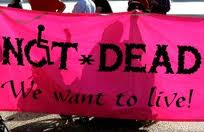
Disability rights activists from Pennsylvania Not Dead Yet and New Jersey centers for independent living, as well as groups representing parents of people with disabilities, will be marching to Princeton University and holding a protest on June 10, 2015. Activists want Princeton to publicly denounce recent statements by Professor Peter Singer, promoting ending the lives of disabled infants through denial of health care, and for Princeton to take other steps to address what the activists describe as Singer’s “hate speech” toward disabled people.
“Since about 1980, Singer has promoted public policy that would legalize the killing of disabled infants in the first month of life,” said Stephen Drake, Not Dead Yet’s research analyst and expert on Singer. “More recently, he has expanded his position in the context of health care rationing.”
In 2009, the New York Times Magazine published an article by Singer titled ‘Why We Must Ration Health Care.’ In the article Singer spoke hypothetically of assigning a life with quadriplegia as roughly half that of a life without any disability at all. On this basis, Singer laid out a case for denying health care to people with significant disabilities on the basis that these lives have less value than the lives of nondisabled people. A response signed by 20 disability rights organizations was submitted to the magazine, criticizing the decision to seek out Singer as an analyst of healthcare and for the specific content of the article.
“This was probably Peter Singer’s most direct assault on the value of the lives of people with physical disabilities past the age of infancy,” said Drake.
On April 26, 2015 on “Aaron Klein Investigative Radio,” Singer again rationalized the killing of disabled infants. Three days later, the National Council on Disability, a council appointed by the U.S. President to provide advice on disability policy, issued a press statement on Singer’s comments during the show. According to the NCD release:
Singer told Klein that health care rationing is already happening, and surmised that hospitals routinely make decisions not based on need, but rather on cost. He then used the presumed practice to rationalize the killing of disabled infants by arguing in support of “non-voluntary euthanasia” for human beings who Singer contends are not capable of understanding the choice between life and death, including “severely disabled infants, and people who through accident, illness, or old age have permanently lost the capacity to understand the issue involved.”
In addition, Not Dead Yet issued a petition to Princeton through change.org.

Wednesday, June 10, 2015

Britain to debate assisted suicide bill.

Alex Schadenberg
By Alex Schadenberg
International Chair, Euthanasia Prevention Coalition

The British House of Lords has debated many assisted suicide bills over the past few years. In fact the House of Lords debated the Falconer assisted suicide bill in the past year, a bill that died on the order paper before the election. The House of Commons has not debated an assisted suicide bill in 20 years.

Yesterday backbencher British Labour MP, Rob Marris, was chosen first in the Private Members bill ballot giving Marris the right to introduce Falconer's assisted suicide bill in the House of Commons.

According to the BBC, the Marris assisted suicide bill is scheduled for its first hour of debate on September 11.

Prime Minister Cameron
Prime Minister David Cameron, who has a majority government, opposes assisted suicide. The Express and Star reported that Cameron told his weekly Prime Minister's Question Time that:

“I don’t support the assisted dying proposals. I don’t support euthanasia.” 
...problems with the existing law can be ‘dealt with sensitively’ without ‘bringing in euthanasia’.
Mark Atkinson
The media reported that Mark Atkinson, the interim chief of the disability rights charity - Scope warned that legalizing assisted suicide would put people with disabilities at risk:

"Many disabled people are really worried about the legalisation of assisted suicide. 
“They are concerned that it will lead to them feeling under pressure to end their lives.”
While Agnes Fletcher, Director of Living and Dying Well, added: 
“The bill contains very few explicit safeguards.”
The Care Not Killing Alliance, Not Dead Yet UK, Living and Dying Well coalition and many other groups oppose the assisted suicide bill because it gives physicians, the right in law to cause the death of their patients when their patients are at the most vulnerable time of their lives.

Tuesday, June 9, 2015

EPC campaign to protect people from assisted suicide.

By Alex Schadenberg
Executive Director - Euthanasia Prevention Coalition

The Euthanasia Prevention Coalition (EPC) responded to the Supreme Court of Canada assisted suicide decision with a letter writing campaign to politicians asking them to use the Notwithstanding Clause to protect Canadians from assisted suicide. EPC sent-out 160,000 post-cards asking the Government to use the Notwithstanding clause.

EPC is now promoting the Give us time! campaign in English and French.

The Give us time! campaign asks Canada's Justice Minister Hon Peter MacKay to:
  1. Establish a Royal Commission on assisted suicide.
  2. Use the notwithstanding clause to give us time.
The Give us time post-cards can be ordered in english or french from EPC for free at: info@epcc.ca or by calling toll free at: 1-877-439-3348.

New Zealand government does not support assisted suicide.

Prime Minister John Key
By Alex Schadenberg
International Chair - Euthanasia Prevention Coalition

The New Zealand media reported that the government will establish a "select committee" on euthanasia and assisted suicide, but it is not backing a bill to legalize assisted suicide.

The media reported that:

Prime Minister John Key is backing a select committee inquiry, but said a law change will only be debated if a members bill is submitted and drawn from the ballot. 
Key said some National MPs are deeply opposed to assisted death, and he doesn't think it would make it out of backroom discussion. 
"I don't think that we would, but some caucuses might, depending on the size of them and the sort of nature and make of them."
The New Zealand High Court decided on Friday, June 5 that only parliament can change the assisted suicide law.

Euthanasia Free New Zealand and Not Dead Yet - Aotearoa are effectively opposing euthanasia and assisted suicide.

Monday, June 8, 2015

Euthanasia in Belgium: A subtle but real form of coercion

This article was published on the Vivre dans la Dignitè (Living with Dignity) website.

A recent visit to a nursing home in Belgium reveals that residents are bombarded with the idea that euthanasia is a good choice. It was the "fortnight on 'end of life'". An admittedly important subject, but which must be discussed in a balanced way. Here, at the opening of the event, a video was presented, biased in favour of euthanasia. The rest of the program isn't objective either.

Under the pretense of informing residents, they plant the idea that euthanasia is a good solution. But nowhere is a balanced view presented in the program: they do not speak of options for life; they only speak of the choice of death.

First week's schedule posted
in the lobby of the residence.
We were told that most residents feel quite lonely. They no longer have friends. Their family does not come to visit them, or rarely. Even friendships formed at the rest home go out when friendslose their mobility or die. The sense of isolation is very strong for a majority of the residents of such nursing homes.

The schedule of this "fortnight on end of life" is displayed at the entrance of the residence, and also in the elevator and on each floor. This is part of the social activities of the residence. Not having very much to do, residents attend almost all of these social activities. The term "captive audience" comes to mind.

It is a form of subtle and very effective coercion. Nobody forces the individual to make that "choice." It's not like they twisted their arm, or that they held a gun to their head. No, nothing as obvious.

Yet, requests for euthanasia follow one another.

Note:
  • The "Early declaration" document is about euthanasia. See the official document in French.
  • The screening of the movie "Amour", in which an elderly man uses a pillow to smother his wife who has aphasia (and perhaps dementia), after refusing the assistance that had been offered to him. More uplifting movies should be offered, especially to elderly people who may be at the end of their life.
  • This propaganda comes from the Association pour le Droit de Mourir dans la Dignité (Association for the right to die with dignity), a Belgian association that was incidental in the legalisation of euthanasia in Belgium (including for children). Half of the members of the euthanasia surveillance commission in Belgium belong to ADMD. We should expect elderly people in Québec will be facing similar propaganda in the coming years.
The program displayed
in the elevator.
Program

Monday, June 1: Opening of the fortnight on "End of Life"

Introductory remarks
Videotape "Living with euthanasia" of the ADMD


Tuesday, June 2: Presentation of "Advance directives"

Wednesday, June 3: Speech on "The place of the family at the end of life"

Thursday, June 4: Conference on "end of life" presented by ADMD

Friday, June 5: Philo Workshop "What is a good death? "

Saturday, June 6: Movie "Stepmom"

Sunday, June 7: Presentation of the document "Early Declaration"

Monday, June 8: "The importance of aesthetics at the end of life"

Tuesday, June 9: Conference on "pain"

Wednesday, June 10: Presentation on "The end of life of the elderly"

Thursday, June 11: "The institutions Residents of Rights"

Friday, June 12: Roundtable discussion on the fortnight

Saturday, June 13: Movie "Amour"

Saturday, June 6, 2015

California Governor Jerry Brown may need to veto assisted suicide bill SB 128.

Sign the online petition urging California Governor Jerry Brown to veto assisted suicide bill SB 128 (Link).

California Assisted suicide bill SB 128 protects doctors and other participants in a patient's death, including family members - but it does not protect patients. This is done in three ways:
  1. Taking the teeth out of patient protections;
  2. A near complete lack of transparency - in Oregon, similar confidentiality provisions preclude disclosure to law enforcement.
Patient choice and control is not assured by SB 128 instead it is a recipe for patient abuse. Other problems include steerage to suicide by healthcare providers and the risk of suicide contagion.

Marilyn Golden, Senior Policy Analyst for the California based Disability Rights Education & Defense Fund, stated in an article published in the Los Angeles Times that:
“If this bill passes, some people’s lives will be ended without their consent, through mistakes and abuse. No safeguards have ever been enacted or proposed that can prevent this outcome, which can never be undone.”
California: Vote NO on assisted suicide bill SB 128.

Assisted suicide bill SB 128 was introduced in the California Senate on January 21, 2015. On March 25, SB 128 passed in the Senate Health Committee on April 7, SB 128 passed in the Senate Judiciary Committee and on June 4 SB 128 passed in the Senate. On June 23 there will be a hearing at the State capital at 1:30 pm in room 4202 on the bill.

Assisted suicide bill SB 128 has not gone to a vote in the California House yet, but the assisted suicide lobby is running a big campaign in California which may require Governor Jerry Brown to veto the bill.

Sign the online petition urging California Governor Jerry Brown to veto assisted suicide bill SB 128 (Link).

Hope Ireland: Assisted suicide and euthanasia could be discriminatory towards people with disabilities.

By Alex Schadenberg
International Chair - Euthanasia Prevention Coalition


HOPE Ireland - Saying No to Euthanasia & Assisted Suicide held its inaugural conference before a "full-house" at the RDS Centre in Dublin. Dr Kevin Fitzpatrick told RTE news that: 'legalising assisted suicide would have catastrophic consequences.'

Dr Kevin Fitzpatrick
Link to the video news report.
Listen to the interview on News Talk radio.

The RTE news reported that:
Director of the group, Kevin Fitzpatrick, warned that it was not possible to put enough safeguards into legislation to cover every aspect of human nature and human motivation. 
Dr Fitzpatrick, who is partially paralysed and who uses a wheelchair, said that assisted suicide and euthanasia were discriminatory against disabled people, arguing that while doctors would not hesitate to treat able-bodied people with suicidal ideation, the same was not always true for the disabled or those with other conditions. 
"Too many doctors look at someone like me, or someone with a progressive condition in a worse situation, and they say, "yeah, we can't blame you" [if you are feeling suicidal.]" Dr Fitzpatrick said. 
He went on to say that such a response was based solely on the persons disability, and, he said, that was where the discrimination came in, and that such discrimination "leads to death". 
Dr Fitzpatrick said that evidence showed that "once you open the door and legalise [euthanasia] things change dramatically," and that's what HOPE Ireland wants to prevent.
Conference speakers were from Ireland, Belgium, Netherlands, France, Australia including Alex Schadenberg and Amy Hasbrouck from Canada.

European Court of Human Rights orders France to dehydrate Vincent Lambert to death.

Alex Schadenberg
By Alex Schadenberg
International Chair - Euthanasia Prevention Coalition

The European court of Human Rights ordered France to withdraw fluids from Vincent Lambert, a 38 year-old man with cognitive disabilities.

The case came about when Lambert's wife wanted her husband to have his fluids withdrawn to cause his death while his parents wanted to continue caring for him.

The Telegraph newspaper reported that Lambert's wife stated after the Strasbourg court decision that withdrawing fluids will fulfill her husbands wishes while Lambert's mother, Viviane stated:

“It’s scandalous. They are condemning my son. We will remain by Vincent’s side and will continue to fight,"
Vincent Lambert's mother
This decision should concern people who believe in the equality of every human being. Lambert was not dying, but has a cognitive disability. This decision means that people with cognitive disabilities, who are incapable of speaking for themselves, may be intentionally dehydrated to death.


The decision of the European court of Human Rights is considered a precedent case in all of the 47 European states.

British woman sentenced for smothering man to death.

Alex Schadenberg
By Alex Schadenberg
Executive Director - Euthanasia Prevention Coalition

A British woman was given the mandatory minimum sentence (at least 9 years) for smothering a man to death. Heather Davidson (54) pled guilty to smothering David Paterson (81) to death on February 11, 2015.

According to the York Press Davidson claimed that she was motivated by "mercy" whereas the Paterson family said that David was murdered.

The case was based on the fact that Paterson clearly wanted to die a natural death. The York Press reported the Paterson family as stating:
Heather Davidson & David Paterson
Uncle David was such a strong character, great fun and outwardly very sociable, inwardly he was an incredibly private and guarded person. Towards the end of his life, Uncle David became less able to manage and needed our help which he accepted with great grace. However, he still retained his privacy and dignity.
 
Only a few months ago we were helping to sort his home out in the anticipation he would be able to leave hospital and live there. 
We all knew of, and respected his deeply held Christian beliefs. We are, and Uncle David would have been, horrified that someone he classed as a friend and who he thought shared his Christian values, would have acted in this way. ... She had no right to do this to him. 
We were anticipating a funeral that would be a celebration of his life but instead of having the space and time to remember all the good he brought, this has thrown our lives and thoughts into chaos. 
We have been deprived of the opportunity to grieve as we should have. We all have moments considering the horror of Uncle David's last few minutes and console ourselves with the thought that as he had been almost unconscious for most of the time, he would hopefully not have known anything about it. 
Our overriding emotions are of shock and horror, we all want to know why this has happened. It makes no sense at all. Heather Davidson was a person Uncle David had helped, a person he trusted and considered a friend, she has taken away our opportunity to grieve for him, as we had the right to do. 
All the attention into his private and personal affairs is the last thing he would have wanted. He did not have a lot of dignity at the end. Davidson took away the last remnants of this and thrust him and his life into the limelight. She had no right to do that, and for all of us, including Uncle David, we want to know why. 
When we think of Uncle David we can't help smile but now that smile is tinged with the emotion clouding the dreadful way his life finally finished."
The euthanasia lobby will say that David Paterson was denied his right of self-determination, which was wrong, but they need to admit that promoting euthanasia based on "suffering" demeans the "sufferer" and leads to people believing that ending the life of the sufferer is a societal good.

We need to create a society that eliminates suffering by caring and not killing.

Friday, June 5, 2015

Euthanasia without consent continues in Belgium.

First Published on the Bioegde website.

Raphael Cohen-Almagor
By Michael Cook

A leading academic has published a stinging critique of how Belgium administers its euthanasia law. Writing in the Journal of Medical Ethics, Rafael Cohen-Almagor, an Israeli professor of politics at the University of Hull, says that Belgians should be alarmed by the deliberate shortening of lives of some patients without their explicit voluntary request.

Consent is supposed to be a cornerstone of Belgium’s euthanasia act, but Cohen-Almagor, after surveying reports and articles, believes that the number of patients who are killed outside of the law is disturbing. “Ending patients’ lives without request is more common than euthanasia,” he says. He urges the Belgian medical profession to place reform high on their agenda.

Euthanasia has taken root in the culture of Belgium, he observes. Support for euthanasia among doctors is over 90%. “Social and peer pressure makes it difficult for those who oppose euthanasia to uphold their position in the liberal culture that has been developing,” he says. About 90% of the public also support it.

In this atmosphere, consent seems to have become optional for a particularly vulnerable group, “80-year-old patients or older who were mostly in coma or suffered from dementia”. Killing them is clearly against the law, but Belgian physicians are ignoring its letter and observing its spirit – as they interpret it. “Whether deliberately or not, the physicians were disguising the end-of-life decision as a normal medical practice,” he says, citing a 2010 study.

Cohen-Almagor highlights last year’s position paper by the Belgian Society of Intensive Care Medicine Council. This document says that “shortening the dying process with use of medication may sometimes be appropriate, 'even in the absence of discomfort'”. Furthermore, the final decision for terminal treatment lies in the hands of the medical care team, not necessarily the relatives. He criticizes the paternalism of the statement and points out that it fails to mention the word “consent”.

He concludes by asking: 
“If Belgium has been unable to control abuse—and does not seem to have tried very hard—what reason is there to believe it will be controlled in the future?”

Thursday, June 4, 2015

Belgium doctors are hastening death without request.

This article was published by OneNewsNow on June 4, 2015

A jump in support for assisted suicide in the United States fails to reflect the dangers of the practice.

Alex Schadenberg
Gallup poll tallies 68 percent support for assisted suicide for patients who request it, have an incurable illness and are living in severe pain.

Alex Schadenberg of the Euthanasia Prevention Coalition is not surprised by the numbers after the extensive publicity on Brittany Maynard, who had terminal brain cancer and moved from California to Oregon for help to commit suicide.

He says there was a "media love-in" for Maynard's death, which affected the American public.

"So what's really missing here is the reality of what is the actual effect of legalizing assisted suicide," Schadenberg observes. "We don't see that readily being promoted by the media and we also don't see counter stories dealing with the same issues."
Gallup acknowledged that the poll results are questionable. The headline itself reads, 
"U.S. support for euthanasia hinges on how it's described," because support dropped from 70 percent to 51 percent when "help end a patient's life" was changed to helping "commit suicide."

Schadenberg points to a March report from Belgium that shows 1.7 percent of all deaths were hastened in the country without a person's request.

The head of a euthanasia committee in Belgium, he says, has admitted that an average 50 Belgians are dying every year due to psychiatric problems – a far cry from brain cancer.

Millions have been spent in America to change minds about assisted suicide and Schadenberg says it's time for a counter campaign to educate people on the truth of it.

HOPE Ireland conference opposing euthanasia


On June 6th 2015 the inaugural Hope Ireland conference will take place in the RDS in Dublin. This free-to-attend conference will focus on how euthanasia laws are rooted in discrimination against disabled people of all ages and will highlight the terrible consequences of legalised euthanasia and assisted suicide in other countries.

Dr Kevin Fitzpatrick
Speaking in advance of the conference, Director of Hope Ireland Dr Kevin Fitzpatrick OBE said that the current law in Ireland protected vulnerable people and saved lives. ‘Those defences in law cover every citizen of Ireland and must be maintained, strengthened if possible, not overthrown.’

“We must look to the experience of other countries and states where we can see once euthanasia and/or assisted suicide is legalised those laws are very quickly extended to people who are not terminally ill at all, most often targeting vulnerable people. In Belgium one in twenty deaths are now deliberately caused. Euthanasia for children of any age is now legal. A Belgian government adviser stated publicly in 2013, their euthanasia law was drawn up specifically for disabled people who he believed were right to want to die. Now this includes considering euthanizing a man with bi-polar condition, and life-term prisoners who are fed up in jail.

Early this year Canada specifically legalised euthanasia even when the sole criterion was on the grounds of disability. Dr Fitzpatrick said that it was now impossible to deny euthanasia laws were rooted in discrimination against disabled people and were used to end the lives of people who were not terminally ill.

In the Netherlands some newborns are euthanised simply for being born with spina bifida and in 2013 42 people were euthanised even though they had mental health issues or a diagnosed psychiatric condition. In the US, Oregon is held up as a paragon but there too we shall show the terrible consequences of permitting third parties, doctors or not, to intervene in the end of any human life.”
“There are very good reasons why the disability rights movement is so opposed to such laws. We are the primary targets. In countries where laws enabling assisted suicide and euthanasia have been introduced, very quickly they are extended to end the lives of those who are not terminally ill, most of whom are, in fact, disabled people. The mere existence of such laws has become an invitation to see euthanasia as a form of ‘justifiable killing’.”
Dr Fitzpatrick said that most people who are offered the best end-of-life care turn away from their wish to die. This shows the vital importance of such care and support, and why it is essential that the current law needs to be protected supported and strengthened.
“In Ireland, as elsewhere, we should be proud of the hospice care movement, and our communities which offer such incredible support and proper end-of-life care. This is where end-of-life care truly prioritises dignity and respect while at the same time seeking to help people live as fully as possible. We must ensure that every possible health, social and human support is provided to those who need it. We perfectly understand why some people can fall into despair without that very best support. We think everyone should be striving to make the best end-of-life care available to every citizen of Ireland. The simple truth is: we can never legislate against mistakes, misguided help, exhaustion or financial pressures or even the cynicism that can enter every decision to end another human being’s life. But we must not allow that to happen and we certainly must not create the conditions in which it will happen more and more easily and routinely, by changing the law to permit it.”
Alex Schadenberg
The Hope Ireland Conference entitled ‘Saying No to euthanasia and assisted suicide” will take place on Sunday the 6th of June in the RDS conference hall from 9am – 4pm. Speakers at the conference will include:

Prof. Des O’Neill: Consultant Physician in geriatric medicine and Director of Centre for Ageing, Neuroscience and the Humanities, Dublin. (Keynote speaker)

Dr. Kevin Fitzpatrick: OBE Director of Hope Ireland, Director of Euthanasia Prevention Coalition International and a disabled activist.

William Binchy: Fellow Emeritus, Trinity College Dublin, Barrister at Law, former Commissioner, Irish Human Rights Commission, 2001- 2011

Alex Schadenberg : Executive Director and Chair of Euthanasia Prevention Coalition International. Other international speakers from Canada, France, Holland and Belgium.

Full details of the conference are available at www.hopeire.com.