Tuesday, July 12, 2022

MAiD (Euthanasia) for Long Covid and poverty.

Alex Schadenberg
Executive Director, Euthanasia Prevention Coalition

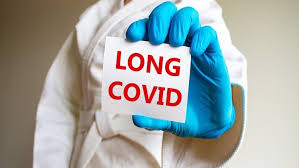
One of the outcomes of the Covid pandemic is that some people are experiencing what is known as Long Covid. I know several people who are living with long Covid and experiencing different symptoms over a long period of time. One of the difficulties with Long Covid is that the symptoms vary and the person who lives with Long Covid does not have a prognosis for when they will get better.

Hannah Alberga reported for CTV news that Tracey Thompson, a Toronto resident who is in her 50's, has requested MAiD (euthanasia) because she is living with Long Covid and is approaching poverty as she is unable to work. Alberga reported:
Thompson, a Toronto resident in her 50s, says the enduring illness and lack of substantive financial support has led her to begin the process of applying for Medical Assistance in Dying (MAiD), a procedure that first became legal in Canada in 2016.
“[MAiD] is exclusively a financial consideration,” she told CTV News Toronto.

After 26 months of lost income since the onset of symptoms, no foreseeable ability to work and an absence of support, Thompson said she expects to run out of money in about five months.
When parliament passed Bill C-7 (March 2021) Canada's euthanasia law was expanded by not requiring that a person's death be reasonably foreseeable. Based on the current law Alberga probably qualifies for euthanasia (MAiD) even though her condition does not have a prognosis.

Alberga explains that Thompson doesn't want to die, but she says that she cannot live without an income or support. Alberga reports:
It’s not that Thompson wants to die. In fact, she still treasures the little bursts of joys in life.

“I'm very happy to be alive. I still enjoy life. Birds chirping, small things that make up a day are still pleasant to me, they're still enjoyable. I still enjoy my friends,” she said.

“There's a lot to enjoy in life, even if it's small.”

Yet, a world in which Thompson cannot access an income is not one she thinks she’ll survive.
Alberga explains that Thompson's condition may not qualify for the Ontario Disability Support Program (ODSP) and even if she does qualify it would take a long time to be approved, and even then, ODSP only pays $1169 per month, which would only cover her rent. 

In other words, Thompson probably qualifies to be killed but she may not qualify for income support to enable her to live.

When euthanasia was debated in the courts and then in parliament, the concept of euthanasia for people living in poverty was considered reactionary and yet this is happening. 

In April an Ontario woman (51) with Multiple Chemical Sensitivities (MCS) died by euthanasia because she was living in poverty and couldn't find a suitable place to live.

A federal government committee is currently examining the expansion of euthanasia (MAiD) to children, by advanced directive, and they are debating the rules for MAiD given to people with mental illness.

Canada's federal government needs to re-evaluate the MAiD program. From its inception, Canada's MAiD law employs undefined terms, and it states that the assessor only needs to be 'of the opinion' that a person fits the criteria of the law. Therefore, when cases of questionable euthanasia deaths are identified, the assessor is assured by the law that they cannot be prosecuted.

Countries that have not legalized assisted death need to recognize that when the clear line (kill or not kill) is crossed and doctors and/or nurses are legally permitted to kill their patients, the law will expand. 

There are many reasons why someone may seek death; once death is deemed to be a reasonable response to human suffering, then more reasons will be approved for death.

Society needs to care for its citizens, not kill its citizens.

Canada is an example of how killing becomes contagious.

Choice? Canada's the "most permissive euthanasia law in the world"

This article was published by Nancy Valko on her blog today.

Nancy Valko
In his excellent July 10, 2022 blog, Alex Schadenberg, chair of the International Euthanasia Prevention Coalition, republished an article by Dr Ramona Coelho that now “Canada’s medical assistance in dying (Maid) law is the most permissive euthanasia legislation in the world”.

Coehlo says “Canada’s MAiD law currently allows suicide facilitation for persons with disabilities and is on track to expand in March 2023 to those living with mental illness. “ (Emphasis added)

How did assisted suicide/euthanasia laws get so far and so fast down the proverbial “slippery slope”?

In my December, 2016 blog “Pain and ‘Choice’”,  I wrote about how I saw the warning signs when I was a new nurse in 1969.

Here is my blog:

PAIN AND “CHOICE”

December 15, 2016 nancyvalko 

It was 1969 and I was fresh out of nursing school when I was assigned to a patient I will call “Jenny” who was thirty-two years old and imminently dying of cancer. She was curled up in her bed, sobbing in pain and even moaned “just kill me.” The small dose of Demerol I injected into her almost non-existent buttocks every four hours “as needed” was not helping. I reassured Jenny that I was immediately calling the doctor and we would get her more comfortable.

However, I was shocked when the doctor said no to increasing or changing her medication. He said that he didn’t want her to get addicted! I told him exactly what Jenny said and also that she was obviously very close to death so addiction would not be a problem. The doctor repeated his no and hung up on me.

I went to my head nurse and told her what happened, but she told me I had to follow the doctor’s order. Eventually, I went up the chain of command to the assistant director of nursing and finally the Chief of the Medical Staff. The verdict came down and I was threatened with immediate termination if I gave the next dose of Demerol even a few minutes early.

I refused to abandon Jenny so for the next two days before she died, I spent my time after my shift sitting with her for hours until she fell asleep. I gave her whatever food or drink she wanted. I stroked her back, held her hand and told stories and jokes. I asked her about her life. I did everything I could think of to distract her from her pain and make her feel better. It seemed to help, although not enough for me. I cried for Jenny all the way home.

And I was angry. I resolved that I would never watch a patient needlessly suffer like that again.

So, I educated myself by reading everything I could about pain medicine and side effects. I also pestered doctors who were great at pain control to teach me about the management, precautions, and rationale of effective pain management. I used that knowledge to advocate and help manage my patients’ pain as well as educating others.

I was delighted to see pain management become a major priority in healthcare and even called “the fifth vital sign” to be evaluated on every patient. I saw new developments like nerve blocks, new drugs, and regimens to control pain and other techniques evolve as well as other measures to control symptoms like nausea, breathlessness, and anxiety. Now we also have nutritional, psychological, and other support for people with terminal illnesses and their families.

Best of all was that I never again saw another patient suffer like Jenny despite my working in areas such as ICU, oncology (cancer) and hospice.

Twenty-Four Years Later

When my oldest daughter was 14, she attended a public high school where the science teacher unexpectedly started praising the infamous Dr. Jack Kevorkian and his public campaign for legalized assisted suicide and euthanasia. Kevorkian’s first reported victim was Janet Adkins, a 54 year old woman with Alzheimer’s in no reported physical pain who was hooked up to a  “death machine” in the back of a rusty van. Mrs. Adkins was just the first of as many as 130 Kevorkian victims, many if not most of whom were later found to have no terminal illness. Kevorkian escaped prosecution--even after he harvested a victim’s organs and offered them for transplant--until the TV show 60 Minutes aired Kevorkian’s videotape showing him giving a lethal injection to a man with ALS (Lou Gehrig’s disease). Shockingly, Kevorkian served only 8 years in prison before he was paroled and eventually became a media celebrity peddling assisted suicide and euthanasia.

My daughter, who never before showed any interest in my speaking and writing on the topic of assisted suicide, now stood up and peppered her teacher with facts about Kevorkian. The teacher asked her where she learned her information and she answered, “From my mom who is a cancer nurse”.

Sarcastically, he responded “So your mother wants to watch people suffer?” My daughter responded “No, my mother just refuses to kill her patients!” End of discussion.

Conclusion

But not the end of the story. Tragically, we now have legalized assisted suicide in several states and serious efforts  to expand it to include people without physical pain but with conditions like Alzheimer’s, mental illness or other psychological distress as well as even children.

As Wesley Smith recently and astutely observed:

“Moreover, the statistics from Oregon and elsewhere show that very few people commit assisted suicide due to physical suffering. Rather, the issues are predominately existential, such as fears of being a burden or losing dignity

The public is being duped by groups like Compassion and Choices that campaign for legalized assisted suicide on the alleged basis of strict criteria for mentally competent, terminally ill adults in unbearable physical pain to freely choose physician-assisted suicide with (unenforceable) “safeguards”.

The emerging situation throughout the world is more like Kevorkian’s dream of unfettered and universal access to medical termination of the lives of “expendable” people. How much easier is that when people with expensive mental health problems, serious illnesses or disabilities can be encouraged to “choose” to be killed?

Monday, July 11, 2022

A message to the world. Don't legalize euthanasia.

Alex Schadenberg
Executive Director, Euthanasia Prevention Coalition

Recently articles about concerning approvals and deaths by euthanasia (known as MAiD) in Canada have opened the question of have we gone too far in Canada?

The Euthanasia Prevention Coalition opposes all MAiD deaths, but sadly, we accurately predicted that once the line in the sand that gives doctors and nurses the right in law to kill their patients was crossed, the rules and reasons for approving medical killing (MAiD) would expand. This is what Canada has experienced.

Dr Ramona Coelho, a family physician who specializes in caring for marginalized people, recently wrote about two cases of premature deaths by MAiD in Ontario. Coelho wrote:

A man was admitted to hospital after suffering a small stroke affecting his balance and swallowing. He was feeling down and isolated due to a COVID-19 outbreak on his ward. The stroke neurologist anticipated he would be able to eat normally and regain most of his balance. Psychiatry diagnosed an adjustment disorder but noted his prognosis was very good. The patient then requested MAiD. Neither of his MAiD assessors had expertise in stroke rehabilitation and recovery. Because he was temporarily eating less, the MAiD assessors decided he could die right away instead of waiting the required 90 days for those living with disabilities despite having no terminal comorbidities. He received MAiD the following week. This man died alone and depressed and before he had tried proper therapy or reached maximal recovery.

A 71-year-old widower was admitted to a Southwestern Ontario hospital after a fall. His family says during his admission he contracted an infectious diarrheal illness. He was humiliated by staff for the smell of his room, his family said. He developed new shortness of breath that was not comprehensively assessed. In this context, a hospital team member suggested he would qualify for MAiD. The team said he had end-stage chronic obstructive pulmonary disease and it was terminal. The patient was surprised by the diagnosis but trusted the team. Within 48 hours of his first assessment, he received a medically assisted death. Post-mortem testing showed he did not have end-stage COPD. His family doctor, when notified of his death, also stated he did not have end-stage COPD, but the team had failed to contact her when they were assessing his history.

The first case concerns MAiD assessors who did not have enough knowledge or training to recognize that the patient's prognosis was very good. The patient needed treatment and time to recover, not death by lethal injection.

The second case concerns a hospital team that misdiagnosed the patient. Therefore, his approval and death by lethal injection was based on a misdiagnosis, and to make matters worse, the MAiD team didn't even contact the family doctor who would have told them that the patient was misdiagnosed.

Then there is the case of a woman in BC, known at Kat, who is living with Ehlers-Danlos Syndrome (EDS). Kat sought death and was approved for MAiD, not because she wants to die, but because she unsuccessfully fought to receive treatment. She said it was easier to be approved for MAiD than to receive treatment to live. Ehlers-Danlos Syndrome cannot be cured, at this time, but Kat is seeking treatment for her symptoms.

In April I wrote about the euthanasia death of a 51-year-old woman with chemical sensitivities. The story by CTV National News Medical Correspondent, Avis Favaro reported that the woman was not terminally ill but living with chronic chemical sensitivities and environmental allergies. Favaro reported:
She died after a frantic effort by friends, supporters and even her doctors to get her safe and affordable housing in Toronto. She also left behind letters showing a desperate two-year search for help, in which she begs local, provincial and federal officials for assistance in finding a home away from the smoke and chemicals wafting through her apartment.

“This person begged for help for years, two years, wrote everywhere, called everywhere, asking for healthy housing,” said Rohini Peris, President of the Environmental Health Association of Québec (ASEQ-EHAQ).

“It’s not that she didn’t want to live,” Peris said from her home in Saint Sauveur, Que. “She couldn’t live that way.”

I stated that the CTV news story represents how MAiD is abandonment. This woman was not killed because of "unremitting suffering" but because she didn't have appropriate housing.

In late April, Favaro reported on a case of a 31-year-old Ontario woman who was also approved for (MAiD) euthanasia for chemical sensitivities. Favaro stated that Denise (not her name) was also diagnosed with Multiple Chemical Sensitivities (MCS):

The chemicals that make her sick, are cigarette smoke, laundry chemicals, and air fresheners. She is at risk of anaphylactic shock and so has EpiPens at all times in case she has a life-threatening allergic attack.

Denise is also a wheelchair user after a spinal cord injury six years ago and has other chronic illnesses. In March 2021, the Canadian government passed Bill C-7 which permitted (MAiD) euthanasia for people who were not terminally ill, but living with chronic conditions. This has resulted in approvals to lethally inject (MAiD) people with treatable chronic conditions and it is exposing the reality that people with chronic conditions are often living in abject poverty and poor living conditions.
According to Favaro, Denise applied for MAiD based on poverty. The good news is that Denise did not die by MAiD because she found a clean place to live.

All of these stories are important as a federal government committee is currently examining the expansion of euthanasia (MAiD) to children, by advanced directive, and they are debating the rules for MAiD given to people with mental illness.

First of all, Canada's federal government needs to re-evaluate the MAiD program. From its inception, Canada's MAiD law employs undefined terms, and it states that the assessor only needs to be 'of the opinion' that a person fits the criteria of the law. Therefore, when cases of questionable euthanasia deaths are identified, the assessor is assured by the law that they cannot be prosecuted.

Secondly, countries that have not legalized euthanasia need to recognize that when the clear line (kill or not kill) is crossed and doctors and/or nurses are legally permitted to kill their patients, that the law will expand in its application. 

There are many reasons why someone may seek death; once death is deemed a reasonable response to human suffering, then more reasons will be approved for death.

Society needs to care for its citizens, not kill its citizens.

Canada is an example of how killing becomes contagious.

Important articles on this topic:

  • Canada's Medical Assistance in Dying law is the most permissive in the world (Link). 
  • 20-year-old man with undiagnosed condition is approved for euthanasia (Link).
  • Euthanasia by advanced directive is a recipe for abuse (Link).
  • BC woman approved for euthanasia but can't access healthcare (Link).
  • Why euthanasia for children is wrong (Link).
  • Euthanasia is out-of-control in Canada (Link).

Sunday, July 10, 2022

Canada's medical assistance in dying (MAiD) law is the most permissive euthanasia legislation in the world.

Dr Ramona Coelho is a family physician in London, Ontario, whose practice includes caring for marginalized patients and those living with mental illness and disabilities. In her article, Coelho explains how Canada's euthanasia law has become the most permissive regime in the world. Her article was published by the London Free Press on July 9, 2022.
Canada’s medical assistance in dying (MAiD) law is the most permissive euthanasia and assisted-suicide legislation in the world. The United Nations special rapporteur on the rights of persons with disabilities, the UN independent expert on the enjoyment of all human rights by older persons, and the UN special rapporteur on extreme poverty and human rights have all warned our Canadian government that our MAiD law will lead to human rights violations.

Still, the federal special joint committee on MAiD is studying and making recommendations to the government on expanding the system that was created in 2016 and further enlarged in 2021.

Here are some recent examples of MAiD abuses under the current law, based on information provided by doctors, a patient and family members:

A man was admitted to hospital after suffering a small stroke affecting his balance and swallowing. He was feeling down and isolated due to a COVID-19 outbreak on his ward. The stroke neurologist anticipated he would be able to eat normally and regain most of his balance. Psychiatry diagnosed an adjustment disorder but noted his prognosis was very good. The patient then requested MAiD. Neither of his MAiD assessors had expertise in stroke rehabilitation and recovery. Because he was temporarily eating less, the MAiD assessors decided he could die right away instead of waiting the required 90 days for those living with disabilities despite having no terminal comorbidities. He received MAiD the following week. This man died alone and depressed and before he had tried proper therapy or reached maximal recovery.

A 71-year-old widower was admitted to a Southwestern Ontario hospital after a fall. His family says during his admission he contracted an infectious diarrheal illness. He was humiliated by staff for the smell of his room, his family said. He developed new shortness of breath that was not comprehensively assessed. In this context, a hospital team member suggested he would qualify for MAiD. The team said he had end-stage chronic obstructive pulmonary disease and it was terminal. The patient was surprised by the diagnosis but trusted the team. Within 48 hours of his first assessment, he received a medically assisted death. Post-mortem testing showed he did not have end-stage COPD. His family doctor, when notified of his death, also stated he did not have end-stage COPD, but the team had failed to contact her when they were assessing his history.

Was MAiD raised as an option because the man’s admission was taking too long or his room smelled or because he was a victim of ageism? Did he choose death because his treating team made him feel horrible or he made his decision based on inaccurate information? His family believes this is the case. There is no safeguard in the legislation that protects marginalized Canadians (victims of ageism, racism, or ableism) from MAiD being raised as a “treatment option.”

CTV ran a W5 story showing a man’s MAiD provision and a patient let me know the story was very appealing, and MAiD would be a good option for her. This patient is in her midlife and has a recent onset mild spinal cord injury of which she hasn’t had time to adjust, receive any peer support or proper symptom control. She would prefer to die than be poor and she is aware the government won’t provide what she needs to live with her new disability.

The legislation is written such that she can access MAiD before she can get better, heal to the extent she can, and adjust. Also troubling, the government has not considered the well-documented phenomenon that messaging promoting suicide increases rates of suicide. Have we considered how MAiD offered by the government might affect a person’s decision to choose death?

Despite these cases and numerous others in the media spotlight that should make us pause and consider the evidence, some are pushing for MAiD expansion. The federal expert panel on MAiD for mental illness has recommended mental illness be grafted onto the MAiD framework without any legislative changes in March 2023.

Troublingly, Canadian bioethicist Udo Schuklenk dismisses concerns that suffering caused by societal injustice could lead to choosing death. Schuklenk claims that limiting MAiD for psycho-social suffering “would translate into removing the agency of decisionally capable patients without offering them a way out of their predicament.”

Schuklenk speaks of agency but shows no consideration for how societal structures, such as governments, create and sustain the predicaments that can make death an attractive choice for those who would have instead benefitted from greater resources and care.

Dr. Jeff Kirby, a member of the expert panel on MAiD for mental illness, writes that he had to resign before the report was published as the recommendations were “soft” and “inadequate.” He also states there were procedural issues, including the discouragement of members bringing forward relevant matters for deliberation and a lack of reporting transparency.

Ellen Cohen, representing a national mental health advocacy organization, also resigned giving equal concerns. Canada should be extremely cautious about recommendations that come from an expert panel where two of 12 appointed members resigned in good conscience.

Canada’s MAiD law currently allows suicide facilitation for persons with disabilities and is on track to expand in March 2023 to those living with mental illness. The first report of the federal special joint committee on MAiD suggests it will not only ignore all the problems caused by MAiD but also further entrench and expand MAiD in Canada.
Previous articles by Dr Ramona Coelho:
  • Offering euthanasia to a suicidal person leads to premature deaths (Link).
  • Why euthanasia for children is wrong (Link).
  • Profound social change with euthanasia for mental illness (Link).
  • Why expanding access to medical assistance in dying keeps us up at night (Link).

Friday, July 8, 2022

Korean Medical Association strongly opposes assisted suicide bill

Alex Schadenberg
Executive Director, Euthanasia Prevention Coalition

The Korean Biomedical review reported that the Korean Medical Association (KMA) expressed serious concerns about a proposed bill to legalize euthanasia and assisted suicide. They expressed that legalizing assisted suicide will permit legal suicide.

Rep. Ahn Gyu-back of the opposition Democratic Party proposed the bill to legalize assisted suicide and exempt the doctor from criminal charges of aiding a suicide but it also confuses assisted suicide with euthanasia.

The Korean Biomedical review reported that the KMA consulted their membership and stated on Friday July 8 that there are diverse social views among physicians in Korea and no social consensus exists on the issue. They also encouraged the government to:
expand the scope of hospice and palliative care to improve patients' quality of life and provide psychiatric and psychosocial support.
The KMA provided constructive criticisms of the bill, the process and assisted suicide. They were concerned that:
  • The committee examining the bill may allow suicides without objective evaluations.
  • The legal definition in the bill is ambiguous between murder and assisted suicide.
  • The bill defines "people eligible for assisted death with dignity" as terminally ill patients but "terminally-ill patient" has no social or medical definition.
  • Adding assisted suicide will hamper the consistency of the law and cause confusion for physicians and people
  • The bill conflicts with the Suicide Prevention Act.
Korea needs to consider the horrific experience with legalizing euthanasia and assisted suicide (MAiD) in Canada and reject following a similar social experiment in Korea.

Spain: Police shooter to avoid trial after his euthanasia death was approved.

Alex Schadenberg
Executive Director, Euthanasia Prevention Coalition

A shooter in Spain who was seriously injured when he was arrested last December for shooting three fellow workers and two police officers may avoid trial for his crimes through euthanasia.

Murcia today reported:
A court in Barcelona has green-lighted the assisted death request of Marin Eugen Sabau, a 46-year-old Romanian man who is awaiting trial for injuring 5 people after opening fire at a Securitas office in Tarragona last December.
According to Spanish News Today:
Last December, the 46-year-old Romanian man entered the Securitas offices from which he had recently been let go and opened fire, seriously injuring two other workers and the manager. While fleeing the scene, he shot an officer manning a checkpoint before locking himself into a deserted farmhouse. Police surrounded the property and when the gunman opened fire, a shoot-out ensured.

The man was critically injured... with an irreversible spinal chord injury.
Sabau requested euthanasia based on the fact that people in his condition qualify for euthanasia in Spain.

The lawyer for Jose Antonio Bitos, one of the injured officers, argued that Sabau should not avoid his trial or conviction by euthanasia. Murcia today reported that the lawyer will present a new appeal to the Provincial court and that the lawyer tends to appeal the decision, even up to the Constitutional court.

Monday, July 4, 2022

Strong opposition from MPs to introducing euthanasia and assisted suicide in the UK

The following is a media release from the Care Not Killing Alliance on July 4, 2022

Date: Monday 4th July 2022 

Release time: Immediate

Care Not Killing is pleased at the “strength and breadth” of opposition from MPs towards the policy of introducing euthanasia and assisted suicide (EAS) in the UK.


During today’s Westminster Hall debate, parliamentarians heard about just some of the dangers of introducing so-called “assisted dying”, including evidence from Oregon, Canada, and the Netherlands, with vulnerable people feeling pressured into ending their lives prematurely, and the growing link between introducing EAS and increases in a jurisdiction's suicide rate.

Danny Kruger MP
Danny Kruger (Con), Chair of the Dying Well All-Party Group, referred to considerations of financial savings in extending euthanasia in Canada beyond terminal illnesses, and the reality of care rationing within the NHS.

Stephen Timms (Lab) described the NHS as his party’s greatest achievement, and said its being underfunded was not a reason to give up on seeking achievable, high-quality, equally-accessed palliative care. He said:

“I agree with the organisation Care Not Killing that we want… a funded policy for comprehensive hospice, community and hospital specialist palliative care services across the country, with a duty placed on NHS trusts to ensure these services are made available to all who need them.”

As the debate drew to a close, the Minister restated the Government's longstanding position: the ultimate decision is for Parliament, as with other issues of conscience, and "our neutral stance means that this would have to be via private members legislation."

Article: Assisted suicide to be debated in the UK (Link).

Dr Gordon Macdonald
Dr Gordon Macdonald, Chief Executive of Care Not Killing, commented: 

“Doctors’ groups such as the Association of Palliative Medicine, disability rights organisations, and all those who oppose the introduction of euthanasia and assisted suicide will be pleased at the strength and breadth of opposition to changing the law in Parliament.

“We heard MPs acknowledge that palliative care remains a Cinderella service, hugely reliant on charity with many patients who would benefit from this type of care not currently receiving it; this should be the priority. MPs like Sir Peter Bottomley recognised the growing body of evidence that shows legalising assisted suicide or euthanasia does not reduce the suicide rate in the general population but increases it. This was explored convincingly in a recent peer-reviewed study from the UK’s Anscombe Bioethics Centre published in February, which showed a ‘consistent association’ between the passing of assisted suicide and euthanasia laws and an increase in suicide rates (including assisted suicides) among the general population across those countries that have introduced euthanasia or assisted suicide.”
Dr Macdonald continued: 

“Some MPs rightly expressed concern at the mission creep we see in countries like Canada,which legalised so called ‘medical assistance in dying’ in 2015. The law was originally limited to those whose natural deaths were ‘reasonably foreseeable’, but in September 2019 the Quebec Superior Court struck down that restriction. This followed the case of Alan Nichols, a former school caretaker who was physically healthy, but struggled with depression. His life was ended by lethal injection in July 2019. That same year also saw the chilling case of Roger Foley, who was repeatedly offered the drugs to kill himself, while being denied the social care to live a dignified life, due to the cost.

“At the same time, deaths from lethal injection continue to rise in Canada. In 2020 7,595 had their lives ended this way, including 1,412 who cited loneliness as a reason for opting to be killed, no doubt this was compounded by COVID. Now the Canadian law has been expanded to include those with chronic conditions, and soon, mental health conditions.

“Our current laws protect vulnerable people and do not need changing, instead we need to refocus our attention on how to ensure we provide the very best palliative care to those who need it.”
For media inquiries, please call 07970 162225.

Ends

Care Not Killing is a UK-based alliance bringing together over 40 organisations - human rights and disability rights organisations, health care and palliative care groups, faith-based organisations groups - and thousands of concerned individuals.

We have three key aims:

  • to promote more and better palliative care; 
  • to ensure that existing laws against euthanasia and assisted suicide are not weakened or repealed;  
  • to inform public opinion further against any weakening of the law. 

*As this story is dealing with suicide, please could we ask that you include details about organisations that offer help and support to vulnerable people who might be feeling suicidal such as the Samaritans, CALM or similar - Thank you.*

Euthanasia lobby leader has no regrets after serving three years for killing.

Alex Schadenberg
Executive Director, Euthanasia Prevention Coalition

Sean Davidson who is a past President of the World Federation of Right to Die Societies and a leader of Dignity South Africa has just completed three years (house arrest) for his conviction in the deaths of Anrich Burger (in 2013), Justin Varian (in 2015), and Richard Holland (in 2015). He says he has no regrets.

Eyewitness news in South Africa reported Davidson as saying:
I didn't murder them I helped them end their own life.
Davidson is playing with words when he says that he only helped them end their own life. In 2013 Davidson injected a lethal dose of drugs into Anrich Burger, who was living with quadriplegia after a 2005 car accident. 

Lethal injection is not just helping to end a life, but it is actively ending a life.

Assisted suicide to be debated in Britain.

Alex Schadenberg
Executive Director, Euthanasia Prevention Coalition

A parliamentary debate to legalize assisted suicide in the UK was spawned by a petition to parliament. According to Yahoo News:
Assisted dying will be debated in the House of Commons today, after a petition calling for its legalisation reached the required number of 100,000 signatures.
Yahoo News quoted from Dr Henry Marsh, a brain surgeon in the UK who is living with terminal cancer and supports assisted suicide, and Dr Mark Pickering from the campaign group Care Not Killing Alliance. Pickering told Yahoo News that:
Many of the heartbreaking stories that we hear driving the assisted suicide debate are of people who sadly did not get the right palliative care, and did not have access to the best support at the time of their dying or their loved ones dying. We really need to fix that.
Tanni Grey-Thompson
A bill to legalize assisted suicide was defeated in the House of Lords by a vote of 179 to 145. During that debate, members of the House of Lords with disabilities spoke out against assisted suicide.

...hundreds of people – from both sides of the argument – had written to her about the amendment, which would – if passed – “fundamentally change the political and societal landscape for disabled people”.

“If people have not read it, they should look at the article by… Lord Shinkwin this weekend about how disabled people are encouraged to think that they would be better off dead than live with an impairment.

“Even in this chamber, we hear about things such as incapacity and incontinence and all the things that people fear.

“I push back on that, and I push back on the view that public opinion is overwhelmingly in support of this.”

The All Party Parliamentary Group for Dying Well promotes access to excellent care at end of life and stands against the legalisation of doctor assisted suicide in the UK.

Thursday, June 30, 2022

Netherlands Health Minister Proposes Protocol for euthanasia of children under 12.

Alex Schadenberg
Executive Director, Euthanasia Prevention Coalition

The DutchNews.nl reported today that Dutch Health Minister Ernst Kuipers announced the intention to extend euthanasia to children, but without changing the law. Kuipers intends to extend the Groningen Protocol, which currently applies to babies, to include children under the age of 12.

An article by Peter McLaren Kennedy for EuroWeekly stated:

The proposed protocol contains seven criteria for euthanasia for those between one and 12. Doctors will have to be convinced the child’s suffering is unbearable and there is no possibility of a cure or a treatment to alleviate the pain.

The diagnosis would have to be fully discussed with the child’s parents as well as the possibility of euthanasia, for which both parents will have to give their permission.

Doctors will also discuss the procedure with the child in a way the child will understand and will only proceed if the child is in no way opposed to it.

In addition, doctors will have to consult at least one independent doctor who will be required to evaluate if all the criteria have been met before euthanasia can take place.

The concept is currently out to consultation with Kuipers to present the final concept in October, when he will also announce when the protocol will come into force.

In October 2020, Netherlands Health Minister Hugo de Jonge announced that the government would amend or permit child euthanasia. According to the DutchNews.nl:

De Jonge added that current laws would not need to be amended. Rather, doctors would be exempted from prosecution for carrying out an approved euthanasia on a child.
At that time, an effective campaign opposing child euthanasia was established by a group of Netherlands citizens and the Euthanasia Prevention Coalition ran a petition with more than 100,000 people opposing child euthanasia. The Netherlands government did not extend euthanasia to children.

This latest announcement sets a dangerous precedent. The Groningen Protocol permits euthanasia of newborns who are experiencing current or possible future suffering. If you use the same definitions for children under 12, there will be many euthanasia deaths of children who may have treatable conditions. Further to that, there are many medical conditions that possibly lead to future suffering.

As much as I oppose euthanasia in general, it would be more honest if
the Netherlands parliament debated and passed clear legal guidelines rather than avoid the contentious debate and approve a killing protocol that will enable doctors and parents to make lethal decisions in a back room.

health minister Ernst Kuipers

Read more at DutchNews.nl:

health minister Ernst Kuipers has said in a briefing to MPs.

Read more at DutchNews.nl: