Thursday, December 16, 2021

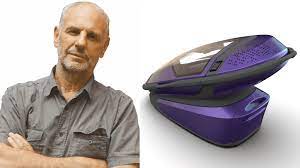
Switzerland has not approved suicide pod.

Alex Schadenberg
Executive Director, Euthanasia Prevention Coalition

The International media is gaga over Philip Nitschke's Sarco or suicide pod. I try not to write a lot about Nitshcke because he runs a suicide business where he provides online suicide books and devices and he has a website and chatroom explaining to people the best suicide methods.

When the story was released, I called Sarco a deadly lucrative stunt for Nitschke and I suggested that the article by Clare O'Dea for Swissinfo confirmed my thoughts. O'Dea wrote:
The first Sarco is being displayed at the Museum for Sepulchral Culture in Kassel, Germany from September 2021 to August 2022. The second turned out not to be aesthetically pleasing. For that and various other reasons it’s not the best one to use.
In suggest that the purpose of Sarco is to promote Nitschke's suicide business. This is precisely why Sarco is designed in an aesthetically pleasing manner.

Now Snopes published an article by Nur Ibrahim stating that Switzerland has not approved Nitschke's suicide pod. I don't always agree with Snopes, but Snopes is correct when it states:
Dr. Philip Nitschke, the man behind the Sarco capsule, claims that the pods have passed a “legal review” and will be available for use in Switzerland in 2022. But details of the “legal review” have not been revealed. Experts consulted by Sarco have argued use of the pod falls outside of Swiss law. A number of assisted suicide organizations in Switzerland have also expressed skepticism over using the machine, and the legality surrounding it.
I think that Michael Cook, the editor of Mercatornet, was right when he referred to Sarco as both a gas chamber and a coffin.

Snopes is right when it states that Sarco falls outside of Swiss law.

Nitschke has once again gained international attention and free advertising from the media for his suicide business. As Paul Russell said a few years ago in his article about Nitschke - "It's a business after all."

Wednesday, December 15, 2021

‘Systemic Ageism’ Blamed for Excess COVID Deaths, Ignored with Euthanasia

This article was published by National Review online on December 14, 2021

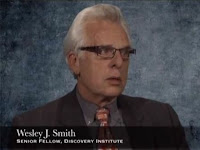
By Wesley J Smith

Governor Andrew Cuomo’s New York wasn’t the only government that inflicted blatant harm and unnecessary death on elders during during the Covid pandemic. Quebec did too. From the Toronto Sun story:
“Systemic ageism,” outdated health-care facilities and government reforms contributed to the tragedy that unfolded in the province’s long-term care homes during the first wave of COVID-19, a former Quebec health minister told a coroner’s inquest on Monday.

Réjean Hébert, who is also a gerontologist, told coroner Géhane Kamel that nearly 10 per cent of the province’s long-term care patients died of COVID-19 in the early months of the pandemic — a rate five times higher compared to Canada as a whole.
It didn’t start with Covid:
Hébert, who served as health minister under former premier Pauline Marois, said that even before the pandemic there was a tendency to shift health-care resources toward other priorities, leading to a lack of doctors and nurses to care for vulnerable seniors in care homes. As a result, the homes were no longer able to provide acute care, forcing them to transfer distressed patients to hospital, which was “extremely difficult” for those with cognitive impairments, he said.

Hébert also pointed to outdated facilities where patients were subjected to inadequate ventilation and forced to share bedrooms and bathrooms as factors that contributed to Quebec’s high mortality rate.
Article: Quebec doctor testified that COVID patients were euthanized rather than treated (Link).  

Now, do you think that this clear warning about the threat to elders caused by “systemic ageism” will be applied as Quebec and the rest of Canada expand access to euthansia among the elderly? Is Putin a friend of Ukraine?

The media will often report in detail and with righteous indignation about varied failings and abuses in health-care systems — such as the drumbeat of criticism often seen against HMOs in the states. But these crucial questions are often forgotten once the subject turns to euthanasia.

I call this phenomenon “Euthanasia Land,” a magical realm of chirping birds and butterflies, where systemic failures in health-care and social policy disappear and life terminations happen only under the most rigorous protective guidelines and by the most deeply caring and compassionate medical personnel.

But Euthanasia Land isn’t real. The crises reported in this story have equal impact on doctor-prescribed death as they do lapses in proper care. They are just far less discussed.

Consider the Canadian woman who was euthanized because she didn’t want to be lonely during Covid lockdowns. She wasn’t allowed family visitors while she was alive, but they were allowed to be with her when her doctor killed her. She wasn’t the only such victim, either. A Canadian government study found that hundreds of people who died by euthanasia in 2019 requested death at least in part due to loneliness and isolation.

But none of that stops the death juggernaut. When these horrors are reported, which isn’t often, they are soon forgotten.

Would it have been too much for the critics of the elder-care in Quebec — and the reporter, for that matter — to connect these crucial dots, and thereby open a vital conversation about how these same systemic problems also impact the provision of euthanasia?

I’ll bet the thought didn’t occur to them because, somehow, it never does.

More articles on this topic:

  • Quebec doctor testified that COVID patients were euthanized rather than treated (Link).  
  • Quebec COVID inquest uncovers nursing home deaths from neglect and abuse (Link).

Monday, December 13, 2021

Quebec anaesthetist fighting "euthanasia" allegation

The following article was written by Michael Cook and published by Bioedge on December 12, 2021. The article refers to the act as euthanasia, but it doesn't appear to be euthanasia. Stories from Québec often refer to euthanasia in the wrong manner. 

Withdrawing a ventilator can be inappropriate, but it is not euthanasia. The patient does seem to have been medically abandoned. Since the patient was not given a lethal dose or suffocated with a pillow or some other device, therefore it is not euthanasia. Euthanasia is a form of homicide.

Providing or withdrawing treatment is a treatment decision that requires consent. The anaestetist disconnected the ventilator without the consent of the patient or the substitute decision maker. Therefore the act appears to be unethical, but it does not appear to be euthanasia. The article by Michael Cook follows:

Michael Cook
By Michael Cook

Police blotter. Here is a case from Quebec which suggests two things. First, that Canada’s medical aid in dying legislation does not mean that doctors are allowed to kill patients willy-nilly. Second, that some doctors take a very utilitarian view of their patients.

This week a court lifted a ban on revealing the name of a retired anaesthetist who is being investigated by the police over a death at Hôpital de la Cité-de-la-Santé de Laval. Dr Isabelle Desormeau had requested confidentiality because publicity could prejudice her case.

The incident in question occurred on October 31, 2019. An 84-year-old man went to the hospital complaining of a stomach ache, which was actually an intestinal obstruction. Emergency surgery was required. Dr Desormeau and the surgeon spoke with the man about the risks. He asked them to “prolong life through limited care”.

The operation began at about 2 am. The surgeon discovered that large parts of the small intestine were necrosed. The man’s niece was consulted and told that if they proceeded with the operation, the man would have to wear a colostomy bag and would be in hospital for a long time. It was decided to “conclude the operation and offer palliative treatment”.

Back in the operating room, the surgeon “closed the patient’s abdominal wall”. But then the anaesthetist and the nurses quarrelled. Dr Desormeau allegedly questioned “the usefulness of finding a room for the patient when he could be taken directly to the morgue”. She said that the man had no one to accompany him in palliative care. One of the nurses retorted that the patient had a daughter.

In the end the anaesthetist disconnected him from the ventilator at around 4:45 am. The nurse claims that she protested several times that “this is not the way to do things and that the patient should be returned to the floor to die with dignity”.

The man died at about 5.04 am. The anaesthetist walked out without signing a death certificate, leaving that job to the surgeon.

The investigation continues.
Euthanasia is an intentional action or omission to cause death. Withdrawing the ventilator was not the cause of death, the medical condition of the patient is the cause of death. Withdrawing a ventilator without consent is medically unethical, but it is not euthanasia.

Friday, December 10, 2021

Québec committee supports euthanasia for incompetent people but not for mental illness.

Alex Schadenberg
Executive Director, Euthanasia Prevention Coalition

A report from a Québec committee of elected officials who examined further expansions of euthanasia supported extending euthanasia to incompetent people who made an advanced request but not extending euthanasia for mental illness alone. The Canadian Press reported:
A Quebec committee of elected officials says anyone diagnosed with Alzheimer’s disease should be able to sign an advance request for medical aid in dying. 

That is the main recommendation in a multi-party committee report tabled Wednesday looking at expanding the province’s law on end-of-life care, one that is expected to revive a debate that has divided politicians and the public.
If euthanasia is extended to incompetent people who requested death in an advanced directive, then the people are killed by lethal injection (euthanasia) will not be required to consent at the time of death. Remember, people write an advanced directive when they are competent but before they are sick. These people will lose the right to change their mind. 

Further, euthanasia is sold to the culture based on the concept of freedom of choice for consenting adults. Clearly euthanasia based on advanced directives undercuts the concept of choice for consenting adults.

The Québec committee did not approve euthanasia for mental illness alone. The Canadian Press reported:
However, the committee did not recommend expanding access to those whose only medical problem is a mental disorder. It says experts testified that in many cases with mental illness, it can be difficult to make the proper diagnosis.
Rejecting euthanasia for mental illness alone seems like a victory, but Bill C-7, that was passed by federal parliament in March 2021, permits euthanasia for mental illness alone. A few months ago the federal government appointed a committee to determine the protocols for approving euthanasia for mental illness alone. It is likely that the Quebec committee decided to leave this contentious issue alone simply because the federal government had technically legalized it already.

Nonetheless, I give the Québec euthanasia committee credit for listening to all perspectives on these issues. The federal government committee is stacked with Members of Parliament who support expanding euthanasia and who appear unwilling to examine the abuse associated with the current law.

Switzerland Supreme Court overturns conviction, based on technicality, of assisted suicide of a healthy woman.

Alex Schadenberg
Executive Director, Euthanasia Prevention Coalition

Pierre Beck
In October 2019, a Geneva court gave a suspended sentence to the regional vice-president of the assisted suicide group EXIT, Pierre Beck, for assisting the suicide of an 86-year-old healthy woman. Swissinfo, reported that Beck admitted to acting beyond the criteria of the law but he said that he didn't regret his action and faced with a similar situation he would likely do it again.

Swissinfo reported on December 9, 2021 that Switzerland's Supreme Court overturned the conviction of Beck on a technicality.

On Thursday, the Federal Court in Lausanne overturned this decision. Although judges were divided about the legality and nuances of the case, a majority of three against two concluded that Beck could not be found guilty under the Federal Act on Medicinal Products, but that the case should go back to the cantonal court in Geneva and be examined under the Federal Act on Narcotics and Psychotropic Substances, which includes pentobarbital.
Beck admitted to assisting the suicide of an 86-year-old healthy woman because she wanted to die with her husband.

Thursday, December 9, 2021

It is stressful to kill somebody. Healthcare professionals experience with euthanasia.

Alex Schadenberg
Executive Director, Euthanasia Prevention Coalition

A research article by Nancy Preston, a Professor of supportive and palliative care at Lancaster University, published by The Conversation on December 8, outlines studies concerning the experience of medical professionals who participate in euthanasia. She reports that it is stressful to kill someone.

Under the topic of Uneasy relationship, Preston writes:
Several research studies on assisted dying conducted at Lancaster University have highlighted the practical and ethical challenges for healthcare professionals who are asked by patients to support medically assisted dying. Interviews with medical practitioners often indicate an uneasy relationship for many healthcare workers with this practice.

In [the Netherlands], where both medically assisted suicide and euthanasia are permissible, healthcare workers supporting patients with an assisted death described the work as emotionally demanding, particularly for less experienced professionals. Even when healthcare professionals are trained to support patients in this area, some feel they can do only one or two cases a year.

One doctor interviewed for the study said: “I had a colleague who was all for it [assisted dying] and she’s ‘I can’t do it anymore’ because even if you are in favour of it, it becomes a burden when you do it three or four times. It is stressful to kill somebody.”

Some healthcare workers in the study even applied to work in places where assisted dying did not occur. Others were more comfortable being involved but agreed it was never a normal death and they remembered each one.
Preston comments on research related to the conflict with preventing suicide and assisted suicide. She writes:
Interviews with hospice staff in Washington in the US, where a form of medically assisted dying is available, found that they encountered different types of suicide, and felt conflicted and powerless about wanting to prevent suicide on one hand and supporting a patient’s decision on the other.
The assisted suicide lobby is trying to normalize assisted suicide as a form of medical treatment. Even medical professionals who support assisted suicide found it stressful to kill somebody.

Gratitude and Concern - Québec Euthanasia Committee report.

For Immediate Release.

A joint reaction of Living with Dignity and the Physicians’ Alliance against Euthanasia to the report of the Quebec Select Committee on the Evolution of the Act respecting end-of-life care

Montreal, December 9, 2021 – The citizen network Living with Dignity and the Physicians' Alliance Against Euthanasia would like to jointly express their gratitude to the Quebec Select Committee on the Evolution of the Act respecting end-of-life care for having shown wisdom in recommending that access to medical aid in dying not be extended to people whose ‘only medical problem is a mental disorder’. At the same time, both groups would like to express their concern regarding the recommendations that facilitate access to medically assisted dying via advance medical directives, to individuals who are incapacitated.

The commissioners conclude in their report that individuals who are capable, who have neurocognitive disorders and "who will ultimately be incapacitated, should be able to make an advanced request for medical aid in dying following a diagnosis”. This recommendation is widely supported by a population convinced that a diagnosis of neurocognitive disorders inexorably leads to a loss of dignity that would make life no longer worth living. As one doctor points out in the report, "people do not die with dignity from Alzheimer's". Living with Dignity and the Physicians’ Alliance Against Euthanasia strongly oppose this perception of dementia, as do many medical specialists (geriatricians and others) who work on a daily basis with individuals with dementia, who objectively, never lose their dignity. The incredible vulnerability of those living with neurocognitive disorders must be emphasised - vulnerability due to their condition and due to the societal view. The State has a duty to protect them. Charity takes precedence over self-determination.

It should be remembered that there are still many voices decrying the serious ethical problems associated with an extension of MAiD by advance directives. Many of these issues have already been described in the submissions of Living with Dignity and the Physicians’ Alliance against Euthanasia (please see below), as well as other experts in the field, including Dr. Félix Pageau and Dr. Pierre Durand. The consultations during the examination of a possible bill will be an opportunity to express our concerns about this extended accessibility favored by the Select Committee.

In closing, Living with Dignity and the Physicians’ Alliance Against Euthanasia hope that the committee responsible for the parliamentary review of the federal law on medical aid in dying will take note of the cautious choice made by the Quebec Select Committee on the Evolution of the Act respecting end-of-life care with regard to individuals whose only medical problem is a mental disorder. There is still time to act so that March 17, 2023 does not mark the opening of the door to medical aid in dying (under Bill C-7).

Video series to reflect on the issues surrounding the expansion of assisted dying

In conjunction with the tabling of the report, Living with Dignity has commenced publishing a series of seven videos (currently available only in French) to reflect on the issues surrounding the expansion of access to medical aid in dying. It gives the floor to Mr. Louis-André Richard. A professor of philosophy, he participated in the development of Bill 52 (Quebec law concerning end-of-life care) from 2010. An expert in ethical and political philosophy, he has been providing training in palliative care in Quebec and France for over 15 years. He holds a doctorate in philosophy, palliative culture and society.


Three of these videos are already available in an abridged version on the Facebook page of Living with Dignity (direct link) and in a long version on its YouTube page (direct link).

Contribution of Living with Dignity and the Physicians’ Alliance against Euthanasia to the work of the Select Committee on the Evolution of the Act respecting end-of-life care:

Click here for the testimony and brief of the citizen network Living with Dignity.

Click the following links for the testimony and the brief of the Physicians’ Alliance against Euthanasia.

-30-

Media contact: (438) 938-9410

Jasmin Lemieux-Lefebvre
Coordinator
Living with Dignity
directionVDD@gmail.com

Charmine Francis
Coordinator
Physicians’Alliance against Euthanasia
info@collectifmedecins.org

Tuesday, December 7, 2021

What is a “Death Doula” and Why is the assisted suicide lobby so Interested?

This article was published by Nancy Valko on her blog on December 7, 2021.

By Nancy Valko

Most people have heard of doulas, specially trained people who help pregnant women during pregnancy, labor, birth, and immediate postpartum by providing “emotional, physical, and informational support”.

My daughter used a doula for both of her children and was so happy with the results that she is considering taking the training to become a doula in the future.

But now, there are “death doulas” that have nothing to do with birthing.

As Wesley Smith wrote about in a 2014 article titled “Good Grief: Now It’s “Death Doulas”, there was an op-ed in the LA Times about the Hippocratic oath and the terminally ill by a journalist and medical professor who wrote:

“If we allow medicine to prolong life, should we also allow it to shorten life for the terminally ill?

We could, however, skirt the controversy entirely: What if we created another class of medical professionals known as death doulas, who could fill a gap between treatment doctors and hospice workers?” (All emphasis added)
But “death doula” idea continued and in 2017, the “National End-of-Life Doula Alliance (NRDA) was formed and even more importantly in 2018:
“a special council within The National Hospice and Palliative Care Organization (NHPCO), the leading hospice and palliative care membership organization in the US, was held. The purpose of the special Council is to provide information and resources to its members, affiliated organizations, and the public regarding the role of end-of-life doulas.” (Emphasis added)

“Unfortunately, while the NHPCO "opposes MAID (medical aid in dying) as "a societal option to alleviate suffering", the American Academy of Hospice and Palliative Medicine (AAHPM) has had a position of "studied neutrality" on the issue of medically assisted suicide since 2007.”

According to a New York Times June 2021 article “Death Doulas’ Provide Aid at the End of Life” , there are nearly 800 members in the National End-of-Life Doula Alliance with membership nearly doubling in the past year and increasing interest in training programs such as the International End-of-Life Doula Association, Doulagivers, and the Doula Program to Accompany and Comfort.

Death doulas do not have to be medically trained and death doula training and certification programs can cost as little as the $189.00 holiday special online course at the International Association of Professions Career College for 6 weeks part-time. 

According to the New York Times, death doulas “don’t get involved in medical issues” but rather, “they support clients emotionally, physically, spiritually and practically.” Prices for these services “range from $25 an hour on up, although many do it voluntarily.”

WHY IS COMPASSION & CHOICES INTERESTED IN DEATH DOULAS?

Last month, Compassion & Choices (the largest organization attempting to pass assisted suicide laws in every U.S. state) filed an amicus brief in the federal court case Full Circle of Living & Dying v. Sanchez in support of a lawsuit to protect “to protect the First Amendment free speech rights of death doulas in California.”

The plaintiff Full Circle of Living & Dying is described by Compassion & Choices “as a non-profit organization that provides death doula services and home funerals”.

The defendant in the Full Circle of Lining & Dying lawsuit is the California Cemetery and Funeral Bureau which issued a 2019 order to the death doula plaintiffs to:

“immediately discontinue advertising and operating as a funeral establishment until a license is issued by the Bureau” and “threatened fines of up to $5,000 if Full Circle continued to operate without a license.”
Compassion & Choices’ chief legal advocacy officer Kevin Diaz argues in the amicus brief that:

Full Circle “has a disclaimer on its website that they are not funeral directors, do not offer funeral home services, and do not operate out of a funeral home”; that:
“Full Circle does not need a physical location for its services and the cost of obtaining such a location far exceeds the non-profit’s small budget.”

and added that

“a ruling in favor of the California Cemetery and Funeral Bureau “will force most, if not all, death doulas out of practice.” (Emphasis added)
As Kim Callinan, the President and CEO of Compassion & Choices explains in her 2021 article “Medical Aid in Dying: The Role of Death Doulas” for the National End-of-Life Doula Alliance newsletter:
“Death doulas can play a key role in shifting end-of-life care from a paternalistic to patient-directed system by bringing non-judgmental support to patients and serving as their advocate. This is particularly needed for patients who would like the option of medical aid in dying. All too often, interested and eligible patients are unable to navigate the complicated, multi-step process to access medical aid in dying (aka medically assisted suicide); too many unfortunately die suffering. (All emphasis added)
CONCLUSION

Over more than 52 years, I have cared for many dying people, both personally with friends, my mother and daughter and professionally in cancer units, critical care and home hospice. The people I have cared for range from babies to the very elderly.

My interest in people with terminal or life-threatening illnesses started when I first became an RN in the late 1960s and saw people with terminal cancer routinely secluded in in a private room at the end of a hall.

I asked the more experienced nurses how I should approach these patients and if I should be cheerful or solemn.

These nurses said they didn’t know the answer either so I had an idea. I decided to go visit these patients after I finished my shift and just ask to sit down and speak with them. Many of these wonderful people told me how isolated and lonely they felt when friends and family members treated them differently and we would talk about what they wanted both before and after their expected deaths.

I shared what I learned with the other nurses and family members who were relieved to know how they could help.

Whether or not these people were in hospitals, institutions or at home, the goal was always to help them live as well as possible until death. It was imperative that these people felt loved, respected and cared for even when they seemed to be unconscious. I also saw that the person’s relatives and friends also needed understanding and support. It helped that I personally knew how hard it can be to lose a loved one.

I feel privileged to have cared for my loved ones, friends, patients and their families and I never witnessed an excruciatingly painful death or was tempted to help end a life because I knew how to help.

It will be interesting to see what happens in the Full Circle of Living & Dying v. Sanchez case but I know that no matter whether a person is physically healthy or terminally ill, assisting a suicide is never good healthcare!

Monday, December 6, 2021

Death capsule is designed to undermine societal resistance to suicide.

Alex Schadenberg
Executive Director, Euthanasia Prevention Coalition

I have avoided writing about Philip Nitschke's (Dr Death) Sarco Death capsule that is designed to promote his death business while undermining resistance to suicide.

An article written by Clare O'Dea for Swissinfo.ch says that Switzerland has approved the Sarco death machine. Essentially this article is propaganda to popularize suicide and provide fame for Nitschke.

O'Dea reports:
Some 1,300 people died by assisted suicide in Switzerland in 2020 using the services of the country’s two largest assisted suicide organisations, Exit (no connection to Exit International) and Dignitas. The method currently in use is ingestion of liquid sodium pentobarbital.

...Sarco offers a different approach for a peaceful death, without the need for controlled substances.
Sarco is a deadly lucrative stunt for Nitschke, O'Dea confirms my thoughts:
The first Sarco is being displayed at the Museum for Sepulchral Culture in Kassel, Germany from September 2021 to August 2022. The second turned out not to be aesthetically pleasing. For that and various other reasons it’s not the best one to use.

In other words, the purpose of Sarco is to enable suicide in an aesthetically pleasing way.

Sarco fulfills Nitschke's philosophy that suicide should be available to anyone at any time. Nitschke tells O'Dea:

P.N.: Currently a doctor or doctors need to be involved to prescribe the sodium pentobarbital and to confirm the person’s mental capacity. We want to remove any kind of psychiatric review from the process and allow the individual to control the method themselves.

Nitschke has been promoting suicide for years. Many years ago, when he was trying to create the "peaceful suicide pill" he was he stated that the suicide pill is for anyone, including troubled teens. This is what he told Kathryn Lopez in 2001:

I do not believe that telling people they have a right to life while denying them the means, manner, or information necessary for them to give this life away has any ethical consistency. So all people qualify, not just those with the training, knowledge, or resources to find out how to 'give away' their life. And someone needs to provide this knowledge, training, or resource necessary to anyone who wants it, including the depressed, the elderly bereaved, the troubled teen. If we are to remain consistent and we believe that the individual has the right to dispose of their life, we should not erect artificial barriers in the way of subgroups that don't meet our criteria.

Nitschke is a death salesman and the Sarco is his latest deadly device to create attention to his deadly business, while killing people along the way.

More articles on Nitschke:

  • The economist swoons over death doctor and his suicide machine (Link).
  • Suicide promotion websites linked to euthanasia activist (Link).
  • Schadenberg comments on suicide activist, Philip Nitschke (Link).

Scotland assisted suicide consultation (Guide)


Your responses are invited to a consultation document on assisted suicide for Scotland ahead of a 22 December deadline

"A proposal for a Bill to enable competent adults who are terminally ill to be provided at their request with assistance to end their life" has been lodged with the Scottish Parliament by Liam McArthur MSP, and a public consultation on the terms of the proposal is underway. A report based on the responses will then be compiled and published, and will inform the final bill.

The proposal envisages assisted suicide for persons:
  • Aged 16 or over (the age of majority in Scotland) 
  • Resident in Scotland for at least 12 months  
  • Deemed to be "terminally ill", which McArthur understands to mean "a registered medical practitioner has diagnosed them as having a progressive disease, which can reasonably be expected to cause their death."

The consultation document includes detail on what McArthur expects a bill to include by way of eligibility and procedure, as well as background to the proposals, and runs to some thirty pages. The more substantial your response to the consultation, the more effective it will be in pushing back against the proposals - especially if supported by your own personal experiences - but you're not required to answer all of the questions.

Respond to the consultation at: www.smartsurvey.co.uk/s/AssistedDyingProposal 

The essential questions

There are five mostly tick-box questions in the first section, "about you".

Regarding "your views on the proposal", your submission will be the stronger for every answer you give, but of the ten questions in the second section, the first is essential:

1. Which of the following best expresses your view of the proposed Bill?
We strongly recommend ticking Fully opposed

Please explain the reasons for your response.

We suggest making clear your objection to both the proposal and the principle. Principled objections can be summarised as noting that euthanasia and assisted suicide laws are:

Uncontrollable - once the principle is accepted into law, it is subject to abuse and extension as arbitrary lines are redrawn as seen in Oregon, Canada, Belgium and beyond.

Unethical - legalisation would make assisted suicide a treatment option to be offered alongside others, forcing the choice upon all eligible patients and making it a budgetary consideration when the great expense of end-of-life care is under review. To say in law that some suicides are to prevented, and others assisted, necessarily devalues people's lives.

Unnecessary - repeated studies have found that end of life suffering is often rooted in a lack of access to palliative care, including access to specialist palliative care, and also to constraints on living with dignity with proper financial and community support.

The detail
2. Do you think legislation is required, or are there are other ways in which the Bill's aims could be achieved more effectively? Please explain the reasons for your response.
We strongly recommend answering "no". You might point to the need to ensure equitable access to fully-funded palliative care and adequate financial support for dignity in living for those with terminal and chronic illnesses, and disabilities.
3. Which of the following best expresses your view of the proposed process for assisted dying as set out at section 3.1 (Step 1 - Declaration, Step 2 - Reflection period, Step 3 - Prescribing/delivering)?
We strongly recommend ticking Fully opposed
Please explain the reasons for your response, including if you think there should be any additional measures, or if any of the existing proposed measures should be removed. In particular, we are keen to hear views on Step 2 - Reflection period, and the length of time that is most appropriate.

You might point to the phenomenon of doctor-shopping in places like Oregon, where physicians who often have no prior knowledge of patients and who are predisposed to agree to assisted suicide sign an alarming number of requests and prescriptions.

4. Which of the following best expresses your views of the safeguards proposed in section 1.1 of the consultation document?
We strongly recommend ticking Fully opposed
Please explain the reasons for your response.

The proposal is being sold as a limited offering because it is based on a terminal diagnosis - "the choice to live has already been taken away", McArthur claims. You might point out that while life expectancy predictions are notoriously unreliable, the choice not to include a time-frame in the proposal's definition of "terminal" means including people who could live for many years.

5. Which of the following best expresses your view of a body being responsible for reporting and collecting data?
We strongly recommend ticking Fully opposed
Please explain the reasons for your response, including whether you think this should be a new or existing body (and if so, which body) and what data you think should be collected.
The proposal would require that deaths by assisted suicide be listed on death certificates as in fact caused by the underlying illness. You might say that any system of oversight which requires dishonesty from the outset cannot serve transparency or justice.
6. Please provide comment on how a conscientious objection (or other avenue to ensure voluntary participation by healthcare professionals) might best be facilitated.
The requirement that doctors with conscientious objections make effective referrals to colleagues open to assisted suicide requests is deeply concerning, requiring meaningful participation in the process despite claims to the contrary.
Financial implications

7. Taking into account all those likely to be affected (including public sector bodies, businesses and individuals etc), is the proposed Bill likely to lead to:
We strongly recommend ticking a significant reduction in costs
Please indicate where you would expect the impact identified to fall (including public sector bodies, businesses and individuals etc). You may also wish to suggest ways in which the aims of the Bill could be delivered more cost-effectively.
You might point to a report issued when Canada was in the process of widening its euthanasia law, calculating multi-million dollar savings if more people could take up euthanasia, and a paper from the University of Strathclyde suggesting that "the economic costs of denying assisted dying should not be ignored; they should not be the key driver of any legal change, but it would be irresponsible not to consider them." The cheaper option would cheapen human lives.
Equalities

8. What overall impact is the proposed Bill likely to have on equality, taking account of the following protected characteristics (under the Equality Act 2010): age, disability, gender re-assignment, marriage and civil partnership, pregnancy and maternity, race, religion or belief, sex, sexual orientation?
We strongly recommend ticking Negative

Please explain the reasons for your response. Where any negative impacts are identified, you may also wish to suggest ways in which these could be minimised or avoided.

You might note that barriers to euthanasia for children have been challenged in Canada and overturned in Belgium; and substantial concerns from within the disabled community that "if assisted suicide is legal, lives will be lost due to mistakes, abuse, lack of information, or a lack of better options; no current or proposed safeguards can change that."

Sustainability

9. In terms of assessing the proposed Bill's potential impact on sustainable development, you may wish to consider how it relates to the following principles:
living within environmental limits
ensuring a strong, healthy and just society
achieving a sustainable economy
promoting effective, participative systems of governance
ensuring policy is developed on the basis of strong scientific evidence.

With these principles in mind, do you consider that the Bill can be delivered sustainably?
We strongly recommend ticking No
Please explain the reasons for your response.
You might point to the proposal's attempt to justify legalising assisted suicide before ensuring equitable access to fully-funded palliative care, and adequate financial support for dignity in living. Such mis-prioritisation is an affront to a "healthy and just society."
General

10. Do you have any other additional comments or suggestions on the proposed Bill (which have not already been covered in any of your responses to earlier questions)?
If you have a pertinent personal perspective - especially experiences as patients, healthcare professionals and carers - this could be the moment to share something that showed up the threat of legalising assisted suicide or the difference made by accessing meaningful care and support.

Respond to the consultation at
: www.smartsurvey.co.uk/s/AssistedDyingProposal

You can read the full consultation document here here. 

Remember to respond before Wednesday 22 December.

Thursday, December 2, 2021

Dutch doctors group approves euthanasia for incompetent people.

Alex Schadenberg
Executive Director, Euthanasia Prevention Coalition

As the slippery slope in the Netherlands euthanasia experiment is greased, other nations may follow.

The DutchNews.nl reported that the latest Netherlands euthanasia development is the change by the Dutch Medical Association (KNMG) allowing doctors to euthanize patients with advanced dementia who made an advanced request while competent but who cannot consent to their death.

According to the DutchNews.nl:
The change in position follows a ruling by the Supreme Court in April 2020, in which judges said a doctor who ended the life of a patient with severe dementia had not committed a criminal offence. The patient was no longer in a position to confirm her written euthanasia request.
The Netherlands Supreme Court decision referred to in the article concerned a woman with dementia who had resisted dying by euthanasia, so the doctor first put a sedative in her coffee, but then the woman continued to resist so the doctor had the family hold her down as the woman was lethally injected.

Canada is considering similar changes to its euthanasia. Sadly, the KNMG acceptance of euthanaisa for incompetent people will make it easier for Canada to accept the same protocols.

Euthanasia is sold to the culture based on full consent and the freedom of choice. These protocols clearly undermine the requirement of consent.