Monday, November 12, 2018

Virginia legislative panel rejects assisted suicide.

Alex Schadenberg
Executive Director - Euthanasia Prevention Coalition

An article published November 8 in the Virginia Mercury 
by Katie O'Connor, informs us that a Virginia legislative committee rejected a legislative proposal to legalize assisted suicide. The article reported:
Del. Kaye Kory, D-Fairfax, requested that the Joint Commission on Health Care study the medical-aid-in-dying debate, in which a patient with less than six months to live obtains lethal drugs through a physician to end his or her life. 
The commission’s staff developed several options, including a few related to adding a new end-of-life decision-making tool to Virginia’s code, called the “Physicians Orders for Scope of Treatment,” or POST, form. 
It would encourage patients to decide on their treatment preferences with their doctors, and it would then be added to their medical record or a state registry so everyone from first responders to emergency physicians knows the patient’s preferences. 
But all the options were killed, with all the committee’s Republicans, as well as Sen. Rosalyn Dance, D-Petersburg, voting not to make any recommendations on the topic.
The article confirmed that Kory will not be introducing legislation to legalize assisted suicide in Virginia this year.

Virginia will be the first of many states to reject assisted suicide during this legislative cycle.

Sunday, November 11, 2018

Dutch doctor who euthanized woman with dementia without consent is being prosecuted.

Alex Schadenberg
Executive Director - Euthanasia Prevention Coalition

The Netherlands Public Prosecutor has decided to prosecute the doctor who lethally injected (euthanasia) an incompetent woman without effective consent. According to The Guardian news:

A doctor who secretly slipped a sedative into a 74-year-old woman’s coffee before administering a lethal drug as members of her family held her down is to be the first medic to be prosecuted for breaching Dutch euthanasia laws.
In January 2017, a Netherlands Regional Euthanasia Review Committee decided that the forced euthanasia on a woman with dementia, where the doctor sedated the woman by secretly putting the drugs in her coffee, and then asked the family to hold her down in order to lethally inject her, was done in "good faith."
Dutch doctor reprimanded for euthanasia without consent of woman with dementia.
So lets, examine the fact concerning this death by lethal injection: 
  • The woman had dementia and was incapable of asking for euthanasia, 
  • The declaration in her will was not clear, 
  • She stated several times that she did not want to die, 
  • She was not informed that a sedative was put in her coffee,
  • Her family was required to hold her down so the doctor could lethally inject her.
  • The Regional Review Committee found that the doctor contravened the law but that it was done in "good faith."
Jacob Kohnstamm, who was the chair of the Regional Euthanasia Review Committee wanted the case heard by the court to establish a precedent concerning cases when a doctor lethally injects a person with dementia. 

In a January 2017 article in the Mail online Kohnstamm stated that he was in favour of a trial: 
'Not to punish the doctor, who acted in good faith and did what she had to do, but to get judicial clarity over what powers a doctor has when it comes to the euthanasia of patients suffering from severe dementia.'
It is common for the Netherlands court to hear a case, not with the intention of punishing the person who broke the law but rather to establish a precedent to determine what the court considers acceptable or unacceptable, based on the application of the Netherlands euthanasia law.

This outcome of this case will likely effect Canadian euthanasia policies. The Canadian government is debating the extension of euthanasia to incompetent people who previously requested euthanasia while competent.

Saturday, November 10, 2018

Open Letter To Medical Students Concerning Assisted Suicide

This article was published by Not Dead Yet on November 8, 2018

B
Diane Coleman
y Diane Coleman

Over the years, I’ve had a number of opportunities to provide presentations on disability related topics to university medical students. Instructors invited me to speak because they saw a problem in the fact that medical education included very little training on disability and independent living. That always struck me as odd considering the higher need for medical services that many disabled people experience.

As founder and President of a disability group called “Not Dead Yet,” a number of instructors asked me to explain why many disability rights organizations oppose legalization of assisted suicide.

I have an advanced neuromuscular condition and use breathing support with a mask 18 hours a day. As a severely disabled person who depends on life-sustaining treatment, I would be able to qualify for assisted suicide at any time if I lived where assisted suicide is legal. If I became despondent, for example if I lost my husband or my job, and decided that I wanted to die, I would not be treated the same as a nondisabled and healthy person who despaired over loss of a spouse or job.

If anyone doubted that someone like me would qualify for assisted suicide in a state like Oregon, those doubts were laid to rest in December 2017 when an Oregon Public Health Department official clarified in writing, “Patients suffering from any disease (not just those that typically qualify one for the DWDA [Death With Dignity Act]) may not be able to afford some treatments or medication, and may choose not to pursue some treatments or take some medication for personal reasons. . . . If the patient does not receive treatment or medication (for whatever reason) and is left with a terminal illness, then s/he would qualify for the DWDA.”

And this isn’t just about breathing support. This type of assisted suicide eligibility applies to someone who needs any treatment – dialysis, heart medication, insulin, anything without which the person would likely die within six months.

In the decade leading up to the passage of Oregon’s assisted suicide referendum in 1997, proponents often revealed their view that people with disabilities should be eligible. Two thirds of “Dr. Death” Jack Kevorkian’s body count were people with non-terminal conditions like multiple sclerosis. (NEJM 2000) The Hemlock Society contributed to his legal defense fund.

But when the Hemlock Society morphed into “Compassion and Choices,” the messaging shifted, partly in an effort to exclude disability rights organizations from the public debate. Assisted suicide is only for people expected to die within six months, they said. The person must self-administer the lethal drugs, so no one else could kill them, they said.

Even with this incremental strategy and some expensive public relations activity, it proved slow going to convince people that assisted suicide could be safe in a healthcare system that was under such intense insurance industry and government pressures to cut costs. Any reasonably trained lawyer should be able to see the absence of meaningful patient protections in assisted suicide bills. It took a decade to pass the Washington State statute that came next.

All along, disability groups have pointed out the inherent discrimination and empty pretense of safeguards in these bills. Why does everyone else get suicide prevention, while old, ill and disabled people get suicide assistance? How could a doctor who’s known a person for an average of 13 weeks, as the Oregon data documents, know if they are being pressured to ask for assisted suicide?

Reported reasons for requesting assisted suicide pertain to disability, chronic or acquired due to illness. Three of these reasons (feeling a loss of autonomy, loss of dignity, feelings of being a burden) could be addressed by consumer-directed in-home care services. However no disclosure or provision of such services is required. Basically, the law operates as though the reasons don’t matter, and nothing need be done to address them. People who need home care are treated as disposable.

Assisted suicide proponents are fond of saying that many people don’t go through with it, but the lethal drugs give them peace of mind. What if some of the many who change their mind have family members who are not happy about it? If the only other person present at the end is a greedy heir or tired caregiver, how will anyone know whether they self administered the lethal drug or were cajoled, tricked or forced?

Throughout last summer, people in wheelchairs with the disability rights group ADAPT were dragged out of Congressional hearings and arrested, leading successful efforts to save healthcare for millions of Americans. This same group asserts that “Assisted suicide is not about relieving the suffering of the dying: it is an expression of the most toxic and deadly form of ableism.”

One day soon, you will be a doctor to a person with a disability. That person may be young or old, newly disabled or an expert in life with disability, but they need you. We urge all medical students to recognize and reject ableism, to look behind the public relations images of assisted suicide and consider the dangers to the many elders, ill and disabled people who are not safe from the inevitable dangers of mistake, coercion and abuse that assisted suicide laws entail.

Friday, November 9, 2018

New Zealand man wanted to die, but now he wants to live. Say no to euthanasia.

Alex Schadenberg
Executive Director - Euthanasia Prevention Coalition

New Zealand is debating the legalization of euthanasia.


Raymond Muk
The major media, in New Zealand are publishing positive articles about euthanasia. Legalizing euthanasia gives doctors the right in law to kill their patients.
Stuff published an article questioning euthanasia in January featuring Raymond Muk, a man who lives with Dushenne Muscular Dystrophy. 

Raymond said that 10 years-ago he attempted suicide, but today he is happy to be alive. The message that Muk is sharing is that if euthanasia or assisted suicide had been legal, he could be dead. Muk stated:
"Life expectancy is just an historical average, so I don't let it confine my decisions. This year, I'm embarking on a counselling degree. I want to help others be happy." 
He does not feel that his life is worth less than that of another, more able-bodied person. He reveals that he tried to kill himself 10 years ago and that is something he regrets; other people, including a number of people with disabilities, were his inspiration to keep going.
Raymond Muk's story recognizes that suicidal feelings will come and go, and for many people with disabilities, there is a time in their life when they may want to die, but suicidal ideation is not a good reason to give doctors the right in law to kill.

Nonetheless, as Philip Matthews, the author of the Stuff article reminds us:

This is where Raymond Muk comes in. What does it mean to say that those with serious medical conditions can legally opt out of life with the help of the able bodied? Does it imply that their lives are less precious, less valuable? 
It smacks of discrimination to him. We want to be progressive in our thinking but legalising assisted suicide for only the ill or disabled is not moving forward.
Typical of Stuff, the rest of the article promotes euthanasia.

Friday, November 2, 2018

Australian man sentenced 10 years for assisting the suicide of his wife.

Alex Schadenberg
Executive Director - Euthanasia Prevention Coalition

Jennifer Morant
Graham Morant (69), an Australian man who was accused of assisting the suicide of his wife, Jennifer Morant (56) for the $1.4 million insurance money was convicted on October 3, 2018 of the crime and has now been sentenced to 10 years in prison for his crime.

ABC News Australia reported Justice Peter Davis stating:

"You took advantage of her vulnerability as a sick and depressed woman.
You counselled your wife to kill herself because you wanted to get your hands on the $1.4 million. 
Your general financial position was such that $1.4 million was a very significant sum, as it would be to most people. 
You have not shown any remorse for the offences you have committed. 
You did not plead guilty and you did not cooperate with the administration of justice."
The Morant case shows how euthanasia and assisted suicide can hide the crime of murder. 

The circumstances related to Morant's health and death are similar to the circumstances related to most assisted suicide deaths.

Gavin Newsom Helped Mother’s Assisted Suicide

This article was published by National Review online on November 2, 2018

Wesley Smith
By Wesley Smith

A recent article in the New Yorker extolling the (probable) next Governor of California reveals that Gavin Newsom helped his mother commit assisted suicide. From the article:
Newsom’s sister, Hilary, said that when their mother had breast cancer, in her fifties, he was difficult to reach. “Gavin had trouble explaining to me how hard for him it was to be with her when she was dying, and I had trouble explaining to him how much I needed him,” she said. “Back then, he seemed like the kind of guy who would never change a diaper.” 
Gavin Newsom
In May, 2002, his mother decided to end her life through assisted suicide. Newsom recalled, “She left me a message, because I was too busy: ‘Hope you’re well. Next Wednesday will be the last day for me. Hope you can make it.’
 
I saved the cassette with the message on it, that’s how sick I am.” He crossed his arms and jammed his hands into his armpits. “I have P.T.S.D., and this is bringing it all back,” he said. “The night before we gave her the drugs, I cooked her dinner, hard-boiled eggs, and she told me, ‘Get out of politics.’ She was worried about the stress on me.”
When I first read the piece, I assumed she didn’t die in California because assisted suicide was a felony there in 2002, and Newsom was a member of the San Francisco Board of Supervisors sworn to uphold the law. Wrong. She died in San Francisco.

Note, by the way, that Newsom’s cancer-stricken mother had to leave a message that she was going to kill herself because he wasn’t visiting her or keeping in regular touch.

Awful.

Thursday, November 1, 2018

Nova Scotia woman's death is part of a campaign to expand euthanasia.

Alex Schadenberg
Executive Director - Euthanasia Prevention Coalition


Audrey Parker, who has been working with the euthanasia lobby group, Dying with Dignity, is promoting the extension of euthanasia to people who are incompetent, but made a previous request, is scheduled to die by euthanasia today.

Parker argues that she is dying early because if she became incompetent, she will not qualify for euthanasia in Canada. Parker has been speaking to the media and lobbying the government to extend euthanasia to people in Canada who are incompetent, but made a previous request for euthanasia (MAiD).

The Canadian Press reported that Dying with Dignity will be promoting a bill, known as Audrey's Law, to extend euthanasia to incompetent people who made a previous request. The CP report states:

She also cited the proposed text for a bill, drafted by Dying with Dignity Canada, which she said is now being described as "Audrey's Law."
The problem with the concept of euthanasia for incompetent people who previously requested it is that people will add a euthanasia clause to their advanced directive when they are in fear of the future. When they are actually in that situation, they are legally unable to change their mind.

A woman with dementia, in the Netherlands, was euthanized, even though she resisted. The doctor put a sedative in her coffee, but she still resisted, so the doctor had her family hold her down while injecting her.

According to the facts of the case:

  • The woman had dementia and was incapable of asking for euthanasia, 
  • The declaration in her will was not clear, 
  • She stated several times that she did not want to die, 
  • She was not informed that a sedative was put in her coffee,
  • Her family held her down so the doctor could lethally inject her.
  • The Regional Review Committee found that it was done in "good faith."
When the euthanasia lobby promotes euthanasia for incompetent people it proves that choice is an illusion. Choice is the banner only used when they are trying to legalize euthanasia. 

Incompetent people cannot choose or consent to their previous request and it is impossible to know if they still want to die by lethal injection.


Michelle Lujan Grisham would legalize assisted suicide if elected Governor of New Mexico.

Alex Schadenberg
Executive Director - Euthanasia Prevention Coalition


Michelle Lujan Grisham
New Mexico has been debating assisted suicide for many years. During the previous legislative session the New Mexico Senate defeated the assisted suicide bill by a vote of 22 to 20.

Several years ago an activists Judge claimed that there was a right to assisted suicide in New Mexico.

On June 30, 2016 the New Mexico Supreme Court, in a 5 - 0 decision, upheld the New Mexico Court of Appeal decision that assisting a suicide is a crime in Morris v Brandenburg.

As part of a question and answer article in the Albuqueque Journal, Michelle Lujan Grisham, the Democrat candidate for Governor of New Mexico, stated that she supported the legalization of assisted suicide. In the article, Question 10 states:

10. Do you support or oppose updating the current prohibition in the law on assisted suicide in order to allow aid-in-dying under certain medical circumstances?

I support updating the current prohibition. We should provide patients with humane end-of-life options, including medical aid-in-dying for terminally ill competent adults.
Steve Pearce, the Republican candidate for Governor of New Mexico answered the same question by opposing assisted suicide.
I do not support assisted suicide. A patient near death is an understandable emotional situation, but history and morality teach us the government should not encourage patients to commit suicide. I will also guarantee conscience protection for doctors who do not want to assist in suicides.
RealClearPolitics indicates that Grisham is leading in the polls to become the next New Mexico Governor.

People who oppose assisted suicide must not vote for Grisham.

Wednesday, October 31, 2018

Swiss doctors go head-to-head over liberal assisted suicide guidelines.

This article was published by Bioedge on October 28, 2018

By Michael Cook

The Federation of Swiss Medical Doctors (FMH) has refused to include in its code of ethics new guidelines on end-of-life care proposed developed by the Swiss Academy of Medical Sciences (SAMS). These provide that a physician may practice assisted suicide for patients presenting with "unbearable suffering" related to the symptoms of an incurable disease or disability. Until now, the patient had to have a terminal illness.

The FMH believes that unbearable suffering is too vague as a criterion. Michel Matter, a FMH vice president, gave the example of a bipolar patient. "When she is in a low phase, such a person would fulfil this condition of unbearable suffering, but not when she is in a high phase." For him, doctors must protect the most vulnerable patients and whose situation is not always clear. "By defending the weakest, the FMH is in step with society," he concluded.

Samia Hurst, of the University of Geneva, who participated in the development of the guidelines, criticised the decision of the FMH. "This test of unbearable suffering is found in many jurisdictions about voluntary death.” She added that "Physicians already practice assisted suicide outside end-of-life situations (for example, by accompanying, for example, elderly people with multiple pathologies). The new directives of the SAMS frame these situations, while the old ones did not. "


Canadian MP, David Anderson, sponsors bill to uphold conscience rights of health care professionals


David Anderson MP
Ottawa, ON – Today in the House of Commons, David Anderson, MP for Cypress Hills–-Grasslands tabled Bill C-418, the Protection of Freedom of Conscience Act, to protect conscience rights for health care professionals.

The purpose of the Protection of Freedom of Conscience Act is to protect the rights of health care professionals to conscientiously object to participation in medical assistance in dying (MAiD), making it an offence to intimidate or try to force a health care professional to be involved in MAiD. It also makes it an offence to fire or refuse to employ a health care professional for refusing to take part, directly or indirectly, in the provision of MAiD.

MAiD became legal across Canada in 2016. This bill addresses a legislative gap in protecting the right to refuse participation in MAiD, which is already guaranteed in the Criminal Code, but which lacks clarity for effective enforcement.


Anderson views the protection of conscience rights for medical professionals as part of protecting the fundamental freedom of conscience and religion guaranteed to all Canadians in the Charter of Rights and Freedoms. “I believe it’s time to stand up for doctors and health care providers who aren’t willing to leave their core ethics behind when they’re at a patient’s bedside,” said MP Anderson. “Access to MAiD and the right to conscientious objection aren’t mutually exclusive.”

A recent court case in Ontario highlights the undue tension placed on health care providers in some jurisdictions to provide effective referrals for MAiD. Doctors who object to involvement in MAiD, including members of religious communities and doctors who believe their fundamental role is to heal, not take life, argue that providing referrals is tantamount to direct involvement in MAiD. The Protection of Freedom of Conscience Act will provide support for health care providers who object to providing MAiD based on conscience or religion and who are at risk of facing discrimination, coercion, or being fired for refusing to participate.

Anderson draws comparisons between his work on international human rights and the history of rights in Canada. “Canada is a nation built on the freedom to have dissenting beliefs and follow one’s conscience, and we must stand up for these rights wherever we see them being assaulted. The right of doctors to refuse to take the life of a patient is one of these.”

To read the First Reading publication of C-418, visit http://www.parl.ca/DocumentViewer/en/42-1/bill/C-418/first-reading.

– 30 –

For more information, please contact the office of:
David Anderson, MP: (613) 992-0657

Monday, October 29, 2018

The Importance of Talking to Patients

This article was published by Nancy Valko on October 29, 2018.

Nancy Valko
By Nancy Valko

As I have related before, back in the early 1970s when I was a new ICU nurse, I was teased for talking to comatose patients. I was even asked if I talked to my refrigerator. I explained that if hearing was truly the last sense to go, it made sense to talk to the patients and explain what we were doing just as we would for any other patient. The other nurses thought this was ridiculous-until “Mike”.

“Mike” was a 17-year old boy who was admitted to our intensive care unit in a deep coma with massive injuries caused by a terrible car crash. The neurosurgeon on duty pronounced, “He won’t live until morning and it’s a good thing, because he’d be a vegetable.” I was shocked that he said this in front of “Mike”!

But “Mike” didn’t die. I kept talking to him and eventually he could even move a finger on command. But he would not respond to the neurosurgeon, even with tests to see if he would move with pain stimuli.

Later on, when “Mike” was able to breathe on his own, he would even say “Hi” for me on command but it was only after I repeatedly begged that Mike finally said “Hi” to the neurosurgeon. The neurosurgeon called this a “miracle” but shortly after that, Mike was transferred to a nursing home. None of us ever expected to see him again.

However, about 2 years later, a handsome young man strode into our ICU and asked “Do you remember me?” It was Mike! He said he had driven 60 miles to tell us thanks for saving his life and we all dissolved in happy tears.

I told him that he wouldn’t remember this, but he would move and say “Hi” for us nurses but not for the neurosurgeon. Mike got very serious and said “I remember him calling me a vegetable and I wouldn’t move for him!”

After that, every nurse on our unit was told to talk to every comatose patient as if he or she was totally awake and soon we found more patients who unexpectedly woke up or improved.

And no one ever teased me about talking to “comatose” patients again.

Throughout the decades since, I have talked to other patients who were considered comatose or otherwise unconscious, not just to patients with a major brain injury but also to patients approaching death and to patients sedated while on a ventilator for breathing. I’ve always considered this talking and explaining just basic respect for every patient. I was pleasantly surprised when I followed up with patients and families after they left our ICU and found many who remembered and told me how much this had helped them.

“Observations From ICU Patients We Thought Were Asleep, But Were Not”

So I was thrilled to see this title for a new Journal of the American Medical Association (JAMA) learning audio for doctors with stories from patients about what they experienced in an ICU while their treating doctors and nurses thought they were “asleep”.

In the audio, most of the patients were on sedation while on a ventilator and assumed unaware. One such woman related how she became so angry at her doctor’s attitude that she wanted to throw something at him and was frustrated when she couldn’t. Another man related how painful it was when the electrodes checking for his level of sedation were used without explanation or warning. Another complained about hearing nurses talking about her mom and dad poorly and their lack of empathy.

But there were also good stories about nurses or doctors taking the time to explain what was happening, talking as if the patient could hear everything and helping patients communicate without words. One doctor told about how his own father was in a hospital for an extended time and his dad remembered hearing the doctor talking about all the things he couldn’t do instead of what he could do. This doctor says that his father’s discouraging experience made him a better doctor.

The audiotape also explains how difficult it can be to not over or under-medicate people, especially when it comes to pain, confusion and anxiety. The audiotape recommends that health care professionals try to avoid long acting drugs with potential side effects and continuous medication infusions and to use simple tools to assess delirium, confusion and anxiety.

The audiotape also recommends that health care professionals “treat patients like real persons”, “take the time to explain”, “be careful to assess level of awareness”, “realize that every action and word have real consequences” and that the “human element” is the most important.

Conclusion

Being in an ICU can be especially stressful for patients and their families and I hope this information is helpful. Medicine can do wonders today but it is the human connection that provides the best environment for healing for both patients and their families.

Is Euthanasia Psychiatric Treatment?

Canada legalized euthanasia and assisted suicide in June 2016 under the term: Medical Assistance in Dying (MAiD). 

Sign the petition: I Oppose Euthanasia For Psychiatric Reasons Alone (Link).

In December 2016, the federal government announced that the Council of Canadian Academies would research and provide recommendations concerning the expansion of euthanasia in three areas: mature minors, people who are incompetent but previously requested MAiD and euthanasia for psychological suffering alone. This article concerns the last group.

Dr Damiaan Denys
Download the article in pamphlet format.

The Netherlands and Belgium legalized euthanasia in 2002. The legislation in both of these countries technically allowed euthanasia for “psychological suffering.” In the early years, euthanasia for psychological suffering was rare but in the past few years it is sky rocketing.

A commentary by Dr. Damiaan Denys, the President of the Dutch Society of Psychiatrists, was published in The American Journal of Psychiatry (September 2018) titled: Is Euthanasia Psychiatric Treatment? 


Denys' commentary is based on a 42-year-old married woman who requested euthanasia for psychiatric reasons while receiving treatment from his team. The Psychiatric team disapproved of her euthanasia death because treatment options existed but the woman died by euthanasia anyway. Denys wrote:

Although we had treated her intensively for 2 years, our advice was disregarded. Eight weeks later we received the obituary of the patient.
Denys outlines the problems with psychiatric euthanasia based on experience in the Netherlands. He wrote:
…whether euthanasia is an option for psychiatric patients, there are medical and ethical dilemmas related to the practical process of decision making and execution. How can we reconcile the daily practice of reducing suicidal ideas and behaviors in patients with respecting a death wish in single cases? How can we distinguish between symptoms and existential needs? How can we decide whether a psychiatrist is sufficiently autonomous to judge euthanasia? Does the fragile therapeutic relationship between psychiatrist and patient not bias judgment? How are differences in opinion between psychiatrist and patient resolved? Although psychiatrists are not legally obliged to approve or execute euthanasia, neither can they interfere once a request is granted by a third party, as illustrated in the aforementioned case.
Dr. Mark Komrad
Dr. Mark Komrad, an American Psychiatrist on the Faculty at John’s Hopkins University examined the experience with euthanasia for psychiatric reasons in the Netherlands and Belgium. He wrote in a commentary published by the Psychiatric Times (Feb 2017) that:

Some remarkable stories have been profiled in the Dutch media. For example, a woman was granted euthanasia for chronic PTSD due to childhood sexual abuse. The arguments based on personal autonomy to justify such access to PAS/E are being pushed even further in the Netherlands. Ministers of Health and Justice have proposed to their Parliament that criteria not be limited to medical conditions, but be extended to average citizens who feel they have lived “completed lives.” 
Prominent cases profiled in the Belgian media include a pair of deaf twins euthanized on request because they were going blind, a man with gender identity disorder who was unhappy with surgical results, and another man who sought euthanasia for ego-dystonic homosexuality.
Canadians were told that euthanasia would be legalized with safeguards to prevent the problems that have occurred in the Netherlands and Belgium. Canada is now considering extending euthanasia beyond the original parameters.

The Canadian law states that MAiD can be done when it is approved by 2 doctors or nurse practitioners when the person fulfills the following conditions:
  • The person is at least 18 years old, 
  • The person has a serious and incurable illness, disease or disability, 
  • The person has an advanced state of irreversible decline in capability, 
  • The person has an enduring physical or psychological suffering that is intolerable to them, 
  • The person’s natural death must be reasonably foreseeable (no definition). 
Therefore, Canada’s euthanasia law does not permit euthanasia for psychological reasons alone.
 
In fact, Canada has gone too far already. Euthanasia for psychological suffering is a bad idea that is abused in other jurisdictions and will be abused in Canada.


Contact EPC at: 1-877-439-3348 or info@epcc.ca to order the postcards to be sent to Members of Parliament. 

Download this article in pamphlet format.

Sunday, October 28, 2018

Netherlands Euthanasia Cases Examined by Board of Procurators General Since 2016

By Richard Egan (researcher with the Australian Care Alliance)

Twenty three cases of failure by physicians to comply with all the requirements of the Netherlands euthanasia law referred by the Euthanasia Review Committees to the Board of Procurators General since 2016 have been considered with the following results: 
  • four cases are still subject to criminal investigation; 
  • five have resulted in a physician being placed on one year probation with the possibility of prosecution if there is a further breach of the law, and 
  • the remaining fourteen cases have been unconditionally dismissed. 
Criminal investigation

On 28 September 2017 it was announced that the Chief Public Prosecutor of the Public Prosecution Service in The Hague would lead a criminal investigation into a suspect who was acting as a physician when she carried out euthanasia on a 74-year old severely demented and incapacitated woman in the spring of 2016.

The woman had had a will drawn up some years ago before her admittance to the nursing home, but it was ambiguous and contradictory. Furthermore, in the opinion of the Review Committees the physician crossed a line in carrying out the euthanasia - physically restraining her when she resisted being given a lethal injection!

On 8 Mar 2018 it was announced that a further four cases were now under criminal investigation.

Two cases to be investigated by a prosecutor in Noord-Holland involve the same physician. The first investigation revolves around the death in May 2017 of a 67-year-old female, who lacked the capacity to express her own will and suffering from Alzheimer. The review committee found that the physician, at the time the life of the woman was terminated, was not able to ascertain if it was a voluntary and deliberate request for euthanasia because the living will had been drafted years before and had not been reconfirmed since. Furthermore the physician failed to substantiate why the suffering of the woman was unbearable.

The second investigation is about the termination of the life of an 84-year-old woman in June 2017. The woman regarded her life as hopeless because of several physical illnesses. The review committee considered, inter alia, that the physician could not have arrived at the conviction that other solutions to eliminate the suffering were lacking and that the suffering therefore was hopeless.

A prosecutor of the Prosecution Service in The Hague has instituted an investigation into the death of an 84-year-old woman in February 2017. Her freedom of movement had been very much restricted by pulmonary emphysema. The woman had a euthanasia statement and had clearly expressed that she no longer wanted to live. She refused to undergo any further examinations or treatments. One of the conclusions of the review committee was that the physician concluded to easily that the suffering of his patient was hopeless

Nineteen other cases finalised: Most (14) unconditionally dismissed

The details of and findings on a further 19 cases referred by the Review Committees to the Board of Procurators General are available (in Dutch only).

Botched execution of assisted suicide and euthanasia

  • Doctor ordered the wrong drug for an assisted suicide – patient woke up after an hour. Euthanasia then performed. (One year probation) 
  • After an assisted suicide failed and the doctor had failed to follow the required precaution of previously inserting an intravenous cannula, the doctor administered the euthanatics intramuscularly. This is in violation of the guidelines as this route could be both painful and ineffective. (Dismissed unconditionally) 
  • Doctor used a lower than recommended dose of sedative, failed to do a complete coma check and administered the muscle relaxant while the patient still had a clear heartbeat. (Dismissed unconditionally) 
  • Before administering a barbiturate drink for assisted suicide the doctor intended to flush the infusion needle with saline but mistakenly used the muscle relaxant instead causing the possibly painful death of the patient. (Dismissed unconditionally) 
  • After the inserted infusion needle ruptured the vein of the patient, the doctor served the remaining amount of the 2000 mg sedative intramuscularly, after which he administered the patient an intracardiac injection with 150 mg muscle relaxant. The doctor has taken a great risk of possible complications and pain in the patient. (One year probation) 
  • After an assisted suicide failed the doctor injected the muscle relaxant without doing a full coma check. (Dismissed unconditionally) 
  • Doctor injected the muscle relaxant while the patient was clearly not in a sufficiently deep coma. (Dismissed unconditionally) 
  • The first two attempts at performing euthanasia on the patient failed before the doctor realised that the intravenous cannula was not properly placed and the sedative and muscle relaxant would have only been delivered subcutaneously not intravenously. In both attempts the muscle relaxant was delivered while the patient was not in a complete coma. A third attempt succeeded after the placement of a new intravenous cannula. (One year probation)
Leaving the patient after a failed attempt to get euthanatics
  • Doctor failed to take back up set of euthanatics (She never had before either). When the first attempt failed she had to leave the patient to get the second set. (Dismissed unconditionally) 
  • Doctor failed to bring a reserve set of euthanatics as the package was too big for his case! After the first set failed he had to leave the patient to get a second set. He also neglected to give a pain killer before inducing coma. (Dismissed unconditionally) 
  • Doctor failed to bring a second set of euthanatics and left the patient to get one when the first dose of sedative failed to produce a coma. (Dismissed unconditionally) 
Eligibility criteria not met
  • End of Life clinic doctor went ahead despite views of patient’s neurologist and psychiatrist that further treatment options were available for a man with mild Parkinson’s and treatable anxiety and mood disorder (One year probation) 
  • End of Life clinic doctor failed to get a proper psychiatric consultation before performing euthanasia on a48 year old man with depression, anxiety attacks and paranoid delusions. (Dismissed unconditionally) 
  • In an Alzheimer’s case the doctor failed to get a consultant’s opinion and instead relied on a report from an earlier treating doctor. (One year probation) 
Independence of consultant
  • Three cases involved a concern from the Review Committees that the consultant used by the doctor was not independent, being a doctor in the same practice. These cases were all dismissed unconditionally as the Board concluded that “Guidelines about independence of the consulting doctor are not sufficiently clear”. The new 2018 Code states explicitly that the consultant can’t work in the same practice as the doctor. 
  • Doctor inserted an intravenous cannula before the consultant arrived to assess the case. This could have put improper pressure on the consultant in making an assessment. (Dismissed unconditionally). 
Valid request
  • Patient was in and out of a coma after a cerebral haemorrhage. There had been an earlier request for euthanasia but the Review Committees found that alleged confirmation of the request by hand squeezes and nods was insufficient to establish a valid request. Also it was not possible to establish that the patient had unbearable suffering as she was mostly in a coma. (Dismissed unconditionally)

Netherlands Public Prosecutor drops case against Dutch euthanasia doctor

This article was published by Bioedge on October 27, 2018

By Xavier Simons

Prosecutors in the Netherlands have dropped a case against a physician who euthanised a semi-conscious, severely impaired patient without written consent.

The case involved a 72-year-old woman suffering from metastatic pancreatic cancer, who was euthanized following cerebral haemorrhage that left her barely able to communicate. The woman had not signed a written declaration of intent, though the treating doctor said that the woman had expressed a desire for euthanasia on several occasions in the past.

The Public Prosecution Service announced Friday that it had conducted an investigation and said it was satisfied that the woman’s wish for euthanasia was voluntary and well-considered. They noted that, while the woman could not complete a written declaration of intent, she could nod and gesture with her hands, and that she had indicated that she wished to be euthanized.

The Dutch Regional Euthanasia Review Committees (RTE) had referred the case to authorities in 2017, along with three other cases of possible non-compliance with euthanasia regulations. The RTE were concerned that in this case there was no written consent, and they questioned the doctor’s interpretation of the patient’s “signals” following the brain haemorrhage. The RTE was also concerned that alternative options for relieving the patient’s suffering, such as palliative sedation, had not been adequately explored.

The Public Prosecution Service said that it intended to release its findings on the other cases within the next few weeks.

Friday, October 26, 2018

Diane Coleman: I depend on life-support to stay alive. Why I oppose assisted suicide laws.

This article was published by NJ.com on October 26, 2018.

By Diane Coleman
President and CEO of the Disability Rights Group Not Dead Yet
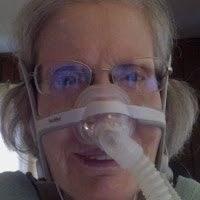
Diane Coleman
I have an advanced neuromuscular condition and must use breathing support with a mask 18 hours a day. As a severely disabled person who depends on life-sustaining treatment, I would be able to qualify for assisted suicide at any time where it is legal.

If I became despondent, for example if I lost my husband or my job, and decided that I wanted to die, I would not be treated the same as a nondisabled, healthy person who despaired over divorce or job loss.

If anyone doubted that someone like me would qualify for assisted suicide in a state like Oregon, those doubts were laid to rest in December 2017 when an Oregon Public Health Department official clarified in writing:

"Patients suffering from any disease (not just those that typically qualify one for the DWDA [Death With Dignity Act]) may not be able to afford some treatments or medication, and may choose not to pursue some treatments or take some medication for personal reasons. . . . If the patient does not receive treatment or medication (for whatever reason) and is left with a terminal illness, then s/he would qualify for the DWDA."
In the decade leading up to the passage of Oregon's assisted suicide referendum in 1997, proponents often revealed their view that people with disabilities should be eligible. Two thirds of "Dr. Death" Jack Kevorkian's body count were people with non-terminal conditions like multiple sclerosis.

The Hemlock Society contributed to his legal defense fund.

When the Hemlock Society morphed into "Compassion and Choices," the messaging shifted, partly in an effort to exclude disability rights organizations from the public debate. Assisted suicide is only for people expected to die within six months, they said. The person must self-administer the lethal drugs, so no one else could kill them, they said.

Any reasonably trained lawyer should be able to see the absence of meaningful patient protections in assisted suicide bills. It took a decade to pass the Washington State statute that came next.

All along, disability groups have pointed out the inherent discrimination and empty pretense of safeguards in these bills. Why does everyone else get suicide prevention, while old, ill and disabled people get suicide assistance? How could a doctor who's known a person for an average of 13 weeks know if they are being pressured to ask for assisted suicide?

Reported reasons for requesting assisted suicide pertain to disability, chronic or acquired due to illness.

Three of these reasons (feeling a loss of autonomy, loss of dignity, feelings of being a burden) could be addressed by consumer-directed in-home care services. However no disclosure or provision of such services is required. Basically, the law operates as though the reasons don't matter, and nothing need be done to address them.

People who need home care shouldn't be treated as disposable.

Assisted suicide proponents are fond of saying that many people don't go through with it, but the lethal drugs give them peace of mind. What if some of the many who change their mind have family members who are not happy about it?

If the only other person present at the end is a greedy heir or tired caregiver, there are no safeguards to determine whether they self-administered the lethal drug or were cajoled, tricked or forced.

Although these and other obvious weaknesses persist in New Jersey's assisted suicide bill (AB1504), the New Jersey Law Journal not only endorses it, but openly advocates expanding it to include active euthanasia and eligibility for people who are not expected to die in six months. No more incremental strategy, no need to hide the broader agenda.

Throughout last summer, people in wheelchairs with the group ADAPT were dragged out of Congressional hearings and arrested, leading successful efforts to save healthcare for millions of Americans. This same group asserts that "Assisted suicide is not about relieving the suffering of the dying: it is an expression of the most toxic and deadly form of ableism."

We urge New Jersey lawmakers to reject ableism, to look behind the public relations images of assisted suicide and consider the dangers to the many elders, ill and disabled people who are not safe from mistake, coercion and abuse.

Diane Coleman is the president and CEO of Not Dead Yet, a national disability rights group which she founded in 1996 to give voice to disability rights opposition to legalization of assisted suicide and euthanasia.

Tuesday, October 23, 2018

Doctor who planned to die by assisted suicide is happy to be alive.

Alex Schadenberg
Executive Director - Euthanasia Prevention Coalition

Dr Randy Hilliard
The Detroit Free Press published an article by Meira Gebel about a new treatment for stomach cancer and how one man, a doctor, had planned to travel to Switzerland to die by assisted suicide, before receiving this new treatment.

Randy Hilliard, who was a professor of psychiatry at Michigan State University, was diagnosed with stage 4 stomach cancer. He became obsessive with suicide and planned his death by assisted suicide in Switzerland and his funeral. Hilliard stated:

“My immediate reaction was, 'I'm dead,' which of course shows you know why accessing your own medical records may not be the best idea," 
It was one rather pathetic way of asserting some control over my life. Cancer was going to kill me, and I did not intend to die yet." 
Hilliard abandoned the idea of assisted suicide and then agreed to the treatment. Gebel reported:
Back in 2010, the drug had just recently been approved for stomach cancer patients and promised a slightly longer life expectancy — 11 to 13 months longer. It was a long shot: Only 20 percent of cancer patients have the HER-2 protein surrounding the cancer cell targeted by the drug.

Hillard’s metastatic tumors had that specific protein. And eight years later, it still puzzles him … well, the statistics do. Stomach cancer at his stage has an 18-percent survival rate, and, not to mention, is one of the most uncommon cancers in America.

“I wake up every day shocked at how non-dead I am,”
Since 2010, Hilliard and his wife have traveled to South America, Dubai, Singapore and Sydney, he has become an outspoken patient advocate, a blogger at professional forums and a fundraiser for cancer research.

Assisted suicide ends life when a person is at their lowest point. 


How many people like Hilliard were denied the opportunity of a new life because they died by assisted suicide?