Monday, December 17, 2012

Rasouli case: A strange case to prove a point.

Matt Gurney published a thought provoking article in the National Post, today,  entitled: Hassan Rasouli: A strange case to prove a point with. 

The Rasouli case is particularly concerning since the "doctors" in the case continue to seek to have his ventilator withdrawn without the consent of the family even though Mr. Rasouli has recovered from his original diagnosis. I have republished the article by Matt Gurney below my article.


Rasouli Family
The Rasouli case began in late 2010, when the "doctors" at Sunnybrook Hospital in Toronto told the Rasouli family that they would be withdrawing the ventilator from Hassan Rasouli, who was dependent on the ventilator, with or without the consent of the Rasouli family.

In response to the threat to withdraw the ventilator, the Rasouli family asked the court for an injunction to prevent the ventilator from being withdrawn.

Justice Himel heard the case and decided that the Rasouli family did not need an injunction because the "doctors" are required to obtain consent before withdrawing life-sustaining treatment. Himel decided that if the doctors wanted to withdraw the ventilator without the consent of the family that they would need to bring the case before Ontario's Consent and Capacity Board.

Link to my article concerning the decision by Justice Himel.

The "doctors" appealed the Himel decision to the Ontario Court of Appeal rather than bring the case to the Consent and Capacity Board. 

The Euthanasia Prevention Coalition (EPC) intervened in the Rasouli case at the Ontario Court of Appeal. Link to my article that was written the day after the Ontario Court of Appeal hearing.


Last year the Supreme Court of Canada decided to hear the Rasouli case, even though three Justices on the Ontario Court of Appeal unanimously decided that doctors must obtain consent before withdrawing life-sustaining treatment.

The Supreme Court decided to hear the Rasouli case even though new evidence proves that Hassan Rasouli, the 60 year-old retired engineer who obtained a significant brain impairment from a post-surgery infection in October 2010, is not in a Persistent Vegetative State, a condition that the doctors at Sunnybrook hospital had based their case upon.


The Rasouli case will determine whether or not doctors have the right withdraw life-sustaining treatment that the doctor considers futile, without the consent of the family or the patient. Based on the definition of medical treatment this decision is not limited to ventilator cases. The Supreme Court decision will extend to issues related to hydration and nutrition and other life-sustaining treatments.

The Supreme Court will likely define what constitutes medical futility. 


The Ontario Court of Appeal unanimously decided that medical treatment that is physiologically futile can be withdrawn from a patient without consent. Therefore, if a doctor is providing medical treatment that is of no benefit to the patient then it can be withdrawn without consent. The Ontario Court of Appeal decision also found that Hassan Rasouli is benefiting from the ventilator. The ventilator is not futile because it is enabling Mr. Rasouli to breath, which is what the ventilator is designed to do. Therefore the ventilator, in this case, is not futile.

The problem with the concept of futility is that the doctors seem to have defined Mr. Rasouli as futile, therefore no level of treatment is considered to be of benefit to him.

Some media reports have suggested that if the Supreme Court of Canada decides that doctors must obtain consent before withdrawing life-sustaining treatment that there will be a large number of expensive cases in an already cash-strapped medical system. The fact is that the Consent to Treatment Act in Ontario has existed for more than 15 years and in that time very few disputes between patients (family or substitute decision maker) and physicians were not resolved. The current system in Ontario is working reasonably well.


The Rasouli case is important.

If doctors are given the unilateral right to withdraw life-sustaining treatment without the consent of the family or the patient, then doctors will become the sole decision makers of what is considered to be an acceptable quality of life. Doctors should not have the right to determine who lives and who dies based on personal and subjective beliefs related to the quality of life of another person?

Issues of equality are at stake. 


If doctor are given the unilateral right to withdraw life-sustaining treatment without the consent of the family or the patient, then doctors will gain the right to impose their religious or cultural perspectives upon their patients.

Doctors often make a wrong diagnosis. Decisions to withdraw life-sustaining treatment will be imposed on a family, like the Rasouli family, when the diagnosis was originally wrong. You can't bring a loved one back and in the case of Hassan Rasouli, he is not in a PVS state and he continues to improve.

The Supreme Court of Canada should maintain the unanimous decision of the Ontario Court of Appeal, that was balanced and clearly protected the lives of people who are dependent on life-sustaining treatment while recognizing the that doctors can unilaterally withdraw physiologically futile treatment.


Matt Gurney, National Post, December 17, 2012
Matt Gurney
In the aftermath of a devastating illness or injury that leaves a citizen with little chance of recovery, who decides what happens next? The Supreme Court of Canada will soon rule on this difficult question.
Specifically, they will decide the case of Hassan Rasouli, a 60-year-old Toronto man who requires life support to live. Rasouli has been this condition since 2010. After an operation at a Toronto hospital, Rasouli developed an infection that severely damaged his brain. Doctors determined that the damage was irreversible and recommended terminating life support. Rasouli’s family, however, refused to consent, both on religious grounds and in hopes that their husband and father might recover.
This became a legal matter when the doctors declared that they had the legal authority to withdraw life support. The family fought that in court. The Lower Courts have been split on the issue and the Supreme Court will have the final say. (edit: The lower courts were not split on the issue. Justice Himel and the Ontario Court of Appeal had unanimously decided that consent is required before life-sustaining treatment can be withdrawn).
But there is an additional wrinkle here.
When the court battles started, Rasouli had been diagnosed as being in a persistent vegetative state. While the precise definition of that term varies by jurisdiction, it effectively means two things: The patient has noconscious awareness and will not recover. This is not the same thing as brain death, wherein the brain is literally dead, even if the body can be sustained mechanically (usually to permit organ harvesting for donation). It is also not the same thing as a coma, in which a patient is not only unaware, but is unconscious. Patients in a persistent vegetative state can be awake — eyes open and moving about. But there’s no consciousness there. It is the ultimate embodiment of that crude old saying — the lights may be on, but nobody’s home.
Given all the above, whatever the Supreme Court may eventually rule on the legalities of the matter, the doctors seem to have a pretty good argument that there’s nothing to be served by keeping Rasouli on life support.
Except for just one thing: Rasouli isn’t in a persistent vegetative state.
After a year in hospital, Rasouli’s condition was upgraded to a minimally conscious state. It isn’t much of an upgrade — patients in minimally conscious states still face extremely long odds of making anything like a full recovery. And minimally conscious states can be minimal indeed. Rasouli has been carefully tested, and determined to be toward the lower end of consciousness that would even quality for a diagnosis of minimal.
But while the difference between persistent vegetative and minimally conscious states may be small, it’s still enormously significant. Before, doctors were saying that Rasouli had effectively zero chance of any kind of recovery. They were about as certain as anyone can be certain about anything as complex as the human brain.
Now? They’re still recommending that Rasouli be removed from his ventilator, without which he cannot survive — the damage to his brain has destroyed his ability to breathe on his own. But they also acknowledge that Rasouli is not in a persistent vegetative state. It’s unknown whether that reflects an improvement in Rasouli’s condition, or evidence that doctors misdiagnosed him originally. But either way, the family is entirely right to point out that all those who said Rasouli would not get better were wrong. Rasouli may be minimally conscious, but he is conscious. Someone’s home.
There is indeed value there, and the court must carefully consider the issue. Our healthcare system cannot afford to sustain all those patients whose time has come (and passed) but whose families are having a tough time letting go. But families, or those patients whose previously expressed desires can be conveyed through an intermediary, also have some stake in this. It’s as tough an issue as can be imagined.
But it’s also one that has to be uncomfortable for the doctors, and not just because of the complexity of the case. Doctors are asking the courts to agree that their medical judgment is sufficient grounds upon which to withdraw life support in a case where their initial diagnosis is already known to have been wrong.
The court hasn’t been asked to rule on the issue of medical competency or why Rasouli’s diagnosis was changed. But for the broader public, it’s hard to ignore the implications of his improved (if still tragic) condition. We all like to think those administering our medical care know what they’re doing. It would shake the faith Canadians have in their medical system if doctors see their powers over end-of-life care expanded in a case they’ve already gotten wrong once.
National Post
Mgurney@nationalpost.com

The Signs and Symptoms that a person is considering suicide.

By Alex Schadenberg
Executive Director - Euthanasia Prevention Coalition

I just received the email update from Your Life Counts a Canadian Charity that works to prevent suicide through education, intervention and listening to people in crisis. I have always been impressed with the fact that Your Life Counts focuses on individual people and families. They work with people in need.

Rory Butler
Your Life Counts is led by its founder, Rory Butler. Butler is a suicide survivor who has made it his life's work to stop Canada's silent epidemic.

The following article was featured in the recent Your Life Counts email update. It is the Signs and Symptoms that a person is considering suicide. When you know the signs and symptoms of suicide, you can better identify a potential risk or you can identify when intervention or support is required. Your Life Counts Facebook page.

  • Often contemplation of suicide is a result of someone being overwhelmed by a variety of life circumstances. If you know what to look for there are generally signs and symptoms pointing to the fact an individual is contemplating suicide. What are the signs and symptoms? And how should we react once we spot the signs or symptoms in our loved ones or ourselves?
Symptoms that an individual is contemplating suicide often coincide with those of depression. Symptoms often vary and depressive symptoms are treatable. Usually the onset of symptoms is gradual and therefore can go unnoticed. Even the person himself or herself may assume that he or she is just transitioning into a “normal stage of life” where relationships and experiences are no long as interesting or exciting as they once were. This is not true.

Depression and thoughts of suicide can be brought on by a variety of causes, including setbacks or disappointments in life, loss, divorce or breakup, financial stress, medical illness, family history and genetics, trauma and stress (ranging from being unemployed to getting married), pessimism, low self-esteem, physical conditions, medical conditions, etc. Any one of these causes or a combination of several can contribute to depression because they bring on physical weakness and stress.


Depression or thoughts of suicide can affect anybody. The encouraging news is that depression is very treatable and thoughts of suicide can be turned into thoughts of hope. To find out your diagnosis and potential treatment options, speak with your health care provider immediately.


There is help and hope available. Many people living with depression or thoughts of suicide try to harm themselves because they believe that they’re “stuck this way forever.” This isn’t true. Situations and circumstances can change. Things will get better. Taking the first step by deciding to seek treatment and support will make a big difference.


SIGNS TO LOOK FOR:

What are the warning signs?


Saving the life of someone from suicide depends on our ability to recognize those people who are in distress and may be at risk. The American Association of Suicidology developed a simple tool that is available for everyone to use to remember the warning signs of suicide. This tool is called “IS PATH WARM” and outlines the key points to remember.


I  – Ideation (suicidal thoughts)

S – Substance Abuse
P – Purposelessness
A – Anxiety
T – Trapped
H – Hopelessness/Helplessness
W – Withdrawal
A – Anger
R – Recklessness
M – Mood changes

Other signs and behaviours to be aware of and that might suggest someone being at risk of suicide include – but are not limited to:

  • Direct and indirect verbal expressions: “I don’t want to live anymore”, “there is nothing to live for anymore”, “people will be better off without me”
  • Dramatic changes in mood
  • Loss of interest in previously enjoyed activities
  • Agitation
  • Increase in drug and alcohol use
  • Risk taking behavior
  • Agressive, impulsive and/or violent acts
  • Expressions of hopelessness and purposelessness
  • Lack of self care or outright neglect of self
  • Sleeping too much or too little
  • Feeling tired most of the time
  • Gaining or losing a significant amount of weight
  • Changes in eating and sleeping pattern
  • Withdrawal from family, friends, and interests
  • Giving away prize possessions and/or making a will; tidying up personal affairs; writing notes; making notes on belongings
  • Reconnecting with old friends and extended family as if to say goodbye
  • Previous unresolved or recent suicide attempt(s)
  • Unusual happiness and peace after an intense period of turmoil and displaying the above characteristics.
WHAT TO DO – SUICIDE FIRST AID

The following guidelines are based on the expert opinions of a panel of mental health consumers, carers and clinicians from Australia, New Zealand, the UK, the USA and Canada about how to help someone who may be at risk of suicide.

How to use these Guidelines

These guidelines are a general set of recommendations about how you can help someone who may be at risk of suicide. Each individual is unique and it is important to tailor your support to that person’s needs. These recommendations therefore may not be appropriate for every person who may be at risk of suicide. Also, the guidelines are designed to be suitable for providing first aid in developed English-speaking countries. They may not be suitable for other cultural groups or for countries with different health systems.

An important note:

Self-injury can indicate a number of different things. Someone who is hurting themselves may be at risk of suicide. Others engage in a pattern of self-injury over weeks, months or years and are not necessarily suicidal. These guidelines can assist you only if the person you are helping is suicidal. If the person you are assisting is injuring themselves, but is not suicidal, please refer to an excellent web resource hosted jointly by the University of Guelph and McGill University at www.sioutreach.org

How can I tell if someone is feeling suicidal?

It is important that you know the warning signs of suicide.

People may show one or many of these signs, and some may show signs not on this list.

If you suspect someone may be at risk of suicide, it is important to ask them directly about suicidal thoughts. Do not avoid using the word ‘suicide’. It is important to ask the question without dread, and without expressing a negative judgment. The question must be direct and to the point. For example, you could ask: 
  • “Are you having thoughts of suicide?” or
  • “Are you thinking about killing yourself?” 
If you appear confident in the face of the suicide crisis, this can be reassuring for the suicidal person.

Although some people think that talking about suicide can put the idea in the person’s mind, this is not true. Another myth is that someone who talks about suicide isn’t really serious. Remember that talking about suicide may be a way for the person to indicate just how badly they are feeling. 

How should I talk with someone who is suicidal? 

It is important to: 
  • Tell the suicidal person that you care and that you want to help them.
  • Express empathy for the person and what they are going through.
  • Clearly state that thoughts of suicide are often associated with a treatable mental disorder, as this may instill a sense of hope for the person.
  • Tell the person that thoughts of suicide are common and do not have to be acted on. 
Suicidal thoughts are often a plea for help and a desperate attempt to escape from problems and distressing feelings. You should encourage the suicidal person to do most of the talking, if they are able to. They need the opportunity to talk about their feelings and their reasons for wanting to die and may feel great relief at being able to do this. It may be helpful to talk about some of the specific problems the

person is experiencing. Discuss ways to deal with problems which seem impossible to cope with, but do not attempt to ‘solve’ the problems yourself. 

How can I tell if the situation is serious? 

First, you need to determine whether the person has definite intentions to take their life, or whether they have been having more vague suicidal thoughts such as ‘what’s the point of going on?’. To do this, you need to ask the person if they have a plan for suicide. The three questions you need to ask are:

1. Have you decided how you would kill yourself?

2. Have you decided when you would do it?

3. Have you taken any steps to secure the things you would need to carry out your plan?

A higher level of planning indicates a more serious risk. However, you must remember that the absence of a plan is not enough to ensure the person’s safety. All thoughts of suicide must be taken seriously.

Next, you need to know about the following extra risk factors:
  • Has the person been using alcohol or other drugs? The use of alcohol and other drugs can make a person more susceptible to acting on impulse.
  • Has the person made a suicide attempt in the past? A previous suicide attempt makes a person more likely to make a future suicide attempt or to kill themselves.

From the Article “Suicidal Thoughts & Behaviours, First Aid Guidelines:” The Department of Psychiatry The University of Melbourne AUSTRALIA


Once you have established that the risk of suicide is present, you need to take action to keep the person safe. 

How can I keep the person safe?


A person who is actively suicidal should not be left on their own. If you can’t stay with them, you need to arrange for someone else to do so. In addition give the person a safety contact which is available at all times (such as a telephone help line, a friend or family member who has agreed to help, or a professional help giver).

It is important to help the suicidal person to think about people or things that have supported them in the past and find out if these supports are still available. These might include a doctor, psychologist or other mental health worker, family member or friend, or a community group such as a club or church.

Do not use guilt and threats to prevent suicide. For example, do not tell the person they will go to hell if they die by suicide, or that they will ruin people’s lives by killing themselves. 

What about professional help?

During the crisis

Mental health professionals advocate always asking for professional help, especially if the person is psychotic. If the suicidal person has a weapon or is behaving aggressively towards you, you must seek assistance from the police in order to protect yourself.

However, the person you are helping may be very reluctant to involve a professional and, if the person is close to you, you may be concerned about alienating them. In fact, some people who have experienced suicidal thoughts or who have made plans for suicide feel that professional help is not always necessary.

After the crisis has passed

After the suicide crisis has passed, ensure the person gets whatever psychological and medical help they need. Other guides in this series may be useful for you in achieving this. 

What if the person makes me promise not to tell anyone else?

You should never agree to keep a plan for suicide a secret. However, you should respect the person’s right to privacy see. There are guidelines in this series entitled First aid guidelines for deliberate self-injury which can help you to understand and assist if this is occurring. 

Do your best. 

Do your best for the person you are trying to help. Remember, though, that despite our best efforts, some people will still die by suicide.

Friday, December 14, 2012

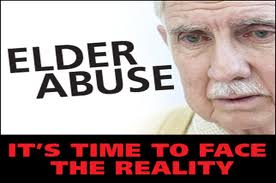
Elder abuse is rampant; assisted suicide makes it easier to cover up murder


The following letter to the editor was written by Theresa Schrempp, a lawyer from Seattle Washington, and published in the Revalli Republic online edition today under the title: Elder abuse is rampant, assisted suicide makes it easier to cover-up murder. 
I am a probate attorney in Washington State. Alex Schadenberg is right that Washington’s assisted suicide law makes it easier to cover up elder abuse, and sadly, even murder (letter, Nov. 29). 
Alex Schadenberg
In Washington state, our assisted-suicide law was enacted by a ballot measure in which the other side spent millions of dollars promoting the law with false promises of “choice” and “autonomy.” Our law, in fact, invites coercion of “eligible” patients, often the elderly. 
A point not mentioned by Schadenberg involves the lethal dose request process. Our assisted suicide law specifies that an interested person (someone who will benefit from the patient’s death) is allowed to be a witness on the suicide request form. In the context of signing a will, this same conduct of acting as a witness would create a presumption of “duress, menace, fraud, or undue influence.” 
Elder abuse is rampant and often perpetrated by those closest to the victim. Victims are frequently unwilling to complain about the abuse out of embarrassment or fear. Legalized assisted suicide invites the ultimate elder abuse. How’s that for “choice” and “autonomy?“ 
Theresa Schrempp,Seattle, Washington

Euthanasia is out of control in Belgium – recent ten year review

The following blog article was written by Dr. Peter Saunders, the campaign director for the Care NOT Killing Alliance. The blog article was published on his blog on Dec 13, 2012 under the title: Euthanasia is out of control in Belgium - new ten year review.

To learn more about the current practise and abuses of the Belgian and Netherlands euthanasia laws order the book, by Alex Schadenberg ($20 includes shipping): Exposing Vulnerable People to Euthanasia and Assisted Suicide. 

Order Exposing Vulnerable People here.


Euthanasia is out of control in Belgium - new ten year review


Peter Saunders
By Dr. Peter Saunders - December 13, 2012.

Belgium has already often been in the news over euthanasia. 

I have previously drawn attention on this blog to the fact that using organs from euthanasia victims for transplant is now an established procedure there.

In a previous post, 'Twenty things Terry Pratchett did not tell us about euthanasia in Europe', I also drew attention (with links) to the following facts: 

1. Almost half of Belgium’s euthanasia nurses have admitted to killing without consent, despite the fact that involuntary euthanasia is illegal in Belgium and that nurses are not allowed to perform even voluntary euthanasia. 
2. In Belgium, nearly half of all cases of euthanasia are not reported to the Federal Control and Evaluation Committee. Legal requirements were more frequently not met in unreported cases than in reported cases and a written request for euthanasia was absent in 88%.
3. A recent study found that in the Flemish part of Belgium, 66 of 208 cases of ‘euthanasia’ (32%) occurred in the absence of request or a request.
But to build on all this Bioedge ran a story last week about a recent report into the first ten years of legalised euthanasia in Belgium. 

Belgium legalised euthanasia in 2002, with a law containing strict controls to protect the vulnerable. (Here is a review of events and the text of the law in English ) 

The Belgium-based European Institute of Bioethics has just released a study (link to English and Dutch translations) of the experience of ten years of euthanasia. It claims that the results are far from encouraging.

Michael Cook at Bioedge gives his assessment as follows: 

‘The central theme of the reportis the ineffectiveness and bias of the body established by the legislation to allay the misgivings of the public by monitoring and controlling euthanasia. After 10 years and about 5,500 cases, not one case has ever been referred to the police. It is illusory, says the IEB, to expect doctors to denounce their own failings.
Furthermore, nearly half of the statutory 16-member Commission for Control and Assessment are members or associates of the leading Belgian right-to-die society. This is sufficient to explain, according to the IEB, ‘the absence of any effective control and the ever‐widening interpretation which the Commission intends to give the law’. 
A law which permits euthanasia is bad enough, the IEB suggests, but the government is not even enforcing its application.

‘As is the case in all penal laws, this law has to be strictly interpreted lest it be of seeing it stripped of any substance. It is not for the Commission, appointed to control and assess the law, to provide an ever‐widening interpretation of its terms, with this going so far as to negate the initial spirit of the text and of doing away with the control of decisive legal criteria.’
As a result, there are on-going abuses in several areas. Here are a few of those which the EIB singles out for criticism:

• A written declaration of a desire for euthanasia is required, either by the patient or a surrogate. However, the Commission often waives this obligation. 
• Initially patients had to have a life‐threatening and incurable illness. Nowadays, the illness need only be serious and debilitating. 
• The pain is supposed to be unbearable, unremitting and unrelievable. However, a patient can refuse medication to relieve the pain. The Commission, says the IEB, has ‘decided not to carry out its mission ‐ so central to the law ‐ of verifying the unbearable and unrelievable nature of the suffering’. 
• The ambit of ‘psychological suffering’ is ever-expanding. 
• Doctor-assisted suicide is not authorised by 2002 legislation. However, the Commission has ignored this and regularly signs off on such cases. 
• If a patient is to be euthanised at home, the doctor himself is supposed to fetch the lethal medications at a pharmacy from a registered pharmacist and to return left-over drugs. In practice, family members often get the drugs; unqualified personnel hand them over; and no checks have ever been made about surplus drugs.’ 
Wesley Smith makes the point on his blog that once doctor-administered death is legal, any assurances about so-called ‘safeguards’ become inoperative. Instead the categories of the killable continually expand. He quotes from the report as follows:

Wesley Smith
'Initially legalized under very strict conditions, euthanasia has gradually become a very normal and even ordinary act to which patients are deemed ‘to have a right’. In the face of certain high profile cases, the evident relaxation of the very strict conditions has caused many reactions but also a total absence of any sanctions on the part of the Commission and a very conciliatory silence from the political establishment has given rise to a feeling of impunity on the part of some concerned medical practitioners, and to a feeling of powerlessness in those worried about where things are leading.'
He then argues that things are looking to get worse, with Belgium poised to follow the Netherlands into infanticide and quotes a further chilling section of the report:

'Several neonatologists have drawn up a procedure which enables euthanasia of premature newborn infants or those presenting a handicap in one of the three following instances: either the infant has no chance of survival, or it is deemed to only have a very mediocre quality of life, or the outlook is poor and it is felt that the infant will suffer unbearable pain.  
The Groningen Protocol [Dutch infanticide protocol] caused quite a stir in Belgium and a great many medical practitioners are of the opinion that since a ‘therapeutic’ abortion is possible right up to the day before birth in the event of the child being handicapped, euthanasia of newborns ought also to be allowed under the same conditions.'
I have never been convinced by the term ‘slippery slope’ which implies passive change over time. What we are seeing in Belgium is more accurately termed 'incremental extension', the steady intentional escalation of numbers with a gradual widening of the categories of patients to be included. 

Documented cases of euthanasia in Belgium have increased 500% since 2003. since I recently described the similar steep increase of cases of assisted suicide in Oregon (450% since 1998) and Switzerland (700% over the same period). In the Netherlands since 2006 the number of official cases of (lethal injection) euthanasia has doubled since 2006, although many other people (possibly up to 12.3% of all deaths) are having their lives actively ended through the process of ‘continuous deep sedation’ whereby doctors deeply sedate patients and then withhold fluids with the explicit intention that they will die.


The lessons are clear. Once you relax the law on euthanasia or assisted suicide steady extension will follow as night follows day.


I do not publish comments left Anonymously


In the past few weeks I have received many comments from readers and followers of this blog who written comments listed as Anonymous.

A few years ago, I decided that I would not publish comments from people who would not attach their names to the comment. 

I have received comments from people that attacked others, or attacked me, without the person being willing to put their name to their comment.

I also receive many good and instructive comments from people who are also remaining Anonymous.

Whether the comment is instructive or attacking, I simply will not publish an Anonymous comment.

Therefore if you want your comment published on this blog, then post your name with the comment.


Alex Schadenberg

Tuesday, December 11, 2012

Council of Canadians with Disabilities: Help To Live Not Die

CACL
CCD
The Council of Canadians with Disabilities (CCD) and the Canadian Association for Community Living (CACL) were granted joint intervenor standing by the BC Court of Appeal, yesterday, in the Carter case. 

The Euthanasia Prevention Coalition (EPC) and EPC-BC were also granted intervenor standing, by the BC Court of Appeal in the Carter case, that will be heard by the BC Court of Appeal from March 4 - 8, 2013. 

On June 15, 2012, Justice Lynn Smith decided, in the Carter case, that the law protecting Canadians from assisted suicide was unconstitutional because it deprived some people with disabilities equal access to suicide. Justice Smith also ordered parliament to legalize a limited form of euthanasia and she gave Gloria Taylor, one of the plaintiffs, a constitutional exemption to die by euthanasia or assisted suicide. 

Gloria Taylor died from natural causes on October 5, 2012.

On July 13, 2012, the Hon Rob Nicholson, Attorney General of Canada, appealed the decision by Justice Smith, in the Carter case, to the BC Court of Appeal. It is expected that the Carter case will ultimately be decided by the Supreme Court of Canada.

To raise money for the legal costs to intervene at the BC Court of Appeal, CCD has established a website entitled: Help To Live Not Die. The Help To Live Not Die website explains the position of CCD on assisted suicide and encourages people to donate money for the legal costs for their intervention at the BC Court of Appeal in the Carter Case.

CCD is a national human rights organization of people with disabilities working for an inclusive and accessible Canada. CCD is the leading national organization of people with disabilities in Canada.

CCD/CACL oppose assisted suicide and have been granted the right to make the following arguments before the BC Court of Appeal in the Carter case:
1. they will provide insight into the interpretation of "death with dignity" in the disabled community;2. the impugned provisions are consistent with discouraging people from choosing death over life, while the trial judgement makes death more palatable for people with disabilities, a result incompatible with the values underlying (s. 7) and (s. 15);3. decisions allowing physician-assisted suicide of persons with disabilities is based on and fosters stereotypical thinking that is inherently discriminatory, and deepens the disadvantages and inequalities suffered by people with disabilities;4. financial and social conditions place increased stress on those who provide support to the disabled, creating greater potential for abuse. The autonomy of vulnerable people cannot be separated from the perilous and dependent circumstances in which they live, and the choices that flow from this;5. No reliable half-way measure exists for achieving the purposes of the impugned provisions. The trial judge erred in failing to properly consider and balance competing interests in her (s. 7) and (s. 1) analysis; and6. the Charter value of life underlies the impugned provisions and the exemption for the disabled created by the trial judgment cannot be justified.
In granting intervenor standing to CCD/CACL Madam Justice Neilson recognized that some of the arguments are already being made by the Attorney General of Canada, but she stated:
"I am persuaded an important distinction lies in the fact these applicants present these arguments from the point of view of the disabled community, a segment of society that will be profoundly affected by the outcome of the appeal and whose perspective should be before the court."
The Euthanasia Prevention Coalition (EPC) requires your financial support to enable us to intervene in the appeal of the Carter case. Donations to EPC can be made online here. 

We also encourage people to support the fundraising efforts of the Council of Canadians with Disabilities (CCD) that is presented on the Help To Live Not Die website. EPC is very pleased that the CCD/CACL were granted intervenor standing in the appeal of the decision by Justice Smith in the Carter case.

Monday, December 10, 2012

New Zealand petition opposes euthanasia and assisted suicide.

A group that has formed to protect New Zealand citizens from euthanasia and assisted suicide has begun a petition campaign to oppose a bill that has been presented in the New Zealand parliament.

The group - Euthanasia Debate NZ - has launched the petition campaign to encourage political leaders to oppose euthanasia and assisted suicide. Link.

The petition campaign is designed to inform New Zealand citizens of the possible political debate concerning the legalization of euthanasia and assisted suicide. The petition states:

"The Bill you have before you in New Zealand is the most radical and extreme of any piece of legislation anywhere in the world because basically it is euthanasia on demand." Baroness Ilora Finlay.
I am deeply concerned by attempts to legalise assisted suicide and euthanasia and wish to express my strong opposition to it. 
Euthanasia and Assisted Suicide present great risks to the safety of New Zealand's most vulnerable people who already feel that they are a burden to their families and society. 
No such legislation, no matter how it is drafted, can ever adequately protect every New Zealander from the risk of abuse. 
Euthanasia and assisted suicide legislation would create opportunities for the ultimate in Elder Abuse. 
I ask you to oppose the legalisation of assisted suicide and euthanasia under all circumstances. 
Sign Now

The Euthanasia Prevention Coalition supports the work of Euthanasia Debate NZ. EPC agrees that the proposed legislation in New Zealand is one of the most extreme piece of legislation anywhere. 

Earlier this year, the New Zealand Medical Association clearly stated its opposition to euthanasia and assisted suicide. 

EPC granted intervenor standing at the BC Court of Appeal in the Carter case.


The Euthanasia Prevention Coalition (EPC) and EPC-BC, were granted intervenor standing today in the appeal of the decision by Justice Smith in the Carter case at the BC Court of appeal. 

The Honourable Madam Justice Neilson granted EPC and EPC-BC intervener standing based on our legal experience and based on the fact that EPC represents a broad cross-section of the Canadian population.

EPC also intervened in Carter before Justice Lynn Smith at the lower court. EPC has been granted intervener standing in the Leblanc case in Quebec, EPC intervened in the Rasouli case at the Ontario Court of Appeal and EPC also intervened today at the Supreme Court of Canada in the Rasouli case.

It was argued by the respondents that EPC should not be given standing in the appeal of Carter based on the fact that parts of the EPC submission are similar to the Government of Canada submission while other parts of the submission were similar to that of the Council of Canadians with Disabilities/Canadian Association for Community Living submission. 

EPC argued that while we share some of the same concerns as other intervenors, that we also offered a unique perspective.

Madame Justice Neilson decided that the EPC submission will focus on the following points:
1) in other jurisdictions where assisted suicide or euthanasia have been legalized, the safeguards put in place are illusory and have resulted in significant abuse. They are value-laden as they differentiate between levels of disability, and do not protect those most vulnerable from abuse;
2) the lower court misapprehended and misapplied expert evidence relative to the efficacy of safeguards in permissive jurisdictions that have legalized assisted suicide;
3) the trial judge erred in her (s. 15) analysis by failing to consider the circumstances of vulnerable groups in jurisdictions with legalized assisted suicide or euthanasia, whose lives are marginalized and devalued by these practices;
4) the trial judge wrongly relied upon the "myth of autonomy" and inverted the notions of autonomy and choice in a manner that derogates from the equality, dignity and respect of vulnerable groups and devalues, stigmatizes and subjects members of these groups to prejudicial views. Her decision effectively creates a class of persons with disabilities for whom death is perceived as not only acceptable but desirable, and diminishes choice and autonomy for the most vulnerable members of society.
EPC welcomes the opportunity to submit legal arguments before the BC Court of Appeal with the goal of protecting vulnerable people from euthanasia and assisted suicide at the BC Court of Appeal during the hearing (March 4 - 8, 2013). EPC recognizes that this case will likely be decided by the Supreme Court of Canada. 

EPC also intervened today before the Supreme Court of Canada in the Rasouli case. We hope that the Supreme Court of Canada will make a balanced decision in a similar manner to the unanimous decision by the Ontario Court of Appeal.

The Euthanasia Prevention Coalition requires your financial support to enable us to intervene in the appeal of the Carter case. Donations to EPC can be made online here.

Belgium Euthanasia: Off the Moral Cliff


The following article was written by Wesley Smith and published yesterday on the National Review online under the title: Belgium Euthanasia: Off the Moral Cliff. 

To learn more about the current state of the Belgium Euthanasia Law order my recently published book: Exposing Vulnerable People to Euthanasia and Assisted Suicide. Order Exposing Vulnerable People here.


Wesley Smith, National Review Online - December 9, 2012

Wesley Smith
Euthanasia activists always promise that the killing will be strictly controlled. That’s the sales job. Once euthanasia/assisted suicide become legal and/or culturally accepted, all bets are off. Accept the ideology that killing is an acceptable answer to human suffering and the guidelines cease to matter. Worse, very few continue to care.

A 10-year review of how the euthanasia law has fared in Belgium–which among other wrongs has seen the coupling of E with organ harvesting–shows the pattern I described unfolding before our very eyes. From a report by the European Institute of Bioethics, “Euthanasia in Belgium: Ten Years On:”
From the time of its initial report and subsequent reports, the Commission for Control and Assessment acknowledged its inability to act going on to say that it is not capable of assessing the proportion of declared cases of euthanasia compared with the number of real cases which have actually taken place” Yet, in 2002 the stated objective of bringing euthanasia out of the shadows was a major argument made by those in favour of its legalization.
Yes, well talk is cheap. Once doctor-administered death is legal, such assurances become inoperative. Indeed, as I have often reported here, the categories of the killable continually expand:
Initially legalized under very strict conditions, euthanasia has gradually become a very normal and even ordinary act to which patients are deemed “to have a right”. In the face of certain high profile cases, the evident relaxation of the very strict conditions has caused many reactions but also a total absence of any sanctions on the part of the Commission and a very conciliatory silence from the political establishment has given rise to a feeling of impunity on the part of some concerned medical practitioners, and to a feeling of powerlessness in those worried about where things are leading.
Both assertions are correct. As documented here, there has been at least one joint euthanasia of an elderly couple in Belgium, the Canadian Medical Association reported that nurses have been involved in killing patients, and many euthanasia killings are imposed without request or consent, etc. etc. And it doesn’t matter because the ideological premises and discriminatory quality of life view–the essence of euthanasia consciousness–prevail. Oh hum.
It looks to get worse, with Belgium poised to follow the Netherlands into infanticide:
Several neonatologists have drawn up a procedure which enables euthanasia of premature newborn infants or those presenting a handicap in one of the three following instances: either the infant has no chance of survival, or it is deemed to only have a very mediocre quality of life, or the outlook is poor and it is felt that the infant will suffer unbearable pain. 
The Groningen Protocol [Dutch infanticide protocol] caused quite a stir in Belgium and a great many medical practitioners are of the opinion that since a “therapeutic” abortion is possible right up to the day before birth in the event of the child being handicapped, euthanasia of newborns ought also to be allowed under the same conditions.
Well, studies show it is already happening. This would just institutionalize the human rights abuse. But again, once the underlying premises of euthanasia are accepted, what’s to stop it?

But Wesley, at least Oregon is working, right? Wrong!

To learn more about the current state of the Belgium Euthanasia Law order my recently published book: Exposing Vulnerable People to Euthanasia and Assisted Suicide. Order Exposing Vulnerable People here.