Showing posts with label Dr Leonie Herx. Show all posts

Monday, April 7, 2025

Canada euthanasia reports: Rushing to Death

Alex Schadenberg
Executive Director, Euthanasia Prevention Coalition

The Ontario Death Review Committee (MDRC) published two new reviews of Ontario MAiD (euthanasia) data between 2018 - 2023. The two MDRC reports focus on (Waivers of Final Consent), (Navigating Complex Issues Within Same Day and Next Day MAiD Provisions).

The first three MDRC reports (Report 3) (Report 2) (Report 1) were released in October 2024. I have included three articles about these reports.

  • Article 1: Some euthanasia deaths are driven by homelessness, fear and isolation (Link).
  • Article 2: Ontario Coroner's euthanasia report: Poor at risk of coercion (Link).
  • Article 3: Ontario: At least 428 non-compliant euthanasia deaths (Link).

Dr Ramona Coelho
Dr Ramona Coelho, who is a member of the MDRC Committee wrote an article concerning two reports that was published by the Macdonald-Laurier Institute on April 7, 2025. Coehlo writes:
Canada legalized Medical Assistance in Dying (MAiD) in 2016, encompassing both euthanasia and assisted suicide. Initially limited to those nearing their natural death, eligibility expanded in 2021 to individuals with physical disabilities, with eligibility for individuals with mental illness in 2027. Parliamentary recommendations include MAiD for children. A recent federal consultation explored extending MAiD to those who lack capacity via advance directives, an approach Quebec has already adopted, despite its criminal status under federal law.

Despite its compassionate framing, investigative journalists and government reports reveal troubling patterns where inadequate exploration of reversible suffering – such as lack of access to medical treatments, poverty, loneliness, and feelings of being a burden – have driven Canadians to choose death. As described by our former Disability Inclusion Minister, Canada’s system at times makes it easier to access MAiD than to receive basic care like a wheelchair. With over 60,000 MAiD cases by the end of 2023, the evidence raises grave concerns about Canada’s MAiD regime.

Coelho writes about the scope of the MDRC reports:

I am a member of Ontario’s MAiD Death Review Committee (MDRC). Last year, the Chief Coroner released MDRC reports, and a new set of reports has just been published. The first report released by the Office of the Chief Coroner, Waivers of Final Consent, examines how individuals in Track 1 (reasonably foreseeable natural death) can sign waivers to have their lives ended even if they lose the capacity to consent by the scheduled date of MAiD. The second, Navigating Complex Issues within Same Day and Next Day MAiD Provisions, includes cases where MAiD was provided on the same day or the day after it was requested. These reports raise questions about whether proper assessments, thorough exploration of suffering, and informed consent were consistently practised by MAiD clinicians. While MDRC members hold diverse views, here is my take.

Coelho discusses: Rushing to death, Ignoring Reversible Causes of Suffering:

In the same-day or next-day MAiD report, Mrs. B, in her 80s, after complications from surgery, opted for palliative care, leading to discharge home. She later requested a MAiD assessment, but her assessor noted she preferred palliative care based on personal and religious values. The next day, her spouse, struggling with caregiver burnout, took her to the emergency department, but she was discharged home. When a request for hospice palliative care was denied, her spouse contacted the provincial MAiD coordination service for an urgent assessment. A new assessor deemed her eligible for MAiD, despite concerns from the first practitioner, who questioned the new assessor on the urgency, the sudden shift in patient perspective, and the influence of caregiver burnout. The initial assessor requested an opportunity for re-evaluation, but this was denied, with the second assessor deeming it urgent. That evening, a third MAiD practitioner was brought in, and Mrs. B underwent MAiD that night.

The focus should have been on ensuring adequate palliative care and support for Mrs. B and her spouse. Hospice and palliative care teams should have been urgently re-engaged, given the severity of the situation. Additionally, the MAiD provider expedited the process despite the first assessor’s and Mrs. B’s concerns without fully considering the impact of her spouse’s burnout.

The lack of adequate palliative care and the pressure from the spouse led to Mrs B's euthanasia death. Even though the first assessor indicated that Mrs B wanted palliative care, which reflected her personal values, she not only died by euthanasia, but her death was expedited.

Coelho assesses other factors.

The report also has worrying trends suggesting that local medical cultures—rather than patient choice—could be influencing rushed MAiD. Geographic clustering, particularly in Western Ontario, where same-day and next-day MAiD deaths occur most frequently, raises concerns that some MAiD providers may be predisposed to rapidly approve patients for quick death rather than ensuring patients have access to adequate care or exploring if suffering is remediable. This highlights a worrying trend where the speed of the MAiD provision is prioritized over patient-centered care and ethical safeguards.

Coelho points out how same-day or next-day deaths are more prominent in Western Ontario, she also suggests that the speed of death is being prioritized over the care of the patient.

Coelho then examines the issue of consent. Euthanasia was sold to Canadians as being for: Competent adults who freely choose and consent to the act. The Waivers of Final Consent report creates concern as to whether people. 

Coehlo focuses on two stories to outline her concerns about MAiD without Free and Informed Choice

Consent has been central to Canadians’ acceptance of the legalization of euthanasia and assisted suicide. However, some cases in these reports point to concerns already raised by clinicians: the lack of thorough capacity assessments and concerns that individuals may not have freely chosen MAiD.

In the waiver of final consent report, Mr. B, a man with Alzheimer’s, had been approved for MAiD with such a waiver. However, by the scheduled provision date, his spouse reported increased confusion. Upon arrival, the MAiD provider noted that Mr. B no longer recognized them and so chose not to engage him in discussion at all. Without any verbal interaction to determine his current wishes or understanding, Mr. B’s life was ended.

In the same-day or next-day MAiD report, Mr. C, diagnosed with metastatic cancer, initially expressed interest in MAiD but then experienced cognitive decline and became delirious. He was sedated for pain management. Despite the treating team confirming that capacity was no longer present, a MAiD practitioner arrived and withheld sedation, attempting to rouse him. It was documented that the patient mouthed “yes” and nodded and blinked in response to questions. Based on this interaction, the MAiD provider deemed the patient to have capacity. The MAiD practitioner then facilitated a virtual second assessment, and MAiD was administered.

Coehlo outlines how these cases do not ensure free choice nor informed consent.

These individuals were not given genuine opportunities to confirm whether they wished to die. Instead, their past wishes or inquiries were prioritized, raising concerns about ensuring free and informed consent for MAiD.  As early as 2020, the Chief Coroner of Ontario identified cases where patients received MAiD without well-documented capacity assessments, even though their medical records suggested they lacked capacity. Further, when Dr. Leonie Herx, past president of the Canadian Society of Palliative Medicine, testified before Parliament about MAiD frequently occurring without capacity, an MP dismissed her, advising Parliament to be cautious about considering seriously evidence under parliamentary immunities that amounted to malpractice allegations, which should be handled by the appropriate regulatory bodies or police.  These dismissive comments stand in stark contrast with the gravity of assessing financial capacity, and yet the magnitude is greater when ending life. By way of comparison, for my father, an Ontario-approved capacity expert conducted a rigorous evaluation before declaring him incapable of managing his finances. This included a lengthy interview, collateral history, and review of financial documents—yet no such rigorous capacity assessment is mandated for MAiD.

Coehlo concludes her article by asking - What is Compassion?

While the federal government has finished its consultation on advance directives for MAiD, experts warn against overlooking the complexities of choosing death based on hypothetical suffering and no lived experience to inform those choices. A substitute decision-maker has to interpret prior wishes, leading to guesswork and ethical dilemmas. These cases highlight how vulnerable individuals, having lost the capacity to consent, may be coerced or unduly influenced to die—whether through financial abuse, caregiver burnout, or other pressures—reminding us that the stakes are high – life and death, no less.

The fundamental expectation of health care should be to rush to care for the patient, providing support through a system that embraces them—not rush them toward death without efforts to mitigate suffering or ensure free and informed consent. If we truly value dignity, we must invest in comprehensive care to prevent patients from being administered speedy death in their most vulnerable moment, turning their worst day into potentially their last.

Some previous articles by Dr Ramona Coehlo:
  • Canada Euthanasia – unmasking health care and social failures (Link)
  • Discrimination driven deaths (Link).
  • Heart-wrenching lessons from Canada's euthanasia regime (Link).
  • Canadians with Disabilities are Needlessly dying by euthanasia (Link).

Tuesday, October 15, 2024

Canadian cancer patient was "offered" euthanasia in the operating room.

Alex Schadenberg
Executive Director, Euthanasia Prevention Coalition

An article by Cameron Henderson that was published in The Telegraph on October 14 is an example of how aggressive the MAiD teams / euthanasia doctors and nurses are in Canada as they provide euthanasia but also promote it.

A 51-year-old Nova Scotia woman felt pressured to ask for euthanasia. Henderson reports:
Speaking anonymously, the 51-year-old cancer patient said of the moment she was offered death instead of surgery: “It floored me... [it was] the most vulnerable I’ve ever felt in my life”.

The patient, a married grandmother from Nova Scotia, explained she was set to undergo a mastectomy operation for breast cancer when a physician asked her if she knew about medical assistance in dying (MAID).
Henderson continues:
“I was sitting in two surgical gowns, one frontways and one backwards, with a cap on my hair and booties on my feet. I was shivering and in a hard plastic chair and all alone in a hallway,”

“The [doctor] sat down and went through all the scary things with me. Then he asked ‘Did you know about medical assistance in dying?’

“All I could say was, ‘I don’t want to talk about that’.

“I was scared and I was alone and I was cold and I didn’t know what was coming.

“Why was I being asked about assisted dying, when I was on my way into what I truly believe was life-saving surgery?”
The woman said that she was offered euthanasia again, nine months later, before undergoing a second mastectomy and then asked about MAiD a third time while in recovery from her second mastectomy.

The woman said that she felt - Better Off Dead - when she was asked multiple times. Henderson reported:
She said the repeat offers made her feel like a burden to doctors and that people in her position “were better off dead”.

“I felt like a problem that needed to be [gotten] rid of instead of a patient in need of treatment.

“I don’t want to be asked if I want to die,”
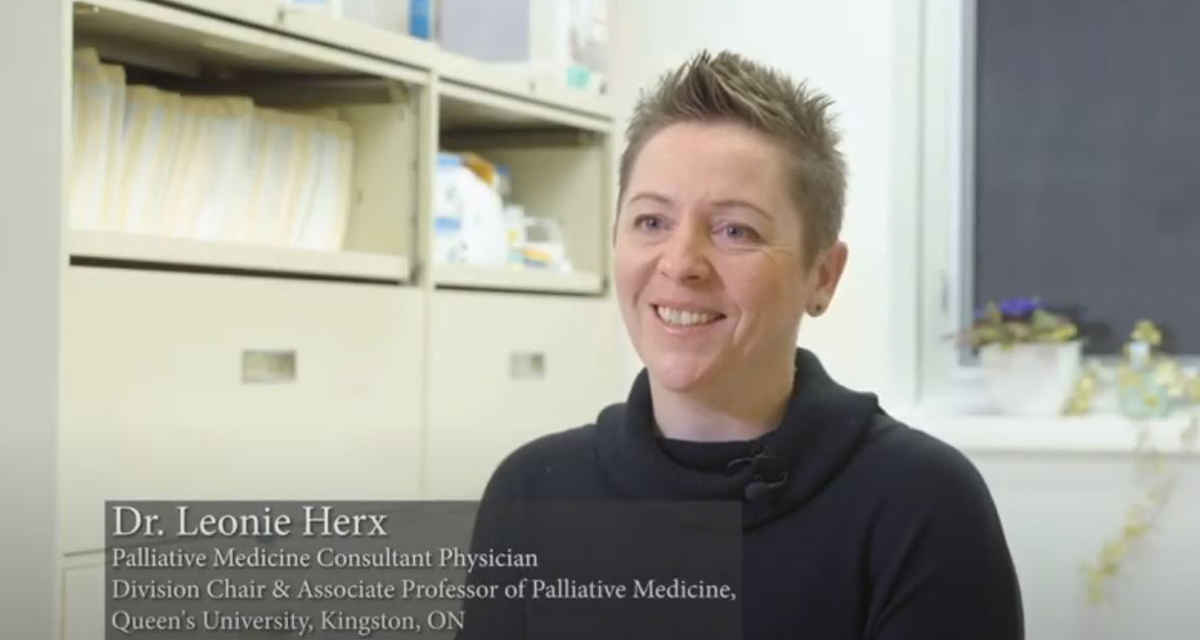
Dr Leonie Herx
Dr Leonie Herx, a palliative medicine consultant in Calgary, told Henderson that
staff-shortages are so bad in some Canadian hospitals that patients who are not at risk of imminent death are offered MAID before they’ve even had a chance to see a palliative care consultant.

In one instance, she claimed that one of her patients saw a MAID consultant first, and when she came back to check on him the next day, he had already been given an assisted death.

“In some cases, MAID has become the only therapy provided, which is completely horrific from a medical perspective,” Dr Herx said, in what will serve as a stark warning to the UK, where the NHS is facing a £37 billion funding gap with acute shortages in palliative care.
Herx's last comment concers the fact that the UK is debating the legalization of assisted suicide while the National Health Service is facing a massive funding gap. 

The Euthanasia Prevention Coalition has received multiple complaints concerning family member or friends being asked if they want MAiD on multiple occasions. One woman asked us how to get the MAiD team to stop asking her husband if he wants MAiD. She said, he had already said NO five times.

Monday, January 15, 2024

The well-funded euthanasia lobby in Canada.

Alex Schadenberg
Executive Director, Euthanasia Prevention Coalition

An interesting article about the euthanasia lobby group - Dying With Dignity (DWD) Canada was written by Miranda Schreiber and published by the Walrus on January 12, 2024. Schreiber provides important information about the financing and positions of DWD Canada.

DWD supports MAiD by advanced request
Schreiber sets up the article with the following paragraph:

Dying with Dignity Canada isn’t just a charity; it’s also the country’s biggest pro-MAID lobby group. Theoretically, lobby groups are meant to allow for the interests of all stakeholders to be represented to the government. But when a lobby group is so well funded that it wields disproportionate power over a debate, the voices of less powerful parties can be neglected. Some critics believe public conversations around MAID are skewed in Dying with Dignity Canada’s favour. And when it lobbies to expand access to assisted dying, few have the resources to push back.
Dying with Dignity lost their charitable status in February 2015 for "serious non-compliance issues" which made them become more politically oriented. But in 2018 DWD received regained charitable status and received a massive donation. Schreiber explains:
In 2018, Dying with Dignity Canada received a donation of $7 million from the late Vancouver entrepreneur David Jackson, an amount that’s been described as transformational. “Being handed 7 million without having to spend any money raising it would make any group [a] top lobby group [in Canada] right away on any issue,” says Duff Conacher, co-founder of Democracy Watch, a democratic reform and corporate responsibility advocacy group.

That year, the Supreme Court had thrown out the stipulation that to receive tax-exempt status, charities could direct only 10 percent of their funds toward political purposes. As a result, Dying with Dignity Canada had its status as a charitable organization reinstated, meaning it was eligible for government funding.
DWD was organizing events with the goal of expanding Canada's euthanasia law. Those events included Justice Minister David Lametti, as a speaker and other political leaders. Schreiber states:
In 2020, Dying with Dignity Canada registered with the federal government as a lobby group while still being recognized as a charity. The group sent Health Canada a letter proposing amendments to regulations, issued in 2022, for how to monitor and document MAID deaths. Dying with Dignity Canada also provided input to the Parliamentary Special Joint Committee on Medical Assistance in Dying (AMAD), which submitted a report in 2023 that reviewed key issues related to assisted dying, including the possibility of expanding eligibility to mature minors and people with mental illness.

Trudo Lemmens
Lemmens says that, having worked in his field since the early 1990s, “I don’t know of any bioethics debates . . . where the government have felt so comfortable appointing or basically promoting the view of specialists associated so directly with a lobby group in favour of one side of the issues.”

“Lobby groups and advocacy groups are obviously part of the political landscape,” Lemmens says. But a healthy democracy, he continues, requires “a certain distance between interest groups and decision makers.” Dying with Dignity Canada “established strong connections in the political and medical establishment,” he says. “Their strong funding base has enabled them to have a disproportionate impact on the legal developments and the public discourse.”
In its 2021 report DWD Canada acknowledged their meetings with cabinet ministers and their political pressure campaign to get Bill C-7 passed. Since Bill C-7 passed there have been many examples of people with disabilities, people living in poverty, people who are homeless, people who are unable to obtain medical treatment, and more, being approved or dying by euthanasia and yet DWD claims this is a myth. Schreiber reports:
Since then, there have been alarming media reports of people with disabilities applying for assisted death because they experienced poverty and had no viable options for living, a situation disability groups had been warning about for years. Studies have repeatedly shown that some MAID applicants are driven by squalid conditions in long-term-care homes, homelessness, lack of access to appropriate care, and insufficient disability welfare. During AMAD committee hearings, some disabled activists, doctors, and nurses said they had personally seen people apply for assisted death due to material privation and insufficient access to health care. It is sometimes the case that even if those applicants are approved for MAID based on their physical health, it may be their lack of financial and health care support that drives them toward this option.

But representatives associated with the MAID lobby continued to argue that access to assisted death for anyone with a chronic or terminal medical condition is an essential liberal right, and that excluding people from MAID eligibility on the basis that their deaths were not foreseeable was discriminatory. Dying with Dignity Canada’s website includes a post that lists myths and facts about MAID; the allegation that vulnerable people are eligible for MAID on the basis of insufficient social and financial supports is listed as a myth. Below it is a listed “fact”: “Suffering from a lack of social supports does not qualify a person for MAID. No one can receive MAID on the basis of inadequate housing, disability supports, or home care.” This is, strictly speaking, true, but many disabled people have testified that while their disability makes them eligible for MAID, their reason for acting on this eligibility is poverty.
DWD Canada claims that there is no evidence that (MAiD) euthanasia has been provided disproportionately and yet Schreiber reports:
A recent Al Jazeera Fault Lines documentary tells the story of forty-one-year-old Rosina Kamis, who taught statistics at a university. Diagnosed with fibromyalgia in her twenties, she eventually had to stop working and began relying on government support. “I can’t believe it’s so easy for me to get MAID,” she wrote in an email that appears in the documentary. In another email to a friend, she confides that “the suffering I experience is mental suffering not physical.” She explains in the email that part of the reason for her application was her exhaustion related to the health care that she needed, her poverty, and her feelings of isolation. “I think if more people cared about me I might be able to handle the suffering.” Kamis died by MAID in September 2021.
DWD Canada has worked to change the perception and meaning of palliative care. Schreiber explains:
The thinking goes that patients with chronic or terminal conditions still have the option to receive care that enhances their quality of life, thus alleviating their suffering, until they die a natural death; those who can no longer bear their agony can choose to turn to MAID. This framing has led to a perception that MAID is an offshoot of palliative care. But research the Canadian Society of Palliative Care Physicians (CSPCP) carried out in 2015 found that palliative care could not be reliably depended on as a safeguard for MAID because it was underfunded and underresourced. At the time, nearly 80 percent of Canadians in urban areas had access to palliative care; that figure fell to about 35 percent in some rural and remote areas. The CSPCP expressed concern that Canada did not have sufficient social infrastructure in place for MAID to be legalized safely. (A 2023 report from the Canadian Institute for Health Information found that while the number of people accessing palliative care has risen in recent years, “there are still signs of poor-quality palliative care, including people not getting palliative care until just before they die.”)

In 2015, Susan MacDonald, then president of the CSPCP, told Canadian Medical Association Journal that medically assisted death should not be classified under palliative care. Her concern was that ending life was in contradiction with the philosophy and practices of palliative care, the purpose of which is enhancing care for patients.
Leonie Herx
Schreiber interviews Leonie Herx, a palliative care practitioner and professor of medicine at Queen’s University who said:
“Lobby groups like Dying with Dignity [Canada] get these very loud spokespeople who are representing a very different view to the vast majority of palliative care clinicians and [use] that in their marketing strategies,” says Herx. Dozens of Dying with Dignity Canada’s webinars include guest interviews with palliative care physicians and nurses who express the view that offering MAID is part of palliative care. One consequence of this apparent integration is that some practitioners are noticing more hesitancy among patients to seek out palliative treatment because they are worried they will be offered MAID.

Meanwhile, some palliative care professionals feel increasingly ignored by the government. While appearing before the AMAD committee, Long split her five-minute testimony with former Canadian senator James Cowan, who retired from the Senate in 2017. But neither of the two national Canadian palliative care organizations was invited to speak.
I am convinced that DWD Canada lobbying has led to provincial governments forcing palliative care institutions to provide euthanasia.

Funding for DWD Canada has grown significantly with corporate donations and government grants. Schreiber reports:
Some of the lobby organization’s donors have included TD Canada Trust, Rogers, Google Ads, Mackenzie Investments, Telus, Sun Life Financial, RBC, and Pfizer. (Pfizer also makes three of the drugs recommended by the Canadian Association of MAID Assessors and Providers to facilitate MAID.) As a charitable organization, it received $222,077 in government assistance in 2020 and $204,655 in 2021, according to Charity Intelligence Canada. The Canadian Association of MAID Assessors and Providers (CAMAP), an organization founded by a member of Dying with Dignity Canada’s advisory council, received $3.3 million for the development of MAID training modules. In 2022, the Temerty Faculty of Medicine at the University of Toronto appointed a Bresver family chair in end-of-life care and medical assistance in dying, a new departmental role addressing both palliative care and MAID. The position was financed by a $1 million donation from Barbara Bresver, director-at-large of the GTA chapter of Dying with Dignity Canada.
Money buys influence as Schreiber reports:
By virtue of its financial resources, Dying with Dignity Canada has a higher degree of access to politicians than most palliative care workers or activists are able to get. It works with prominent PR firms such as Blackbird Strategies and, previously, Impact Public Affairs. From 2022/23, representatives of Dying with Dignity Canada have registered thirty-five pre-arranged oral meetings with politicians in Ottawa to discuss topics such as expanding eligibility for MAID.
Schreiber concludes the article by reporting how DWD Canada claims to represent marginal communities “through the lens of diversity, anti-racism and anti-oppression.” But disability advocate, Mitchell Tremblay explains the reality. Schreiber writes:
Meanwhile, Dying with Dignity Canada has responded to questions from disabled advocates with statements that are “very pro-MAID while dismissing the negative effects,” says Mitchell Tremblay, a disability advocate and host of The #Pwdcast. (He also appears in the Fault Lines documentary.) He says he talks to people every day who feel coerced into applying for MAID because it has become one of the only ways to escape poverty, homelessness, bad treatment from landlords, and the feeling that the government doesn’t care about them. “We want safeguards, proper mental health, addiction, and housing support,” says Tremblay. “So that MAID isn’t the better option for so many.”
The Euthanasia Prevention Coalition has a large base of financial supporters. Some of our donors are making very generous donations, and we thank you for your support.

More articles on this topic:

  • Euthanasia is being forced on Montreal palliative care home (Link).
  • Euthanasia lobby pressures BC government to force Catholic hospitals to provide euthanasia (Link). 
  • British Columbia government to build euthanasia center next to Catholic hospital (Link).
  • Canada: How Death Care is pushing out Health Care (Link).
  • The reality of medical assistance in dying in Canada (Link).

Monday, December 25, 2023

2023 Euthanasia Prevention Coalition Year in Review

Alex Schadenberg
Executive Director, Euthanasia Prevention Coalition

The Euthanasia Prevention Coalition (EPC) blog had almost 1.1 million blog articles read in 2023. 2023 was an active year for news related to euthanasia and assisted suicide. This article shares many of the most important stories.

We encourage you to renew your EPC ($25) membership (Link).

In early January 2023 we reported that a Colorado man accidentally ingested lethal assisted suicide drugs while attending an assisted suicide death (Link). This story emphasized the fact that there is no independent oversight for assisted suicide. In late January we reported that a Vancouver doctor euthanized a man who was deemed to be incapable of consenting (Link). Dr Ellen Wiebe is Canada's most notorious euthanasia doctor. We also reported on Tyler Dunlop who was homeless and seeking death by euthanasia (Link).

Dr Leonie Herx
In early February we reported that the United Church approved a euthanasia prayer (Link). Soon after, a Canadian Health expert issued a warning to Scotland's parliament concerning Canada's euthanasia law (Link). In mid February, Canada's Special Joint Committee on Medical Aid in Dying issued a report calling on parliament to extend euthanasia to "mature minors" and by advanced directive (Link). According to the report, Canadian children would be able to be euthanized with or without parental consent (Link).

In March we published the article - Where the Churches stand on euthanasia (Link).


In September we reported that a Belgian doctor completed a euthanasia death with a pillow (Link). In mid-September I wrote about my experience visiting the Memorial to the Victims of Euthanasia in Berlin (Link).


In November I published an article titled: Canada's euthanasia law has gone "mad" (Link). This article was made into a pamphlet that can be ordered from EPC (Ordering Link).

In December, Tyler Dunlop, who had applied to die by euthanasia, published a book titled: Therefore Choose Life - My Journey from Hopelessness to Hope (Link). Order the book from EPC (Order Link). We reported that a BC woman, who had cancer and offered euthanasia, was successfully treated in the US (Link). Soon after we reported that a BC cancer patient died by euthanasia after BC Cancer couldn't provide him chemotherapy (Link). Waiting lists for cancer treatment in Canada continues to get worse.


We encourage you to renew/become a member of EPC ($25) (Link).

Wednesday, February 8, 2023

Canadian Health Expert issues warning about euthanasia.

When privileged groups impose bespoke ethics to remove humanity’s unsightly wrinkles, it’s usually the powerless and the marginalised who suffer the unintended consequences.
Alex Schadenberg
Executive Director, Euthanasia Prevention Coalition


Professor Leonie Herx
The Scottish Parliament is currently debating the legalization of euthanasia (assisted dying). Canadian Professor Dr Leonie Herx, who is a world leader and health expert in palliative care presented to a committee hearing on the assisted dying bill. Herx, who is a past-President of the Canadian Society of Palliative Care Physicians is well versed in the reality of legalizing euthanasia in Canada.

Kevin McKenna recently reported for The Herald that Herx issued a warning to Scotland.

“In Canada, we’ve been living in a regime of assisted dying for six and a half years and the reality of where we’ve ended up is not what was intended when we started. It’s quite horrific, actually and so it’s important for those considering this type of legislation in Scotland to get a full picture and consider all the unintended consequences of it. 

“Most troubling of these is that, as the legislation has expanded well beyond what we were told would only be very rare and extreme cases of suffering, it’s society’s most vulnerable groups who are being caught in the net.

“It’s now become very difficult in palliative care to do our work when medically assisted dying becomes a default solution for some patients. In the past, when people said ‘I can’t go on like this’ we’d have brought in the palliative care team to look at all facets of that individual’s suffering. Now it’s too often understood and interpreted as a request for euthanasia.” 

Herx then commented on the role of healthcare cost savings and euthanasia.

“In Canada our parliamentary budget office assessed the cost of expanding the legislation and found it would save the Canadian Government hundreds of millions of dollars per year on healthcare. Reports are now emerging of health care administrators advising euthanasia as an option to patients because the cost of their care is considered too high. 

Herx then explained how Canada's euthanasia practise has quickly changed.

“At the outset, we were told that a ‘carefully designed and monitored system of safeguards’ would limit harm and any risk of wrongful death of vulnerable persons. Yet, every year since, there have been documented cases of non-compliance with safeguards and misapplication of both law and policy.”

In 2016 Canadians were told that legalised assisted dying would be reserved only for exceptional circumstances of intolerable suffering. Yet it’s since been incrementally expanded by subjective and loose interpretations of the law.

As the initial parameters have expanded, Canada has begun to witness increasing numbers of cases where people have been requesting euthanasia because of extreme poverty, lack of access to housing and their inability to afford access to basic care home facilities. Underpinning much of this has been a sense of despair brought on by loneliness and depression. 

Herx then shared a few of the many horrific Canadian euthanasia stories. 

The professor cites a notorious and distressing case, covered widely in the Canadian media. “One 93-year-old woman, whose family shared her story, experienced so much depression from being locked in her room during Covid that the thought of another lockdown was more than she could bear.

“So she requested euthanasia to avoid another Covid lockdown. This shows where this can go. It will disproportionately affect those who are lonely or depressed or who are on the margins of society and can’t afford to live well.

“It’s characteristic of a very ableist and ageist society that our healthcare system is discriminatory against them. Now we just offer death as an easy and cost-effective way out.

“Military veterans who are suffering from PTSD and having suicidal thoughts are being offered euthanasia by case workers, There’s now an inquiry into why so many of these brave people who had risked their lives for their country were being offered this. People are shocked by how quickly we got here.” 

Herx then explains how palliative care has continued to improve.

“We’ve lost our understanding of those normal, physiological changes that happen with ageing. I’ve been practising palliative medicine for 16 years and I’ve yet to encounter someone whom I’ve been unable to help make comfortable at the end of their life. We have exquisite tools that are improving all the time to assess patients’ needs and medications to help different and complex suites of symptoms. These can be therapeutically delivered along with constant assessment and reassessment of potential side effects. 

Herx continues by explaining some of the outcomes of euthanasia in Canada.

The way in which the Canadian euthanasia laws have been manipulated and distorted to pursue a path of least resistance is now heading inexorably into eugenics, or survival of the fittest. Canada’s disability community have called it precisely that because the expanded legislation includes disability as a reason in and of itself to have your life ended. And you’re more at risk if you’re voiceless, powerless and without sufficient funds.

Says Professor Herx: “We have clear evidence from Canada and other countries that have legalised assisted suicide that it’s those made vulnerable by poverty who’ve been put to wrongful and premature death. Many of them could have lived well for another few years if they’d been given the right supports and funding to do so.”

Herx concludes by commenting on how the euthanasia lobby has had endless resources to promote euthanasia while the disability lobby has been shut-out of the debate due to money.

The Dying with Dignity lobby have an international network and have succeeded in shaping the way this has unfolded. In Canada, according to Professor Herx, they are very powerful and have a lot of money. “They’ve influenced the way the Canadian media has told this story. No lobby group has had more meetings with politicians than Dying with Dignity. Such access doesn’t come cheap.

“The Canadian disability community believes that the people driving this are often white, worried, wealthy individuals who want control over their own life and death. One of my fellow palliative care specialists calls this ‘privileged autonomy’.” 

Dr Leonie Herx has lived through the legalization of euthanasia in Canada. She became a palliative care leader, she continued her education and is a palliative care expert and professor in medicine and now she is urging the Scottish parliament to not follow Canada's lead and to reject euthanasia.

Wednesday, May 18, 2022

Assisted suicide is a cancer that is destroying authentic palliative care.

Alex Schadenberg
Executive Director, Euthanasia Prevention Coalition

Terry O'Neill wrote an excellent article that was published by the BC Catholic on May 12 titled: Assisted suicide is a cancer that is destroying authentic palliative care.

Authentic palliative and hospice care does not hasten death.

O'Neill quotes key people including: Palliative-care expert Dr. Neil Hilliard from Abbotsford BC, Dr. Ebru Kaya, president of the Canadian Society of Palliative Care Physicians, Dr. Leonie Herx, the immediate past president of the Canadian Society of Palliative Care Physicians and myself.

Hilliard, who is a past medical director of palliative care in the Fraser Health BC region stepped back from his role after the BC government demanded that all palliative care facilities (non religiously affiliated) must provide euthanasia. O'Neill quotes Hilliard:

health facilities’ introduction of assisted suicide into palliative-care wards and hospices, following legalization of Medical Assistance in Dying (MAiD) in June 2016, has led to a reduction in true palliative-care services.

“It’s like a cancer growing within the palliative care programs,” said Dr. Hilliard who, in 2017, resigned as medical director of the Fraser Health Authority’s palliative-care program because of his opposition to the authority’s insistence that he support the performing of assisted suicide in hospices.
Dr Leonie Herx
O'Neill quotes Dr Herx from her testimony to the Special Joint Committee on Medical Assistance in Dying who stated:
“When patients’ palliative care needs are not met, the ensuing physical, emotional and spiritual suffering can lead to them feeling depressed, hopeless, and a burden to others— many of the factors driving requests for MAiD,” Herx said. “Earlier palliative care can alleviate suffering before it becomes irremediable.”

“With almost six years of lived experience now, we have seen significant deleterious effects of the impact of MAiD implementation on palliative care, including diminished resources and increasing distress experienced by palliative care clinicians,” Herx said.
She said some health authorities’ incorporation of euthanasia into palliative care has led to palliative nurses leaving their jobs because they felt unable to provide palliative care. And in Ontario, for example, some hospice palliative care nurse practitioners are using their full-time paid palliative care roles to provide assisted suicide.

Moreover, there is “increasing moral distress in palliative care clinicians from forced participation in MAiD due to some health authorities mandating that MAiD be provided in hospices and palliative care units or lose funding,” she said. “This is resulting in retention difficulties and early retirements from palliative care which is accentuating and accelerating the already critical shortage of specialist and generalist palliative care physicians.”
O'Neill also quotes Dr Kaya from her testimony to the Special Joint Committee on Medical Assistance in Dying who stated:
assisted suicide needs to be “distinct and separate” from palliative care to ensure that the latter does not suffer.

“By separating them, palliative care can continue to be the safeguard, as intended,” Kaya said. “MAiD assessors and providers are in a conflict of interest if providing palliative care at the same time. This does not prevent palliative care physicians from practicing MAiD – however they should not be providing palliative alongside MAiD for the same patient.”
Alex Schadenberg
O'Neill also interviewed me on the topic. Among other comments, I told O'Neill:
governments should stop giving lip service to improving palliative care and should devote more resources to improving it, especially now that MAiD is available.

“In my opinion, palliative care has been completely undermined” by MAiD, he said. “I haven’t seen anything to improve palliative care. Even if we had just left palliative care alone, where it could be a safe space, that would have made a big difference.”
Forcing palliative care facilities to provide euthanasia and assisted suicide (MAiD) has resulted in palliative care medical experts leaving the field, at a time when more end-of-life care is necessary. At the same time it has changed palliative care.

People need safe places to die. When BC Ministry of Health defunded the Delta Hospice Society (DHS) for refusing to kill their patients by euthanasia (MAiD) the DHS response was to commit to establish safe places to die in Canada. Groups and individuals who are committed to creating safe places to die need to join with the DHS and work towards this common goal.

Monday, May 9, 2022

Assisted suicide must not be confused with palliative care.

Alex Schadenberg
Executive Director, Euthanasia Prevention Coalition

Dr. Ebru Kaya is an associate professor of medicine and the president of the Canadian Society of Palliative Care Physicians (CSPCP) and Dr. Leonie Herx is division chair and associate professor of palliative medicine at Queen’s University and a past president of the CSPCP wrote an opinion article that was published by the Globe and Mail on May 9, titled: Assisted dying must not be confused with palliative care.

The context for the article is the government committee that is examining the expansion of MAID to children (mature minors) and incompetent people who requested death in their advanced directive. Kaya and Herx continue:

While access to MAID is guaranteed in Canada, access to palliative care and other supports, including home and disability services, are not – and worse, MAID is being provided at the expense of already limited palliative care resources. No one should feel compelled to choose an early death because of inadequate care. Tragically, too many physicians know of patients who opted for MAID due to lack of adequate palliative home-care resources to remain in their homes or communities.

Palliative care is a vital service, with clear economic, health and social benefits. It provides medical assistance in living (MAIL) through early identification and impeccable assessment and management of pain and other symptoms – physical, emotional, social and spiritual – that enhance quality of life, reduce depression and anxiety, reduce caregiver distress and may even help people live longer; it does not hasten death, nor does it end life. The National Framework on Palliative Care received unanimous support by parliamentarians in 2018. Yet palliative care has not received the necessary investments and attention to make it a reality for Canadians.
They explain that Canadians lack the necessary information to seek palliative care, rather than MAID but then MAID is now being integrated with palliative care. They write:
Moreover, many palliative care services have had to integrate MAID into their programs in order to continue to receive provincial or federal funding, even though they are fundamentally different. As a result, already scarce resources – including hospice and palliative care unit beds, as well as skilled nurses and doctors – have been diverted to support MAID services.

Palliative care must remain separate from MAID to avoid the risk of confusion between the two. This is especially important for communities that have an underlying distrust of the health care system who decline palliative care because they confuse it with MAID. This does not preclude people who contemplate, request or opt for MAID from receiving palliative care – but in order to make informed choices, patients and family caregivers need to know what palliative care actually has to offer.
They then point out how MAID is an act that is used by the privileged:
As a person approaches the end of his or her life, the inevitable physical decline is viewed in Western European culture as undignified, full of suffering, and a burden on caregivers. However, this belief is not shared by all cultures. Indeed, it should be noted that white, well-educated and wealthy Canadians have led the advocacy for legalization and expansion of MAID; it is not, however, this demographic that bears the pressures to choose MAID due to lack of access to palliative care and other supports needed to live. The government focus on MAID thus disproportionately benefits the already privileged, while continuing to underserve the rest of our society who might not have the same values or advantages.
They conclude that MAID should not be associated or confused with palliative care.
Canadian legislation positioned palliative care as a safeguard to address suffering that might otherwise lead to MAID, and it has led to a tension between MAID and palliative care. As a result, physicians and organizations such as the Canadian Society of Palliative Care Physicians are seen as opposing MAID or obstructing access to MAID when they advocate for palliative care to address suffering.

The expansion of MAID should not be considered without first addressing fundamental problems of inadequate access to care and resources. The expectation that MAID and MAIL can develop in parallel is a fantasy – and the most vulnerable among us risk paying the price.
Thank you Dr's Kaya and Herx for once again defending the proper use of palliative care.

More articles on this topic: