Showing posts with label Tanni Grey-Thompson. Show all posts

Monday, March 17, 2025

Disabled will feel forced to end their lives by assisted dying if benefits are cut.

Alex Schadenberg
Executive Director, Euthanasia Prevention Coalition

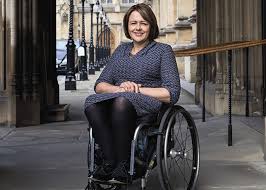
Tanni Grey-Thompson
Greg Heffer, the political correspondent for the Daily Mail online reported on March 14 that Tanni Grey-Thompson, an eleven time paralympic gold medal winning athlete and member of the British House of Lords stated that:

Disabled people will feel forced to end their lives under assisted dying laws if benefit cuts make their lives 'intolerable'

Heffer reported that while:

A committee of MPs are currently continuing their line-by-line scrutiny of the (assisted dying) Bill before it returns to the House of Commons for further debate and a vote.

At the same time, the Government is next week expected to unveil plans for £5billion of welfare cuts - despite a mounting revolt among Labour MPs and some ministers.
Baroness Grey-Thompson, a crossbench peer, expressed her fears about the combined impact of slashing benefits and assisted dying legislation. Heffer reported:
'If you are disabled and terminally ill and your benefits are cut, making life intolerable, it's obvious more people will feel forced down this route to end their lives early,' she told Times Radio.

'And when you understand that we live in a relatively able society, there will be people who sit on the panel who will decide that a disabled person has nothing to offer society and will allow them to end their lives.'
While Chancellor Rachel Reeves argues that the British welfare system is broken, Rachael Maskell, the Labour MP leading a rebellion against cuts to welfare, also expressed fears about people with disabilities feeling pressure to end their lives.

Heffer reported that Sarah Olney, a Liberal Democrat MP who sits on the committee that is scrutinising the assisted dying legislation, warned cuts to welfare and a new law on assisted dying risked a 'perfect storm' for the disabled. Olney stated:
'Of course it's a concern that if some of those people are now facing cuts to their everyday living costs … that might well contribute to their feelings that they might be a financial burden on their relatives and that will influence them in terms of how they feel about assisted dying.

'It's absolutely a concern of the committee that people might be seeking an assisted death for that reason and this news about potential cuts to welfare can only … intensify that feeling for some people.'
Similar to what is happening in Canada, people with disabilities who have found themselves unable to afford the basic cost of living are dying by euthanasia. Legalizing assisted death opens the door to people who are living with social and financial pressures to simply exist, are often requesting euthanasia.

The same could happen in Britain. 

More articles on this topic:

  • Canadian Human Rights Commission concerned about euthanasia (Link).
  • Canada's euthanasia deaths continue to rise (Link).
  • Canadian woman does not qualify for care but qualifies for euthanasia (Link).
  • Vancouver man dies by euthanasia while on a psychiatric day pass (Link).
  • Discrimination driven deaths (Link).
  • Heart wrenching lessons from Canada's euthanasia regime (Link).
  • Euthanasia is being used to kill people in poverty, isolation and social suffering (Link).

Friday, November 22, 2024

Assisted suicide advocate supports assisted suicide for "any reason"

Alex Schadenberg
Executive Director, Euthanasia Prevention Coalition

When the assisted suicide lobby tells you that assisted death will be limited to terminally ill people who are mentally competent, they are only presenting the talking points that are designed to sell the legalization of assisted suicide. 

Janet Eastham reported for the Telegraph on November 21, 2024 that AC Grayling, author, philosopher and outspoken advocate of assisted suicide, stated that:

“If as an act of compassion you wanted to help somebody escape suffering, then why only in the last six months of a terminal illness? Why not for somebody who simply cannot come to terms with being wheelchair bound let us say? Or who is clinically depressed and is never going to be independent of medications for the rest of their lives?”

Grayling supports assisted suicide for:

“any reason” noting “tens of thousands… commit suicide every year” and asking how many of these “just make things worse for everybody… because it’s not done in a clean, quiet helpful, sympathetic way?”

Grayling stated his position on a 2021 podcast. His remarks made alongside Baroness Meacher, the group’s honorary president, were recorded for the National Secular Society podcast in 2021 and have resurfaced amid intense scrutiny of the Bill ahead of a free vote next Friday. In the podcast, Lady Meacher dismissed measures in the Bill that ensure a High Court judge approves every death, saying “you can overdo” safeguards.

Tanni Grey-Thompson
The UK is debating a private members bill that would legalize assisted suicide. It will be voted on November 29, 2024. 

Baroness Grey-Thompson, former paralympian and member of the House of Lords responded, stating:

"... the comments demonstrated that the legalisation puts disabled people “at risk”."


More articles on Kim Leadbeater's assisted suicide bill in the UK

  • Legalizing assisted suicide could cause a seismic shift (Link). 
  • UK assisted suicide bill. The vote will be close (Link). 
  • The UK introduces bill to legalize assisted suicide (Link).

Monday, November 18, 2024

Baroness Tanni Grey Thompson - legalizing assisted suicide could cause a seismic shift.

Alex Schadenberg
Executive Director, Euthanasia Prevention Coalition

Tanni Grey-Thompson
An ITV news article that was published on November 17 quotes Baroness Tanni Grey Thompson, who is an 11 time gold medal paralympian as warning the UK that:
changing the law could cause a “seismic shift” in the way the health system cares for people.
A private members bill to legalize assisted suicide in the UK, that is sponsored by Kim Leadbeater MP is scheduled to be debated in Westminster on November 29.

Grey Thompson who is a long time champion of disability rights told ITV news that:
“I urge Parliamentarians to understand the significance of proposed changes to the law and the seismic shift it would cause to the way we choose to care for people at their most vulnerable,” she said.

“Protecting people is something the current prohibition on encouraging or assisting suicide does well,” Baroness Grey-Thompson said.

“Parliamentarians should be in no doubt that a change to this law would fundamentally alter the political and societal landscape for disabled people.”
The Euthanasia Prevention Coalition will continue to provide analysis of the bill.

More articles on this topic:
  • The UK introduces bill to legalize assisted suicide (Link).
  • UK assisted suicide bill. The vote will be close (Link).

Monday, October 7, 2024

Assisted dying legislation: Unintended consequences.

Alex Schadenberg
Executive Director, Euthanasia Prevention Coalition

The Times, which has supported assisted suicide in the past, published their view on the proposed assisted dying bill in the UK on October 4, 2024. Here is what they wrote:

The trajectory of how the law has changed in other countries is a warning to the UK

The strongest argument in support of legalising assisted dying in the UK is that it is about choice. Its proponents make a persuasive case that individuals enduring severe pain or multiple indignities from a terminal illness should have the option to end their life at a time of their choosing. Instead of compelling an ill person to go through a gruelling, unpredictable run-up to a natural death, medical intervention can pull death back within the realm of personal control. Who would, or should, deny another that option in extremis?

This is the reasoning advanced by Kim Leadbeater, the Labour MP for Spen Valley, whose bill to introduce a legal assisted dying process for the terminally ill will be tabled this month. MPs will be given a free vote on what is regarded as a matter of conscience. Yet supporters of change believe their cause is gaining irreversible momentum: polls suggest that it is now a closer possibility that at any time in our history. Personal pleas command public sympathy. The presenter and campaigner Esther Rantzen, who has terminal lung cancer, ­eloquently argues that she would rather experience a medically induced death at home surrounded by family than be forced to travel solo to Dignitas, the Swiss organisation that offers physician-assisted suicide to those who wish to die. The logic of individual choice is powerful, so long as it stands alone. But the truth is that the “right to die”, when that killing is sanctioned by the state, does not stand alone: it becomes part of a web of other difficult choices and questions, which extend beyond any individual to alter the whole of society.

The consequences of such a change would be far reaching. Among those affected are UK doctors and nurses, whose role would change from preservers of life to ­— in this instance — purveyors of death, a fundamental shift that many would find unconscionable. Others include individuals who require assistance in order to live a dignified and bearable life, like those who are disabled, or elderly and infirm: many share the concerns of Baroness Tanni Grey-Thompson, the Paralympic athlete and disability campaigner, that if such legislation expanded they could come under insidious pressure to end their lives rather than be a “burden” to family and society.

Ms Leadbeater has argued that such fears of a “slippery slope” regarding this legislation are ill-founded. This is wrong: in fact such fears have an increasingly clear basis in reality. In Canada, which introduced assisted dying for the terminally ill in 2016, legislation was subsequently extended to those whose illness or disability is incurable or causes unbearable suffering, and later to those in severe mental distress — although the last proviso will not be enacted until 2027. In the Netherlands last May, Zoraya ter Beek, a physically healthy ­29-year-old woman, was legally euthanised on the grounds of mental suffering.

If this legislation is indeed solely intended to address the understandable terrors of the terminally ill, then a different route is available, as the health secretary Wes Streeting has suggested. It is to improve specialist palliative care for all to a standard of excellence currently experienced only by some. That might also involve clarification for doctors on higher permitted levels of pain relief in such specific circumstances. This would be a far wiser and more humane move than stumbling into legislation which has already revealed a deeply disturbing tendency to exceed its original remit.

Previous articles on this topic:

  • The UK will debate assisted suicide bill this year (Link).

Wednesday, July 31, 2024

Assisted Suicide: too many “complicating factors” to be safely implemented, says British poll

A poll, commissioned by Living and Dying Well, found that the British public believe there are too many ‘complicating factors’ for assisted suicide to be safely implemented in the UK.

See below Living and Dying Well’s press release, or download a PDF version here.

The poll found that:
  • 56 per cent of those who express an opinion (71 percent of all those surveyed) support legalising assisted dying/assisted suicide (AD/AS) in principle but feel there are too many complicating factors to make it a practical and safe option to implement in Britain. 
  • A majority feel that if AD/AS is legalised in the UK, patients should have the legal right to choose to be treated by doctors and other health professionals who have opted out of participating in it. 
  • Legalising AD/AS is not a political priority for most people. Legalising AD/AS ranked 23 out of 24 of issues that need attention, with “regulating AI” and “international trade deals” ranking higher. Only four per cent thought it should be a priority for politicians. 
  • 60 per cent of those surveyed worried that legalizing AD/AS would fundamentally change the relationship between doctor and patient, including more than half (51 per cent) of those who support AD/AS.
Assisted dying/assisted suicide has too many “complicating factors” to be implemented safely, says the British public in a major new poll. 

The poll, of more than 2,000 British adults, by British Polling Council member Whitestone Insight, finds that behind the headline figures of support for AD/AS, the public expressed ambivalence about its consequences and signalled serious doubts. 

The poll, commissioned by the think tank Living & Dying Well (LDW) and released just ahead of a new attempt in the House of Lords to change the law, also found:
  • Seven in 10 (70 per cent) said that assistance in dying in countries like Canada and the Netherlands, where young people with no terminal illness are helped to die, has gone too far. This rose to more than eight in 10 (84 per cent) when those who answered ‘don’t know’ were discounted. 
  • Young people reject AD/AS more than do any other age group. Fewer than half (44 per cent) of 18–24-year-olds supported legalising AD/AS. 
  • A clear majority – 56 per cent – voiced fears that legalising AD/AS would lead to a culture where suicide becomes more normalised than it is today. This rose to 67 per cent when those who answered “don’t know” were omitted. 
  • Similarly, 43 per cent fear that introducing AD/AS when the NHS and Social Care budget is under such pressure would inevitably place an incentive on health professionals to encourage some people to end their lives early.
Four in ten people (41 per cent) are concerned that introducing AD/AS when the NHS is under such strain would “inevitably” risk funding for palliative care services. The survey was conducted in the wake of comments made by a handful of politicians, who wrongly believe the public are broadly supportive of changing the law to legalise assisted suicide and euthanasia. It is being released on the eve of the first reading of a new bill in House of Lords. It pushes back against the narrative frequently promoted by those who say the public support a change in the law and highlights the serious concerns of ordinary people that need to be considered by parliamentarians ahead of any future discussion.

The poll shows that support for AD/AS suicide amongst the public changes when confronted with evidence from where it is legal. Nearly half (47 per cent), for instance, worried that people in places where it is legal opt for AD/AS because they feel they are a burden. Of those expressing any opinion this concern rose to 59 per cent of those who said they support AD/AS. 

Half (50 per cent) of those who supported it in principle think that the fact that Canada saves money with every patient euthanized was a strong argument against legalisation. A third (33 per cent) of those who support AD/AS in practice thought that the revelation that rates in Oregon – the model for the current bill – went up by 260 per cent was concerning. 40 per cent of those who had supported legalisation reconsidered when confronted with the fact that young people suffering from mental illness were euthanized in Belgium and the Netherlands. 

On conscientious objection, more than three quarters (77 per cent) felt all doctors, healthcare workers, and hospices should have the right to opt out of the service. This rose to nine in 10 (89 per cent) of those who expressed an opinion. 

These results run in stark contrast to previous polls on the subject that frame the debate in a simplistic way without asking people to consider what changing the law actually entails. The poll shows that the British people are increasingly suspicious of AD/AS as disturbing evidence emerges from places like Canada.

Tanni Grey-Thompson
Tanni, The Baroness Grey-Thompson DBE, chair of LDW, said: 
“This nationally representative poll conducted under British Polling Council guidelines gives a very different snapshot of ordinary peoples’ attitude towards assisted suicide than the glossy picture presented by proAD/AS organisations. It shows that, at best, people are ambivalent about the prospect. And the survey shows that the more people know about the issue, the more likely they are to reject this legislation.” 
Whitestone Insight surveyed 2001 GB adults online between 5 and 6 June 2024. Data were weighted to be representative of all adults. 

Whitestone Insight is a member of the British Polling Council and abides by its rules.