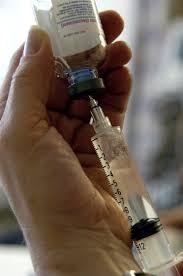
Showing posts with label lethal injection. Show all posts

Monday, May 11, 2026

MAiD (euthanasia). How does death actually occur?

So when they die, they're actually drowning in their own blood.

Alex Schadenberg
Executive Director, Euthanasia Prevention Coalition

The Bridge City News did an interview with Dr Joel Zivot, who is a Candian anesthesiologist and adjunct professor at Emory University in the United States. Zivot spoke to the Bridge City News about how euthanasia drugs cause death. I have edited the comments by Zivot for length. Zivot stated:

I'm an anesthesiologist and I also do intensive care medicine. I'm from Canada originally and I've been in the US for a number of years, and I'm always interested with what's happening in Canada. I have practised in Canada and I trained in Canada.
Zivot comments on the Supreme Court of Canada Carter decision that led to the legalization of euthanasia, which is known as MAiD in Canada. Zivot continued:
I was concerned that such an action would imperil medical professionalism in Canada because it seemed to be advocating a wholesale ethical change as to what physicians are supposed to be doing. Medicine is interested in saving life, not taking it.

...In my intensive care capacity I encounter a lot of patients who die and that's normal and natural but the idea that medicine could be transformed into a practice that I could actually kill someone and call it treatment. Now treatment can be killing. That, of course, to me is an anathema to the ethical practice of medicine.

In the US I am also involved with the area of the death penalty. The reason I got involved in the death penalty is the use of science and medicine as a method of punishing people. The most common method of execution in the US is lethal injection which takes certain types of chemicals that in my hands are medicine and in the state's hands are poison and repurposes them to kill prisoners.
Zivot comments on his beliefs related to the death penalty and then says:
It's not the job of the doctor to kill prisoners and it is not the job of the tools of medicine. So my protest is that if the state wants to executive people, it has to use a technique that isn't an impersonation of medicine.
Zivot then comments on Canada's euthanasia program:
Assistance in Dying in Canada is strikingly similar to the way that prisoners are executed in the United States. When I realized that was going on that caught my attention.

I have reviewed hundreds of autopsies of prisoners executed using lethal injection and found a strikingly common finding of bloody froth in their lungs. So when they die, they're actually drowning in their own blood.

You may have no sympathy for convicted murderers but the US Constitution makes it very clear that when a prisoner is punished that the punishment can't be cruel. I believe that the punishment of lethal injection creates a cruel death.

I brought those same concerns to Canada. My concern in the Canadian assisted dying system is that there's been a persistent dishonesty in exactly what is happening when people are being killed by MAiD.
Dr Zivot was asked about the drugs that are being used for euthanasia. Zivot responds:
No drug company is manufacturing a drug where the labelled indication is to kill. It's not made for that. ...In both the death penalty and assisted dying, it's recognized that these drugs can be repurposed and be converted into poison.
Zivot comments on medical politics in Canada. He then speaks about dying with dignity:
There's been little focus on is the killing part of being dead. To get from alive to dead, you have to be killed, you have to die, and that's not instantaneous. So there's a thing that has to be done to you that causes your death. And that can take some time. 

So words like dignity of course, what does it mean to be dignified, to die with dignity? ...

So to suggest somehow that the only dignity available to people who are suffering is to kill them feels to me to be a very sinister use of the word dignity.

You're basically saying that if you want to be alive and in pain that there is something wrong with you. So if your not dying with dignity then you're living with undignity.

That's branding, that's a false and pernicious claim about people who want to be alive.
Zivot was asked about euthanasia being extended to people with mental illness alone in March 2027. Zivot responds:
That's obviously very disconcerting. Let's hope that between now and then that clearer heads prevail.

I take care of a lot of people who are mentally ill. I have patients who've tried to kill themselves. 

When I encounter them, my assumption is that they want to live. Sure enough, in many cases once they have recovered from their attempted suicide, they live. Sometimes there's gratitude.

I think that you want your doctor to assume that you want to live. Mental illness leads to a series of bad decisions. I don't know how. if we say that a person has mental illness and loses capacity, that the capacity to request death, that capacity is preserved.

So why is a person who is mentally ill able to make that decision? 
Zivot then comments his experience with patients with mental illness and how they are cared for to help them live. Zivot states:
If there is some particular theoretical person who has thought about it, who's done every possible thing, who is not under resourced, who is not lonely, ... and you think that person should be allowed to die? I still don't think it's my job to do it. 

The problem is that once you make that available, you create opportunities and incentives for people to die and that's the worst possible thing.
Zivot was then asked, if lethal injection results in death by drowning, why aren't there more doctors screaming from the rooftops? Zivot responds:
I presented my concerns to the Senate of Canada and I was roundly criticized for it. When I was testifying, a person who was there waiting their turn to speak was an advocate of MAiD, when talking about MAiD he began to cry and said it was the most beautiful thing he had ever seen.

When it came to my turn, I said to the chairperson, if you would like me to cry, I can do that too, if that would be effective.

I am not suggesting that this person was not sincere, but the sense that the only beauty lies in killing is a terrible, terrible idea. 
Zivot was then asked for his final comments. He said:
MAiD is basically saying that if you don't have MAiD then you're facing a terrible painful death. That is untrue.

Palliative care is a branch of medicine that is probably underfunded. Even without palliative care, I'm a physician in intensive care and I deal with people who are dying and I'm pretty comfortable in providing people with sedation or pain control to allow a natural death.

I don't need to kill them. They will die and they don't have to die in pain. 

What people really need is companionship.
Zivot spoke about a study on labour epidurals. The study found that when a woman has companionship and support that the pain she experienced was less. Zivot continued:
We should be there in support of people while they live. If death is going to occur, then we should provide something to ease the pain of natural dying but we don't need to kill them to do that. It's just not true. 

I think that MAiD has created this illusion that there's only two choices. It's either a miserable painful death or MAiD.

That has to stop and be challenged.
Zivot ended the interview by commenting on the effect of Canada's Charter on the euthanasia issue.

Previous articles concerning Dr Joel Zivot (Link to articles).

Thursday, November 6, 2025

German nurse convicted of murdering 10 patients.

German palliative care nurse convicted of murdering 10 people to reduce workload.

Alex Schadenberg
Executive Director, 
Euthanasia Prevention Coalition

A German palliative care nurse was convicted in the murders of 10 people and attempted murder of another 27 people. According to the Reuters report on November 5:

A palliative nurse was convicted on Wednesday of the murder of 10 patients with lethal injections and the attempted murder of 27 others and was handed a life sentence by a German court.

Prosecutors had argued that the nurse injected his mostly elderly patients with painkillers or sedatives to ease his workload at night.

The court found the crimes to be particularly severe and suggested this should affect the ability to be paroled after 15 years.

An article by Kim Ga-yeon for The Chosun Daily reported that:

Investigations revealed that between December 2023 and May 2024, while working at a hospital in Würselen, the man administered large doses of painkillers and sedatives to elderly patients during night shifts to reduce his workload.

Among the drugs used in the crimes was Midazolam, a sedative used in some U.S. states for executions.

A’s defense lawyer argued for acquittal, stating that it could not be conclusively determined that the victims, who had serious illnesses, died due to the drugs. The defendant claimed, “Sleep is the best medicine,” and “I only tried to take good care of the patients by putting them to sleep, and I didn’t know the drugs would be that fatal.”

The prosecution stated, “A worked without passion or motivation. He did not empathize or feel compassion for the patients. He only got annoyed when encountering patients who required a higher level of care.” They added, “Even during the trial, A showed no sign of remorse.”

The prosecution also revealed that they are investigating the possibility of unidentified victims and noted, “A may face trial again.” 

This is not the first conviction of a German nurse for murdering patients. 

Niels Högel's, a former German nurse was convicted and given a life sentence for killing 85 patients while working in two hospitals in northern Germany. Högel's was suspected in the deaths of more than 100 people.

There are many cases of medical murder that were dealt with silently in order to prevent problems within the medical system. Suspected medical murder cases are rarely reported since the medical system lacks effective oversight. When abuse is uncovered, they avoid reporting the problem to authorities based on fear of lawsuits as in the Elizabeth Wettlauffer case in Ontario.

More known cases of medical murder.

In December 2016, in Italy, an emergency room anaesthetist Leonardo Cazzaniga, 60, and nurse Laura Taroni, 40, were arrested for the deaths of at least five patients but prosecutors were examining the medical files of more than 50.

Charles Cullen, a nurse who was also a medical serial killer in the United States. known as the 'Angel of Death' murdered at least 40 patients to become one of America's worst serial killers spoke from prison to chillingly claim: 'I thought I was helping.'

Dr Michael Swango is believed to have killed 35 - 60 patients, and similar to Cullen, he was simply asked to resign, or moved to another medical center. 

Aino Nykopp-Koski is a nurse who was convicted of killing 5 patients in Finland. 

In March, 2013 Dr Virginia Soares de Souza was arrested in Brazil and is suspected of killing 300 patients. 

Then there is Dr Harold Shipman, who was convicted of killing 15 people in England but is suspected to have killed between 250 and 400 of his patients. 

Then there is the case of William Melchert-Dinkel, the Minnesota nurse who was convicted of 2 counts of assisted suicide for counselling depressed people to die by suicide.

In August 2024, Professor Christopher Lyon published a research article concerning healthcare serial killers. The information in this report must be read to understand the reality in Canada, where there are a few doctors and nurse practitioners who carry-out a high percentage of the euthanasia deaths.

Wednesday, September 17, 2025

Kilmeade must not just apologize. He must resign.

Alex Schadenberg
Executive Director, Euthanasia Prevention Coalition

Wesley Smith wrote an article about Brian Kilmeade stating: ‘Just Kill’ Mentally Ill Homeless Who Refuse Help (Link).

Fox News host Brian Kilmeade apologized on Sunday for saying that homeless and mentally ill people should be killed. 

Kilmeade's apology is not enough, Kilmeade should resign.

Guardian article by José Olivares wrote that:
During the Fox and Friends appearance on Wednesday discussing Zarutska’s death, co-host Lawrence Jones said unhoused people with mental illness should either accept the publicly funded programs to help in their situation or be jailed.
“Involuntary lethal injection or something,” Kilmeade responded to Jones. “Just kill ’em.”
The Euthanasia Prevention Coalition believes in the innate equality of the human person. It is not only wrong to suggest that homeless and mentally ill people should be killed, we oppose killing all people.

Kilmeade apologized by stating:
“I wrongly said they should get lethal injections” 
“I apologize for that extremely callous remark. I am obviously aware that not all mentally ill, homeless people act as the perpetrator did in North Carolina – and that so many homeless people deserve our empathy and compassion.”
Kilmeade misses the point in his apology. His original statement suggests that some homeless and mentally ill people should be killed. His apology suggests that some of these people deserve our empathy and compassion.

Some people will suggest that Kilmeade didn't actually mean what he said. Whether or not that is true he said it and his comments have consequences.

Kilmeade's apology is clearly not enough. He needs to resign.

Our statement does not negate the concerns people have with the criminal justice system.

Wednesday, March 5, 2025

Death row inmate chooses death by firing squad rather than lethal injection.

Alex Schadenberg
Alex Schadenberg
Executive Director, Euthanasia Prevention Coalition

A few days ago an article that was written by James Liddell and published by the Independent explaining that a death row inmate convicted of the double murder of David and Gladys Larke has chosen to die by firing squad rather than the electric chair or lethal injection.

I must state that I oppose capital punishment.

Liddell explains that Brad Sigmon chose to be executed by firing squad and he rejected execution by electric chair over fears it would “burn and cook him alive,” and he rejected execution by lethal injection because three previous recipients of death by lethal injection in North Carolina were not declared dead for at least 20 minutes despite the expectation it would take a fraction of the time. 

A few days ago I published an article titled: Death by assisted suicide is not what you think it is. The article referred to the presentation I gave at the British parliament where I explained how death by assisted suicide occurs. I told the parliamentarians that:

  • In 2023, one Oregon assisted suicide death took 137 hours.
  • The assisted suicide poison cocktail causes a burning feeling in your throat,
  • Dying by assisted suicide is not simply taking a few pills and then dying. It is more complicated than that.
Link to the video by Dr William Toffler of Oregon on this topic (Link).
Link to the article: Death by assisted suicide is not what you think it is. (Link)
What assisted suicide and the death penalty have in common (Link).

Thursday, September 23, 2021

Why do death certificates list an assisted death as a natural death and capital punishment as homicide?

Alex Schadenberg
Executive Director, Euthanasia Prevention Coalition

When someone dies by lethal injection, referred to as MAiD and better known as euthanasia, the death certificate is to list the medical condition that the person had when requesting death by lethal injection and not state "MAiD" or euthanasia.

Most US states that have legalized assisted suicide (a self-administered death by a lethal drug cocktail) also require that the death certificate list the medical condition 
that the person had when requesting death by a lethal drug cocktail.

When someone dies by capital punishment in the US, which is often done by lethal injection, the death certificate will state homicide.

Why do death certificates list euthanasia and assisted suicide as a natural death and capital punishment is listed as homicide?

One reason might be that the person who dies by capital punishment does not request that death be inflicted upon them while with an assisted death, people request their death.

Nonetheless, this distinction is not always true.

When analyzing the acts, they are all done by the same or similar lethal drug cocktails. Death occurs in the same manner with the only real difference being the intention of the act.

Whether or not you support euthanasia, assisted suicide or capital punishment, I conclude that homicide is homicide and suicide is suicide. Euthanasia and capital punishment are homicide and assisting a suicide is a suicide. Any other distinction is based on symantics and not reality.

Tuesday, September 21, 2021

BMA goes Neutral on Assisted Suicide. Leading Advocate admits more research on Painful Deaths is needed.

Dr Gordon Macdonald
Chief Executive of Care Not Killing

Dr Gordon Macdonald
On Tuesday last week the British Medical Association’s (BMA) Annual Representatives Meeting (ARM) passed a motion by a narrow majority of just 4 votes (49% to 48%) which shifted the organisation to a position of neutrality on ‘assisted dying’ from its previous position of opposition. By ‘assisted dying’ the BMA is referring to both assisted suicide and euthanasia.

The BMA debate followed a poll of its members last year. That poll itself was the result of a motion passed at the BMA’s 2019 ARM which had been proposed by Dr Jacky Davis, a radiologist and Chair of Healthcare Professionals for Assisted Dying and Board member of Dignity in Dying (formerly the Voluntary Euthanasia Society).

Last year’s poll showed that 40% of BMA members who responded voted for the union to adopt a position of support for assisted suicide and 30% for euthanasia.1  However, beneath the headline grabbing top-line numbers there was a complex picture of medical opinion on the question of whether doctors should be empowered to end patients’ lives.

The closer a specialty is to the care and support of dying people; the less likely its specialists are to support assisted suicide and euthanasia. In the poll 70% and 79% of palliative medicine doctors wanted the BMA to stay opposed to assisted suicide and euthanasia respectively – with backing for active support in single digits. Personal opposition was higher – 76% and 83% – and higher still were the percentages unwilling to participate if legalised: 76% and 84%.2

General Practitioners (family doctors) and geriatricians share this closeness to the lived experience of end of life care, and were similarly averse: 39% of GPs who responded wanted the BMA to remain opposed to assisted suicide compared to just 34% in favour and 46% were personally opposed whilst 43% were personally in favour. Similarly, 44% of geriatricians wanted the BMA to remain opposed to assisted suicide compared to 27% in favour of BMA support for assisted suicide whilst 52% were personally opposed and only 36% personally in favour of a change in the law.3

That brings us to this week’s debate because the poll was conducted on the assumption that any legislation being introduced would be limited to an assisted suicide law applying to adults who are terminally or seriously ill, mentally competent and who voluntarily request assistance to end their lives.4  However, the motion proposed for debate (and approved) has no such caveats.5  In essence, the BMA has opted for neutrality regardless of the nature of any future legislation. So the BMA is now neutral on whether or not those suffering from minor non-terminal conditions and who may have years to live, disabled people, those with psychiatric illnesses, children or just elderly people who are depressed, lonely and tired of life will be allowed under a future law to request assisted suicide or euthanasia.

Then on Thursday this week the Spectator published an article on its website by Dr Joel Zivot6  in which he stated that his research into the deaths of death row inmates has shown that in many cases of those who choose to die by lethal injection they experience pulmonary edema and essentially drown in their own secretions. They may well be suffering pain and distress in the process, often including gasping for breath. Other research suggests that signs of pulmonary edema occur in 84% of cases studied.7  This is relevant because the same drugs (Pentobarbital and Secobarbital) are used in assisted suicide deaths in the USA and euthanasia deaths in Canada.

Link to the podcast "Let's Find Out" between assisted suicide lobby leader Dr Jacky Davis and Dr Joel Zivot (Link to the podcast).
In a Spectator podcast made available online on Thursday evening,8 Dr Zivot discusses his article with Dr Jacky Davis. Dr Davis admitted that she was unaware of this issue previously and acknowledged that Dr Zivot may be right in his findings, but said that more research needs to be done to establish the facts and that Dr Zivot should not be making this information available to the public until that research had been undertaken. She even suggested that the doctors involved in conducting the assisted suicide deaths should be the ones to do the research.

In response, Dr Zivot stated that it was for those who are pushing for the legalisation of assisted suicide or euthanasia to justify their stance and that the onus is on the advocates of ‘assisted dying’ to determine what they have done. He said that the practice of ‘assisted dying’ could be construed as a poor experiment and the onus is on the advocates of ‘assisted dying’ to show that it is “sound and reasonable”.

Now there is some suggestion that the reason for the build up of fluid in the lungs of those who die by lethal injection may be due to the fact that large amount of drugs are being given intravenously over a short timeframe rather than taken orally and that this damages the lungs.9  However, since no post-mortems (autopsies) relating to those who have died by assisted suicide or euthanasia have studied and reported on this aspect of the deaths in question, it is impossible to know if that is indeed the case. Moreover, in Canada, at least in Nova Scotia10, intravenous delivery of Medical Assistance in Dying (euthanasia) seems to be common which raises the question of how many of the 7,595 people who died by MAiD in Canada during 2020 also experienced pulmonary edema, or the ‘drowning’ effect, identified by Dr Zivot in his death row examples. Evidently there is a need for more research.

Whether or not the doctors and families involved in assisted suicide and euthanasia deaths in the USA and Canada will be willing or interested to investigate this matter further remains an open question. What is clear, however, is that rather than rushing into changing the law to follow their North American counterparts in legalising assisted suicide or euthanasia, British legislators should take a much more cautious approach. The BMA should have done so also.

Citations:
  1. https://www.bma.org.uk/advice-and-support/ethics/end-of-life/physician-assisted-dying/physician-assisted-dying-survey
  2. https://www.bma.org.uk/media/3367/bma-physician-assisted-dying-survey-report-oct-2020.pdf, Appendix C, pp. 99-117.
  3. Ibid.
  4. https://www.bma.org.uk/media/2353/bma-physician-assisted-dying-info-pack-april-2020.pdf, page 3.
  5. https://www.bma.org.uk/media/4579/2021-arm-resolutions-day-2-am.pdf, Resolution 70.
  6. https://www.spectator.co.uk/article/last-rights-assisted-suicide-is-neither-painless-nor-dignified
  7. https://www.npr.org/2020/09/21/793177589/gasping-for-air-autopsies-reveal-troubling-effects-of-lethal-injection?t=1631783805580&t=1631894393773
  8. https://www.spectator.co.uk/podcast/payday-who-s-afraid-of-rising-wages-
  9. https://www.npr.org/2020/09/21/793177589/gasping-for-air-autopsies-reveal-troubling-effects-of-lethal-injection?t=1631783805580&t=1631894393773
  10. Crumley E.T. et. al.; “How is the medical assistance in dying (MAID) process carried out in Nova Scotia, Canada? A qualitative process model flowchart study”, https://bmjopen.bmj.com/content/11/7/e048698


Monday, September 20, 2021

Assisted suicide is neither painless nor dignified.

Death by euthanasia or assisted suicide are similar to death by drowning.

Alex Schadenberg
Executive Director, Euthanasia Prevention Coalition

I have published several articles about the research by Dr Joel Zivot, concerning autopsy results from people who died by lethal injection. Dr Zivot is an assistant professor of anesthesiology/critical care at Emory University School of Medicine in Atlanta. The Spectator published a great article by Dr Zivot on September 18 titled: Assisted Suicide is neither painless nor dignified. Zivot is challenging the upcoming assisted suicide bill.

Link to a podcast segment "Let's Find Out" between assisted suicide lobby leader Dr Jacky Davis and Dr Joel Zivot (Link to the podcast).

Zivot explains that he is an expert witness opposing lethal injection executions in America. Zivot opens his article by provacatively stating:

I am quite certain that assisted suicide is not painless or peaceful or dignified. In fact, in the majority of cases, it is a very painful death.

The death penalty is not the same as assisted dying, of course. Executions are meant to be punishment; euthanasia is about relief from suffering. Yet for both euthanasia and executions, paralytic drugs are used. These drugs, given in high enough doses, mean that a patient cannot move a muscle, cannot express any outward or visible sign of pain. But that doesn’t mean that he or she is free from suffering.
Zivot explains his experience with death by lethal injection:
In 2014, I watched the lethal injection of Marcus Wellons in a Georgia prison. The 59-year-old had been sentenced to death for the rape and murder of his 15-year-old neighbour India Roberts in 1989. ‘I’m going home to be with Jesus’ were his final words as the drugs entered his body.

I noticed that Wellons’s fingers were taped to the stretcher, which made little sense, given his body had already been restrained by heavy straps. I kept asking myself why. I read into the subject and came across a report of the lethal injection execution of another death row inmate, Dennis McGuire, five months earlier. During that 24-minute process at the Ohio jail, McGuire clenched his fists. Perhaps it was a final, futile show of defiance. Perhaps it was an outward display of pain. With his fingers secured, Wellons could not have made any such gesture.
Based on autopsies, Zivot proves that death by lethal injection, whether it be execution, euthanasia or assisted suicide are similar to death by drowning:
In 2017, I obtained a series of autopsies of inmates executed by lethal injection, which confirmed my worst fears. Wellons’s autopsy revealed that his lungs were profoundly congested with fluid, meaning they were around twice the normal weight of healthy lungs. He had suffered what is known as pulmonary oedema, which could only have occurred as he lay dying. Wellons had drowned in his secretions. Yet even my medical eye detected no sign of distress at his execution.
Wellons was executed with a chemical called pentobarbital, which caused his pulmonary oedema. In Oregon, four in five assisted suicides have employed pentobarbital or its close relatives. (The Assisted Dying Bill is based on the Oregon system.) If a post-mortem examination were to be performed on a body after assisted suicide, it’s very likely that similar pulmonary oedema would be found.
Zivot continues by explaining why the proposed British assisted suicide bill will likely result in deaths similar to drowning:
The proposals before the House of Lords would see sick patients prescribed a lethal dose of perhaps 100 barbiturate pills. Laws in Oregon, like those proposed in the UK, require patients to take the drugs themselves, which rules out any form of general anaesthetic. Often patients are handed anti-sickness and anti-seizure tablets but nothing more in preparation, meaning they’re very much awake as the assisted suicide process begins and they start ingesting fatal quantities of barbiturates. Without a general anaesthetic, many will be in great discomfort, even if outwardly they don’t appear to be suffering.
Zivot confirms his theory based on the assisted suicide death of Linda Van Zandt:

Indeed, there are countless examples of people who have discovered just how messy, painful and distressing it can be as they watched their loved ones go through the process. Take Linda Van Zandt, who helped her aunt, suffering from amyotrophic lateral sclerosis, die in California. She later described how she had to feed 100 crushed pills in a drink to her aunt ‘who could barely swallow water’, but ‘had to drink all of it in less than five minutes to “ensure success”’. She concludes: ‘The day was fraught and frightening… We had been forced to assist in the most bizarre fashion, jumping through seemingly random legal hoops and meeting arbitrary deadlines while my aunt suffered, and finally emptying capsules, making an elixir so vile I cried when I knew she had to drink it. This was death with dignity?’
Zivot states that, when given the information about how death by lethal injection occurs, three death-row inmates chose to die by the electric chair rather than die by lethal injection. Zivot concludes:
Advocates of assisted dying owe a duty to the public to be truthful about the details of killing and dying. People who want to die deserve to know that they may end up drowning, not just falling asleep.
When Dr Zivot made a similar presentation to the Canadian Senate Committee examining the euthanasia bill, they simply ignored his warnings based on some argument that executions and assisted death are different. In fact, Zivot acknowledges that they are different, but the drugs used are similar and result in the same outcome,

Death by euthanasia or assisted suicide are similar to death by drowning.

Thursday, June 17, 2021

The failure of deaths by lethal injection

Alex Schadenberg
Executive Director, Euthanasia Prevention Coalition


Whether you oppose or support the death penalty, these deaths by lethal injection are observed and researched while deaths by euthanasia are not observed or researched.

In Canada (MAiD) euthanasia deaths are observed through a self-reporting system, whereby the person who approves the death is often the same person who carries out the death who is the same person who reports the death. This self-reporting system enables abuse of the law and problems with euthanasia deaths to remain unknown.

Death penalty lethal injection deaths are often observed by the media and usually include an autopsy thus enabling researchers to determine whether or not the person who died suffered in the process.

An article by Austin Sarat that was published on March 23, 2021 in The Verdict  examines the failure of capital punishment deaths by lethal injection.

This issue concerns me because the lethal injection drugs used in capital punishment are the same or similar to the lethal injection drugs used in euthanasia.

Sarat
 writes:
From its earliest adoption by the state of Oklahoma in 1999 through 2009, lethal injection meant one thing, death by a standard three-drug cocktail: sodium thiopental, an “ultrashort-acting barbiturate” to anesthetize the inmate; pancuronium bromide, a “chemical paralytic” to asphyxiate the inmate; and potassium chloride, to stop the heart. By 2009, every death penalty state used this same drug combination.
A decade later, none was employing it. Instead, they were executing people with a wide variety of novel drug combinations.
Sarat explains:
My research collaborators and I have examined every American execution during the last decade. We found that as the paradigm decomposed, the number of problems encountered during executions by lethal injection multiplied.

Of all the techniques used to put people to death in the United States during the 20th and into the 21st century, by 2010 lethal injection already had shown itself to be the most problematic. Since then things have only gotten worse.
Sarat uncovers the problems with death by lethal injection:

First, during the last decade, in more than eight percent of lethal injections, executioners struggled to find suitable veins to set IVs.

We also found that the lethal injection process itself does not always produce painless death. In almost five percent of the last decade’s lethal injections, inmates gave some verbal indication that they were experiencing pain during their execution.

One such inmate was Anthony Shore, who was executed in Texas on January 18, 2018. Soon after his execution by pentobarbital began, Shore cried, “Ohh weeee, I can feel that it does burn. Burning!” He then shook on the gurney and struggled to breathe, before dying 13 minutes later.

In another sign of lethal injection’s inhumanity, a September 2020 NPR investigation found signs of pulmonary edema—fluid filling the lungs—in 84 percent of the 216 post-lethal injection autopsies it reviewed. Inmates’ lungs had filled with fluid while they continued to breathe, which would cause them to feel as if they were drowning and suffocating.

Sarat's research suggests that from 2010-2020, 3.7 percent of barbiturate combination executions were botched in comparison with more than 22 percent of sedative combination executions.
Sarat concludes by stating:
Over the last decade, new drugs and drug cocktails may have allowed the machinery of death to keep running. New procedures may have given the increasingly jerry-rigged lethal injection process a veneer of legitimacy. But none of those changes has resolved its fate or repaired its vexing problems.

By now we should have learned that little can be done to change lethal injection’s status as America’s least reliable and most problematic death penalty method.

This column was the product of a research collaboration with five Amherst College students, Mattea Denny, Nicolas Graber-Mitchell, Greene Ko, Rose Mroczka, and Lauren Pelosi.

Tuesday, May 21, 2019

What’s Cruel for the Incarcerated is Cruel for the Terminally Ill: The Connection between Lethal Injection and Assisted Suicide

This article was originally published on May 21 by Consistent Life.

by Jacqueline H. Abernathy, Ph.D., MSSW

Jacqueline Abernathy
In a recent episode of HBO’s Last Week Tonight, comedian and host John Oliver offered a scathing (albeit profane) rebuke of lethal injection as a means of execution in U.S. states with capital punishment. He detailed the issues with the drugs employed and how ineffective they are at killing: essentially torturing the condemned with a prolonged death intended to make the process appear more palatable for everyone else. With each point he made, he always came back to his premise: the lethal means are irrelevant because capital punishment is simply wrong.

I agree completely.

But then he said something quite disturbing: He claimed that assisted suicide is somehow different because terminally ill people are easier to kill.

I’ll give you a moment to try to reconcile that with his larger point. That moment is over, because it doesn’t matter how much time you have. One simply cannot reconcile the two.

Lethal injection supplies the same class of drugs as assisted suicide does. It uses the same means toward the same end: premature and imposed death. How then is killing an ill person any different from killing anyone else?

Since he brought it up, let’s clear up the confusion about how assisted suicide works. He detailed how lethal injections are inhumane, but what distinguishes assisted suicide from traditional euthanasia is that traditional euthanasia is a lethal injection whereas assisted suicide is self-administered oral ingestion of these same drugs. Hence the drugs used in assisted suicide — which have included pentobarbital, the same one that has been used in lethal injection — are an okay option when self-administered by someone who’s dying; just not for those sentenced to death. Because it’s faster or more effective at killing, says Oliver. Only there is one big problem: it’s not.

Oliver mentioned assisted suicide only to demonstrate that it supposedly offers a more humane alternative to lethal injection, which he decried as barbaric and cruel. The show presented harrowing details about how the condemned may remain conscious during their executions since the drug responsible for inducing a coma can often fail. He explained how limited availability of certain lethal drugs can inspire the use of creative alternatives with horrific consequences. Finally, he lamented how long and torturous the process was, lasting not just a few minutes as intended but in one case, nearly two hours.

What Oliver apparently does not know is that every one of his points also apply to assisted suicide.

John Oliver
I can concede the logic that ill people are more fragile than healthy ones, but it doesn’t take a medical degree to know that intravenous delivery of any drug is more effective than oral intake.

Reports indicate that some people who choose assisted suicide vomit their bitter lethal dose before it can be absorbed, which is why anti-nausea drugs often accompany the barbiturate overdose. People do sometimes regain consciousness just like during an execution. Just as drug makers don’t want to be involved in executions, many of them have also inflated their prices to discourage use in assisted suicide. This practice leads many people to choose cheaper drugs with consequences akin to those experienced when the state looks for more readily-available drugs for lethal injections. In both cases, death takes far longer. And while I cringe that executions have taken up to 2 hours, assisted suicide can take up to 4 days.

Oliver mentioned assisted suicide only to make his point, while failing to recognize assisted suicide’s own inhumanity. He also mentioned alternatives to lethal injection like opioid overdose and the problems associated with that. His goal was not to defend any means of killing in executions, as he always circled back to his premise: there is no right way to do a wrong thing. So how then is assisted suicide not also a very wrong thing?

Oliver’s obliviousness is typical of the mental gymnastics required for justifying other forms of legal violence: that the violence he supports is not comparable to what he condemns. So let’s make it comparable. Would he withdraw his opposition to lethal injection if the death row inmates were as ill as those who choose assisted suicide?

The answer is clearly no. It doesn’t become okay to kill a person simply because they’re sick and therefore easier to kill. This suggests a double standard between ill people and inmates, when we actually have mechanisms to treat terminally ill inmates with dignity. This is called compassionate release, and exists at the federal level and in most U.S. states.

There’s hope that the horror stories Oliver highlighted will result in judges ruling that lethal injection is unconstitutional on the grounds that it is cruel and unusual punishment. But explain this: how is what deemed to be inhumane for convicted murderers somehow acceptable for the ill and dying? It clearly isn’t. Oliver was right when he said humane society doesn’t purposefully kill. Yet medical fragility is an exception? If anything, a humane society treats those more vulnerable with greater care rather than using their illness to justify their violent and unnatural end.

Oliver said it best when he concluded: “there is no perfect way for the government to kill people.” What he fails to mention is that there’s also no perfect way for people to kill themselves. I hope John Oliver will rethink his defense of violence toward the terminally ill and extend to them the same concern he has for human beings sentenced to die by execution. Assisted suicide is just as macabre as lethal injection, but less effective at killing. Just as in capital punishment, the means are irrelevant. Killing humans is wrong even if the human is terminally ill. Even if that human is yourself.

Tuesday, September 4, 2018

A Tale of Two Visions: Euthanasia and Palliative Care.

This article was published by the Physicians Alliance Against Euthanasia on August 31, 2018.

Of 32 non-profit Palliative Care centres scattered around the province of Quebec, even under intense economic and political pressure, only 6 currently allow euthanasia within their walls.

Doctors who promote euthanasia consider this low participation rate as a barrier to the fulfillment of patients’ wishes. Many of them, despite self-identifying as Palliative Care physicians, see no problems with cohabitation: they claim to do both Palliative Care and euthanasia; they promise they will always continue Palliative Care as long as the patient obstinately maintains his or her will to live; and when that patient finally becomes reasonable they will – in perfect “continuity of care” — perform the euthanasia which they believed to be indicated all along.

Naturally there are many who would resent and dispute such a characterization of their methods and intent. However, in this case, truth is in the eye of the beholder; and in the view of a typical non-suicidal patient, any doctor or institution practicing euthanasia becomes a threatening presence stimulating feelings of anxiety, which arguably nullify the whole benefit of Palliative Care.

At the best of times, non-suicidal patients (and their families) often harbour fears that doctors intend to do them harm. Only with the greatest effort do doctors gain the trust of patients, which is one of many reasons why, throughout the history of medicine, doctors have relied on an unambiguous promise that they would never harm patients.

Euthanasia proponents, of course, reverse this logic: How, they ask, might a (suicidal) patient trust a doctor who has promised that he would never be willing to end suffering by ending life?

Clearly, then, we are talking about two distinct services and two distinct clienteles, mutually exclusive to the point where a doctor associated with one will naturally be disqualified in the perception of a patient who desires the other.

But where will these services be offered? Euthanasia advocates have a simple answer to this question: everywhere. We will simply take our proposed service, they say, and install it in the homes of others, like a loudly sizzling hamburger stand, suddenly introduced in one corner of a contemplative vegetarian restaurant. The juxtaposition is absurd, of course, but the suggestion also betrays astounding arrogance, founded in a deep ignorance of past social evolution as it is reflected in existing infrastructure.

Palliative Care centres were not always there; Palliative Care only truly began in the 70’s. Nor did the picturesque pastoral “homes”, that we recognize today, spring out fully formed in the blink of an eye. They are the fruit of evolution, imagination, dedication, perseverance and experimentation. In the early days Dr. Balfour Mount and others succeeded in carving out little units in prestigious hospitals where pilot programs were initiated. At that time, there was no question of combining them with euthanasia, because that was still an unheard-of barbarism in the medical culture of the day. But the exclusivity of Palliative Care did not end there.

The whole idea of Palliative Care lay in its differentiation from contemporary models of medicine. And the self-selected staff who gravitated to this new practice were fierce in their loyalty to the ideal, and remain so, in many cases, to this day. Palliative Care is not a technique; it begins as a state of mind. To oblige the staff of existing Palliative Care facilities to offer care in any other mode – let alone that of euthanasia – is to erase, by stealth, from within, the very existence of Palliative Care.

But today, Palliative Care is not something insubstantial, to be cavalierly brushed aside or co-opted into new administrative improvisations. Each of the existing centres embodies the unpaid work of countless real individuals. The buildings were constructed through voluntary contributions of funds, and often of land. In the usual model, fifty to sixty percent of operating budgets are financed through charity. They typically depend on volunteers at every level, from kitchen help, through basic care, to administrative functions. Salaried workers, nurses and others, are working at the pay scales reserved for “private” facilities, which are significantly lower than those enjoyed by similarly qualified staff elsewhere. Key professionals actually migrate from other locations and specialties, in order to enable and share in the professional culture which is unique, not only to this form of practice, but to each individual institution. In short: over a forty-year period, within the confines of a public medical monopoly, certain imaginative individuals and groups have succeeded in creating something truly new and distinctive, financed by charitable donation and supported by armies of volunteers having deep roots in the surrounding communities. To suggest that the nature of care practised in such facilities should be open to legislative or bureaucratic intrusion, beyond minimal oversight, is an insult to the notion of selfless creativity in community service.

No, therefore, euthanasia proponents who would cleverly disguise themselves as Palliative Care specialists have no business whatsoever in such facilities. Crudely articulated: these new enthusiasts of the lethal mode have not yet paid their dues. Let them justify themselves. Let them search for freely given funds. Let them build their clinics stone by stone. Let them show a little respect for differences in medical thought and method; a little humility before the achievements of an authentic labour of love.

In no case should they be allowed, like the famous cuckoo bird, to lay their eggs in the nests of others, and to murder the offspring – in this case the medical brainchildren — of their hosts.

Make euthanasia unimaginable.

Sincerely,

Catherine Ferrier
President

Thursday, June 28, 2018

456 patients killed in a British hospital

Alex Schadenberg
Executive Director - Euthanasia Prevention Coalition

I
Kevin Yuill
n his article: The scandal of under valuing human life, that was published by Spiked on June 28, 2018; Kevin Yuill the author of: Assisted Suicide: The Liberal, Humanist Case Against Legalisation examines the attitudes that precipitated the mass killing "life shortening" of patients at Gosport War Memorial Hospital in Hampshire between 1989 - 2000.

Yuill correctly points out that if assisted suicide or euthanasia were legal that, similar to Gosport, killing would become more mainstream and simply accepted. Yuill writes:

Writing in The Times, Dominic Lawson says there is something obscene about the ‘shortening’ of the lives of more than 450 patients who were staying in Gosport War Memorial Hospital. He is right. 
The Gosport scandal concerns the ‘shortening’ of 456 patients’ lives through the excessive use of painkillers at the hospital in Hampshire between 1989 and 2000. An inquiry, the Gosport Independent Panel, says such ‘life-shortening’ had become virtually routine. 
The use of the word shortening is striking. We might say that Jack the Ripper ‘shortened the lives’ of prostitutes in the East End of London. In fact, if we employ the rather ludicrous measurement of time left – QALYs, or quality-of-life years, as some experts say when referring to care for the elderly in particular – then the doctors who presided over the regime of ‘shortening’ lives in Gosport undoubtedly stole more time than the Ripper could ever have managed. 
Even the term ‘patients’ in this discussion masks the real people involved, with their experiences, lives, loves, families, and, yes, hopes. The report into the scandal anonymised mothers, fathers, grandmothers, brave veterans, beloved teachers, aunts and uncles, friends and rivals, reporting as if they were victims of some foreign disaster rather than having been purposefully killed.
Yuill then explains that sometimes heavy sedation is required to prevent suffering:
There are, admittedly, some situations – now thankfully rare – when a doctor must heavily sedate patients to prevent suffering in the last hours of life. But Gosport wasn’t like this. It appears that the killings took place because the people involved were ‘inconvenient’. This was revealed in a meeting between members of staff about an annoying patient, where the following alarming exchange took place: ‘We agreed that if he wasn’t careful he would “talk himself on to a syringe driver”.’ According to the report, that patient, who was able to walk, talk and dress himself, did have a syringe driver and died the next day. Many others were also seemingly despatched for being irritating. Fifty-five per cent of those who were given lethal doses of diamorphine were not in pain. In 29 per cent of cases, the notes give no justification at all for the lethal dose.
Yuill then challenges the assisted suicide lobby and their cultural engineering:
Much more than an event like the Grenfell disaster, the treatment of these individuals indicates how far a moral crisis besets this country. As expressed all too clearly in our language, human lives are no longer sacred. Another euphemism beloved by people like Polly Toynbee, who summoned her mother from the grave yet again to argue for legalised assisted suicide, is ‘choice’. Everyone wants to have choice. ‘Compassion and Choices’ is the new, improved name for the Euthanasia Society of America. British lobbyists Dignity in Dying (formerly the Voluntary Euthanasia Society) want to ‘allow a dying person the choice to control their death’. 
Let’s leave aside the fetishising of the moment of death when people seem to want their favourite music playing (hint: you won’t hear the end of the song). It is actually this misuse of the concept of ‘choice’ that led to the monstrous events in Gosport. The ‘choice’ referred to by pro-assisted dying organisations is actually suicide. But by calling it a choice, we remove all moral responsibility from the action. The culture of assisted dying reduces the most profound decision a human can make – whether to shuffle off this mortal coil – to a medicalised menu selection. The decision to execute a human being in the United States – even a horrific rapist/murderer – is at least attended with ritual and ceremony, as if something of huge moral importance is occurring. With assisted dying, suicide is given as a treatment option in a pamphlet. The message is ‘we won’t judge’ – that is, ‘we don’t care if you live or die’. 
If such an ‘option’ is offered so casually to individuals, why would it be surprising that a doctor should treat human lives just as casually? If the act of suicide carries no real moral responsibility for the individual, why would killing a patient – or ‘shortening a life’ – carry any special moral responsibility for a doctor? We make it easy to wink and, as the Gosport report notes, tell the nurses to ‘Make the patient comfortable. I am happy for nursing staff to confirm death.’ 
Elderly people already find themselves resented for inconveniently continuing to exist, for voting for Brexit, for blocking beds, for taking up the time of harried NHS staff. Assisted suicide is always preferred for those who have little time left. In the country that has tolerated assisted death the longest – the Netherlands – plans are afoot to extend assisted death to all those over 70 who are ‘tired of life’. How many lonely elderly Dutch people will be despatched in a similar fashion to the patients at Gosport? 
Hopefully someone will be found responsible for the crimes that took place in Gosport. But it is really an entire culture that supports assisted dying, that believes that life and death are nothing but menu selections, that must be changed if we are to avoid future scandals like this one.
Sadly, the instances of killing, rather than caring, or intentional overdose is not rare. Attitudes that led to the killing "life shortening" of 456 patients at Gosport are linked to a culture that accepts these actions. A Netherlands study found that 431 people were killed without request in 2015 and a study from Flanders Belgium found that more than 1000 people were killed without request in 2013.

Legalizing lethal injection (upon request) creates more social acceptance of doctors killing their patients, even without request.

Monday, October 9, 2017

Will assisted suicide always provide a quick and gentle death?

This article was originally published in BioEdge, on October 7, 2017


By Michael Cook

The gold standard for human experimentation is a randomly-assigned double-blind placebo-controlled study. Unfortunately for researchers, organising such a study to assess the effectiveness of the lethal medications used for executions in the United States and for physician-assisted suicide (PAS) has significant ethical issues. They need to rely upon historical data.

In the latest issue of the Journal of Law and the Biosciences, Sean Riley, an end-of-life researcher currently studying in the Netherlands, reviews the patchy record of the drugs used in executions and PAS. He summarizes his findings as follows:

The pervasive belief that these, or any, noxious drugs are guaranteed to provide for a peaceful and painless death must be dispelled; modern medicine cannot yet achieve this. Certainly some, if not most, executions and suicides have been complication-free, but this notion has allowed much of the general public to write them off as humane, and turn a blind eye to any potential problems. Executions or PAS have never been as clean as they appear, even with the US’s medicalization efforts during the 1980s.
He discusses several issues:

Supplier boycotts. Under pressure from anti-death penalty activists, pharmaceutical companies refused to supply prisons with lethal medications. Efforts to circumvent this by going to shady middlemen eventually failed. Most states have ceased to import the key ingredients needed for executions.

Price gouging for PAS drugs. Because of the drought of lethal medications for executions, the price of secobarbital or pentobarbital for PAS has skyrocketed. “Before 2012, patients would pay about $500 for a sufficient lethal dose of the drug, but by 2016, prices had inflated to figures upwards of $25,000.”

Compounding pharmacies. Faced with the huge cost of assisted suicide, prisons and patients began to turn to compounding pharmacies where pharmacists create the drugs from raw materials. “As the past 3 or so years have seen a dramatic increase in the use of compounded drugs,” writes Riley. “There has been a corresponding rise in ‘botched’ executions, though the secrecy laws have neutered most attempts to link failed executions to compounded drugs.”

The drugs made in compounding pharmacies risk being too powerful, not powerful enough, or contaminated. In Massachusetts a former pharmacist is currently on trial for supplying contaminated drugs which caused a nationwide outbreak of meningitis. Prosecutors told the court that he had used expired ingredients, falsified documents, neglected cleaning, failed to properly sterilize the drugs, shipped products before they were tested and ignored mould and bacteria in manufacturing areas. So buying from small firms has its issues.

Last-minute complications. It is difficult to define what a “botched execution” is, but the last moments of some prisoners were clearly agonizing. And for complications with PAS, there is a lack of clear data. “According to data published by Oregon, 5% of patients experienced difficulties, such as regurgitation or seizures, after ingestion of the medication, since the inception of the law in 1997,” says Riley. However, in only 51% of the cases were the details reported. And “there are six reported instances where patients ingested the lethal medications, went unconscious, and awoke sometimes days later.” This is not a feature of assisted dying which supporters speak much about.

Riley concludes that “The processes of death will always, to some extent, be a mystery. For now, whether a death is peaceful and painless can only be assumed.”

Michael Cook is editor of MercatorNet. This article was originally published in BioEdge, which he also edits.

Tuesday, April 18, 2017

Killing by lethal injection. A psychological torment.

This article was published by Living With Dignity Quebec on April 18, 2017.


Who said that medical aid in dying is not killing? When one uses the right words, logic and common sense do the rest:
Medical aid in dying = lethal injection = euthanasia = killing = psychological torment for executioners & psychological torment for doctors.
Conclusion:

Killing (medical aid in dying / euthanasia / assisted suicide) is not a health care.

"Unlike the “kill or be killed” mindset in war or other forms of self-defense, carrying out executions felt very much like participating in premeditated and rehearsed murder. Either from religious training (“thou shall not kill”) or established societal norms, every person knows that taking a human life is one of our culture’s most serious offenses. It exacts severe mental trauma - even when done under the auspices of state law." (Link)
Dr. Ault, former commissioner of the Georgia, Mississippi and Colorado Departments of Corrections.

Monday, February 13, 2017

Canadian doctors are struggling with euthanasia.

Alex Schadenberg
Executive Director - Euthanasia Prevention Coalition


Jeff Blackmer, the former ethicist and current Vice President for medical professionalism with the Canadian Medical Association told Ryan Turnitty from Metro news that Canadian doctors are struggling with participating in "assisted dying" procedures.
doctors have been telling his group that they struggle with taking part in assisted-death procedures. 
He said physicians who have agreed to help a patient they knew well may find it difficult to help subsequent patients. 
“They will say, it was just too difficult and too traumatizing physiologically and it is not something I will go through again,” he said. “They really struggle with it, and for some of those that is the only one they will do.”

Blackmer said some of Canada's physicians are entirely ruling out providing end-of-life assistance to future patients. 
“In some provinces where they have a list of providers where they may be willing to participate, I know from speaking to colleagues that some of those lists are getting shorter.”
Note: When Blackmer says end-of-life assistance, he actually means lethal injection. 

Blackmer says he has not received reports of doctors being pressured to do euthanasia.

The reality is that killing another human being, even by request, is innately wrong and dangerous. People should be concerned about doctors who do not have a problem with killing their patients.

Thursday, January 19, 2017

Promoting assisted suicide: A form of coercion.

The Victoria Times Colonist printed this excellent letter on January 19 by Paul Jungwirth
Noreen Campbell chose to end her life by means of physician-assisted suicide, as was her right under Canada’s new law. 
Since that law was passed, more than 744 people have also chosen to end their life this way. 
But apparently Campbell’s dying wish was that even more people would avail themselves of this new right. 
She wanted her story about ending her life to “open the door for others” and “draw attention to the gaps she saw in the process,” because, as a member of the assisted-suicide advocacy group Dying with Dignity, she felt the law doesn’t go far enough. 
The ease with which she embraces killing as a good solution to suffering is simply appalling. 
Her opinions about why people should go the same route as she did contributes nothing new to this discussion — it’s all about fearmongering and undermining people’s expectations about what palliative care can achieve. 
According to her, taking a lethal injection is preferable to the alternatives, and promoting this idea is an insidious form of coercion that will only result in more needless premature deaths, and an increasingly callous approach to people who might be suffering near the end of life. 
Paul Jungwirth 
Burnaby BC
Previous article on this topic: How many people have died by euthanasia in Canada?