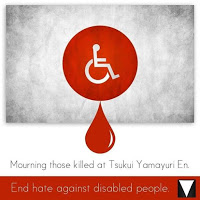
Monday, August 15, 2016

Assisted suicide deaths increase by 31.7% in Washington State (2015). What about the complications?

This article was written by Richard Egan and published on his blog on August 15, 2016

By Richard Egan

Washington State’s Death With Dignity Act, based on Oregon’s, came into operation on 9 March 2009.

Lethal prescriptions up 22% in one year - more than doubled since 2010

In the first full calendar year of operation, 2010, some 87 prescriptions for lethal drugs were provided under the Act. By 2015 this had increased by nearly two and a half times (244.8%) to 213.[1] Prescriptions for lethal drugs increased by 22% from 2014 to 2015.[2]
Deaths from assisted suicide up 31.7% in one year - more than tripled since 2010
Deaths from lethal drugs prescribed under the Act have increased three and a quarter fold (325%) from 51 in 2010 to 166 in 2015, increasing by nearly one third (31.7%) from 2014 to 2015 alone. 
Not all of those who are prescribed lethal drugs end up taking them. Some die of natural causes.
285 doses of lethal drugs unaccounted for in the community
There is no tracking of lethal drugs that are not used by those for whom they are prescribed so these lethal drugs are available in the community and could be used accidentally or intentionally to cause death. Of the 936 prescriptions for lethal drugs issued since 2009 only 651 (71%) have been reported as used leaving up some 285 doses of lethal drugs unaccounted for in the community.
Main concerns are loss of autonomy and burden on family rather than pain control
Some 65% of those for whom a prescription for lethal drugs was provided did not cite any concern about pain control as a reason for asking for the prescription. 
However, 86% cited concerns about loss of autonomy and 52% cited concerns about being a burden on family, friends or caregivers.
Assisted suicide to save money
Significantly, 13% of those for whom a doctor wrote a prescription for lethal drugs cited concerns about the financial implications of treatment.[3]
Very few referrals for expert psychiatric evaluation
Only 4% of those given a lethal prescription were referred to a psychiatrist or psychological for evaluation.
Doctors who barely know the patient but are prepared to assist suicide
In some cases the prescribing doctor knew the patient for less than a week before writing the prescription, and in just over half the cases (51%) the doctor knew the patient for less than 25 weeks.[4]
A peaceful death - what about the complications?
In 2013 one person took 3 hours to lose consciousness after ingesting the lethal dose and one person took 41 hours (1 day and 17 hours) to die after ingesting the dose. In 2015 one person took 72 minutes (1 hour and 12 minutes) hours to lose consciousness after ingesting the lethal dose and one person took 30 hours (1 day and 6 hours) to die after ingesting the dose. In 2009 two people awakened after initially losing consciousness. At least 9 patients have regurgitated the lethal medication. In 2014 one person suffered seizures after ingesting the lethal medication.[5]  
Doctors getting the prognosis wrong and assisting suicide for people with years to live
Although the Act specifies that only persons with “six months or less to live” may request lethal doses of medication from a physician, the data shows that in each year between 5% and 17% of those who die after requesting a lethal dose do so more than 25 weeks later with one person in 2012 dying nearly 3 years (150 weeks) later, and one person in 2015 dying nearly two years later (95 weeeks).[6]
In 226 cases we do not who gave the person the lethal drugs or even if they struggled
There is no requirement under the Act for a physician or any other person to be present when the lethal dose is ingested. Since 2009 there have been 175 cases where no health-care provider was present when the lethal dose was ingested and a further 51 cases where it is not known if a health-care provider was present.[7] In other words in some 226 cases people have died ingesting a dose of lethal medication, legally prescribed under Washington law, and nobody knows whether the person freely ingested the lethal dose or they were cajoled, coerced or forced to do so by another person.
Assisted suicide may increase the overall suicide rate
Proponents have claimed that legalising physician assisted suicide would actually prevent, or at least delay, suicides by giving those faced with a terminal illness an assurance that the means for obtaining peaceful death was legally available. However, a study of comparative rates of suicide in US states found that for the states, like Oregon and Washington, which had legalised physician assisted suicide there is an increase in the overall suicide rate of 6.3% compared to all other states and of the suicide rate of those aged 65 and over of 14.5%. There is no reduction in either the rate of non-assisted suicides or in the mean age of suicide.[8]
As the above analysis shows assisted suicide is far from well in Washington State.

[1] Washington State Department of Health 2015 Death with Dignity Act Report, p. 4, (link to the report).
[2] Ibid.
[3] Ibid., Table 2 on p. 7
[4] Ibid., Table 3 on p.8
[5] Washington State Department of Health, Death with Dignity Act Reports, 2009-2015 available at: (link to the data).
[6] Ibid.
[7] Ibid.
[8] David Albert Jones and David Paton, How does legalization of physician-assisted suicide affect rates of suicide?, SMJ: Southern Medical Journal, Vol. 108, Issue 10, p. 599-604, (link to the study).

Friday, August 12, 2016

States worse than death: I don't think so.

This article was published by William Peace on his Bad Cripple blog on Wednesday August 10.

William Peace is a Syracuse University Professor and disability activist 

William Peace
JAMA Internal Medicine has been in the news and references to a recent article abound on various social media platforms. Here I refer to "States Worse than Death Among Hospitalized Patients with Serious Illnesses" by Emily Rubin and other researchers at the University of Pennsylvania. Over eight months a team of researchers surveyed 180 patients who had been admitted to a hospital in Philadelphia with serious illnesses that included heart and lung disease. All the patients interviewed were 60 years and older. The study was conducted between July 1, 2015 and March 7, 2016. None of the patients had limitations on any life sustaining treatment in their electronic medical records. Researchers asked these patients to hypothesize whether they would prefer to die than be in a progressively worse state of being. In typically terse language Rubin wrote:
Death is a patient-centered outcome because nearly everyone wishes to avoid it. Despite this general preference, however, studies among healthy outpatients and those with serious illnesses show that a significant minority, and sometimes a majority, rate states such as severe dementia as worse than death. Link to the study.
What conditions were patients asked about? Conditions that were deemed worse than death include:
Bowel and bladder incontinence.Relying on Breathing machine to live.Cannot get out of bed.Confused all the time.Relying on a feeding tube.Need care all the time.Living in a nursing home.At home all day.Moderate pain all the time.In a wheelchair.
Below is the chart:
As the above demonstrates, about 70% of patients identified bowel and bladder incontinence, reliance on a breathing machine and the inability to get out of bed as a fate worse than death. 60% indicated being confused all the time and 55% for reliance on a feeding tube and 50% for needing around the clock care were fates worse than death. Other fates worse than death were in a wheelchair, constant moderate pain and being unable to leave home--all a fate worse than death.

Here is the kicker: none of the patients had experienced the conditions described as a fate worse than death. Yes, the patients responding to the hypotheticals posed had not experienced any of the conditions described. It seems to me if researches wanted to ask this sort of hypothetical question it would be behoove them to ask people that live with the conditions described. Instead, they did the exact opposite. This makes no sense. It is akin to asking a middle aged white man what it is like to be a black man.

As one would suspect, the study has gotten glowing reviews from those who advocate for assisted suicide legislation. This "data" has been deemed important by none other than the Economist. Under the Right to Die "What is Unbearable: Some Data about an Emotional Issue":
death really can seem preferable to a lifetime of pain and suffering. A growing movement, including this newspaper, thus seeks to legalize--with stringent safeguards--doctor-assisted suicide around the world... Asking people approaching, or threatened with death, how they feel about it, and the moment at which they would like it to come, is a welcome development. Both side of the doctor-assisted-dying debate should pay attention to it.
As an opponent of assisted suicide legislation, I am paying attention. I read the so called "data" and shook my head on wonder. People over the age of 60 were asked a series of questions that was framed as a fate worse then death. Think about what this says about the millions of people who live with these conditions. Let's review the list. I have experience with the following: Bowel and bladder incontinence, cannot get of bed, need care all the time, at home all day, moderate pain all the time, in a wheelchair. In baseball parlance I am 6 for 10. I am not sure I should be impressed with myself for living a life deemed worse than death or appalled by those surveyed. This study was not conducted in splendid isolation. The study relied on fear. Fear of physical and mental decline all humans will experience. Fear of death. This study only muddies the water in terms of end of life care and the distinction between terminal illness and disability. Terminal illness and disability do not necessarily go hand in hand. Years ago I was at a bioethics conference that had a predominance of people with a disability attending. One speaker asked how many people had been deemed terminally ill at some point in their life? Virtually every person in the audience raised their hand. This reminded of Mike Ervin aka Smart Ass Cripple. He was deemed terminally ill. Those physicians that described him as such are all now deceased decades later.

I truly shake my head in wonder when people fiercely advocate for assisted suicide legislation. It is a red herring. Those that fervently advocate for assisted suicide ask all the wrong questions. I struggle to control my bowels and bladder. This can be a messy business. But it is a management issue and not a statement about the quality of my life or the life of others. A breathing machine? Let's play very fast and loose with language. Exactly what is being referred to here? Ventilation support is a wide arc and a vague reference to a "breathing machine" is inherently misleading. Relying on a feeding tube? I know plenty of people who have used feeding tubes for extended stretches and some who are entirely dependent upon a feeding tube. This too is not a statement on the quality of life. Living in a nursing home? When this is used as a reason to believe it is a fate worse than death I consider this an indictment on the industry not the people who end up living in a nursing home. Stuck at home all day? Again why is one stuck at home? It is possible for others to visit and community living is an option. The slogan "our homes not nursing homes" comes to mind. Do I even need to broach the "use a wheelchair issue". Here is a radical idea: provide a properly fitting wheelchair that is ideally suited to a person's needs. If we did that some of the stigma associated with wheelchair use would be ameliorated. Instead, we isolate the elderly for instance in nursing homes and have them sit in a wheelchair junker that does not fit. No wonder this is deemed a fate worse than death.

The answer to end of life issues is not to legislate assisted suicide laws. The answer to providing quality end of life care requires a national discussion. There is no such thing as a good death. This too is misleading rhetoric coming from people who frame death as a right. When I read this study my first thought was people with a disability are being rendered silent. We are absent from the discussion about our life being a fate worse than death. The researchers in this study felt free to imagine what our lives are like. This happens all the time. The experience is surreal. Oh how many times I have had a biped explain disability to me with great clarity and insight that had escaped me the last 35 years. Heavy on the sarcasm here. Just today I read "Academia, Accessibility, Being Spoken For" by Briana Suslovic. (
Link to her article) She wrote:
It’s a strange feeling to have your own life explained to you in someone else’s terms, isn’t it? When someone else seems to know your language better than you, and then they start translating it into bigger and scarier words, invoking authors you’ve only heard about at cocktail parties, turning your experiences into a case study for fellow scholars to feast upon. That feeling, that dissection, that intellectual erasure-while-remaining-in-the-room… it’s so hard to describe that to someone who hasn’t been through the incredibly de-humanizing experience of being told about yourself in terms you don’t quite understand.
Bravo Suslovic. This is exactly what those that advocate for assisted suicide do not want to hear. They want to render those living a life deemed "a fate worse than death" silent. Advocates that champion a so called good death impose their imagination on our reality. In reality our lives are quite good. If you want to know how to manage incontinence give me a call. If you want to know what it is like to be dependent upon others give me a call. If you want to know about moderate pain, give me a call. Exactly who is the expert here?

Lastly, please do not talk to me about safeguards in assisted suicide legislation that the Economist mentioned. All the safeguards in the world are not enough. Safeguards exist for a reason. Some lives, lives such as mine, are framed as a "fate worse than death". This makes me vulnerable. This makes many people vulnerable. I cannot speak for all people with a disability but I can say with certainty I fear accessing medical care. I fear serious illness. I do not fear the pain of being ill. I do not fear how dehumanizing being hospitalized can be. My fear is different. I fear the do gooder physician. I fear the silent assumption my life is indeed considered a fate worse than death. I fear the kind, loving, and compassionate physician that will decide I have suffered enough. I have met one such physician. I also know there are many more that exist. Please be skeptical of the data considered here. I can speak for myself and others too. We just need typical others to listen. I assure you the quality of my life is quite good. I can say the same about all those I know who have adapted to life with a disability. All typical others need to do is to read what we write about our experiences. navigating a hostile world. And please don't worry this bad cripple does not bite.

Wednesday, August 10, 2016

Norman Kunc: Legalizing Assisted Suicide takes away the mental health safety net for people with disabilities.


Norman Kunc - Project Value

When I was born the doctors told my parents to put me in an institution.

Luckily, my parents ignored the doctor's advice and took me home.

Initially I went to a segregated school, and then argued my way into a regular school.

I went on to complete an undergrad in Humanities and a Master's in Family Therapy.

I now have a successful carreer as a speaker.

I'm married, I have two grown children, and I have a great life.

In the discussion about Canada's assisted dying legislation, many people don't realize how making disability a legitimate condition for suicide jeopardizes the safety of all disabled Canadians.

Norm & Emma


So let me try to explain.

What would happen if my wife died and I became depressed and suicidal?

Now if a non-disabled Canadian becomes suicidal, there is a commitment among psychiatrists and counsellors to rekindle that person's disire to live, and if necessary to protect that person from themselves.

However, as a disabled Canadian, if I become suicidal it is possible and even likely that the psychiatrist will see that as a rational and informed decision.

And that commitment to help me move through and beyond my suicidal state might now be seen as forcing me to live an unbearable life.

And so that psychiatrist may, in fact, help me die.

That terrifies me.

As a disabled Canadian, I want the same commitment to suicide prevention that is afforded to non-disabled Canadians.

This assisted-dying legislation takes away the mental health safety net for disabled Canadians.

Euthanasia - Disability Hate Crime and the silence.

Alex Schadenberg
Executive Director - Euthanasia Prevention Coalition

The Australian News Weekly magazine published an excellent article by Paul Russell, the Executive Director of Hope Australia and Vice Chair of the Euthanasia Prevention Coalition-International.

Russell, in his commentary, examines the reaction to the disability hate crime that occurred in a care facility in Sagamirihara, Japan where on July 26, 19 people with disabilities were brutally killed and another 26 people with disabilities were injured. This was the largest killing in Japan since the second world war.

Russell is essentially commenting on the media response to the killing in his article that he titles: Euthaansia - Disability hate crime: then the rest is silence.

Russell sets up his article by quoting from a letter from the killer;
In a letter the killer sent to the Japanese Parliament some time before his heinous actions, he wrote:
“I envision a world where a person with multiple disabilities can be euthanised, with an agreement from the guardians, when it is difficult for the person to carry out household and social activities. 
“I believe there is still no answer about the way of life for individuals with multiple disabilities. The disabled can only create misery.”
Bill Peace
Russell quotes several responses by disability leaders to the killing. He first quotes from Syracuse, New York, disability activist and academic Bill Peace wrote on his blog
“This hate crime and mass murder led to a sleepless night for me. What took place could have happened in any nation. It could have taken place in Omaha, Nebraska, Cambridge, England, Paris, France, or Syracuse, NY. As I read story after story I felt a chill go down my spine when I read the following words: ‘He was just an ordinary young fellow.’ 
“I have no doubt he was an ordinary young fellow. That is what makes ableism so frightening. People, typical people, think life with a disability is worse than death. I plan to go out to lunch with my son. We will likely stop at a cross walk and wait for a light to turn. A biped will likely stand near me. That biped might be thinking, ‘Shit, if I were paralysed I would prefer to be dead. That guy should be dead. He sucks up too much health-care dollars.’ 
“This is what scares me. The silence. How many silently wish we people with a disability did not exist. My concerns are shared by many who have a disability and more generally any person with an atypical body.”
In another Blog comment Peace states:
“The hate crime in Japan graphically and horrifically demonstrates that people with a disability are prone to being the victims of violence. That violence includes murder. How many more people need to die before ableism is acknowledged as a global problem. 
“The violence I refer to takes many forms. Hollywood knows that films that kill disabled characters for their own merciful end of life resonate well with audiences. 
“Police in the United States have killed a host of people with a disability. Parents who murder their disabled children are given light sentences for their crimes.
Dave Hinsburger
Russell also quotes from Canadian blogger and disability activist Dave Hingsburger:
“The discussion of and public endorsement of the concept of mercy killing of people with disabilities had taken root in this man with alarming ferocity. No doubt he will be spoken of as someone who has mental health issues, and maybe he does. But when you read what he says, what he says isn’t far from what most people have come to believe. 
“His statement to the police upon turning himself in that ‘it’s better that disabled people disappear’ isn’t a deranged rant by someone out of control, it’s a calm statement of fact that echoes the sentiment of many in society. 
“People with disabilities know this sentiment, we hear it, we experience it and we have come to fear what it will do. Our lives are devalued, our needs are seen as special and therefore burdensome, our rights are declared to be gifts rather than guarantees.”
Russell is asking the question that the disability community has a right to know. Why all the media silence concerning the largest mass killing in Japan since WWII?

Tuesday, August 9, 2016

Australia 1996 euthanasia debate, arguments opposing euthanasia remain intact.


Paul Russell
Paul Russell states that the arguements made twenty years ago to support The Euthanasia Laws Act 1997 and oppose euthansia, remain intact today.

The Euthanasia Laws Act 1997 was passed by both houses on the 25 March 1997. It became the first and only legislative measure anywhere in the world to completely overturn existing euthanasia and assisted suicide legislation. 

The following objections were argued by MPs who supported Kevin Andrew's initiative, perhaps the best speech was by the Member for the seat of Melbourne, The Hon Lindsay Tanner MP.

Tanner came to politics through university student movements and into the Australian Labor Party's Victorian faction known as the Socialist Left or simply 'SL'. That Tanner, a self-identified and career-long progressive-thinking politician should oppose euthanasia and assisted suicide once again highlights the reality that opposition to legislative change is not characterised by a 'left-right' divide any more than it can be said to be a division along religious lines, as Tanner himself notes.

The following excerpts are from his speech supporting the 'Andrews' Bill' given in the House of Representatives on the 28 October 1996 (headings have been added):

Hon. Lindsay Tanner
On the question of autonomy:

"But there is a very different question at stake here; that is, not whether in some individual circumstances there is something morally wrong, but whether the state should legalise and indeed can safely legalise such practices. This debate should not be about one or two individual experiences, not about our own experiences, but about the broader social question. Just as the question of capital punishment cannot be determined by one or two murders, by one or two gross and appalling examples of killing, neither should our view on euthanasia be determined by our own experiences of one or two personal tragedies. We must look beyond those experiences to the broader view of the interests of society at large and the interests of the individuals who make up society."
On Church v State:
"It has been argued that this bill put forward by the member for Menzies (Mr Andrews) is about the separation between church and state. I would disagree with that analysis. I think it is also worth noting that just because the churches take a particular view does not therefore make it wrong. Most of us would probably agree with the churches on a few fundamental issues like murder, rape, assault and so forth. So whether the churches take a position is really neither here nor there. 
"To me this is an issue about the relationship between state and citizen—not between church and state."
On the lack of safety:
"I am troubled by euthanasia because I think it is virtually impossible to draw safe boundaries, because I think it is virtually impossible to prevent abuses and mistakes and because I think it is virtually impossible to justify offering the option of assisted suicide to one category of people when you deny it to others. That is a necessary implication of the Northern Territory legislation."
Euthanasia as a misuse of power:
"I regard individual freedom in our society as essentially very fragile, as very vulnerable to misuse of state and bureaucratic power. Intrinsically, the state assuming the right to sanction killing of a citizen, for whatever reason, troubles me a great deal. Even with apparent consent, it worries me. I refer those in my part of the political spectrum, most of whom have a different point of view from me, to debates that have occurred on issues like the Australia Card (1), where the same sorts of concerns about fears of misuse—obviously not on the same life or death scale, but fundamentally the same framework—occurred. Others laughed and said, `You are paranoid, it is excessive,' and the like, but many on the Left had the same sorts of concerns there."

Monday, August 8, 2016

Colorado NDY and ADAPT Engage in Funeral March to Protest Colorado Assisted Suicide Ballot Measure


Press Release issued the morning of August 8, 2016!

Disability Activists from Not Dead Yet and ADAPT Engage in Funeral March 
to Protest Assisted Suicide Ballot Measure

Denver – Disability rights activists from ADAPT and Not Dead Yet will hold a funeral march from the Atlantis Community (201 S Cherokee St, Denver, CO 80223) to the Secretary of State Office (1700 Broadway #200, Denver, CO 80290) on Monday, August 8, 2016 to protest the assisted suicide measure being considered for the Colorado ballot. The group plans to step off from the Atlantis Community at 10:15 a.m. and march north to the Secretary of State’s office where they will have a wreath laying ceremony shortly after the noon hour.

“We are engaging in this street theater to educate the community about how legalization of assisted suicide will cause people to needlessly lose their lives through mistakes, coercion and abuse,” said Dawn Russell, ADAPT advocate and Atlantis Community board member.

“Elder abuse, and abuse of people with disabilities, are a rising problem,” said Anita Cameron, an ADAPT advocate, and Not Dead Yet board member. “With legalized physician-assisted suicide, an heir or abusive caregiver may steer someone towards assisted suicide, witness the request, pick up the lethal dose, and even give the drug — no witnesses are required at the death, so who would know?” she said.

“Colorado’s suicide rate is among the highest in the nation,” said Cameron. “This bill will promote suicide to one class of disabled citizens, rather than provide suicide prevention. That is discrimination.”

These bills simply do not have any effective safeguards to prevent abuse,” said Robin Stephens, a longtime disability rights activist and Not Dead Yet board member. “Death certificates are required to be falsified, no witness is required at the death, and a greedy heir can witness the request for a lethal prescription. Colorado does not need this initiative.”

ADAPT is a grassroots disability rights organization with chapters in 30 states. It uses nonviolent direct action in order to bring attention and awareness to the lack of civil rights the disability community experiences.

Not Dead Yet is a national, grassroots disability rights group that opposes legalization of assisted suicide and euthanasia as deadly forms of discrimination against old, ill and disabled people. Not Dead Yet helps organize and articulate opposition to these practices based on secular social justice arguments. Not Dead Yet demands the equal protection of the law for the targets of so called “mercy killing” whose lives are seen as worth-less.


Not Dead Yet
497 State Street
Rochester, NY 14608
(708) 420-0539

Thursday, August 4, 2016

Children with Trisomy 13/18 are not incompatible with life.

Alex Schadenberg
International Chair - Euthanasia Prevention Coalition


For many years, children born with Trisomy 13 or 18 were labeled as having a lethal anomoly. The parents of children with Trisomy 13/18 were often refused medical treatment or urged to refuse treatment based on a belief that the child would die anyway.

In the past few years new research indicates that many children with Trisomy 13/18 can survive and some of them are doing well. This information has resulted in some parents wanting medical treatment for their children resulting in a few physicians becoming treatment experts for these children.

Dr. John D. Lantos wrote an article that was published in the Journal of the American Medical Association (JAMA) on July 26: Trisomy 13 and 18 - Treatment Decisions in a Stable Gray Zone.

In the article Lantos explains that 30 years ago pediatric residents were taught that trisomy 13/18 were lethal congenital anomalies. He wrote:

Parents were told that these conditions were incompatible with life. There was a tacit consensus that life-sustaining treatment was not medically indicated. Clinical experience usually was consistent with this self-fulfilling prophecy. 
Occasionally, though, some infants with these conditions did survive. The children were invariably institutionalized and described as severely impaired. These case reports were considered as the rare exceptions that proved the rule.
Lantos then explains that everything changed in the age of social media. 
In the age of social media, however, everything changed. Parents share stories and videos, showing their happy 4 and 5-year-old children with these conditions. Survival, it turns out, is not as rare as once thought. Children who were not institutionalized looked happy, cared for, and loved. It became increasingly awkward to describe these conditions as incompatible with life to parents who had ready access to information showing that it was not true.
The story of Bella, the daughter of Senator Rick Santorum, became a well known story about the survival of a child with Trisomy 13. 


Brandon Bosma who is 18-years-old speaks about living with Trisomy 18.


In his article, Dr Lantos then outlines the results of a new study by Dr Katherine Nelson titled: Survival and Surgical Interventions for Children with Trisomy 13 and 18 also published on July 26 in JAMA. Lantos states:
The study by Nelson and colleagues in this issue of JAMA describes survival and use of surgery in a large population-based cohort of children with trisomy 13 and 18 over a long period (21 years,until 2013) in Ontario, Canada. Of 174 children with trisomy 13, the median survival was 12.5 days; of 254 children with trisomy 18, median survival was 9 days. However, 12.9% of children with trisomy 13 and 9.8% with trisomy 18 survived to 10 years. Of children with trisomy 13, 23.6% underwent surgery with a 1-year survival after the first surgery of 70.7%, and of children with trisomy 18, 13.8% underwent surgery with a 1-year survival after the first surgery of 68.6%. The authors did not comment on how many deaths followed decisions to withhold or withdraw life-sustaining treatment. 
In the authors’ review of population-based studies, it appears that survival rates are increasing for infants with trisomy 13 and 18. Thirty years ago, no reports indicated that these infants survived until age 1 year. Over the next few decades, 1-year survival rates increased to 5% to 10%. In the study by Nelson and et al, 19.8% of infants with trisomy 13 and 12.6% of infants with trisomy 18 lived past their first birthday. As with the study by Nelson et al, no prior studies report the percentage of deaths that follow decisions to withhold life-sustaining treatment but, given the prevailing mindset, the number is probably high. Thus, reported rates of survival must be low estimates of the true possibility of survival. The increased survival over time is almost certainly a result of decisions to provide more treatment.
It is important to state that most Trisomy 13/18 children are still being denied medical treatment. There is no way to know how many of those children would have survived or thrived, like Brandon and Lilliana, had treatment been provided.

Dr Lantos offers insight into medical decisions based on "quality of life."
The concept of quality of life is too vague and subjective to be helpful as a criterion for deciding about the appropriateness of treatment. No one can know with certainty what any infant is thinking, feeling, or experiencing, but what is observed can be interpreted. Children with trisomy13 and 18 smile and laugh. They are not in pain. They give and receive love. These factors suggest that their subjective quality of life is not so poor that life-prolonging treatment should not be offered.
Dr Lantos concludes that parents should make the decision to provide or withhold treatment, but that accurate definitions needs to be established.

I personally thank Barbara Farlow for being an advocate for children with Trisomy 13/18. 

I believe that children with disabilities, who are not actually dying, should be given a chance to live. The human family have variable characteristics, abilities and disabilities. I consider all human beings as equally deserving of care and support otherwise society becomes locked into a philosophy that some lives are better off dead, which leads to ending of life decisions based on discrimination and fear.

Wednesday, August 3, 2016

Will Ontario's new drug policy drive people to euthanasia?

Alex Schadenberg
Executive Director - Euthanasia Prevention Coalition


On June 17, the Canadian government legalized euthanasia and assisted suicide. Since only a minority of Canadians have access to effective pain and symptom management, will legalizing euthanasia drive people to a state sanctioned death rather than receiving proper care? During the Bill C-14 debate the government was urged to increase access to palliative care.

Last week the Ontario government announced that on January 1, 2017; the government will stop covering the cost of certain high-dose pain killing drugs. 

Even though the government's concern with opioid addiction is important, will the new blanket policy drive people with chronic pain or other painful medical conditions to euthanasia?

According to a CBC news report:
Ontario will stop paying for higher-strength opioid medications through its Ontario Drug Benefit (ODB) program next January as part of its strategy to address the growing problem of addiction to the painkillers. 
To help fight what it calls the "growing problem of opioid addiction in Ontario," the province's Ministry of Health and Long-Term Care announced last week that it would stop paying for the following higher-strength long-acting opioids from its ODB drug formulary as of January 2017:
  • Morphine, 200 mg tablets. 
  • Hydromorphone, 24 mg and 30 mg capsules. 
  • Fentanyl, 75 mcg/hr and 100 mcg/hr patches. 
  • The province will also delist 50 mg tablets of Meperidine, also known as Demerol.
There is a real concern with opioid addiction, according to the CBC news report:
Deaths linked to opioid use in Canada have soared in recent years.

A 2014 study found that opioids were related to one in eight deaths among young people in Ontario. 
Rates of opioid-related death in the province increased by 242 per cent between 1991 and 2010, rising from 12.2 deaths per million in 1991 (127 deaths annually) to 41.6 deaths per million in 2010 (550 deaths annually).
Opioid overdose is a serious health problem, but people with chronic pain management issues and the terminally ill who live with painful symptoms require effective pain control.

Now that euthanasia is legal, not providing effectively controling pain will lead some people to ask their physician for a lethal injection.

Palliative care expert, Dr Darren Cargill, expressed concern for his patients in a letter published in the Windsor Star. Cargill argues that the Ontario government did not communicate with frontline caregivers when they made this decision. He wrote:
In their zeal to curb drug abuse, the government has acted rashly and without the proper input from frontline healthcare providers. 
Palliative care patients rely on many of the medications removed from this formulary every day to manage their pain from cancer and other serious medical conditions. 
Barriers already exist for patients trying to access high-quality pain management in Ontario, and this move by the government will further hurt patients. These barriers include the Palliative Care Facilitated Access (PCFA) program which requires updating and alterations to return the program to its intended purpose: to improve patient access to palliative care medications. 
No one will argue that more needs to be done to prevent prescription drugs from getting into the hands of children and those who would abuse these drugs as a result of an addiction disorder. 
However, unilaterally removing these drugs without considering the unintended consequences is irresponsible.
An article published in the Huffington Post suggests that most of the drug overdose deaths are from illegal drugs that are produced in China and Mexico. The article states:
The Drug Enforcement Agency in the U.S. also points out that the increase in fentanyl deaths is largely the result of clandestinely produced supplies rather than legal prescriptions having been diverted. The illegal fentanyl is mostly manufactured in China and Mexico.
The Huffington Post article then quotes from two doctors who explain why the Ontario government drug enforcement policy will not work.
Dr Chris Giorshev of Barrie wrote that "There is no evidence that the recent measures will do anything meaningful other than torture legitimate pain/palliative patients" and "most of the problems arise from the illegal fentanyl coming from China -- not from the patches prescribed by us. And the smaller strength pills are actually easier to move on the streets -- so reducing the pill size will have no effect." 
Dr Geoffrey Purdell-Lewis of Burlington, Ontario said that "Not every patient prescribed opioids gets addicted" and that "Some patients appear to need more than a morphine equivalent dosage of 200mg per day and these patients can do well on somewhat bigger doses, especially with careful and strict monitoring and support. Much more thought is needed before the '200mg portcullis' is brought down."
Whether or not the Ontario government's drug policy will deter drug addiction, it will also limit palliative and chronic care specialists from providing effective pain control and it may drive some people to seek death by lethal injection now that euthanasia has been legalized.

Tuesday, August 2, 2016

NDY Release: “Me Before You” Protesters Call For PSA To Prevent Copycat Suicides


Contacts:
Diane Coleman 708-420-0539
John Kelly 617-536-5140


Disability rights advocates who protested the film “Me Before You” in cities across the United States are calling on Warner Brothers to add a public service announcement to further releases of the film to help prevent copycat suicides.

In a letter sent today to Kevin Tsujihara, CEO of Warner Brothers, 19 national and 25 state, local and regional disability organizations stated:

“The public’s primary frame of reference can be shaped by what people see in movies and television. Storylines like this perpetuate stigma and discrimination based on disability. We are especially concerned that audiences will believe the desire to kill oneself is normal for those who need a high level of care. This inaccurate belief has been perpetuated by Warner Brothers track record of distributing other films, such as Million Dollar Baby and The Sea Inside, both of which emphasized the same dangerous message. 
“. . . Therefore, to reduce the risk of a “copycat” suicide effect, as well as negative impacts on individuals and families in the midst of critical health care decisions, the responsible thing to do is add a public service announcement to online and home entertainment releases at the beginning of the film.”
The public service announcement recommended by the disability organizations is Live On. Disabled Lives Are Worth Living, produced by the Center for Disability Rights in Rochester, New York.

Disability protests of Me Before You received substantial press coverage in late May and June. Members of Not Dead Yet UK protested at the London premier on May 24th, which garnered significant coverage (Guardian, Buzzfeed) during the protest and in the days following.

The last big example of this tired theme was Million Dollar Baby, which came out before the major growth of social media but still resulted in protests covered in the New York Times,” said Stephen Drake, research analyst for Not Dead Yet (USA).

Disability rights writers and bloggers also blasted the film for its oppressive portrayal of living with significant disabilities like quadriplegia. Examples include articles by disability studies scholar Bill Peace and activist and filmmaker Dominick Evans. Some have been featured in mainstream outlets like Emily Ladau’s article in Salon, Lauren West’s in Huffington Post and Ben Mattlin’s in the Chicago Tribune.

Not Dead Yet’s New England regional director John Kelly has the same level of spinal cord injury as Will Traynor, the lead male character in Me Before You. “Book and screenplay author JoJo Moyes admits she knows nothing about quadriplegics,” said Kelly, “yet her ignorance is allowed to promote the idea that people like me are better off dead. No one’s suicide should be treated noble and inspirational. Our suicides should be viewed as tragedies like anyone else’s.”


More information this topic:

Thursday, July 28, 2016

Study uncovers concerns with the practice of euthanasia and assisted suicide.

Alex Schadenberg
Alex Schadenberg
Executive Director - Euthanasia Prevention Coalition

A recent research article concerning euthanasia and assisted suicide was published July 5 in the Journal of the American Medical Association (JAMA) titled: Attitudes and Practices of Euthanasia and Physician-Assisted Suicide in the United States, Canada and Europe; uncovers significant concerns.

The media mainly reported on this research article by once again promoting the legalization of euthanasia and assisted suicide. The media reports essentially reported that:
Euthanasia and physician-assisted suicide are increasingly being legalized, remain relatively rare, and existing data does not indicate widespread abuse of these practices.
The media reports often ignored the concerns identified within the conclusion:
Problems and complications with the performance of euthanasia or PAS occur, but the available data make it difficult to determine the precise rates.
The researchers uncovered several concerns with the practice of euthanasia while sadly ignoring a couple of significant concerns. For instance the article states that:
The most recent death certificate studies in those countries, which incorporate unreported cases, found a prevalence of 2.9% of all deaths in the Netherlands (2010) and 4.6% in Belgium (2013) from euthanasia and PAS.
The Netherlands death certificate study, referred to in the article was based on data from 2010 and published July 11, 2012 in the Lancet. The Lancet study found that 2.9% of all deaths were from euthanasia or assisted suicide in 2010. The Lancet study also found that:
  • the number of euthanasia deaths had increased significantly (4051 in 2010, 2425 in 2005). Since 2010, the number of reported euthanasia deaths has increased by more than 77%. 
  • the under reported euthanasia deaths in the Netherlands increased (23% in 2010, 20% in 2005). The Lancet study indicated that there were 3859 euthanasia deaths 192 assisted suicide deaths. There were 3136 official reported euthanasia deaths in the Netherlands. The remaining 723 euthanasia deaths were not reported. 
  • hastening of deaths without explicit request continued (310 in 2010, 550 in 2005).
Since 2010, people with psychiatric conditions and/or dementia are now dying by lethal injection in the Netherlands. In 2015 there were 109 people who died by euthanasia based on dementia and there were 56 people died by euthanasia for psychiatric reasons.

The Belgian death certificate study that was referred to in the article was published in the NEJM on March 19, 2015 was based on deaths in the first 6 months of 2013 in the Flanders region of Belgium. The Belgian study found that:
Similar to the Netherlands people with psychiatric conditions and/or dementia are dying by euthanasia in Belgium. The co-chair of the Belgian euthanasia commission commented in March 2015 that the number of psychiatric euthanasia deaths:
"It is a small group, 50 to 60 patients. But it is not a negligible number:. 2 to 3 percent of the 1,924 people who were euthanized last year."
The research article made some key conclusions. One conclusion relates to the data on euthanasia and assisted suicide, the article stated:
Data about the practices of assisted dying are limited. Therefore, collecting reliable data to evaluate end-of-life practices should be prioritized in all countries, and not only in countries legalizing euthanasia or PAS.
The Netherlands and Belgium have conducted death certificate studies examining every death. These studies uncovered abuses and under-reporting of the law.

Since Oregon and Washington States have not conducted death certificate studies, as in Belgium and the Netherlands and since the death certificate studies uncovered mis-use and under reporting of assisted death, therefore comments suggesting that assisted death laws in Oregon and Washington State have not been abused is only conjecture.


Legalizing euthanasia and/or assisted suicide gives medical professionals the right in law to directly and intentionally cause the death, or be involved with causing the death of their patients. It is never safe or ethical to enable one group of people to cause the death of another group of people. 

Society needs to focus on how it cares for its citizens, not how it kills its citizens.

Hate Crime: A killing rampage targets disabled people

This article was published on July 27 on the Not Dead Yet website.


Diane Coleman - President: Not Dead Yet

Like so many in the disability community who have heard this news, we were horrified to begin the July 26th anniversary of the Americans with Disabilities Act by reading of the murder of 19 people with disabilities in a residential institution in Japan. Japan Today reported the following details of the “stabbing rampage”:
The man arrested over a stabbing rampage in which 19 people were killed Tuesday at a residential care facility near Tokyo has told police that he wanted to “save” those with multiple disabilities and feels “no remorse” for what he did, investigative sources said Wednesday. 
The sources have also found that Satoshi Uematsu, a 26-year-old former employee of the facility in Sagamihara, Kanagawa Prefecture, sought to buy time by constraining at least two facility workers with binding bands before launching the attack, which also left 26 people injured. 
As a result, it took more than 40 minutes for workers at Tsukui Yamayuri En (Tsukui Lily Garden) to make an emergency call to the police after Uematsu entered the facility by breaking a window at around 2 a.m. Tuesday. 
Uematsu told investigators that he “tied up” facility staff and made them hand over the keys to the residential areas. The 19 victims—nine men and 10 women ranging in age from 19 to 70—were all found in the residential areas, which are divided into eight sectors, each having self-locking doors. 
Most of the victims were stabbed in their necks, with some stab wounds as deep as 10 centimeters. Other wounds were also found on their chests and throats. They were apparently attacked when they were asleep.
Los Angeles Times reports also stated that Uematsu attempted to deliver a three-page letter to Japan Parliament Lower House Speaker Tadamori Oshima’s residence, revealing his views on euthanasia and his murderous plans:
The hand-written letter, which was obtained and released by the Mainichi newspaper, begins abruptly, with the writer saying he “is able to kill 470 disabled people” and a disclaimer that he realizes his threats defy common sense. Uematsu said he reached the conclusion that his plan to kill the disabled should be put “into action” and that “looking at the exhausted faces of the caretakers and the lifeless eyes of the employees of the caretaking facilities makes me feel for Japan and the world.”

The disabled, he wrote, “live as animals, not humans and many must succumb to a wheelchair for life while often being shunned from their own families.” 
He said his goal was a world “where the severely disabled who cannot manage life at home or be an active member of the society can make the choice of being euthanized with the consent of their guardians. The disabled are only capable of creating unhappiness.”