Saturday, May 14, 2016

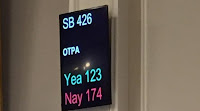
Thank you to NH House of Representatives for Defeating SB426

Nancy Elliott
Nancy Elliott
Chair - Euthanasia Prevention Coalition (EPC) USA

The New Hampshire House of Representatives recently defeated SB426, a bill to study Assisted Suicide Euthanasia. It was a surprising defeat.

EPC USA had worked closely with advocates in New Hampshire since the bill was first filed in the Senate. EPC USA and our allies educated the public and legislators on the dangers of Assisted Suicide and Euthanasia, including discrimination against the disabled, elderly, and ill who are encouraged to commit suicide while the young and healthy get suicide prevention.

The bill's proponents had called for a Commission to Study End of Life Options, particularly "Aid in Dying," but bill sponsor Senator Kelly admitted at the Senate hearing that the real target was Assisted Suicide.

Not only, then, was this commission clearly a showcase for Assisted Suicide, the proposed commissioners were loaded with activists likely to support this radical measure. While the commission claimed it would listen to stakeholders, people who would be affected by the proposed legislation, the commission would not even have had a single representative from a disability community group or seniors group. These are the two communities in the crosshairs of this type of legislation.
Nonetheless, the bill had come out of the Judiciary Committee with the recommendation of Ought to Pass with Amendment.

In the House Judiciary Committee hearing, John Kelly, regional director of disability community group Not Dead Yet, advocated for the rights of the disabled and elderly. Dr. Richard Johnson of New Hampshire and Dr. Paul Saba of Physicians for Social Justice, based in Montreal, testified that doctors make mistakes, and with treatment many of these people could live for years to come.

EPC USA's coalition members worked in the Senate and the House to educate legislators on the dangers of SB426. And at the last minute, NH House members secured enough votes to soundly reject this idea on the House floor.

Passing this bill would not have implemented Assisted Suicide or Euthanasia, but it would have put us closer to it. And even the unbalanced commission would have created some appearance of legitimacy for any bill they pushed, no matter how radical. This is a great win for our New Hampshire advocates, EPC USA, and the citizens of New Hampshire.

For more information on this bill (Link).

New York NDY Activists Occupied Pro-Assisted Suicide Press Conference

This article was published on the Not Dead Yet website on May 12, 2016.


On Tuesday, May 10th, two van loads of disability rights activists from the Center for Disability Rights in Rochester, NY joined with center for independent living advocates from across the state to oppose bills that would legalize assisted suicide.

The activists began by occupying a pro-assisted suicide press conference room, wearing hot pink tshirts and signs that could not be ignored, as reported by NY State of Politics in the following excerpt:

Still, the press conference on Tuesday on the third floor of the Capitol outside of the Senate chambers was attended by opponents of the legislation. Clad in neon pink t-shirts from a coalition of disability rights groups called Not Dead Yet, critics of aid-in-dying policies say it could lead to the cheaper alternative of ending the life of a vulnerable patient rather than caring for them. 
“The bill doesn’t account for that,” said Todd Vaarwerk, a Buffalo resident. “The bill says OK, you can affirmatively do this. We believe people with disabilities will be the primary people affected by this legislation and we’ve got years of evidence to support that.”
The activists also delivered their message outside legislative chambers, as shown in photos.
A local television station in Rochester followed up by interviewing CDR’s Director of Advocacy, Stephanie Woodward, on video for broadcast on May 11.

Friday, May 13, 2016

Parliament Hill - Press conference - May 11, 2016

Presentation by Dr Lise Poirier-Groulx at the Press Conference on May 11, 2016

Dr Lise Poirier-Groulx
with Alex Schadenberg
First, I need to say that I am not an activist; I am not representing any particular group or organization.

I am a concerned physician… Je suis un médecin, troublée, comme bien d’autres, par la tournure des évènements, concernant l’euthanasie et le suicide assisté.

Throughout the history of the civilized world, Physician Assisted Death has always been a forbidden medical act. The foundation of medical ethics is being shaken to its core.

Today, I hope to be a voice for those who’s lives are deemed “lacking in dignity and not worth living”; the sick and dying patients, and those living with disabilities, as well as dementia. The implication of Physician Assisted Death is the unspoken assumption, under the guise of self-determination, that it is better to die than to live with a disability.

Comme médecin de famille et psychothérapeute depuis plus de 30 ans, j’ai eu le privilège, auprès de mes patients, d’être témoin de leurs plus grandes souffrances.

It has been my clinical experience, which is supported by research, that the overwhelming majority of patients do not want to die. They do however want to end their pain; succumbing to despair and hopelessness they may want to end their lives, especially if they are lacking in support.

I remember as naïve medical students, the faith we had in our mentors, who were teaching us the art and science of Medicine, in order to “cure disease, save lives and relieve human suffering”. And that is exactly what we set out to do upon graduation.

La plupart de nous avons pris notre serment d’Hippocrate au sérieux. Comment pouvons-nous donc maintenant nous réconcilier au dilemme qui nous est présenté?

Times have changed…In this time of great scientific discovery, medical treatment has become highly sophisticated; pain and suffering are being managed like never before… And yet… isn’t it ironic that it is precisely at this time in history, that we are removing the legal safeguards against euthanasia and assisted suicide?

Physicians are put in a position of having to decide, without precise scientific guidelines, who will receive suicide prevention and who will receive suicide assistance; the main criteria being disability. Assessment of “life span” is notoriously lacking in precision, and evaluation of “quality of life” is consistently misjudged. Without explicit legal parameters to protect vulnerable individuals, this sets the stage for discrimination and abuse.

Très tôt dans ma pratique médicale, j’ai pû observer de façon remarquable, que les gens les plus heureux n’étaient pas ceux qui avaient le moins soufferts.

Dr. Scott Kim, with his team of researchers, has examined euthanasia for psychiatric reasons in the Netherlands (JAMA Psychiatry, Feb 10, 2016) and he states: 
“There is no evidence base to operationalize “unbearable suffering”, there are no prospective studies of decision-making capacity in persons seeking euthanasia and assisted suicide for psychiatric reasons.”
Since most diagnoses of “grievous and irremediable medical conditions” are initially accompanied by acute psychological distress which often results in depression, the assessment of the decision-making capacity of an individual is fret with uncertainty.

Dr. Victor Frankl, le neurologue et psychiâtre, autrichien, un survivant du camps de concentration de Auschwitz, dit: “…Et si la vie a un sens, il faut qu’il y ait un sens à la souffrance… La façon don’t un être humain accepte son sort et toute la souffrance que celà implique… lui donnent amplement l’occasion – même dans les circonstances les plus difficiles – de donner un sens plus profound à sa vie. Il peut alors agir avec dignité…”

I would like to end my statement with the words of my patients, those whom I have accompanied when they were suicidal. I was stunned to hear them say to me afterwards: 
 “Thank you doctor. You saved my life when I wanted to end it.”
Lise Poirier-Groulx MD FCFP, CGPP, CCFP

Will Johnston - speech euthanasia on euthanasia Bill C-14 - Victoria BC - May 12, 2016

Dr Will Johnston
Dr Will Johnston
Chair, Euthanasia Prevention Coalition of BC

I have a dream, and in that dream the Parliament of Canada debates far into the night to perfect a new law. The new Bill has the support of the majority of our elected representatives. It strives to get just the right balance between Federal and Provincial powers over matters of life and death. In my dream hundreds of Canadians testify before Committees and Panels and town hall meetings. They all want a better Canada. In my dream our Parliament is working against a deadline to get a law into place which honors the highest aspirations of our civilization. Finally the law has passed through the Senate and passed through Parliament and one day, let’s imagine June 6 of the year in my dream, the law goes into force.

What a law! What an achievement, worth every one of those late nights of intense Parliamentary debate and Special Joint Committees and Provincial Territorial Expert Panels and External Panels and town hall meetings and letters and papers and open-line radio shows and documentaries.

In my dream the new law says that anyone in severe pain anywhere in Canada is treated like a cardiac arrest, an emergency which activates a team of specially trained people. Anyone who is depressed and suicidal, anywhere in Canada, is treated like a house on fire, with immediate attention from another team of specially but of course differently trained people. People who are trying to live independently with major disabilities are funded and equipped like a Canadian Olympic team should be. Families with children with disabilities are treated like royalty. Having a disability or having a family member with a disability guarantees you will be kept far above the poverty line, never below that line and forgotten in the economic ditch. A report of possible elder abuse is by law to be treated like an Amber Alert, and abusers exposed to the clear light of emergency inquiry.

What a dream. When the real Canada wakes up on June 6th, it will be to a new law far removed from my dream. Instead, our great nation labored and brought forth – what?- a legal excuse to protect a doctor or nurse from a murder charge as long as they are under the opinion that you fit the right criteria before your death is inflicted. The law will let someone else sign you up, unlimited doctor shopping to find two of them to agree you are better off dead, no independent objective review before the planned death, no required notification of family members, no need for you to be actually dying, no need to be offered alternatives to suicide, no guarantee the death certificate will state the true cause of inflicted death, no requirement for a pain control assessment, no ban on health care workers being intimidated to cooperate.

The new law is careful to protect doctors. Mind you, doctors are not protected in order to use their consciences, they are protected while making mistakes causing wrongful death.

The polls show that people can imagine choosing the time of their own deaths. People expect that when that time comes , they will be in control. They think they have been given a new right, but instead they have lost the protections built into the old law. Someone will have control, all right, just maybe not always you.

To reassure those euthanasia activists for whom the new law could never go far enough, the preamble to the law promises that once the dust has settled we will look at killing children, and people whose only problems are psychiatric, and people who are cognitively disabled.

How could this happen? Parliament defeated at least 13 attempts to make such a law over the past 20 years. Basically, medically inflicted death got draped with medical prestige by the same brilliant marketing that sells everything else in our culture. The polls reflected a public who bought the marketing and didn’t get the whole picture. Then came the judges. Politicians are expected to watch the polls, judges are expected to apply the laws. Something got mixed up and judges started giving more deference to the polls than to Parliament. But judges who look to opinion polls are looking in the wrong place. Some things are wrong even when nobody will say they are. A wrong thing can’t be turned into something good and true by a poll, a judge, or a law.

So what can every one of us do?

Go to www.canadiansforconscience.ca and click on” Federal Government” and send a letter to Members of Parliament or Senators or our Justice Minister. Conscience protection is the only way that a safe haven can be maintained in our health care system. Remember that our Catholic hospitals are our best chance to keep safe places for our families in the health care system. Be ferocious in the defence of these hospitals and do anything you can to support them.

At the start of this speech I listed truly good things waiting to be done. Be full of gratitude for the freedom to do good and do it any way you can.

Thankyou.
Dr Will Johnston.


Thursday, May 12, 2016

UNICEF policy adviser supports euthanasia for "mature minors."

Alex Schadenberg
Executive Director - Euthanasia Prevention Coalition

Hugh Scher and I presented to the Senate Legal and Constitutional Affairs Committee this morning concerning Bill C-14, the bill that will regulate euthanasia and assisted suicide in Canada.

The first presenter in the session was Marvin Bernstein, a lawyer and the chief policy adviser for UNICEF Canada. UNICEF is the United Nations Children's Fund.

In his testimony before the Senate Committee, Bernstein stated that the right to euthanasia should be extended to "mature minors."

Bernstein stated that he endorsed the Provincial-Territorial Expert Advisory report that was stacked with pro-euthanasia "experts" and he endorsed the Special Joint Committee on Physician-Assisted Dying that advocated euthanasia for people with dementia, people with psychiatric conditions and "mature minors."

Marvin Bernstein
Bernstein argued that court cases and international human rights agreements suggest that denying euthanasia to "mature minors" infringes upon their equality rights.

Senator Don Plett asked Bernstein how his position on euthanasia for children fits within UNICEF's Mission statement?

UNICEF's Mission Statement says:
UNICEF is on a mission to reach every child and ensure their well-being, no matter where they are in this world. There’s no limit to the lengths UNICEF will go, the risks we’ll take or the depth of our commitment to save children’s lives... 
We are committed to take action, save, rehabilitate and watch over children, with a special attention to the most vulnerable and excluded groups. 
UNICEF utilizes its influence not only to provide safety for children in need, but also to make a noticeable change in their overall outlook on life. UNICEF believes that if we create a safe, nurturing environment, then every child will get a chance in life regardless of circumstances. 
As part of the UN, we are active in more countries and have saved more children’s lives than any other humanitarian organization.
Bernstein didn't answer the question.

Bernstein's comments to the Senate Committee are representative of an organization that has forgot its mission statement and lost its way. UNICEF was founded to save life not kill.

Victory: New Hampshire assisted suicide study bill defeated.

Alex Schadenberg
Executive Director - Euthanasia Prevention Coalition


Nancy Elliott, the Chair of the Euthanasia Prevention Coalition USA reported that the New Hampshire assisted suicide / euthanasia study bill SB426 was clearly defeated by a bi-partisan vote 174 - 123.

Elliott warned New Hampshire citizens that SB426 was a trojan horse designed to lead to the legalization of assisted suicide and possibly euthanasia in New Hampshire.

Elliott, who is a former three term New Hampshire representative stated in a recent article:
We have studied this topic extensively in New Hampshire. This bill [in its original form, without the proposed House amendment] talks about end of life choices, but singles out “Aid in Dying” – a euphemism for assisted suicide and euthanasia. It is apparent that the “choice” that this bill wants to promote is suicide. By rolling this into a commission stacked with pro-euthanasia people, this idea can be foisted on the citizens of New Hampshire. It gives a platform for pro-assisted suicide / euthanasia advocates to have a platform to push this with. 
[I saw] in my time in the New Hampshire State House where these commissions used their power to bring in huge hybrid bills and push things on the state that are not necessarily vetted well by legislators, only [by] commissions. These commissions are stacked with what they call stakeholders, generally supporters of extensive changes to our laws. 
Nancy Elliott
Elliott has become a leader in the movement to protect people from assisted suicide. Elliott recently explained why assisted suicide is so dangerous:

Assisted suicide/euthanasia is abusive in its very nature. To suggest that someone kill themselves is abuse, and that is exactly what we do when we put these laws in place.

[Assisted suicide] laws are ripe for elder abuse. Generally, your heir can sign you up [for advance directives] and speak for you. There is no witness required at the death [caused by prescribed-suicide drugs], so if the lethal dose was given against the patient’s will, no one would know. And then the death certificate is falsified to say the person died of natural causes, leaving any prosecution for wrongdoing impossible. 
It is also aimed at people with disabilities. While young healthy people are counseled against suicide, people with disabilities are encouraged to commit suicide. Think about it: just having a doctor or nurse suggest that you might want to consider suicide is abusive.

Another huge problem is that doctor predictions [about life expectancy with terminal illness] can be wrong. Many people are alive years and decades after they were told there was no hope. With assisted suicide and euthanasia on the table, they could throw away their lives. In Oregon, where assisted suicide is legal, state-run Medicaid Insurance has denied coverage for medical treatment while offering to pay for a lethal dose of drugs. This should send a chill up all our spines. Oregon also seems to be showing signs of suicide contagion; rates have risen since legalization.

Assisted suicide /euthanasia are dangerous public policy and should be rejected. This proposed commission is just a Trojan Horse to bring these policies to New Hampshire.
EPC-USA is hosting a leaders meeting on Monday, May 23 in Washington DC. For more information email: info@epcc.ca

Tuesday, May 10, 2016

New Zealand Govt-funded euthanasia research paper is a “shabby conclusion to a deceptive beginning”


Media release by Care Alliance, 10 May 2016

Matthew Jansen, Secretary of the Care Alliance, has questioned the value of a Government-funded study by University of Auckland researchers Phillipa Malpas and Pam Oliver into attitudes of New Zealand doctors and nurses to the legalisation of so-called ‘assisted dying’.

Last year Mr Jansen revealed that survey participants were not being told that Drs Malpas and Oliver were members of the Voluntary Euthanasia Society, or that the study was being funded by the Health Research Council.

“The paper they are now distributing is a shabby conclusion to a deceptive beginning” said Mr Jansen. “Their paper slices and dices the numbers in ways that are highly misleading to a casual reader. For example, a small print footnote says that responses from people who ‘strongly disagreed’ with legalising assisted dying were excluded from subsequent analysis. The views of 175 doctors and nurses suddenly disappear from consideration by that sleight of hand alone. That is why their statement that 37 percent of doctors ‘strongly or mostly’ agree with legalising ‘assisted dying’ is simply untrue.”

Mr Jansen also noted that the authors say the survey was anonymous, but then disclose that four days’ worth of responses were removed ‘due to notice of two faked responses by a TVNZ journalist’. “Either it was anonymous or it wasn’t,” said Mr Jansen. “In fact, how do they know that any of the responses were done by doctors and nurses, and only done once per person?”

Mr Jansen said the report should be approached with intense skepticism. He noted, for example, the suggestion in figure 13 that 7.7 percent of doctors have hastened death by administering or supplying a lethal dose of medication is grossly misleading. 

“First, it is 12 out of 155 doctors, not the 368 doctors who completed the survey. Secondly, it appears to include medication given with the intention of relieving pain but that may have the effect of hastening death, which is standard, legal and ethical treatment right now.”

“Once again the euthanasia lobby is showing that it cannot be trusted with data and facts,” said Mr Jansen. “It’s all about scaring up some headlines, and hoping nobody digs deeper. This whole taxpayer-funded exercise has been a shambles from beginning to end.”

Monday, May 9, 2016

Québec: 50 euthanasia deaths in 5 months. No new commitment to palliative care.

This story is written by Amy Hasbrouck. It includes quotes and sections translated from that an article by Davide Gentile of Radio Canada that appeared in the Huffington Post online on May 4, 2016. Link to the original article.

Amy Hasbrouck
Amy Hasbrouck - is a lawyer and the founder of the disability rights group Toujours Vivant - Not Dead Yet and is the EPC Vice President.


Five months after Québec’s euthanasia law went into effect, about fifty people have been euthanized according to health Minister Gaetan Barrette, according to an article by Radio Canada that appeared in the Huffington Post website.

Health Minister Barrette said the rate is normal. "Many people were waiting for the implementation of the law," said Gaétan Barrette. "I do not think we are headed to unbridled growth," he said.

Some doctors who work in palliative care are concerned that more emphasis has been placed on the roll-out of the euthanasia program than toward providing palliative care.

"We do not feel the same mobilization to increase access to palliative care," says Christiane Martel, president of the Quebec Society for Palliative Care. "The majority of people still want to just comfort care at end of life."
Dr Christiane Martel
Martel recalls that access to quality palliative care was the primary objective of the Act concerning the end of life care adopted in June of 2014. 
"In palliative care, we do not see much improvement in resources. But we see a lot of resource mobilization for medical help to die."
Dr. Martel is concerned that meagre hospice care in some regions will affect the number of requests for euthanasia. "I think we must ensure that no one requests medical help to die because we did not have the proper care," she said.

Martel’s colleague Marjorie Tremblay believes that there is a serious problem. 
"What I see in my field every day are patients who don’t have palliative care in their area. I find it appalling!"
She believes that patients whose pain is relieved overwhelmingly reject medical help to die.

She believes Québec should develop an information campaign on palliative care. 
"Have you seen palliative care promoted since the implementation of the law? I have not even heard the term ‘palliative care’!"

Tremblay also deplores the confusion among some people between physician assisted dying and palliative care; they simply want to avoid suffering in the dying process. "Some people are afraid they will be given the lethal injection if they come into palliative care,” she said.

Health minister Barrette believes their findings are exaggerated. "I do not think people say, ”If I don’t get a palliative care bed, I will ask for medical help to die!" I am convinced that it does not happen," insists Barrette.

He says that with few exceptions, the number of palliative care beds in institutions is sufficient. Improvements need to be made, for example, in the Shawinigan area and in eastern Montreal.

However, the minister admitted that home-based palliative care services must be improved. Currently, about 11% of Quebecers end their days at home. Quebec wants this number to increase to 22% within 5 years.

California Hospital says 'NO' to Assisted Suicide.

This article was originally published by Wesley Smith on his blog on May 6.

Wesley Smith
By Wesley Smith

In California, it is a time of choosing for individuals, families, and the medical sector.

Will doctors prescribe poison to their terminally ill patients, if asked? Will hospitals allow patients to commit suicides on premises?

If asked, will people attend the suicides of their ill loved ones, thus validating their worst fears and becoming morally complicit by their own participation? I have urged an across-the-board policy of “total non-cooperation.” Assisted suicide may be legal, but no one can (yet) be made to participate in it.

Now, a courageous hospital appears on the verge of declaring itself an assisted suicide free zone. From the LA Times story:
Medical leaders at Huntington Hospital in Pasadena voted behind closed doors this week for the facility’s hundreds of doctors and affiliated personnel to opt out of California’s assisted suicide law, which goes into effect June 9. 
If the proposed amendment to the hospital’s medical rules is approved by the board of directors this month, Huntington will become one of the largest non-religious medical institutions statewide to turn its back on a law that Gov. Jerry Brown called “a comfort” to anyone “dying in prolonged and excruciating pain.”
Did you catch the columnist’s bias? Data from Oregon, Washington, Netherlands, Belgium, etc., all show that people do not commit assisted suicide due to “prolonged and excruciating pain,” but existential fears about being a burden, losing dignity, etc.

These are crucial issues that demand a compassionate, suicide prevention response from caregivers, cruelly denied to most patients who ask for assisted suicide.

More to the point of total non-cooperation: Assisted suicide isn’t just about the patient who wants to die.
• It is about our individual and collective response to their despair. 
• It is about the adverse impact on culture and our view of the importance of human life, reflected in the fall off the vertical moral cliff seen in Netherlands, Belgium, and Switzerland. 
• It is about the impact on other seriously ill patients, struggling with existential terrors who could be dragged down by the suicide taking place down the hall or across the street. 
• It is about whether we will surrender to the culture of death or peacefully resist with every ounce of our being.
The culture of death brooks no dissent. This column is intended to ratchet up the pressure on the hospital–because it is secular–to yield to the suicide agenda.

I just hope its board of directors will stay true to medicine’s Hippocratic calling and keep their nerve. Just because something is legal, that doesn’t make it right.

Mel Arnold MP opposes euthanasia Bill C-14 based on the unclear language of the bill.

Alex Schadenberg
Euthanasia Prevention Coalition

Mel Arnold MP
On Wednesday May 4, I had the opportunity of speaking to a group of 80 people in Vernon BC, as part of a BC speaking tour. 


An article published in the Vernon Morning Star reported that the local member of parliament, Mel Arnold, voted against Bill C-14 based on the response from his constituents and the unclear language in the bill. The Morning Star reported Arnold to have stated:
“Legislation of this gravity must be precise in the conditions and safeguards it sets out leaving no room for ambiguity or misinterpretation,” 
“We need to fully consider all the implications of what is being presented in the bill,”
Alex Schadenberg
The Morning Star commented on the media release sent out after my presentation: 

Schadenberg says Bill C-14 fails to protect the vulnerable. 
“When signing a request for euthanasia, the bill requires that a medical or nurse practitioner to only: be satisfied that the request was signed and dated by the person, which is a pretty minimal standard,” 
When the person is unable to sign the request, the bill allows anyone to sign the request. Section 4 states: anyone can sign the request so long as they are at least 18 years of age and who understands the nature of the request. That’s a frightening thought.”
The Euthanasia Prevention Coalition is urging our supporters to write/contact Members of Parliament and Senators concerning Bill C-14. The language employed by Bill C-14 is imprecise and dangerous.

Saturday, May 7, 2016

Garnet Genuis MP: Without amendments, euthanasia Bill C-14 "will protect no one."

Garnett Genuis is the Member of Parliament from Sherwood Park / ­Fort Saskatchewan.

Garnet Genuis
I want to be clear that I do not believe in an all-or-nothing approach. Many of my colleagues and I who have broad philosophical concerns about what is happening here are still willing to vote in favour of legislation that does not re-criminalize euthanasia, if it advances positively in the direction of saving some lives, especially minimizing the risk to vulnerable persons. However, this legislation does not contain meaningful safeguards. Without amendment, it will protect no one.

We know that this law has written exceptions. However, it has exceptions to the exceptions; and may I say it has exceptions to the exceptions that are not at all exceptional?

This legislation has a requirement for the provision of written consent. However, if people cannot provide written consent, someone else can do it on their behalf.

This legislation prescribes a waiting period. However, the waiting period does not apply in the event of possible imminent death or loss of capacity.

There is so much ambiguity here.

The government has said that mental illness is excluded. However, in section 241.2(2) the legislation clearly states that physical or psychological suffering qualifies a person to seek premature death.

The legislation says that death must be “reasonably foreseeable”. May I say that death is reasonably foreseeable for all of us? It is those who think that death is not reasonably foreseeable who probably need the medical attention. Why not put in the word “terminal”? When I was learning to drive, my mother thought that death was “reasonably foreseeable” every time we got into the car. That is no criterion.

There is a requirement that two physicians sign off. However, given the huge ambiguities, obviously doctors are likely to have a wide range of interpretations of the rules. The estimates are that there are 77,000 physicians in this country, and the likely practice of doctor-shopping will ensure that people who think they meet the wooly and ambiguous criteria can somewhere find two physicians.

The member for Victoria said earlier today that this is something doctors do every day. No, it is not. Doctors do not take lives every day. This is fundamentally different from the normal practice of medicine. When we have so many different doctors and opinions to choose from, these are not effective safeguards.

Given these five comically ridiculous exceptions to the exceptions, there is no doubt that detailed provincial legislation or regulation will be required in every case. Therefore, it is not at all clear to me what this law is supposed to accomplish.

Further, there are two key areas where the prevailing rules under this law would leave us demonstrably worse off than the Carter ruling alone.

First, there is a terrifying clause in this bill, which states that if someone kills someone else but can demonstrate, at least beyond a reasonable doubt, that he or she had a reasonable but mistaken belief that the criteria applied then that person cannot be penalized. We can find that at 241(6). Therefore, we can kill someone who did not consent and escape prosecution on the basis of reasonable but mistaken belief. Whatever is done, I implore the government to take this very dangerous section out. This is going even beyond the Belgian model.

Second, this legislation provides no protection for conscience rights, despite the court's clear statement that nothing in this decision required particular health care practitioners to be involved, and despite the clear assurance of the Canadian Medical Association that access does not require taking away section 2 conscience rights.

This legislation constitutes a perfect storm. Ambiguous criteria, no advance legal review, no conscience protection, and allowances for doctor-shopping are not meaningful safeguards at all. The bill leaves patients, seniors, the sick, and the disabled vulnerable to error and systemic abuse. We have seen this in Belgium before. I have quoted the studies during questions and comments. We do not want to go down this road in Canada at all. . . .

This article was published by Choice is an Illusion on May 2, 2016.

Friday, May 6, 2016

Dutch euthanasia deaths continue to rise in 2015.

Alex Schadenberg
Executive Director - Euthanasia Prevention Coalition


The Netherlands 2015 Euthanasia report indicates that euthanasia deaths continue to increase. According to the 2015 report, there were 5561 reported euthanasia deaths in 2015 up from 5306 reported euthanasia deaths in 2014

Since 2006, there has been a 289% increase in euthanasia deaths in the Netherlands.

There is also an increase in the number of euthanasia deaths for people with dementia and for psychiatric reasons. There were 109 people who died by euthanasia based on dementia in 2015, up from 81 in 2014 representing a 34% increase. There 56 people died by euthanasia based on psychiatric reasons in 2015, up from 41 in 2014 representing a 36% increase.

Similar to the 2014 report, there were only 4 cases referred by a Regional Euthanasia Control and Evaluation Commission for investigation.


In January 2016, the Netherlands decided to extend euthanasia to people with severe dementia. The Netherlands euthanasia lobby is now lobbying the government to approve euthanasia for people who are healthy but "tired of living."

in one EAS case, a woman who died by euthanasia was in her 70s without health problems had decided, with her husband, that they would not live without each other. After her husband died, she lived a life described as a "living hell" that was "meaningless." 
A consultant reported that this woman "did not feel depressed at all. She ate, drank and slept well. She followed the news and undertook activities."
Every five years the Netherlands conducts a major study on euthanasia. We are expecting to receive the 2015 study in early 2017. The 2010 study was published in the Lancet (July 2012) indicated that 23% of all assisted deaths went unreported in the Netherlands.

Thursday, May 5, 2016

Belgium Warns Canada: Oversight of euthanasia is an Illusion.

New Online Video Series: "Belgium's Advice to Canada."


Many doctors in Belgium no longer report cases of euthanasia because euthanasia is now considered a ‘normal medical procedure'. In this, our fourth and final video in "Belgium’s Advice to Canada: Oversight of euthanasia is an illusion", doctors, victims and advocates warn that effective oversight of euthanasia in Belgium is truly an illusion. The video features Etienne Montero, Lawyer Dean of the Faculty of Law of Namur; Tom Mortier, PhD; Prof Dr Benoit Beuselinck MD, PhD, Oncologist; and Marnix Coelmont, Teacher and Advocate.

As Canadians deliberate controversial Bill C-14 in light of the June 6 deadline, EPC is releasing select clips from our upcoming film, Vulnerable - The Euthanasia Deception, to be released in late June.

Please consider making a donation to the production of this film. We need and appreciate your support of any amount. Link to donate.

The first three videos in the series were:
The first video in the series is: “Medical Assistance in Dying - Don’t Go There!
The second video in the series is: Safeguards Are An Illusion.

The third video in the series is: “Protect Doctor’s Conscience Rights!

Contact Members of Parliament and Senators concerning Bill C-14.

Alex Schadenberg
Executive Director - Euthanasia Prevention Coalition

The two votes on May 4 in the House of Commons on the euthanasia Bill C-14, one to close debate and one to send the bill to committee do not change anything. 

The 235 to 75 vote to send Bill C-14 to committee was disappointing, but only procedural. The 165 to 140 vote to close debate on Bill C-14 was undemocratic but not surprising considering the Supreme Court imposition of June 6 to pass legislation on euthanasia and assisted suicide.

EPC is impressed by Robert Falcon Ouellette (Liberal MP - Winnipeg Centre) who has strongly opposed Bill C-14 (Link to his CBC interview with Ouellette).

The fact is, achieving political movement requires all of our supporters to send letters to Members of Parliament and Senators. We also ask you to attend our rally on Wednesday June 1 on parliament hill (12 noon to 1:30 pm).

EPC urges you, to write to Canadian Senators, especially the members of the Senate Committee on Legal and Constitutional Affairs with your concerns about Bill C-14.

EPC also urges you to contact the members of parliament on the House of Commons Committee on Justice and Human Rights, with your concerns about Bill C-14.

Resources for your communicating with committee members:
Link to the article on Bill C-14 by Alex Schadenberg.
Link to the article on Bill C-14 by the Physicians Alliance Against Euthanasia.
Link to the article on Bill C-14 by Dr Will Johnston (EPC - BC).
Link to the article on Bill C-14 by Andrew Coyne.
Link to the article on Bill C-14 by Amy Hasbrouck (Toujours Vivant - Not Dead Yet).
Speech in parliament by Liberal MP Robert Falcon Ouellette opposing Bill C-14.

EPC presented before the House of Commons Committee on Justice and Human Rights and we will be presenting to the Senate Committee on Legal and Constitutional Affairs.

We need you to write to the members of these committees.

Victory in New York Court - No right to assisted suicide.

This article was published on the Not Dead Yet website on May 3, 2016

A clear and welcome ruling came down Tuesday, May 3rd, from the NY Appellate Division in an assisted suicide case in which NDY filed a friend-of-the-court brief joined by ten other national and state disability organizations. The Court found no constitutional right to assisted suicide. Below is an excerpt from the 36-page decision:

[P]laintiffs rely on two papers that purport to offer empirical evidence that Oregon’s Death with Dignity Act, now in effect for over 20 years, has not invited the fears articulated by people opposed to aid-in-dying, such as an adverse impact on vulnerable populations, and the difficulty in distinguishing whether a wish to end one’s life is driven by a desire to control one’s death, clinical depression, or something else. However, even were a finder of fact to determine that aid-in-dying is “workable,” the issue before us transcends mere practical concerns. As the Supreme Court stated in Glucksberg, a state’s interest in preserving human life “is symbolic and aspirational as well as practical” (521 US at 729), favorably quoting the New York State Task Force, which observed:
“‘While suicide is no longer prohibited or penalized, the ban against assisted suicide and euthanasia shores up the notion of limits in human relationships. It reflects the gravity with which we view the decision to take one’s own life or the life of another, and our reluctance to encourage or promote these decisions.’ New York Task Force 131-132” (id.).
. . . . We find that, even giving plaintiffs the benefit of every reasonable inference, they have not presented sufficient allegations to suggest that the Penal Law has an implicit carve-out for aid-in-dying, or that, notwithstanding the precedents on the matter, the constitutionality of aid-in-dying is ripe for judicial reconsideration.

The issue before us unquestionably presents a host of legitimate concerns on both sides of the debate. As discussed above, plaintiffs present some compelling reasons for making aid- in-dying a legitimate option for those suffering from terminal illness. At the same time, the New York State Task Force on Life and the Law in 1994 “unanimously recommend[ed] that New York laws prohibiting assisted suicide and euthanasia should not be changed” (see Task Force, When Death Is Sought: Assisted Suicide and Euthanasia in the Medical Context [May 1994]). The Task Force based its view on the risks that could be presented to the elderly, poor, socially disadvantaged, and those without access to good medical care; and the role of treatable symptoms such as pain and depression in creating a desire for lethal medications. It also noted that most doctors lack a sufficiently close relationship to their patients to appropriately evaluate a request for help in ending life, and expressed the concern that it could open the door to euthanasia of those incapable of giving consent. We are not persuaded from the record before us that, even though society’s viewpoints on a host of social issues have changed over the last 20 years, aid-in-dying is an issue where a legitimate consensus has formed.

Wednesday, May 4, 2016

EPC: Write to Senators and Members of Parliament.

The Senate Standing Committee on Legal and Constitutional Affairs will be hearing interventions concerning Bill C-14, the bill that will legalize and “regulate” euthanasia and assisted suicide in Canada.

Last week, EPC urged you to contact the members of parliament on the House of Commons Committee on Justice and Human Rights, who hearing from groups and individuals from across Canada on Bill C-14

EPC needs you, to contact Canadian Senators, especially the members of the Senate Committee on Legal and Constitutional Affairs with your concerns about Bill C-14.

The Euthanasia Prevention Coalition (EPC) presented to the House of Commons Committee on Justice and Human Rights this week and next week we will be presenting before the Senate Legal and Constitutional Affairs committee. The Senate has the ability to amend or defeat Bill C-14. 

The Euthanasia Prevention Coalition is also organizing a rally on Parliament Hill on Wednesday June 1 from 12 noon to 1:30 pm.

Resources for your communicating with committee members:
Link to the article on Bill C-14 by Alex Schadenberg.
Link to the article on Bill C-14 by the Physicians Alliance Against Euthanasia.
Link to the article on Bill C-14 by Dr Will Johnston (EPC - BC).
Link to the article on Bill C-14 by Andrew Coyne.
Link to the article on Bill C-14 by Amy Hasbrouck (Toujours Vivant - Not Dead Yet).
Speech in parliament by Liberal MP Robert Falcon Ouellette opposing Bill C-14.

Contact information - Senate Committee on Legal and Constitutional Affairs members:

Committee Chair: Senator Bob Runciman (CPC) bob.runciman@sen.parl.gc.ca

Deputy Chair: Senator Mobina Jaffer (Lib) mobina.jaffer@sen.parl.gc.ca

Committee Member: Senator George Baker (Lib) george.baker@sen.parl.gc.ca

Committee Member: Senator Denise Batters (CPC) denise.batters@sen.parl.gc.ca

Committee Member: Senator Pierre-Hugues Boisvenu (IND) boisvp@sen.parl.gc.ca

Committee Member: Senator James Cowan (Lib) jim.cowan@sen.parl.gc.ca

Committee Member: Senator Nicole Eaton (CPC) nicole.eaton@sen.parl.gc.ca

Committee Member: Senator Serge Joyal (Lib) serge.joyal@sen.parl.gc.ca

Committee Member: Senator Thomas Johnson McInnis (CPC) thomasjohnson.mcinnis@sen.parl.gc.ca

Committee Member: Senator Paul McIntyre (CPC) paul.mcintyre@sen.parl.gc.ca

Committee Member: Senator Donald Plett (CPC) don.plett@sen.parl.gc.ca

Committee Member: Senator Vernon White (CPC) senatorwhite@sen.parl.gc.ca

EPC urges you to send letters to Members of Parliament and Senators. Link to contact Members of Parliament. Link to contact Senators.

Letters to Members of Parliament and Senators can be mailed (Postage Free) when using the following address:

(Name) Member of Parliament
House of Commons
Ottawa Ontario K1A 0A6

Senator (Name)
Senate of Canada
Ottawa Ontario K1A 0A4

Tuesday, May 3, 2016

Belgium's Advice to Canada: Protect Doctor's Conscience Rights!

New Online Video Series: "Belgium's Advice to Canada."


The first two videos in the series were released last week.
The first video in the series was: Medical Assistance in Dying - Don’t Go There!
The second video in the series was: Safeguards Are An Illusion.

Today EPC is releasing the third video in the series Belgium’s Advice to Canada titled: “Protect Doctor’s Conscience Rights!” Two doctors from Belgium discuss the contentious issue of conscience rights in their country since the law on euthanasia was passed 15 years ago. The online video features Prof Dr Benoit Beuselinck MD, PhD, Oncologist, Belgium; Catherine Dopchie, MD, Oncologist, Belgium; and Marnix Coelmont, Teacher, Advocate.

As Canadians deliberate on the controversial Bill C-14 in light of the June 6 imposed deadline, the Euthanasia Prevention Coalition is releasing four short videos entitled: “Belgium’s Advice to Canada” - select clips from our upcoming film, The Euthanasia Deception, coming June 2016.

Please consider making a donation to the production of this film. We need and appreciate your support of any amount. Link to donate.

The final video in the series will be released on Thurday, May 5: “Oversight is an Illusion” - Belgium’s Advice to Canada.

https://www.facebook.com/vulnerablefilm/ (Facebook)

EPC needs you to contact Members of Parliament.

The House of Commons Committee on Justice and Human Rights will be hearing interventions concerning Bill C-14, the bill that will legalize and “regulate” euthanasia and assisted suicide in Canada.

Several MP's have said that they are receiving more communication from members of the euthanasia lobby than from our supporters. 


EPC urges you to contact members of the House of Commons Standing Committee on Justice and Human Rights with your concerns about Bill C-14.

EPC also urges you to contact the members of the Senate Committee on Legal and Constitutional Affairs.


Resources information:
Link to the article on Bill C-14 by Alex Schadenberg.
Link to the article on Bill C-14 by the Physicians Alliance Against Euthanasia.
Link to the article on Bill C-14 by Dr Will Johnston (EPC - BC).
Link to the article on Bill C-14 by Charles Lewis.
Link to the article on Bill C-14 by Andrew Coyne.
Link to the article on Bill C-14 by Amy Hasbrouck (Toujours Vivant - Not Dead Yet).

Contact information for Committee members:

Committee Chair: Anthony Housefather (Lib) - Anthony.Housefather@parl.gc.ca

Committee Vice Chair: Ted Falk (CPC) - Ted.Falk@parl.gc.ca

Committee Vice Chair: Murray Rankin (NDP) - Murray.Rankin@parl.gc.ca

Committee Member: Chris Bittle (Lib) - Chris.Bittle@parl.gc.ca

Committee Member: Michael Cooper (CPC) - Michael.Cooper@parl.gc.ca

Committee Member: Colin Fraser (Lib) - Colin.Fraser@parl.gc.ca

Committee Member: Ahmed Hussen (Lib) - Ahmed.Hussen@parl.gc.ca

Committee Member: Iqra Khalid (Lib) - Iqra.Khalid@parl.gc.ca

Committee Member: Ron McKinnon (Lib) - Ron.McKinnon@parl.gc.ca

Committee Member: Hon. Rob Nicholson (CPC) - rob.nicholson@parl.gc.ca

EPC also encourages you to send letters to your Members of Parliament. Link to contact your Member of Parliament.

You can mail letters to Members of Parliament (Postage Free) by sending letters to:

(Name) Member of Parliament
House of Commons
Ottawa Ontario K1A 0A6