Thursday, April 17, 2014

Harold Shipman: Euthanasia without request or consent?

By Alex Schadenberg
International Chair - Euthanasia Prevention Coalition
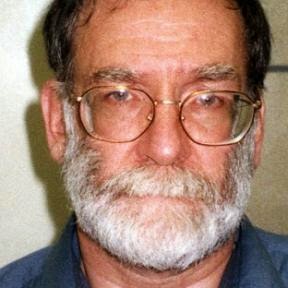
Harold Shipman was responsible
for at least 218 deaths.
The Associated Press reports that a recent two-part documentary marking ten years since the death of serial killer, Dr Harold Shipman, refers to his actions as euthanasia.

In 2000 Shipman was given 15 life sentences for murder, “although many more were suspected,” as the Press Association so cautiously phrases it. (According to The BBC, “police believe he may have actually killed up to 215 patients.”)

The documentary examines some of the deaths attributed to Dr Shipman and interviews some of the family members of his victims. The Associated Press article reports:
Jack Shelmerdine, whose father - also called Jack - died at the hands of the GP, said he and his family had a greater suspicion that there was a problem with hospital care than their doctor being at fault. 
The son of one of serial killer Harold Shipman's victims still maintains he was a "good doctor" and said he views the killing as "euthanasia". 
He had been present when Shipman delivered the lethal injection. Mr Shelmerdine recalled: " I was concerned that my father was still unconscious, still asleep as we were thinking, and I rang Dr Shipman and I remember his words were, 'Oh, he might well make it'. But those words, 'he might make it' seemed odd to me. 
"And I just wondered whether questions ought to be asked. I wasn't thinking in terms of Dr Shipman having done anything. We were more inclined to think that the hospital had done something wrong rather than Shipman.
Michael Swango was responsible
for approximately 60 deaths.
The problem with euthanasia without request is that some family members support euthanasia and often the family members are unaware of what is actually happening or comments from a family member are misconstrued resulting in death. This explains why statistics from Belgium indicate that up to 32% of all assisted deaths are done without request.

Reporting on part one of the documentary the article states:
In the first programme, Harold Shipman: Driven To Kill, a former colleague from his early years practising medicine at Pontefract General Infirmary, the then ward sister Margaret Sivorn, said he was a "brilliant doctor". 
"The consultants liked him. He got on well with his colleagues. The patients absolutely couldn't ever say a bad thing about him," she said. 
"They felt calm and comfortable with him and knew that he was looking after them properly. He was always professional, always, and you always felt at ease with him. He'd have a smile with them, a little joke with them, but professional to his fingertips."

Tuesday, April 15, 2014

Assisted suicide would bring a culture of death.

The following editorial was published on March 25, 2014 by The Telegraph UK. This editorial was published after UK Prime Minister David Cameron stated that he would be voting against the assisted suicide bill.


Legalisation leads to bureaucratisation, turning a matter of complex moral concern into one of legal box-ticking.

Prime Minister Cameron
David Cameron is right to warn of the dangers of legalising assisted suicide. Under the 1961 Suicide Act it is technically a criminal offence to help someone to die, but the Director of Public Prosecutions already issued guidelines four years ago to indicate that anyone who acted “out of compassion” would be unlikely to face charges. And yet Lord Falconer’s Bill to legalise assisted dying is before the Lords and the Government has indicated that it would permit a free vote on a measure that does not reflect a genuine need. Unless defeated, it could be the first uncertain step on a very slippery slope.

For a sense of what lies at the bottom of that slope, consider the Netherlands and Belgium. The Dutch liberalised euthanasia in 2001 and it was supposed to be limited to those with “unbearable and hopeless suffering” whose mental faculties were acute and who had no hope of relief. Since legalisation, the number of people dying through medical euthanasia has doubled – thanks in part to the operation of mobile euthanasia units that allow people to take their own life even if family doctors have refused to offer help. Among those who have died have been those with chronic depression and those in the early stages of dementia. In Belgium, meanwhile, euthanasia is now the cause of one in 50 deaths. A recent, high-profile example was that of 44-year-old Nathan Verhelst, who was helped to die when a botched sex-change operation left him with “unbearable psychological suffering”. Belgium has just become the first country in the world to permit euthanasia for chronically ill children.

Life can be full of pain and every sympathy should be extended to those who wish to die in dignity and peace. But legalisation leads to bureaucratisation, turning a matter of complex moral concern into one of legal box-ticking. Worse still, as we are seeing in the Benelux countries, it has the potential to become “normal”. Not only would this encourage ruthless relatives to persuade relatives to choose death, but it may also add to the wider societal pressure for the aged or the ill to see themselves as a “burden” on everybody else. We are already being bombarded with messages that our population is growing unmanageably old, fostering a culture of death. That is a culture that does not instinctively cherish all lives equally but rather directs attention and resources away from the infirm and towards the young and healthy.

One of the most important principles of medicine is “non-maleficence”, the ancient pledge to do no harm. The emphasis of health care must be to treasure life and safeguard it. The push for assisted suicide is a troubling challenge to that fine tradition.

People with disabilities don't want your pity and we don't want euthanasia.

The following letter was published by the Hamilton Spectator on April 15, 2014.

Sign the Declaration of Hope to oppose euthanasia and assisted suicide.


Steve Passmore protesting
euthanasia bill in 2009.
By Steve Passmore

I was born with cerebral palsy and I have lived all of my life with pain. I now have scoliosis which affects my mobility and gives me further pain. My prognosis is living with a wheelchair.

Steven Fletcher MP has introduced euthanasia bills with language that specifically focuses on people with disabilities because his bills are about him dying by euthanasia.

Fletcher is saying that he does not value his life, but I value my life and the lives of others with disabilities. His “right to die” ends at the point where it affects other people. Don’t take me down with your death wish.

As a member of parliament, Fletcher has the opportunity to make a difference in the lives of people with disabilities, to work towards improving social supports and living opportunities, but his euthanasia bills say that our lives are not worth living.

People with disabilities are at risk from euthanasia because they are often dependent on others who legally have the right to make decisions for them. Any legislation that lessens protections in law for people with disabilities is very concerning.

I have overcome many physical and social barriers in my life, I am busy wanting to live, but Fletcher’s bill directly affects my right to live.

People with disabilities, who live with a positive mind-set, show society how to overcome challenges. We see these challenges as opportunities for personal growth.

Fletcher wants your pity. People with disabilities don’t want your pity and we don’t want your death.

The concept of euthanasia creates great fear for me. Legalizing euthanasia or assisted suicide abandons me as a person. That society would rather help me die with dignity, than help me live with dignity.

We will fight for the right of people with disabilities to live with equality, value and acceptance.


Steven Passmore
Hamilton Ontario

Links to similar articles:
People with disabilities are not disposable.
People with disabilities protest Bill C 384.

Monday, April 14, 2014

Registered Nurses' Association of Ontario will vote on a Pro-Euthanasia Resolution at May 1 - 3 AGM

All RNAO members need to attend this historic RNAO AGM to oppose this resolution.  
Register for the RNAO Conference/AGM

RNAO members can vote against this resolution online between April 15 - 30.

Non-members can voice their opposition to this resolution (contact link).

RN Voice in National Discussion Regarding End-of-Life Care

Submitted by: RNAO Board of Directors


Whereas a national discussion is underway regarding end-of-life care with specific emphasis on ‘dying with dignity’ which involves a review of assisted suicide and/or euthanasia; and

Whereas the final decision on permitting assisted suicide and/or euthanasia rests with the public; and


Whereas there is support from all three provincial political parties to engage in a discussion regarding end-of-life care; and


Whereas RNAO is being asked by stakeholders and media to comment on this issue;

Therefore Be It Resolved That RNAO urge the provincial and federal governments to engage in formal public dialogue on end of life issues and dying with dignity, including discussions, related to assisted suicide and/or euthanasia; and

Therefore Be It Further Resolved That the following principles be considered when discussing assisted suicide and/or euthanasia:
● Personal autonomy and justice are fundamental principles
● Ensuring timely access to evidence-based palliative care must remain a top priority
● The government must reject calls for involuntary euthanasia
● Assisted suicide and/or euthanasia must never be considered within the context of cost-savings
● Procedural safeguards must be enacted, including:
○ Restricting assisted suicide and/or euthanasia to competent adults with terminal illness;
○ Requiring that requests for assisted suicide and/or euthanasia be initiated by the person seeking the service and would be subject to a thorough review process that includes: independent confirmation on terminal illness; determination of capacity by a mental health-care professional (with appeal to the Consent and Capacity Board); providing access to all reasonable alternatives and establishing a waiting period.
● The practice of assisted suicide and/or voluntary active euthanasia must be restricted to professionals who have sought designated education and training.
● No health professional or organization should be required to participate in assisted suicide and/or voluntary active euthanasia.
● A provincial monitoring and reporting system must be developed, including a process for responding to complaints.
This resolution on End-of-Life Care contradicts the RNAO policy concerning Patient Safety.

Links to articles related to nursing and euthanasia:
● Legalizing euthanasia and assisted suicide is not safe. Patient safety must come first.
American nursing association opposes assisted suicide.
● Nursing ethics and euthanasia.
● Quebec nurses and palliative care leaders so no to euthanasia.
Belgium nurses are involved with euthanasia without request - nearly half of the time.
Research article confirms that Belgian euthanasia law is abused.

Sunday, April 13, 2014

Woman needed help not assisted suicide.

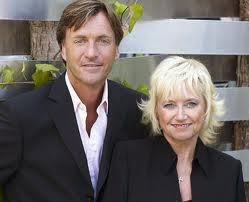
The following article was written by Richard and Judy and published in the Daily Express on April 12, 2014.

By Richard and Judy, Express - April 12, 2014.


Richard and Judy
In a week of disturbing stories right across the news gauntlet – Peaches, Pistorius, the political car-crash of Maria Miller – one dark and troubling tale went almost unnoticed: The death of a retired art teacher, only identified as Anne, by assisted suicide at the infamous Dignitas clinic in Switzerland.

The truly disturbing nature of Anne’s story is this: she was not suffering from any form of terminal disease. True, at 89, she had had her health problems – diseases of the lung and heart, requiring spells in hospital (which she hated). But she wasn’t dying of cancer, or one of the nasties such as Huntington’s Chorea, or multiple organ failure.

Anne simply felt alienated from the modern world. Speaking days before she died – from a lethal dose of drugs provided by the clinic – she said she felt she faced a choice either to “adapt or die”, and announced she was not prepared to adapt to a world in which technology took precedence over humanity. She added that she had become frustrated with the trappings of modern life, such as fast-food, consumerism, and the amount of time people spend watching television.

“They say ‘adapt or die,’” she said, having already made the decision to take the latter option by drinking a deadly dose of barbiturates. “I find myself swimming against the current, and you can’t do that. If you can’t join them, get off... all the old fashioned ways of doing things have gone.” Now you may or may not agree with Anne’s world view, but judging by her comments (and there were more in the same vein) it sounds very much to me as if the poor woman was suffering from a classic case of clinical depression – feelings of hopelessness, alienation, despair and suicidal thoughts.

Is that a condition Dignitas should be giving itself permission to treat with a lethal cocktail of drugs? I don’t think so. Its own rules state that it will only provide help in cases of “illness which will lead inevitably to death, unendurable pain or an unendurable disability”.

Anne’s niece, Linda, 54, accompanied her aunt to Zurich and was by her side when she died. She has said she “cannot think of a better death”.

Hmm. I don’t doubt her personal belief in that statement and I am sure she genuinely believes she did the right thing by her aunt. But Anne’s death raises disturbing questions. What if she’d been 10 years younger, say, 79, but held exactly the same bleak view of the world? Would she still have been offered assisted suicide?

Or what about 69? Or 59? At exactly what point does the combination of (undiagnosed) depression plus advancing years get the thumbs-up from the Dignitas doctors?

Personally I have always supported the principle of assisted suicide but Anne’s exit from this world has made me seriously wonder if it can ever be properly controlled.

This disturbing story could be the thin end of a very unpleasant wedge.

Belgium euthanasia: accelerating down the slippery slope

By Michael Cook, Mercatornet.com - April 13, 2014 (Link to the original).

Involuntary euthanasia is acceptable medical treatment, according to a recent official statement by the Belgian Society of Intensive Care Medicine. Although voluntary euthanasia is legal is Belgium under some circumstances, involuntary euthanasia is basically illegal.

The Society has decided (decreed may be a better word) that it is acceptable medical practice to euthanase patients in critical care who do not appear to have long to live -- even if they are not suffering, even if they are not elderly, even if their relatives have not requested it, even if they have not requested it and even if it is not legal.

The Society spells out its policy very carefully. It is not about grey areas like withdrawing burdensome or futile treatment or balancing pain relief against shortening a patient’s life. It clearly states that “shortening the dying process by administering sedatives beyond what is needed for patient comfort can be not only acceptable but in many cases desirable”.


“Shortening the dying process” is a euphemism for administering a lethal injection.

Most dying patients in intensive care have not made advance directives and “are usually not in a position to request euthanasia”. Therefore, “difficulty can arise when the purpose of the drugs used for comfort and pain relief in end-of-life management is misconstrued as deliberate use to speed the dying process.” The Society’s solution to this difficulty is to allow its members to kill the patients.

Effectively the Society has declared itself to be above the law. However, with the backing of the Society, it is unlikely that Belgian doctors would be prosecuted. It will be interesting to see how the government reacts.

The Society also says that intensive care doctors should inform relatives of a decision to euthanase a patient, but it does not instruct them to ask for the relatives’ permission. The policy applies to both adults and children. Furthermore, patients do not have to be suffering; “Shortening the dying process” can actually enhance death, the statement says.

The statement concludes by reassuring intensive care doctors that what they are doing is “not be interpreted as killing but as a humane act to accompany the patient at the end of his/her life.”

In February the lead author of the policy, Jean-Louis Vincent, a former president of the Society, published an op-ed in the leading Belgian newspaper Le Soir explaining the Society’s position. He complained that intensive care doctors were working in a “legal no man’s land” and that Belgium needs a law which bans overly aggressive therapy. He believes that advance directives are worse than useless and that doctors need to be able to give lethal injections to shorten lives which are no longer worth living, even if the patients have not given their consent. “The first purpose of medicine is to restore or maintain health, that is, the well-being of the individual, not life at all costs,” he wrote.

Does anyone need any more evidence to prove the existence of a slippery slope in Belgium?

Michael Cook is editor of MercatorNet.


Link to other recent article:
Belgium ICU doctors kill patients.

Saturday, April 12, 2014

Voters in Quebec have spoken out against euthanasia, but that doesn't mean the issue has died.

The following article was pubished by OneNewsNow on Friday April 11, 2014.

Alex Schadenberg
Quebec lawmakers were considering legalizing euthanasia before the election was called.

Alex Schadenberg of the Euthanasia Prevention Coalition tells OneNewsNow the election this week does not reflect public opinion on just one issue.
"I think there were many issues that had Quebecers vote against this government," Schadenberg advises. "The fact is though is that it's a big victory for people opposed to euthanasia and assisted suicide because the ideological push for euthanasia has now been lessened in a serious manner."
OneNewsNow reported Wednesday that an effort by some to separate Quebec from Canada was defeated at the polls.
Even though the Quebec Liberals won a majority government over the separatists in the election, there are a few members of the Liberal Party that support euthanasia.
"The other sad factor in Canada is the issue of euthanasia will be going to the Supreme Court of Canada on October 14 this year," Schadenberg tells OneNewsNow. "So no matter what happens, the issue of euthanasia will be front and center in the Canadian context."
Also capturing the attention of Quebec voters was a proposal to bar government employees from wearing symbols of their faith such as the cross on the job.

Thursday, April 10, 2014

Western Australian Legislative Motion: Opposing Euthanasia - Promoting Palliative Care

Hon Nick Goiran, Liberal MLC from the Western Australian Legislative Council, representing the South Metropolitan region presented the following motion and speech opposing euthanasia and assisted suicide and promoting palliative care.

Hon Nick Goiran
Hon Nick Goiran is also the co-convenor of the Parliamentary Friends of Palliative Care in Western Australia.

From Hansard

Euthanasia Motion 

HON NICK GOIRAN (South Metropolitan) [11. 37 am] without notice: I move: 

That this House:
(a) noting that:
(i) the Belgium Parliament has recently authorised the direct killing of children through euthanasia; 
(ii) euthanasia or assisted suicide is now routinely performed in Belgium and the Netherlands on persons with no terminal illness but with psychiatric disorders such as anorexia or depression or with disabilities such as blindness; and 
(iii) Dr Philip Nitschke during a recent visit to Perth offered instruction in methods of suicide including how to illegally obtain pentobarbitone, a schedule 8 poison, and how to use nitrogen as an undetectable means of ending life;  
(b) condemns the practice of child euthanasia;
(c) commends palliative care as an appropriate response to terminal and chronic illness;
(d) affirms the value of every human life including those with mental illness or disability; and
(e) endorses suicide prevention as the appropriate response to all those who for whatever reason may think life is not worth living. 
Hon Nick Goiran:
When I last spoke on the issue of euthanasia and assisted suicide in my contribution to the budget debate on 17 October last year, there was so much compelling evidence from Oregon on the dangers involved, there was insufficient time for me to address the situation elsewhere around the globe. On that day, the Tasmanian House of Assembly rejected the Voluntary Assisted Dying Bill 2013, dismissing the claim by proponents that legalised euthanasia was working well in Oregon, the Netherlands and Belgium as unfounded. 

Sadly, since then Belgium has legalised the killing of children by euthanasia, and Dr Philip Nitschke has brought his travelling circus to Perth, touting his latest deadly toy—the nitrogen cylinder.


Tom Mortier's mother
I turn to the issue of Belgium, where deaths by euthanasia have increased sixfold since it was legalised in 2003, from 235, to 1432 in 2012. In Flanders in 2007, nearly one-third of deaths by euthanasia were brought about without any explicit request from the patient. Although the law only authorises doctors to perform euthanasia, nurses administered the legal drugs in 12 per cent of cases involving an explicit request, and in 45 per cent of cases without an explicit request. Belgium allows organ donation after euthanasia, including from people with psychiatric disorders, such as a woman suffering from auto-mutilation, which is cutting to cause self-harm. Her consent was accepted as valid, despite her mental illness. Tom Mortier, whose mother was euthanased in April 2012 for chronic depression, wrote in an article on 4 February last year that: 
I was not involved in the decision-making process and the doctor who gave her the injection never contacted me. ...  
How is it possible that people can be euthanased in Belgium without close family or friends being contacted? Why does my country give medical doctors the exclusive power to decide over life and death? How do we judge what "unbearable suffering" is? ... Can we rely on such a judgment for a mentally ill person?  
After all, can a mentally ill person make a "free choice"? ... How can a medical doctor be "absolutely certain" that his/her patient doesn't want to live anymore?
In December 2012, deaf identical twin brothers were euthanased for distress at learning they were going blind. Dr Marc Maurer, president of the US National Federation of the Blind said: 
"This disturbing news from Belgium is a stark example of the common, and in this case tragic, misunderstanding of disability and its consequences. Adjustment to any disability is difficult, and deaf–blind people face their own particular challenges, but from at least the time of Helen Keller it has been known that these challenges can be met, and the technology and services available today have vastly improved prospects for the deaf–blind and others with disabilities. That these men wanted to die is tragic; that the state sanctioned and aided their suicide is frightening." 
In late 2012, 44-year-old Ann G was euthanased for unbearable psychological suffering. She had been treated for anorexia since her teenage years by psychiatrist Walter Vandereycken. In 2008 she accused him of sexually abusing her under the guise of therapy. In October 2012, Vandereycken admitted to sexually abusing his patients. Following this, Ann G spoke of temporary relief from "the cancer in her head", but subsequently persisted in her request for euthanasia. Sadly, she will not be able to testify against her abuser if charges are laid. 

In September 2013, Nathan Verhelst was euthanased for unhappiness following a sex change operation. Nathan, who was born Nancy, had been rejected by a family who hated girls. Verhelst's mother was quoted in the United Kingdom's The Telegraph at the time as saying: 

"When I saw 'Nancy' for the first time, my dream was shattered. She was so ugly. I had a phantom birth. Her death does not bother me."
Dr Wim Distelmans, who euthanased Verhelst, is co-chairman of the Belgium Euthanasia Control and Evaluation Commission, which examines all reported cases of euthanasia but has never reported a single case to the police for investigation. Distelmans has commented on how the commission handled the case. He said: 
"... we didn't discuss about the case for one minute. It was just passed like that," ... "We already have a tradition of 10 years. Should Nathan's case have been 10 years ago, maybe we would have discussed some time about the case. Now, it's like [just] another one." 
When there is not a terminal illness or specific psychiatric disorder, the reason for euthanasia is given as polypathology, which simply means that the sum of ailments and limitations is held to be unbearable. Last month it became legal in Belgium for emancipated minors to request euthanasia on the same terms as adults, including on mental health grounds, and for other children with the capacity for discernment to request euthanasia for a hopeless medical situation likely to result in death. For unemancipated minors, one parent must consent. 

I turn now to the situation in the Netherlands. Euthanasia was legalised in the Netherlands in 2003. The number of deaths there has more than doubled from 1,815 in 2003, to 4,188 deaths in 2012. Euthanasia now accounts for nearly three per cent of all deaths in the Netherlands. Euthanasia is routinely carried out for dementia, depression and other mental health issues. In 2012, there were 42 notifications involving patients with dementia, and 14 involving patients with psychiatric problems. The Royal Dutch Medical Association states that as the elderly experience: 

... various other ailments and complications such as disorders affecting vision, hearing and mobility, falls, confinement to bed, fatigue, exhaustion and loss of fitness take hold, ... The patient perceives the suffering as interminable, his existence as meaningless and — though not directly in danger of dying from these complaints — neither wishes to experience them nor, insofar as his history and own values permit, to derive meaning from them. ...  
such cases are sufficiently linked to the medical domain to permit a physician to act within the confines of the Euthanasia Law. 
In 2013, a woman was killed by euthanasia because of her blindness. She was distressed at not being able to see whether her clothes were stained or to see new clothes when shopping. She refused a guide dog on the grounds that she wanted to walk a dog, not be led by one. 

Case 15 of the "Dutch Regional Euthanasia Review Committees: 2011 Annual Report" concluded that the attending physician failed to accurately diagnose a woman‘s back pain and prescribed only limited pain-relief medication. Consequently, it could not be said that the woman's pain was definitively unrelievable. This woman is now dead from euthanasia and can get no relief from this finding of error.


What has been the response to this around the globe? I will start with the Council of Europe, the Parliamentary Assembly of which, in response to the out-of-control situation in Belgium and the Netherlands, resolved 41 to 9 on 25 January 2012

Euthanasia, in the sense of the intentional killing by act or omission of a dependent human being for his or her alleged benefit, must always be prohibited. 
In April 2013, The World Medical Association in April 2013 noted that: 
... the practice of active euthanasia with physician assistance, has been adopted into law in some countries. ... 
The World Medical Association reaffirms its strong belief that euthanasia is in conflict with basic ethical principles of medical practice, and The World Medical Association strongly encourages ... physicians to refrain from participating in euthanasia, even if national law allows it or decriminalizes it under certain conditions. 
I turn now to the situation with the Australian and New Zealand Society for Palliative Medicine, which endorsed the World Medical Association's position in October 2013. Its position statement on this issue reads, in part: 
The discipline of Palliative Medicine does not include the practice of euthanasia or assisted suicide; ...  
ANZSPM opposes the legalisation of both euthanasia and assisted suicide. 
The World Health Organization's definition of palliative care, which has been adopted by Palliative Care Australia and on page 8 of its 2008 "Glossary of Terms" specifies that palliative care: 
intends neither to hasten or postpone death; 
also states: 
Palliative care is an approach that improves the quality of life of patients and their families facing the problems associated with life-threatening illness, through the prevention and relief of suffering by means of early identification and impeccable assessment and treatment of pain and other problems, physical, psychosocial and spiritual. 
Dr Graham Jacobs +
Ms Margaret Quick MLA +
Dr Anil Tandon +
Hon Nick Goiran MLC
I am pleased to say that, along with my co-convenor of the Parliamentary Friends of Palliative Care, Margaret Quirk, MLA, I will at 1.00 pm today in the Aboriginal People's Room, host a briefing for members provided by Dr Yvonne Luxton, CEO of Palliative Care Australia, speaking on "National and International Developments in Palliative Care: Implications for Western Australians, including Aboriginal people." Meanwhile, this coming Monday Dr Patsy Yates, president of Palliative Care Australia, will present the new position statement on paediatric palliative care which, in sharp contrast to the Belgian approach of offering to kill children who are terminally ill, states on page 3 that it: 
... aims to provide the best quality of life through an holistic approach which supports the physical, emotional, social and spiritual aspects of the child and their family. "The goal is to add life to the child‘s years, not simply years to the child‘s life."  
... Children and adolescents need to experience the best life possible regardless of their prognosis, and especially if their time is limited. 
I will now briefly turn to the issue of elder abuse and people at the other end of life. Just last week the Minister for Seniors and Volunteering, Hon Tony Simpson, MLA, announced funding for an elder abuse hotline to assist the 12 500 seniors who are exploited or abused in Western Australia each year, mainly by their own children, partners and family carers. Financial abuse is the most common form of elder abuse, but emotional, social, physical and sexual abuse can also occur. Elderly people would be put at further serious risk of abuse by a law permitting euthanasia or assisted suicide, which could allow others to subtly coerce them into agreeing to die to free up the inheritance or rid others of a burden of care. 

I conclude by asking: suicide promotion or suicide prevention? In a 2001 interview when asked who should be given help to kill themselves, Dr Philip Nitschke answered that someone needed to provide this knowledge, training or recourse necessary to anyone who wanted it, including the depressed, the elderly bereaved or the troubled teen. He said that if we are to remain consistent and we believe that the individual has the right to dispose of their life, we should not erect artificial barriers in the way of sub-groups who do not meet our criteria. 


During his visit to Perth on 24 February 2014, Nitschke gave Western Australians detailed instruction in methods of killing, including how to illegally obtain the schedule 8 poison pentobarbitone and how to use nitrogen as an undetectable means of bringing about death. I am mindful of the prolonged and tragic death of Western Australian mother Erin Berg who, while suffering from postnatal depression, followed Nitschke's detailed instruction manual and travelled to Mexico to purchase and self-administer that drug, dying 12 days later in a Mexican hospital. Nitschke dismisses the deaths of those with mental illness who follow his detailed suicide instructions as mere collateral damage. He said that while young people and those with mental illnesses could access Exit's instructions on the internet, the risks of this had to be weighed against the benefits for many others. He said that there will be some casualties, but that this had to be balanced with the growing pool of older people who feel immense wellbeing from having access to this information. 


This is a cult of suicide and death that I want no part of. In response to the challenges of suffering and despair there is always a better way than killing.

Wednesday, April 9, 2014

Belgian ICU Doctors Kill Patients

The following article written by Wesley Smith and published on his blog on April 9, 2014.

Wesley Smith
By Wesley Smith (link to the article)

The Journal of Critical Care Medicine has published a statement by the Belgian Society of Critical Care Medicine giving ICU docs the right to kill patients–even though euthanasia in the country is supposed to only be consensual.

Under the document, futile care impositions of withdrawing or withholding care are up to the medical team–whatever a patient or family may want. Moreover, in such cases, doctors are allowed to kill! From the statement (my emphasis) :
This statement paper, developed by members of the Belgian Society of Intensive Care Medicine Council, is not about giving analgesics or sedative agents to combat pain or agitation, nor about the so-called double effect, wherein analgesics given to alleviate pain may have the adverse effect of shortening the dying process. The discussion here is about the administration of sedative agents with the direct intention of shortening the process of terminal palliative care in patients with no prospect of a meaningful recovery…
Moreover, we explain our belief in the concept that shortening the dying process by administering sedatives beyond what is needed for patient comfort can be not only acceptable but in many cases desirable.

In other words, kill the patient by intentionally overdosing with palliative drugs beyond what is needed for comfort–whether the patient wants it or not!

And note, the patient need not be actually suffering!
Shortening the dying process with use of medication, such as analgesics/sedatives, may sometimes be appropriate, even in the absence of discomfort, and can actually improve the quality of dying; this approach can also help relatives accompany their loved one through the dying process—such a decision should be made with due consideration for the wishes of family members.
The killing license also applies to children:
The present document applies to children as well as to adults
It’s only logical: Once killing is accepted as an answer to human suffering, what constitutes “suffering” expands like an elastic band to include that of society and the hospital having to care for lives defined as meaningless. And it can even include termination when patient suffering isn’t present.

Tuesday, April 8, 2014

Well-funded out-of-state group is pushing assisted suicide in California

An out-of-state special interest group has once again moved into California seeking to push assisted suicide legislation. Despite failed legislative efforts this year in New Hampshire, Connecticut and Massachusetts, Compassion & Choices, formerly the Hemlock Society, began a roll-out of online advertisements aimed directly at Californians. This same group sponsored California legislation in 1999, 2005 and 2007 which were all defeated with bipartisan opposition. 

Assisted suicide has long been opposed by disability rights organization across California and nationally. 
"If calculating dollars and cents, it does not take an economist to realize the frightening prospect that assisted suicide is for people living with a disability or serious illness; we are the logical target," said Marilyn Golden, Senior Policy Analyst for the Disability Rights Education and Defense Fund. "Assisted suicide is not progressive, in fact it puts many vulnerable people at risk; and we have already seen examples of that where it is legal."
Catherine Campisi, former California Department of Rehabilitation Director, wrote to the California Assembly Committee last year,  "...Assisted suicide legalization is a direct threat to anyone viewed as a significant cost liability to public or private healthcare providers."

The pro-assisted suicide organization Compassion and Choices was known formerly as the Hemlock Society is based in Oregon. The organization's president, Barbara Coombs Lee is a former HMO executive. According to the Hartford Courant newspaper, Compassion and Choices recently spent $190,000 on advertising and lobbying efforts for a failed effort in the Connecticut General Assembly. The Connecticut General Assembly is comprised of a House of Representatives (97 Democrats and 53 Republicans) and Senate (22 Democrats and 14 Republicans). 

Since 2005, Californians Against Assisted Suicide is a diverse, broad-based coalition working against assisted suicide legalization in California. The coalition is comprised of organizations including those representing disability rights, independent living, healthcare, faith-based, social justice, civil rights and medical professionals. 

For more information on Californians Against Assisted Suicide, please visit our website at: www.NoAssistedSuicideCA.org

Swiss Assisted Suicide to Save the Planet.

Wesley Smith published the following commentary on his blog on April 6, 2014.


Wesley Smith
By Wesley Smith

Assisted suicide is not about terminal illness.
Assisted suicide is not about disability.
Assisted suicide is not about mental illness.
Assisted suicide is about suicide!

All pretense otherwise was stripped off the movement as the Daily Mail reports that a healthy elderly woman flew to Switzerland to be made dead because she couldn’t handle how high tech has impacted society and, apparently, to save the planetFrom the story:
A retired art teacher has ended her life at the Dignitas clinic in Switzerland after becoming increasingly disillusioned with modern life. In an interview before her death, the 89-year-old environmentalist, from Sussex, said she felt technology had taken the humanity out of social interaction. 
Anne, who asked to be referred to only by her first name, also said she was worried about the damage being inflicted on the planet through overcrowding and pollution.

Monday, April 7, 2014

The Trouble with Euthanasia

Alex Schadenberg
By Alex Schadenberg
Executive Director - Euthanasia Prevention Coalition

The recent video promoting the legalization of euthanasia and assisted suicide, as shown on Vision TV, tells the story of people who want to die by euthanasia.

When considering these stories it appears that opposing “assisted death” is irrational, but this video was designed to promote the legalization of euthanasia and not to provide full information on all sides of the issue.

To legalize euthanasia requires a change in the law to allow one group of people, most likely doctors, the right, in law, to kill another group of people in society.

When the euthanasia law is abused, it means that someone has died, who didn’t request it, who may have been coerced into it, who was depressed or mentally ill, or one of many scenario’s that occur.

To state that euthanasia, in the few jurisdictions where it is legal, has not been abused is a lie and to suggest that euthanasia would not be abused in Canada is to suggest that we live in a utopia, which we do not.

Legalizing euthanasia or assisted suicide is not safe and the negative outcome is lethal.

Some real life stories.
healthy woman, who was becoming blind, died by euthanasia in the Netherlands because she thought that it would be intolerable to live without knowing if her clothes were clean.

depressed woman died by euthanasia in Belgium, even after her psychiatrist thought that treatment was possible.

There are many more stories and studies that prove how legalizing euthanasia will have tragic, lethal outcomes.

A few facts:
In Belgium, one study found that 32% of the assisted deaths were done without request.

Another Belgian study found that only 53% of the assisted deaths were reported and 73% of the reported assisted deaths fulfilled the requirements of the euthanasia law.

A Netherlands study found that 23% of all assisted deaths are not reported. Euthanasia in the Netherlands has been extended to psychiatric conditions. In 2013, euthanasia for psychiatric reasons occurred 45 times.

Recently a former leader of a euthanasia group in the Netherlands stated that the Netherlands euthanasia law has derailed.

A study from Switzerland found that in 16% of the assisted suicide deaths, the person who died had no physical illness.

The Euthanasia Prevention Coalition has found that when people learn more about euthanasia and its consequences, they become more opposed to it.

Society needs to improve how we care for people, rather than approving how to kill people.

I Want to Live

Alex Schadenberg spoke in Iowa where he met, Paula Graham, the author of the poem.


I want to live.
I want to live.
I have places to go
And faces to know.
I have talents to give.
I want to live.

I want to feel April showers
And smell the sweet spring flowers.
I want to spend lazy hours watching fleecy clouds
Drift hither and yon in a summer sky.

I want to walk through autumn leaves,
Orange, gold and red.
And listen to their whispering voices
As they drift from overhead.

I want to catch the swirling snowflakes
Tossed by fierce winter winds.
And watch as the water freezes
In the rivers and the lakes.

I want to live out the seasons of my life.
Spring, summer, fall, winter,
But ah! It isn't to be
For you can't be bothered with me.

I want to live.
I want to live.
I have places to go
And faces to know.
I have talents to give.
I want to live.

Friday, April 4, 2014

Dad’s death brought home the truth about palliative care.

The following article was written by Susan Martinuk and published in the Calgary Herald on April 3. 

The Euthanasia Prevention Coalition (EPC) asks its supporters to contact their Member of Parliament to support Motion 456. Link to the Member of Parliament contact information.

Susan Martinuk
By Susan Martinuk

This past week, the House of Commons spent one hour debating a motion that calls for the federal government to work with the provinces to establish a national palliative care and end-of-life strategy.

An entire hour. That’s rather disappointing given the hours dedicated to silly, unconstructive debate over internal government matters such as hirings and firings.

It appears that much of the government comment during the debate was an attempt to disconnect itself from any obligations in developing such a strategy. Fair enough, perhaps, since the feds have already prepared an in-depth parliamentary report (2011) and a major Senate report (2005). There have also been progress reports, fact sheets and $43 million dedicated to palliative care research.

We don’t need more reports or strategies — we just need action.

Taking the federal government out of the equation leaves the provinces to devise palliative care strategies that best suit their individual health networks, facilities and geography. But it can also be problematic. With no federal incentives for change, the only way to force provincial governments to create palliative care strategies is for people to actively call for their development.

The people who have had to deal with a system that provides little assistance to families of the gravely ill have to speak out for all the families who will soon be in that situation.

I’ve just spent an extended period of time with my father, watching him waste away from cancer.

Last June, my siblings and I determined that he could no longer function on his own and I temporarily moved home to be with him. Based on his condition, we thought it would only be two or three weeks; a month at most. But once I was home, living with him in the empty house where my mom had recently passed away, his health and mental well-being improved. As a result, my two or three weeks became a nine-month journey that ended on Feb. 16.


During that time, we had no access to palliative care or a hospice. In the last weeks of his life, we dealt with a doctor who had recently come to Canada from England. He didn’t touch, examine or even look at my dad. Instead, he spent 10 minutes telling my sister and me about the fabulous palliative care facilities that exist in Britain and his shock at not having such care here. Perhaps he missed the irony that his comments about the lack of available care came as he forgot to look at, acknowledge or care for my father and his palliative condition.

I can’t even begin to discuss the doctor who thought that palliative care meant no care.