Monday, January 20, 2014

Assisted suicide full of dangers.

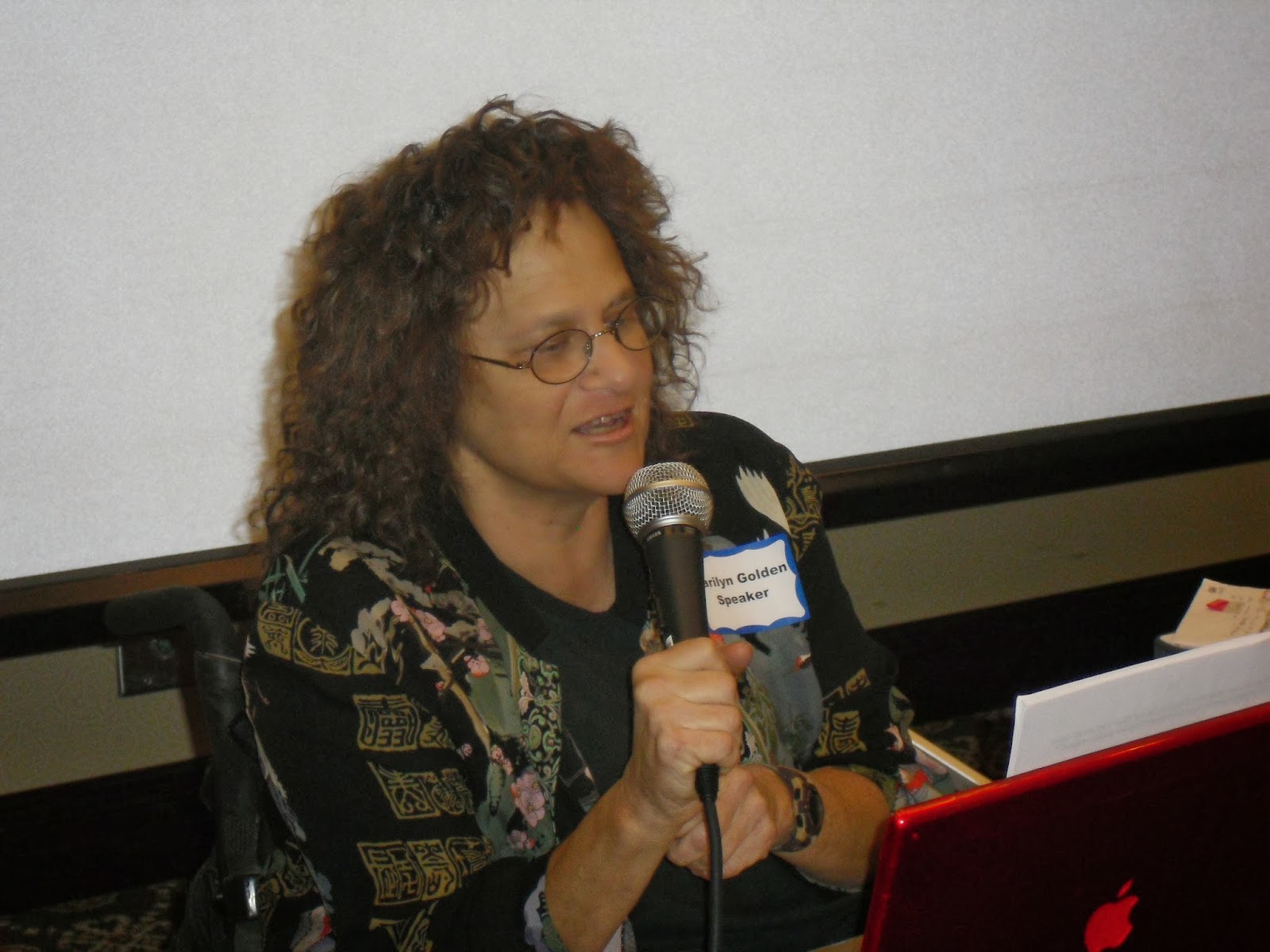
The following article was written by Marilyn Golden and published in the Albuquerque Journal on January 18, 2014.
Marilyn Golden
With the stroke of a pen, a New Mexico judge unraveled some of the most basic protections people in our state have when facing serious illness or disability.
This week, Judge Nan G. Nash of the Second District Court in Albuquerque ruled that the health care system and those entrusted to deliver medical care cannot be prosecuted for prescribing a lethal prescription overdose for the purposes of assisting in the suicide of someone with serious disease or disability.
This ruling tears away at the fabric of what those of us in the disability rights movement have been working to improve: a health care system free to deal with each individual uniquely rather than as a line-item on an accounting ledger, the elimination of abuse and coercion by those seeking to profit or take advantage of someone during a difficult time, and the illusion that individuals with a severe illness or disability should be measured by a flawed societal definition of quality of life.
Nash’s ruling codifies the idea that some lives are not worth living and they should have the option, if not the duty, to “choose” a premature death via a doctor’s prescription pad.
This turn of events in states like New Mexico and Oregon is a frightening prospect for persons living with a disability. If the practice of assisted suicide becomes normalized, what real choice is there for those of us who can cost the most to care for, and need assistance by equipment, specialized vehicles and personal aides to perform daily tasks?
Such was the choice given in the now infamous case of Barbara Wagner in Oregon.
Oregon’s assisted suicide law passed in 1998 and has been widely scrutinized by those in the medical community, disability rights advocates and ethicists who have noted many examples of unreported problems and complications with the law, generally only brought to light through investigative reporting or personal testimonies.
Barbara Wagner
Wagner was an Oregon retiree diagnosed with lung cancer. During the course of her treatment, her physician recommended particular chemotherapy, but within weeks, she received a notice from her insurer that they would not cover the life-saving treatment. However, they would pay for assisted suicide.
Some may believe that an aging grandmother who contracted lung cancer and is in an advanced stage has the obligation, for the good of the herd, to request a lethal prescription and go quietly into the night. We foresee very dangerous social ramifications, as disability and disease are further quantified.
As we work towards world-class health care and access for all, the legalization of assisted suicide is a move toward health care quality and access for only the select.
Further, legalization of assisted suicide does not account for the pressures or coercion from family members or others. While we may think coercion or pressure to die would never happen in our family or acquaintance circle, that cannot be said of every family, and unfortunately, statistics on elder abuse show that ulterior motives can often arise.
In fact, the laws that apply in Oregon and now New Mexico only say that a person must be of a sound mental state when the lethal dose is prescribed. There is no safeguard for an individual’s mental state when the prescription is administered or ingested.
The fact is, even those individuals facing the very end of life have multiple options offered by palliative and hospice care that make assisted suicide unnecessary, such as palliative sedation, where sufficient medication can be provided to render the patient unconscious, if necessary, until he or she passes peacefully.
Assisted suicide is a dangerous across-the-board health care policy, particularly for those of us that live with disability and serious disease on a daily basis. Nash seems to have ignored all the dangers posed to the disability community and seriously ill when the ruling was issued.
We hope New Mexico Attorney General Gary King will stand with the disability rights community and appeal this decision.
The Disability Rights Education and Defense Fund is a leading national civil rights law and policy center whose mission is to advance the civil and human rights of people with disabilities.
Sunday, January 19, 2014

French court ruling prevents death by dehydration for disabled man.

By Alex Schadenberg
International Chair, Euthanasia Prevention Coalition

A court in France ruled against the withdrawal of food and water from Vincent Lambert, a tetraplegic patient who has been in a state of minimal consciousness in hospital for five years, following a car accident.

Parents of Vincent Lambert
Lambert was incapacitated in a car accident five years ago, but the decision to cut his intravenous food and water supply has divided his family. Lambert's doctors and wife wanted to end the supply and allow Lambert to die, but his parents, who are vehemently opposed to ending his life, took his case to court.

The ruling goes against the wish of his wife and instead favours the parents’ desire to keep their son alive.

The wife and parents of Lambert have long been in opposition over the issue and in recent months his brothers and sisters have become involved on opposing sides.

The Lambert case is very similar to the Terri Schiavo case in 2005 in Florida, except that in the Schiavo case the court sided with Schiavo's estranged husband rather than her parents and siblings, who wished to care for her.

The French court has prevented Lambert from dying a horrific death by dehydration.

Links to similar articles:

Saturday, January 18, 2014

The Netherlands euthanasia law has derailed.

By Dr. Sc. Tom Mortier, 
The Department of Health and Technology, Leuven University College

Tom Mortier
It is well known that euthanasia is out of control in the Netherlands. In 2012, 4188 people were reported to have died by euthanasia in the Netherlands. (Link). These deaths do not include the (estimated 20 - 23%) unreported euthanasia deaths.

In January 2014 the euthanasia debate in the Netherlands re-started intensively after the Dutch newspaper Trouw reported a big quarrel between doctors about the euthanasia death of a 35-year-old psychiatric patient in 2012. (Link).

A young woman with psychiatric problems asked her general practitioner for euthanasia. For this purpose, her general practitioner consulted the first independent doctor, but this doctor gave a negative recommendation. A second independent doctor ruled that the euthanasia request could not be granted because, according to him, there were still treatment options. The general practitioner then asked a third doctor, a psychiatrist, who only needed two weeks to conclude that the problems of the 35-year old woman were untreatable and thus a lethal injection was legitimized. Two days later, on December 19 2012, the patient was killed. 

In April 2013 the regional Review Commission on Euthanasia stated that the euthanasia was performed ‘carefully’. Nonetheless, there is now a big discussion between the doctors and one doctor, George Wolfs, submitted a complaint after receiving a negative 'treatment' during the hearings in front of the Review Commission on Euthanasia. Under the twelve year old Dutch Euthanasia Act there has never been such a complaint. (Link)

Now, Boudewijn Chabot, a psychiatrist and one of the most famous euthanasia advocates, and a former leader of the NVVE, has written an opinion in the Dutch newspaper NRC Handelsblad that  the euthanasia law in The Netherlands has derailed. (Link) He came to this conclusion after some remarkable Dutch euthanasia cases.

Fourteen euthanasia or assisted suicide deaths of psychiatric patients were reported at the Dutch regional euthanasia review committees in 2012. There were 13 similar deaths in 2011. The euthanasia review committees judged that all of the cases in 2012 were performed carefully. In 2013, the euthanasia review committees came to the conclusion that only seven of the nine euthanasia deaths of psychiatric patients done by the Levenseindekliniek (Life end clinic) were done carefully. (Link)


The Life End Clinic consists of thirty travelling teams that have a doctor and a nurse who will do euthanasia anywhere in the Netherlands. Most of the doctors working for the clinic are general practitioners and internists, but there are also two psychiatrists. One of the psychiatrists is Gerty Casteelen (Link). 

Casteelen lethally injected a 54 year-old woman with a personality disorder, eating disorder and a chronic obsessive-compulsive neurosis. Casteelen doesn’t find it hard to kill her patients because she believes that she is making people happy. Not only the patient, but also the family.

Another patient of Casteelen who died by euthanasia in 2013, was a physically healthy autistic man of 63 who was working for a government institution. He never had a relationship and the only thing he did his whole life was work. This man had been treated for a long time for depression. He also tried to commit suicide, but he failed. According to Casteelen this man decided that he wanted to die. The night before his death, he gave a farewell reception for his colleagues. The day after, Casteelen went to his house and gave him a lethal injection. (Link)

It is remarkable that Boudewijn Chabot has stated that the Dutch Euthanasia law has derailed. In 1994 he was found guilty and sentenced for prescribing a lethal dose in the assisted suicide death of a woman with mental problems. The judge didn’t impose a sentence on him because of the exceptional circumstances of the case and that he was acting carefully. This judicial statement became the basis for the Dutch euthanasia law (Link). 

More than 4000 people die by euthanasia in the Netherlands each year. People who are not euthanized by their general practitioner or psychiatrist will go to the Life End Clinic. 

Chabot argues that psychiatric patients should only be lethally injected by their own treating practitioners. Furthermore, Chabot stated that ‘he does not feel comfortable’ with the Dutch euthanasia law because it has flaws and he is startled by the recent developments in the country.

Links to similar articles:

Friday, January 17, 2014

Tragic alleged case of assisted suicide may be linked to Coronation Street episode.

A 21 year old woman has been arrested on suspicion of assisting suicide in the death of Emma Crossman (21).


Liberal's to debate euthanasia at their February 20 - 23, 2014 convention in Montreal

Post Media News is reporting that the Liberal Party of Canada will likely debate euthanasia at their February 20 - 23 party convention in Montreal.

Resolution 90: Assisted suicide:

"BE IT RESOLVED that voluntary euthanasia and assisted suicide be permitted under the Criminal Code of Canada in the circumstances set out by Justice Smith in her decision in the British Columbia case of Carter v. Canada (Attorney General)."

Post Media News reported:

The Young Liberals of Canada are the driving force behind the move after they agreed to sponsor a resolution calling for the legalization of doctor-assisted suicide, Postmedia News has learned. 
While a proposal to support legalizing prostitution may not even make it onto the larger convention floor, the resolution on euthanasia is expected to be tagged a priority, which would mean it must be debated by all delegates during the Feb. 20-23 policy convention. 
Euthanasia has emerged as a hot political topic given Canada’s aging population and several high-profile cases, including one legal challenge in British Columbia that the Supreme Court said Thursday it would hear.

Thursday, January 16, 2014

Canadians with Disabilities Feel Threatened by SCC Decision to Allow Appeal on Assisted Suicide


Link to the Council of Canadians with Disabilities Media Release.

Anxiety in the disability community has been heightened by the Supreme Court of Canada decision to allow an appeal of the British Columbia Court of Appeal (BCCA) ruling in Carter v. Canada (assisted suicide). "The ongoing efforts to achieve assisted suicide by any means are escalating the level of anxiety experienced by people with disabilities. Imagine the emotional toll it takes on people with disabilities who keep hearing from assisted suicide campaigners that people who experience problems with toileting, feeding and other activities of daily living should have help to die," states Tony Dolan, CCD Chairperson.

Euthanasia Prevention Coalition concerned with the safety, security and equality of every Canadian.

Today, the Supreme Court of Canada decided to hear the Carter case, which seeks to legalize euthanasia and assisted suicide in Canada. Link to the Press Release.

Sign the Declaration of Hope to oppose euthanasia and assisted suicide.

The Euthanasia Prevention Coalition (EPC) intervened in the Carter case at the lower court and at the BC Court of Appeal.

EPC will seek to intervene in Carter at the Supreme Court of Canada.

EPC legal counsel Hugh Scher states:
EPC is concerned about the safety, security and equality of people with disabilities and seniors, which is central to the protections set out under the Charter of Rights and Freedoms and our Criminal Code.
Dr Will Johnston
EPC-BC chair Dr Will Johnston states:
The Supreme Court of Canada will consider this important public safety issue. The Court rejected assisted suicide and euthanasia in 1993 and prevented Canada from taking a wrong turn. In the 20 years since, human nature has not changed, our poor record of predicting the dying process has not changed, and vulnerable people are still at risk in our health care system. Euthanasia activists continue to confuse the public about turning off ventilators, which has little to do with the issue. We are getting better at controlling symptoms, and we have seen the abuses of euthanasia in those few jurisdictions where this practice has become entrenched, two good reasons to continue to avoid euthanasia and assisted suicide in our Canada.

Let us hope that by clarifying the issues, the Supreme Court once again confirms the Canadian rejection of suicide and direct killing of the sick, and that we stay the course in providing great symptom control to all who need it.
Disability rights advocate Amy Hasbrouck of Toujours Vivant - Not Dead Yet states:
People with disabilities, chronic illness and seniors are negatively affected by assisted suicide and euthanasia because it leads to the impression that our lives are lacking in meaning and value as compared to other Canadians. Link to a Youtube video by Amy Hasbrouck.
Alex Schadenberg
EPC Executive Director, Alex Schadenberg states:
The evidence is clear that in jurisdictions where these practices have been legalized, there have been significant abuses of vulnerable people. For example, a study in Belgium demonstrated that 32% of the people killed under the Belgian euthanasia law were killed without request, a breach of a fundamental condition of that law.  
Not one of these doctors has been prosecuted.
For further information, please contact:
  • Dr Will Johnston, (Vancouver) EPC-BC Chair: (604) 220-2042, willjohnston@shaw.ca
  • Hugh Scher, (Toronto) EPC Legal Counsel: (416) 816-6115, hugh@sdlaw.ca
  • Alex Schadenberg, (LondonEPC Executive Director: (519) 851-1434, info@epcc.ca
  • Amy Hasbrouck, (Montreal) Toujours Vivant - Not Dead Yet: (450) 921-3057, tigrlily61@gmail.com
The Carter case, was launched by the family of Kay Carter, a woman who died by assisted suicide in 2010 in Switzerland. The Carter family claimed that Kay was denied the “right” to die with dignity in Canada and her family were forced to break the law by assisting her travel to Switzerland for suicide. The BC Civil Liberties Association represented the Carter family.

On June 15, 2012, Justice Smith wrongly decided that Canada’s assisted suicide law was unconstitutional. Smith found that people with disabilities who are unable to kill themselves by suicide without assistance were discriminated by the law.

Smith also decided that “safeguards” can effectively protect vulnerable people. Smith gave parliament one year to pass a law allowing assisted suicide and a limited form of euthanasia in Canada.

Fortunately, the federal government appealed the decision of Justice Smith to the BC Court of Appeal.

BC Court of Appeal
The BC Court of Appeal found that Smith did not have the right to strike down Canada’s assisted suicide law and that she made several errors and incorrect assumptions in her decision.

The BC Court of Appeal stated that Smith was wrong when she found that the circumstances had sufficiently changed since 1993, giving her the right to strike down the 1993 Rodriguez decision.

In 1993, the Supreme Court of Canada upheld Canada’s assisted suicide law in the Rodriguez case, a case that was based on Sue Rodriguez. Rodriguez, who was living with ALS, petitioned the courts to grant her the right to die by assisted suicide.

The BC Court of Appeal also found that Smith was wrong when she assumed that the Rodriguez decision did not consider certain constitutional analysis. The BC Court of Appeal concluded that only the Supreme Court of Canada has the right to overturn its decisions.

The BC Court of Appeal decision challenged Smith’s assertion that Canada’s assisted suicide law discriminates against people with disabilities. The majority stated that:
“those who have only a limited ability to enjoy life are not less alive and have no less a right to life, than able-bodied and fully competent persons.
EPC was pleased that the BC Court of Appeal recognized that Canada’s laws prohibiting assisted suicide meet the legislative objective that is grounded in respect for and the desire to protect human life and the current assisted suicide law is rationally connected to its purpose.

The BC Court of Appeal also acknowledged that parliament recently considered a bill (Bill C-384) that would have legalized euthanasia and assisted suicide in Canada. On April 21, 2010, parliament overwhelmingly defeated Bill C-384 by a vote of 228 to 59.

Laws that prohibit euthanasia and assisted suicide provide equal protection in law for all people and uphold the safety of all people, in every life condition, from having their life taken from them.

Links to other similar articles.

Five dangerous myths about death and dying.

The following is part of an article that was written by Dr Peter Saunders and published on his blog.

Dr Peter Saunders
By Peter Saunders - Campaign Director - Care Not Killing Alliance

This morning I took part in a debate on the Radio Four Today programme (listen here) about the assisted suicide story to be screened next Monday in a British television drama (see my previous blog on this here).

I am not opposed in principle to drama programmes dealing with this issue but as a doctor who has managed many dying patients I expressed concern this morning that all media portrayal of suicide or assisted suicide has to be done with the utmost care and sensitivity so as not inadvertently to steer vulnerable people toward suicide.

On the basis of the reports I have heard the programme runs the real risk of giving credence to five dangerous myths about death and dying.

First there is the myth that people dying of cancer want to die. The overwhelming majority don’t – they want good care and support. Over 7,000 people die from pancreatic cancer every year in England and Wales and it is never more than a handful who choose or desire to go down the suicide route.

Next is the myth that cancer pain cannot be controlled – in good hands it almost invariably can. This is why the pro-euthanasia lobby have essentially stopped using pain as an argument for changing the law.

Third is the myth that that effective pain relief produces confusion and is therefore to be avoided. Although sedation is sometimes necessary in order to help control severe pain in a dying patient this is in practice very rarely the case. Patients with cancer pain can tolerate much larger doses of pain medication than you or I and remain mentally alert.

More serious is the myth that that the lives of some sick and disabled people are not worth living and that it is therefore reasonable for people with these conditions to kill themselves. This is profoundly discriminatory and demeaning and simply panders to ignorant prejudice. This is why disability rights activists are so strongly opposed to any change in the law. They know they will be in danger from people who have made judgments about their lives.

Finally, there is the myth that suicidal thoughts in sick and disabled people should be managed differently from similar thoughts in people who are not sick and disabled. People who choose to end their lives usually do so because of a perception that they are alone and that no one cares about them, because of a loss of meaning and purpose or because they perceive their lives to be a burden on others. It is much more about the person than the disease. People who are suicidal need love, support, care and professional help, not for us to accede to their requests. It is utterly illogical to offer a glass of barbiturate to someone who is terminally ill whilst offering protection and care to a person equally suicidal with a mental illness.

Wednesday, January 15, 2014

New Mexico Lower Court Parrots the Language and Platitudes of Assisted Suicide Advocacy Groups

Disability rights group - Not Dead Yet, published the following commentary on their blog yesterday.

Link to: Attorney General must appeal Assisted Suicide court decision in New Mexico.

Link to the online petition: Protect New Mexico Citizens from Assisted Suicide.


Diane Coleman
By Diane Coleman:

As many of our readers have heard by now, a New Mexico Second Judicial District Judge has ruled that the state constitution establishes a fundamental right of people who are diagnosed as terminally ill to receive a lethal prescription from a doctor, with a corresponding right of the doctor not to be prosecuted under the state law that prohibits assisted suicide.

The judge admitted that the conduct involved would fall within the prohibition on assisted suicide enacted by the state legislature, and that the legislature was aware of the public debate on the issue and wrote the law in a way that clearly included physician assisted suicide. She even admitted that calling it “aid in dying”, as assisted suicide proponents advocate, doesn’t change the fact that it is prohibited by the statute. But she ruled that the state constitution makes “aid in dying” a fundamental right. On that basis, she carved it out of the statute, asserting that no state interest justified limiting the fundamental right, thus declaring the statute unconstitutional as to “aid in dying.”


Stephen Drake has been talking about the proponents’ word game in promoting the term “aid in dying” for years. I’ll refer readers to his entertaining piece entitled Using and Promoting Change of Language to Make the Objectionable Acceptable.

The effort to sell this language as a way of avoiding substantive concerns did not get anywhere in Connecticut. As I pointed out in my blog on a 2012 interview about the New Mexico case with Health Policy Solutions (Doctors, patient challenge New Mexico assisted suicide ban), the Connecticut court viewed this as more appropriate for legislative than judicial action, stating:
Legislative determination is particularly important given the significant medical legal and ethical concerns about legalized physician assisted suicide that have been raised across the country. Among the other difficult and important public policy concerns that the legislature would have to evaluate – and is uniquely positioned in our system of government to evaluate – are the following: 
-  Whether physician-assisted suicide threatens the most vulnerable in society, including the poor, the elderly, and the disabled, who are at risk of being threatened, coerced, or influenced to end their lives to spare their families the financial costs and emotional strain of caring for them; …  
- Whether physician-assisted suicide shifts the focus of physicians and insurers away from vitally important measures such as identifying and treating depression and providing end-of-life pain control and palliative care; . . .  
- Whether physician-assisted suicide undermines the physician-patient relationship and the integrity of the medical profession by eroding patient trust in the doctor’s role as healer;…  
- Whether physician-assisted suicide opens the door to the possibility of involuntary euthanasia, as has occurred in the Netherlands, because “what is couched as a limited right to ‘physician-assisted suicide’ is likely, in effect, a much broader license which could prove extremely difficult to police and contain,” Washington v. Glucksberg, 521 U.S. 702, 733 (1997). (Blick Decision on Motion to Dismiss.)
The New Mexico judge didn’t seem to feel the need to get into all that. In fact, the “Findings of Fact” read like C&C platitudes and propaganda rather than objective statements of fact. Just to highlight two of them:
[Finding of Fact] 31. Where it is permitted, the application for an aid in dying prescription must be made by the mentally competent, terminally ill patient and cannot be made by a surrogate decision maker.
But the Oregon, Washington and Vermont statutes all say that your request for a lethal prescription can be made by someone else familiar with your manner of communicating, which would include the typical surrogate. The disability experience is that doctors all too often prefer to talk to a relative or other companion rather than the person with a disability.
[Finding of Fact] 32. Where it is permitted, an aid in dying prescription must be self-administered by the mentally competent, terminally ill patient and cannot be administered by a surrogate decision maker.
As elder law attorney Margaret Dore has pointed out, assisted suicide statutes provide that the person must be competent at the time of the request for a lethal prescription, but say nothing about the time the dose is administered. More importantly, no independent witness is required at the death, and without such witness, there’s no way to know whether the fatal drugs were administered by the person or their surrogate.

It all comes back to the conclusion I reached about the New Mexico case when I last wrote about it:
The New Mexico plaintiffs are all people who seem privileged enough to be justified in their confidence that the patient in this case will not be coerced into assisted suicide, will not be denied care that she wants, will not be treated like an unwanted burden on those around her, and is not at risk of being administered the lethal drugs without her consent. 
It would be nice if everyone with a difficult illness could have the same confidence.  But in the real world, where elder abuse is on the rise, C&C’s platitudes should not distract us from our collective obligation to consider the impact on everyone, not just the privileged few.
What needs to happen next is an appeal by the New Mexico Attorney General. Please contact: AG Gary King through his Director of Communications Phil Sisneros at:  psisneros@nmag.gov to urge that essential next step.

 Link to the online petition: Protect New Mexico Citizens from Assisted Suicide.

Diane Coleman

Monday, January 13, 2014

Court imposes assisted suicide in New Mexico


The following article was written by Wesley Smith and published on his blog.

Wesley Smith
By Wesley Smith

If you ever wonder why there are so many radical and extreme lawsuits, wonder no more. As I have often said about a variety of issues, it only takes one judge to break down the walls of democratic governance and impose an ideological view.

That has now happened in New Mexico where Compassion and Choices brought a lawsuit claiming that a doctor assisting the suicide of a terminally ill patient isn’t breaking the assisted suicide law, but merely providing the state constitutionally protected medical treatment of “aid in dying.”

That redefinition gambit did not work a few years ago in Connecticut. It didn’t even work in Montana, where the Supreme Court there refused to impose a constitutional right to assisted suicide. And the U.S. Supreme Court has already ruled that there is no federal constitutional right to assisted suicide.

But now, that “one judge” has been found.

First, Judge Nan G. Nash finds that terminal illness is nothing but suffering–despite the great advances of hospice and the meaning many find in that time of life. From the decision:

Attorney General must appeal Assisted Suicide court ruling in New Mexico.

By Alex Schadenberg

Link to the online petition: Protect New Mexico Citizens from Assisted Suicide.

Gary King
Judge Nan Nash, of the Second Judicial District in New Mexico made the wrong decision in the case Morris v New Mexico. Nash decided to legislate from the bench by allowing New Mexico doctors to prescribe lethal drugs to assist the suicide deaths of their patients.

People need to contact New Mexico Attorney General, Gary King, to appeal the Nash decision to protect New Mexico citizens from assisted suicide.

Contact Phil Sisneros on behalf of Attorney General Gary King 
by phone at: 505-827-6000, by fax at: 505-827-5826 or email at: psisneros@nmag.gov

The Albuquerque Journal reported that Nash decided:
Drs. Katherine Morris and Aroop Mangalik, both oncologists at the University of New Mexico Hospital, could not be prosecuted under the state’s Assisted Suicide Statute, which is defined as the act of “deliberately aiding another in the taking of his own life.”
Drs Morris and Mangalik both previously practised medicine in Oregon, where assisted suicide is legal. The article continued by stating:
Nash found that the right exists under the New Mexico Constitution, which prohibits the state from depriving a person of life, liberty or property without due process.
Morris v. New Mexico, which was heard December 12 - 13, 2013, should have been dismissed.  

The case claimed that "aid in dying", which is also known as assisted suicide, is not prohibited by the New Mexico assisted suicide law because "aid in dying" is not assisted suicide.

The case argued, that if "aid in dying" is assisted suicide, then the New Mexico assisted suicide law is unconstitutional because it undermines the right to privacy and autonomy.

"Aid in dying" is assisted suicide and assisted suicide does not constitute medical treatment. Therefore prohibiting assisted suicide does not undermine the right to privacy or autonomy.


The Judge did not take into account that assisted suicide is different than suicide because assisted suicide requires the direct involvement of another person. It is not possible to protect vulnerable citizens from assisted suicide abuse, especially when elder abuse is involved.

Links to more information:
Court imposes assisted suicide in New Mexico.
Assisted suicide is being debated throughout the US.
New Hampshire, Canada and now Connecticut.

Belgium Protest: Stop the extension of euthanasia to children

By Alex Schadenberg
International Chair - Euthanasia Prevention Coalition


Protest: Les dossards Jaunes
On Sunday, January 12, 2014, in the afternoon, organizers of groups that are working together to oppose the Belgian euthanasia law held a protest outside the offices of the Belgium euthanasia Control and Evaluation Commission.

Three hundred protesters, wearing yellow jackets, gathered at 1:45 pm at: rue de l’Autonomie, 4 – 1070 Brussels with the message that: 
the existing euthanasia law must not be extended to children and to demand better control and enforcement of the existing 2002 euthanasia legislation.
The media reported on the event. Media Press News reported that:
While Belgium is set to vote on the extension of the law on euthanasia to minors, a group wearing "Yellow Bibs" denounced the lack of control by the commission, they stated: "By the reckoning of the President of the Board of Control, many cases of euthanasia are illegal in Belgium and many doctors do not report to the board, the statements required by law ... In 6000 cases of euthanasia since 2002 no file has been forwarded to the courts, which is statistically amazing. "They also asked about the presence in the commission of sixteen members, four members of the ADMD (euthanasia group) who do not hide their activism: "We demand the immediate resignation of the members of the ADMD seen their conception of their mission control, which is inconsistent with the terms of the law." 
The 300 people today in the streets of Brussels gave a red card to the supervisory committee. The goal is to revive the debate on euthanasia and alert the public on current abuses: "From next week a letter will go to all the presidents of political parties. We ask them to respond concretely to our proposals and we will disclose publicly. We ask them to take care of these issues as a priority and not to possibly extend the out of control law to children. We also ask them specifically if they "cover" the design is its ADMD mission within the supervisory committee." The group will not stop and is already planning other actions and events.
Some of the suggestions that the group made are:
a reduction of the quorum needed within the Control Commission to send a case to the prosecutor as well as "a renewal of the Board of Control immediate way" to ensure the "real pluralism."
The Belgian people are waking up to the atrocity and the abuses related to euthanasia.

Recently Marc Cosyns admitted he doesn't report the euthanasia deaths that he does. Sadly, this did not surprise people who oppose euthanasia. A study that was published in the (BMJ Oct 2010) concluded that euthanasia deaths are significantly under-reported in the Flemish region of Belgium with only 52.8% of assisted deaths in the Flemish region of Belgium reported, meaning that 47.2% of all assisted deaths were not reported.

In January 2013; it was reported that Belgian identical twins, Marc and Eddy Verbessem, were euthanized, with the approval of Wim Distelmans, the co-chair of the Belgian euthanasia Control and Evaluation Commission, because they feared becoming blind.

In February it was reported that a woman with Anorexia Nervosa was killed by euthanasia, after reporting that she had been sexually assaulted.

Tom Mortier's mother
In February 2013, Dr Tom Mortier wrote about the euthanasia death of his depressed mother in April 2012. Mortier stated:
How is it possible that people can be euthanised in Belgium without close family or friends being contacted? Why does my country give medical doctors the exclusive power to decide over life and death? ... What are the criteria to decide what “unbearable suffering” is? Can we rely on such a judgment for a mentally ill person? 
In September 2013, a person, who was not physically ill, was killed by euthanasia after a botched sex-change operation.

A study that was published in the (CMAJ June, 2010) found that 32% of all assisted deaths in the Flemish region of Belgium are done without explicit request.

It is clear that the Belgium euthanasia law has been incrementally extended through abuse.

Canadians need to be concerned.